We read current Amazon listing titles and descriptions and scored 3 named SKUs. 1 of 3 (33%) is a sled. 1 of 3 (33%) is a harness titled weight pulling. 1 of 3 (33%) is eyewear. 0 of 3 (0%) store a snapshot price. 0 of 3 (0%) are booties, necklines, snow hooks, or a racing X-back named as such. 3 of 3 (100%) print a searchable Amazon title. The catalog is a class mismatch, not a kit.
Desk pick: Recreational one-dog snow toy → Dasher after you confirm the live brake story. Short yard pull → Weight Pulling Dog Harness after you measure chest and accept the weight pulling title. Sunglasses → last, optional, and never “essential #3.” Ice pads → leave this URL and buy booties. Distance team → specialist mushing suppliers. Iditarod’s public race materials treat booties and dog care as operational reality for long-distance teams — that is their event, not a protocol we ran. Weight-pull is a different organized sport (IWPA).
Related desk pages: harness for pulling, large-breed harness, dog boots, fresh meals (not a sled diet).
Our guides are reader-supported. This article may contain affiliate links. As an Amazon Associate we may earn a commission if you buy through links, at no extra cost to you.
Quick picks at a glance
- Best listed recreational sled tile: Dasher Wooden Snow Dog Sled. Confirm live rider/dog ratings and a stop plan.
- Best listed short-pull harness tile: Weight Pulling Dog Harness for Dogs. Titled for weight pull, not an Iditarod X-back.
- Best listed optional glare tile: Dog Sunglasses. Not a booty. Not a line.
- Missing on this URL: booties, gangline, neckline, snow hook, sport-correct sled harness.
What current Amazon listings show (Sled-Kit, August 2026)
| Job | What actually works | Category | Fail if you skip it |
|---|---|---|---|
| One-dog recreational snow | Wood sled + a sled harness you measure | Dasher + harness bought elsewhere | Sunglasses as the safety kit |
| Short judged / yard pull | Freight-style chest harness | Weight Pulling card | 10 trail miles in a plate harness |
| Ice / overflow | Booties sized on paw width | No card | Bare pads because the sled looks traditional |
| Distance / race team | Specialist catalog | 0 of 3 cards | Inventing MTN Ridge medals on this URL |
Before you shop: (1) you named the sport (sled / ski-jor / weight-pull / stop), (2) the harness class matches that sport, (3) you have a stop plan (hook, drag, or flat ground), (4) lameness, pad splits, or a dog that suddenly will not pull goes to a veterinarian first. Fail gate 1 and this checklist is three random tiles.
What the best gear for sled dogs can and cannot do
A sled-class harness can spread a sustained trot into a line. Booties can keep ice crust off pads. A wooden rec sled can teach a whoa on a flat field. None of that required a materials chamber.
What this catalog cannot do: complete a race kit; prove snow-blindness prevention; turn a weight-pull chest plate into a 20-mile X-back; replace Merck’s heat-related illness overview when the sun is out and the air is “cold.”
A walking no-pull harness is a street tool. It is not a tug system. Do not clip a gangline to a walking back-clip.
How the desk scored the best gear for sled dogs
Four readable axes.
- Object class. Sled vs harness vs eyewear.
- Sport word in the title. “Weight Pulling” is a different federation than a sled X-back.
- Whether the title names sled-dog hardware. Booties, gangline, snow hook — 0 of 3.
How these products compare on labels and price
| Product | Card price | Object class | Sport match |
|---|---|---|---|
| Dasher Wooden Snow Dog Sled | — | Recreational sled | Entry snow toy / kicksled-adjacent |
| Weight Pulling Dog Harness for Dogs | — | Weight-pull harness | IWPA/UKC-style pull, not automatically a sled X-back |
| Dog Sunglasses | — | Eyewear | Optional glare accessory |
*That is a catalog fact, not a free kit. Live Amazon prices move. We will not invent a $300–$1,200 “pro kit” total as if we invoiced one. 1 of 3 (33%) is a pull interface — and that one is weight-pull titled. 2 of 3 (67%) are not a harness. 3 of 3 (100%) fail as a complete trail kit. If you came for booties, 0 of 3 cards help.
The 3 cards on this URL
1. Dasher Wooden Snow Dog Sled
Best for: a recreational wood sled conversation after you confirm live capacity and invent a brake.
Lightweight ash / traditional design is listing-class language. Limited capacity and braking are the expected entry-sled caveats. A snow hook and a helmet for the human are not in the card. A wooden sled that feels charming in two inches of new snow can skate on rain-crust. Braking is then you, a drag, or a hook.
2. Weight Pulling Dog Harness for Dogs
Best for: a short, controlled pull whose title already says weight pulling.
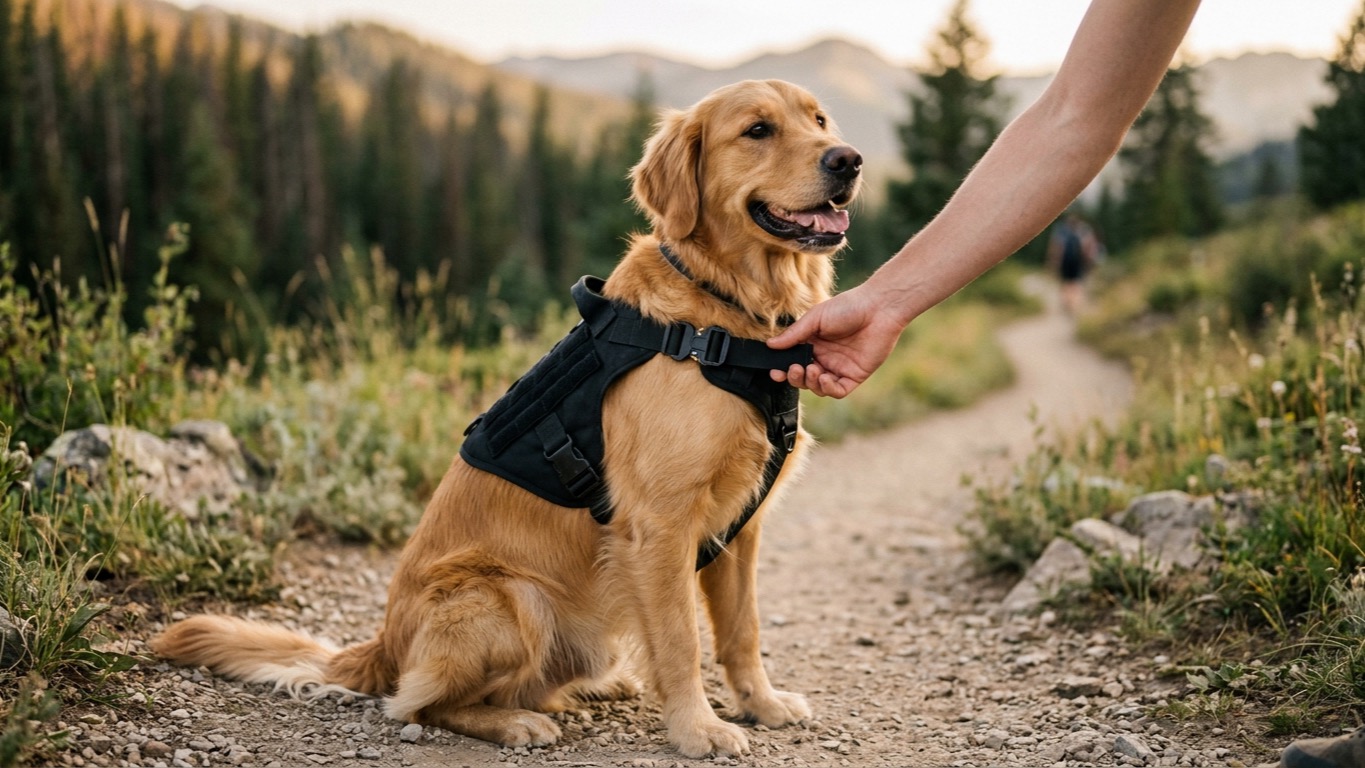
Even pressure / padded chest is maker language. Sizing that “runs large” is a recurring owner theme on generic pull harnesses, not a tape we used. For sled miles, ask whether the live photos show an X-back line harness or a freight chest plate. If it is the latter, keep it in the weight-pull column.
3. Dog Sunglasses
Best for: an optional glare experiment after eye pain is ruled out.
UV / wrap language is marketing. Fit takes conditioning. A head-shy dog will remove them. Eye redness or discharge is a veterinarian. This tile is not a booty.
Decision framework for the best gear for sled dogs
1. Name the sport
Yard tire pull → the weight-pull card is at least titled honestly. Two hours on a trail → you need a sled harness that this title does not guarantee. Recreational kicksled → Dasher plus a sled harness bought elsewhere.
2. Measure the dog, not the breed
Chest girth, neck, and withers-to-tail length matter. Maker charts beat “husky size M.” A harness that walks into the armpit will rub.
3. Booties are a consumable
Race practice treats booties as wear items. Size on paw width. Carry spares. This URL has zero booty cards.
4. Line hardware is inspectable
Ganglines fail at splices and cheap clips. Inspect every outing.
5. The sled is a brake and a load
A wooden recreational sled without a drag / snow hook plan is a gravity problem on crusted downhill. Treat braking as your system.
6. Cold-weather materials
Plastic clips shatter. Lines ice up. Batteries die.
Why harness class dominates the best gear for sled dogs
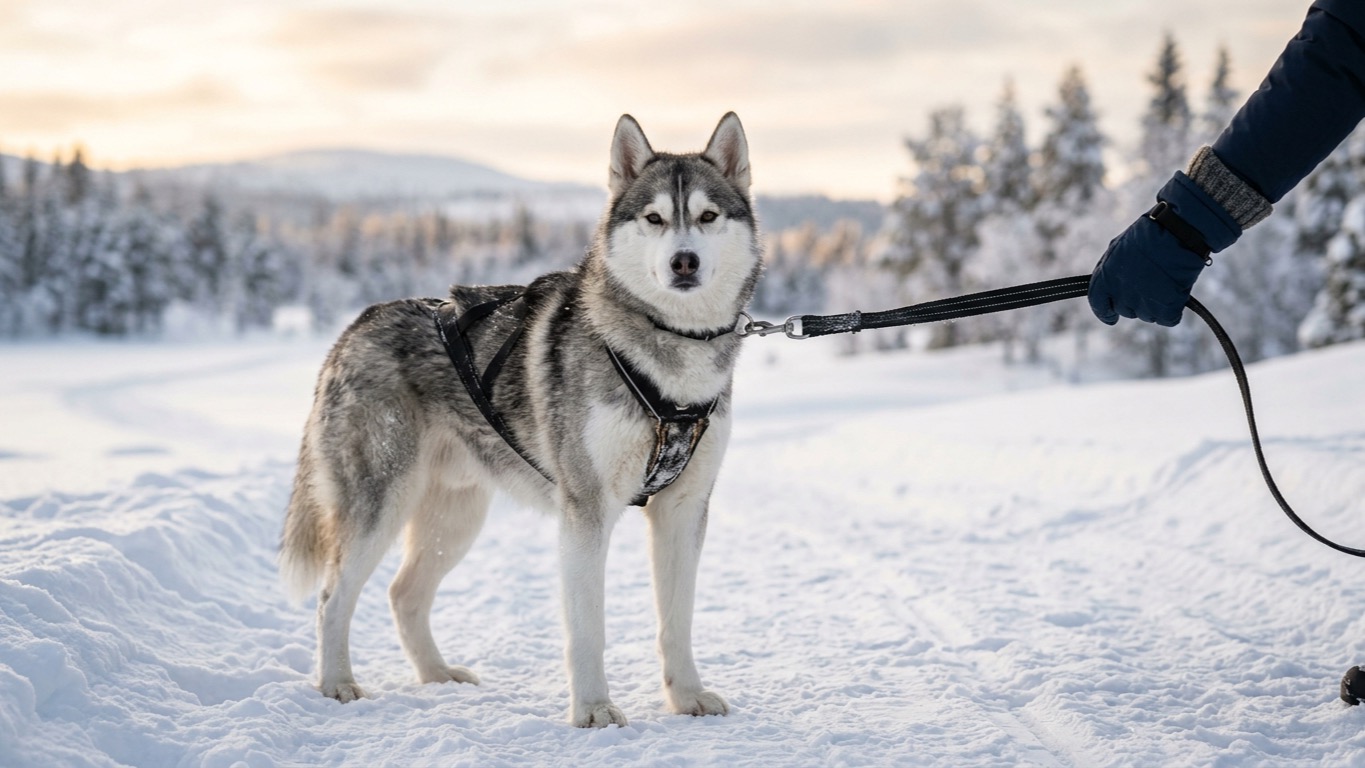
The harness is the interface between muscle and load. An X-back-style sled harness generally runs along the back. Shoulders should move for a sustained trot. A weight-pull harness often uses a broader chest load for a short, maximal pull. Using the wrong class is a rub-and-gait problem.
X-back (typical sled). Straps cross over the back. The tug leaves near the tail.
H-back / distance variants. More wrap around the ribs. Still a line harness, not a walking no-pull.
Weight-pull / freight. Broader chest load. Often a padded plate. Built for a short, heavy pull. The card on this URL is titled for this class. A 20-mile trail in that shape is how armpits cook.
If the Amazon photos are ambiguous, look for: where does the tug attach, and is there a plate across the chest? When still unsure, buy from a mushing supplier that names the discipline.
Booties — the missing card on the best gear for sled dogs
Ice crust cuts pads. Long-distance culture treats booties as required wear in many conditions. Recreational kicksledders still meet the same ice. Size on the widest paw. Too loose = shed on the trail. Too tight = circulation. Carry extras.
Failure modes you can name without a trial: shed on the first mile; rub at the dewclaw; ice ball inside; pad still cut on glass crust. Dog boots as a general pet aisle are not automatically mushing Cordura.
This URL’s sunglasses card does not replace a booty.
Gangline, neckline, snow hook — also missing
A team is a system: tug lines, necklines, a gangline, and a way to stop. Shock sections take a start-jerk. Quick-release hardware you can work with gloves is a winter requirement. Inspect splices. Replace frayed line. Inspect every run.
A multi-dog gangline is geometry. Dogs that cross, a neckline that is too long, and a tug on the wrong D-ring are how you get a downed dog wrapped in polyethylene. Recreational one-dog kicksled is simpler: one tug, one dog, one human who can let go. Dasher is closer to that one-dog toy than to an eight-dog Iditarod gang. Do not scale a wooden rec sled into a team by buying two more sunglasses.
A snow hook that does not hold is a runaway sled. Practice setting it without the dogs first.
Sprint vs distance vs yard pull
Sprint. Light line. Less padding. Speed. Booties still appear when the surface is glass.
Distance. Padding. Inspectable line. Booty consumption. Snack and rest plan. Not a Dasher-plus-sunglasses story.
Yard / weight pull. The harness card’s title lives here. Short reps. Controlled surface. Read IWPA (or your org) the week you enter.
Do not mix a sprint harness, a weight-pull load, and a recreational sled in one “best of 7” sentence. This page never had seven cards.
Worked example: two weekends, two kits
Weekend A — one dog, flat field, two inches of new snow, teachable whoa. Kit: Dasher after live capacity. A sled-style harness measured on the dog (not the weight-pull card unless the photos show a line harness). Zero sunglasses required. Booties only if you hit ice.
Weekend B — short judged pull on a cart. Kit: Weight Pulling Dog Harness after the tape. Controlled surface. No Dasher required. No sunglasses required. If you later switch to trail miles, buy the other harness class.
How to choose the best gear for sled dogs this month
- Vet screen if this is a new sport.
- Name the sport. Sled, ski-jor, weight-pull, or stop shopping.
- Buy the harness for that sport. It may not be the weight-pull card.
- Buy booties if ice is real. They are not on this URL.
- Buy line + stop.
- Buy a sled (Dasher only if the live listing matches a rec job).
- Sunglasses last, optional.
That order is why this catalog feels upside down. We will not reorder reality to match the tile sequence.
What is the best gear for sled dogs on this URL?
The best gear for sled dogs on this URL is Dasher for a recreational wood sled, the Weight Pulling Dog Harness for a short freight pull, and Dog Sunglasses only as optional glare gear. The current Amazon listing review (Sled-Kit) is 3 cards, 0 booties, 0 priced tiles, 0 X-backs.
How should you measure a dog for the best gear for sled dogs?
Measure chest girth, neck, and withers-to-tail length. Compare to the live chart. Put the harness on in the kitchen. Watch armpit ride-up. Five minutes of walk. Look for rub. Only then add a light drag. Booties on a short ice walk before a long one. If the dog shuts down, stop.
Frequently asked questions
What is the best gear for sled dogs?
A sport-correct harness, booties when ice demands, and a line + stop you inspect — then a sled that matches the load. On this URL you can start a recreational sled conversation (Dasher) and a weight-pull harness conversation. You cannot complete a race kit.
How often should I replace a gangline?
Inspect after every serious run. Replace when a strand parts or a splice slips.
Can I use a weight-pull harness for sled miles?
Sometimes people do. The title on this card is weight pulling. If the live shape is a freight chest plate, expect a different rub pattern than an X-back.
Do I need dog sunglasses for snow?
Optional. Rule out eye pain with a veterinarian.
Are recreational sleds OK for racing?
Generally no. Race sleds and rec wood toys are different objects. Dasher is the rec tile here.
What about booties on this page?
There is no booty card. Shop booties as their own aisle.
Can I use walking-harness gear?
A walking no-pull is a street tool. Do not clip a gangline to a walking collar or a walking back-clip. Neck load plus a start-jerk is an emergency class.
Do I need a helmet if I buy the Dasher?
If you are on the sled or on skis behind a dog, you are the crash object. Helmet and eyewear for the human are rational. The dog sunglasses card is not a substitute.
How many booties per dog per day?
Distance culture treats them as consumables. Ice crust may use several pairs. Soft snow may use zero. There is no card here to quote.
Is the weight-pull harness OK for canicross?
Canicross is a running-with-belt sport with its own harness shapes. Do not assume a freight chest plate is a canicross harness.
Why only three products?
That is the stored catalog. We do not invent four more SKUs to fake a “top 7.”
Human safety the dog cards omit
You are on snow. Helmets, eyewear for you, and a plan if the team leaves without you matter more than a pet sunglasses tile. A runaway wooden sled is a blunt object. Teach a whoa you will actually use. We are not a mushing school.
If you finish a run on a plowed street, you are in traffic. A reflective vest on the human and a light on the sled matter more than pet sunglasses. Dogs are not lane-legal.
Conditioning, youth dogs, and heat
Pull sports are athletic. Conditioning is weeks, not a Saturday. Start with walk-in-harness, then light drag, then distance. A dog that screams at the start is not automatically having fun. It can be arousal that turns into a fight or a shoulder injury.
Youth dogs and growth plates: a veterinarian / sports-medicine conversation, not a “start them young on a Dasher” slogan.
Heat illness happens on bright snow. Merck heat illness is the medical frame. We do not publish a heart-rate protocol.
Intact males and females in season add team-management problems this three-card page will not solve.
Pads, nails, ice balls, food, water
Ice balls between toes are a stop-the-run event. Hair between pads holds snow. Nails that are too long crack on crust. Sunglasses do not fix a pad. If a pad is already split, more miles are not “toughening.”
Working dogs burn calories. Recreational kicksled is not a 100-mile race. A dog that will not drink cold water still dehydrates. Warm water in a thermos is human logistics, not a product card. Do not invent a “sled dog diet” from the fresh meals page and a Dasher.
Off-season storage and land use
Salt, mice, and a damp garage kill nylon faster than a short season of honest use. Hang harnesses. Keep booties from welding into a frozen brick. Wood sleds want off-the-dirt storage so runners do not sit in meltwater. Sunglasses in a crushed glove box will warp. None of that required a −30 °F chamber.
Groomed ski trails, dog-ban parks, and road rights-of-way are local. A wooden sled on a snowmobile trail is a visibility problem. We are not your ranger.
One-dog kicksled vs a team
A Dasher-class wooden sled plus one dog is a teachable object: one tug, one whoa, one human who can fall off. Adding dogs multiplies line, booty, and fight risk. This URL does not sell a gangline. If you want a team, you have left the three-card aisle.
Ski-jor and canicross are belt-and-line sports with their own harness geometry. A freight weight-pull harness is the wrong default. A walking no-pull is also the wrong default.
When the best gear for sled dogs stops being the answer
A lame dog, a household with no snow and no pull sport, or a shopper who wanted seven race SKUs is not these three tiles. Class honesty informs the notes above.
How we researched this guide
Desk research. We cross-checked sport context against Iditarod’s public materials, IWPA, and Merck’s public heat-illness overview. Nothing here is a veterinary certification or a race-marshal stamp.
Limitations: live listings add inches and prices we do not store; Amazon titles clone; a three-card aisle cannot teach gee/haw.
Keep a simple log: sport name, chest girth, whether booties stayed on, and whether you actually used a stop. A hallway sculpture is a failed category row.
Extra desk notes: night, loaner gear, and the week the class wins
Night. A headlamp for the human matters more than pet sunglasses. Dogs have different night vision. You still hit trees.
Loaner gear. Inspect it like it was crashed. A cracked snap is cheaper than a lost dog.
Two sports, one harness. Do not share a freight chest plate across weight-pull Friday and ski-jor Saturday. That is how you invent a rub.
Desk row you can reuse. Rec snow → Dasher + sled harness elsewhere. Yard pull → Weight Pulling card. Ice → booties, other aisle. Distance → leave this URL. Sunglasses → optional last. That is the whole map.
Cold-weather first-aid that is not a product card
Pad cuts, broken booties, and a dog that will not eat on the trail are the usual stoppers. A real kit is vet wrap, a spare booty pair, a way to melt water, and a plan to bag a dog and walk out. Sunglasses do not belong in that sentence as item one. We are not publishing a medical protocol. We are naming why the catalog is thin.
If you add a second dog, you have added a neckline, a chance of a fight at the start, and a doubling of booty count. Specialist books and local mushing clubs exist for a reason this three-card aisle cannot replace.
Fit session without pretending it was a trial
A sane first session still looks like:
- Measure chest and neck. Compare to the live chart.
- Put the harness on in the kitchen. Watch armpit ride-up.
- Five minutes of walk. Look for rub.
- Only then add a light drag.
- Booties on a short ice walk before a long one.
If the dog shuts down, stop. A “tough it out” first hour is how you get a dog that hates the harness.
Maintenance the listings imply
Dry nylon before storage. Salt and ice rot stitching. Do not bake synthetics on a wood stove. Coil lines without kinks. Check sled runners and lashings. Wood flexes and splits. Sunglasses: rinse salt, check straps. Salt, mice, and a damp garage still kill nylon faster than a short season of honest use.
What “field-tested” bought on this URL
Night on a plowed street is traffic. A reflective vest on the human and a light on the sled matter more than pet sunglasses. Dogs are not lane-legal. We are saying: do not let a three-card “kit” talk you into skipping the obvious.
Youth dogs: growth plates are a veterinarian conversation. Intact males and females in season add team-management problems this page will not solve. A dog that screams at the start is not automatically having fun. It can be arousal that turns into a fight or a shoulder injury. Conditioning is a calendar.
Powder, crust, ice, and overflow are four different friction stories. A wooden recreational sled that feels charming in two inches of new snow can be a skate on rain-crust. If the live Dasher listing does not discuss a brake, assume you must add a stop plan or stay on flat ground.
Walking no-pull harnesses belong on pulling-harness pages. They are the wrong physics for a gangline. Canicross and ski-jor are belt-and-line sports with their own harness shapes. A freight chest plate is the wrong default there too.
Buying order if you only have one budget: vet screen if this is a new sport; sport-correct harness (may not be the weight-pull card); booties if ice is real; line + stop; sled (Dasher only if the live listing matches a rec job); sunglasses last, optional. That order is why this catalog feels upside down. We will not reorder reality to match the tile sequence.
Sources
- Iditarod, public race / dog-care materials. https://iditarod.com/
- International Weight Pull Association. https://iwpa.net/
- Merck Veterinary Manual, Heat-Related Illness in Animals. https://www.merckvetmanual.com/emergency-medicine-and-critical-care/heat-related-illness-in-animals/heat-related-illness-in-animals