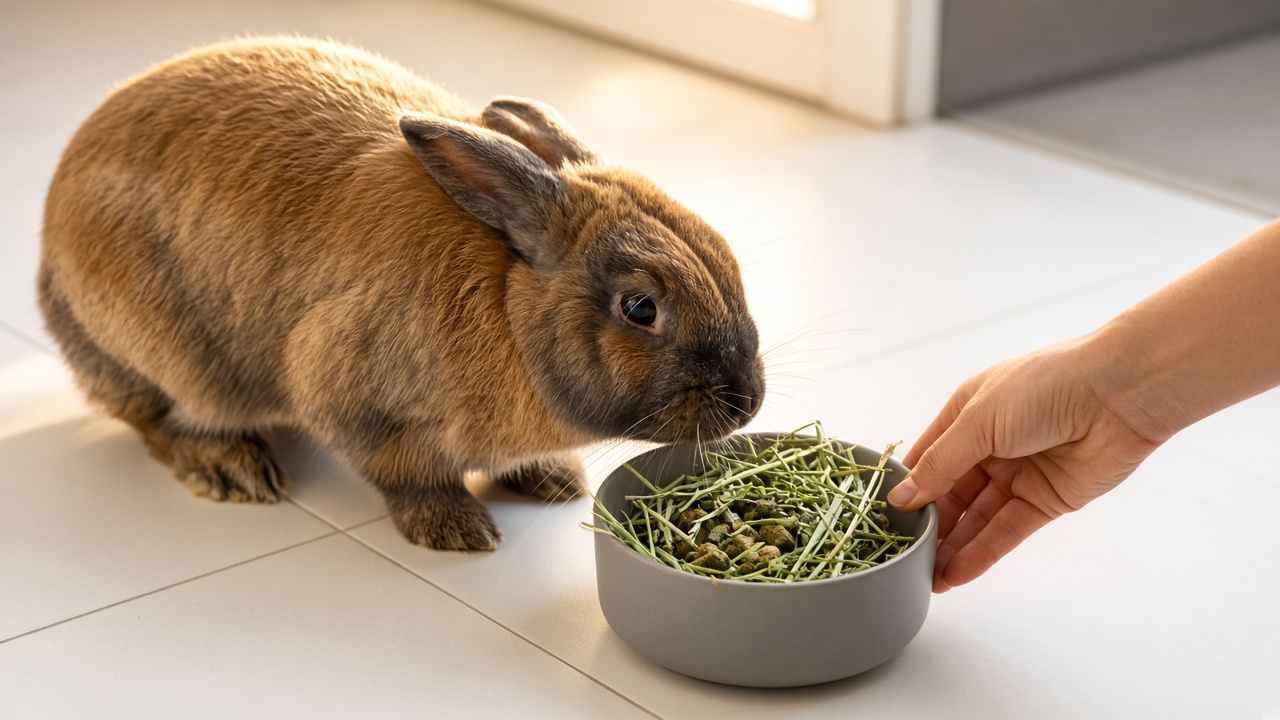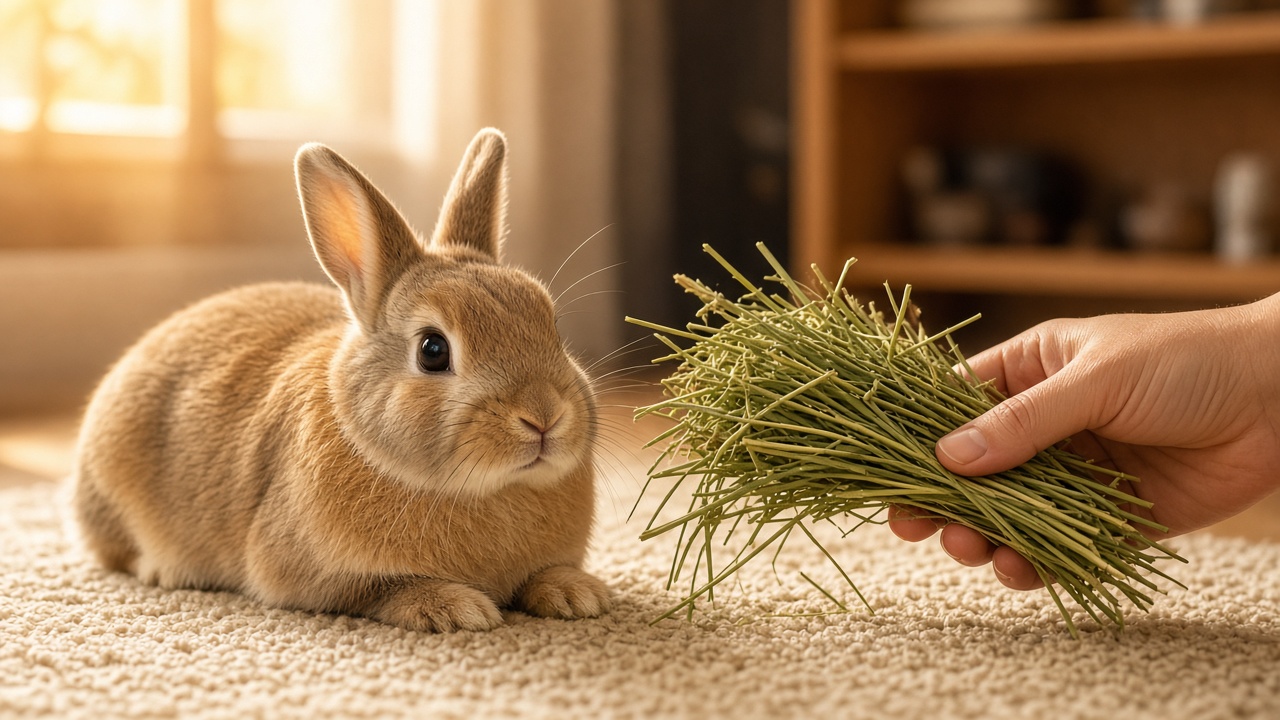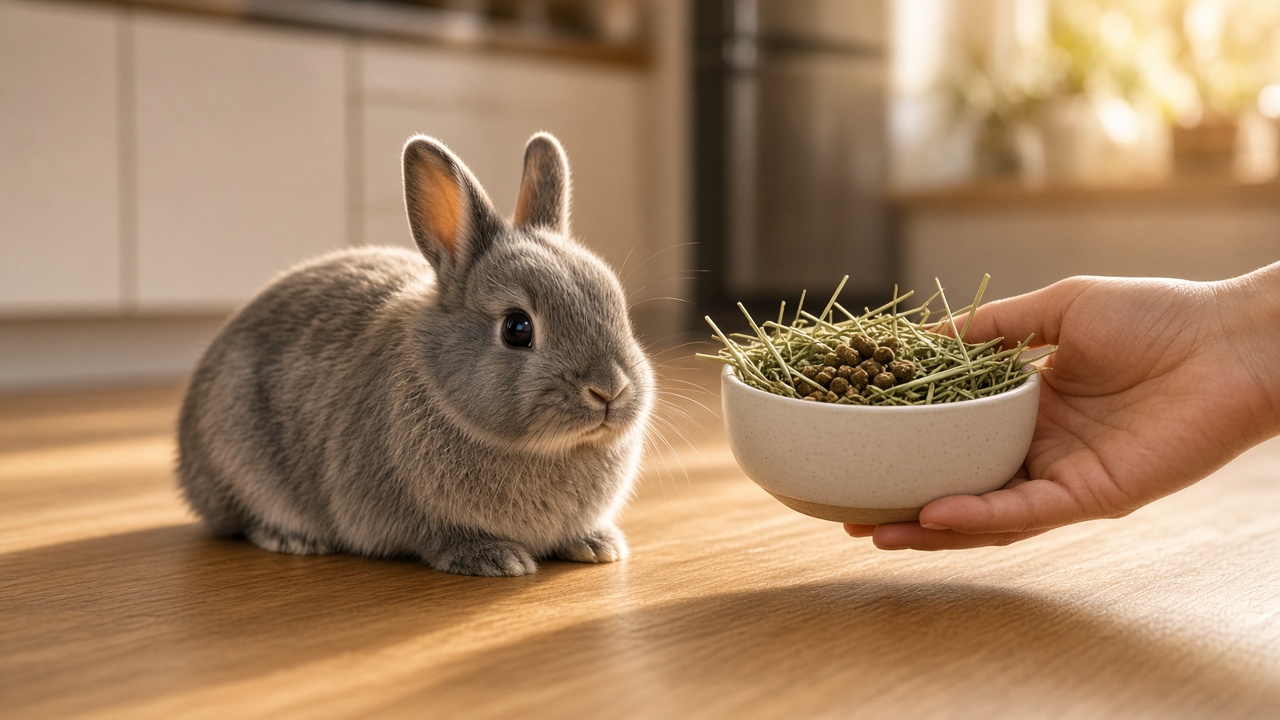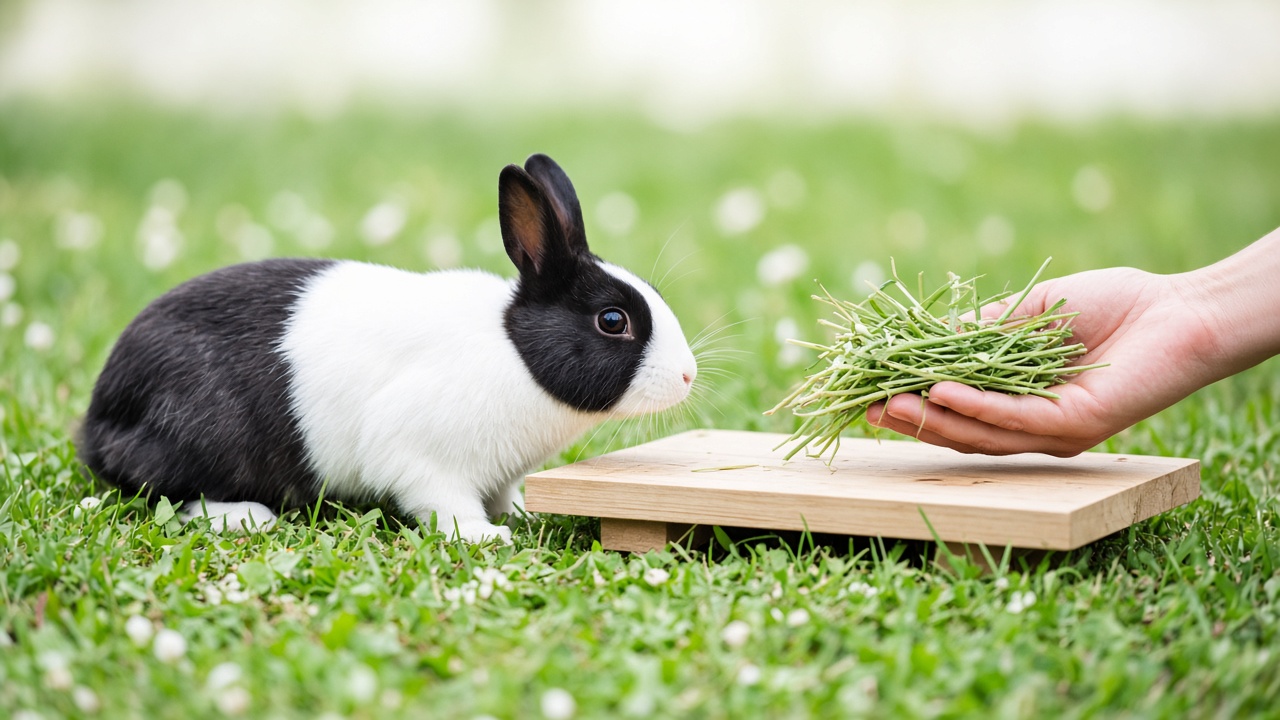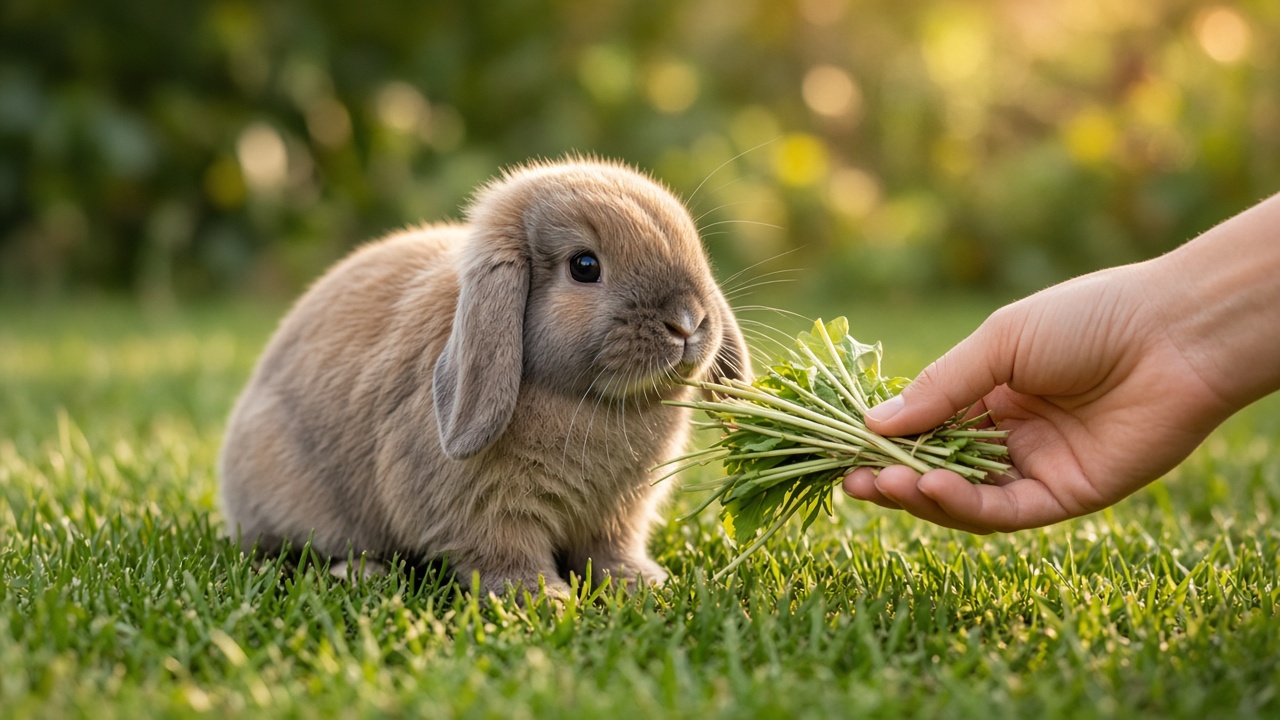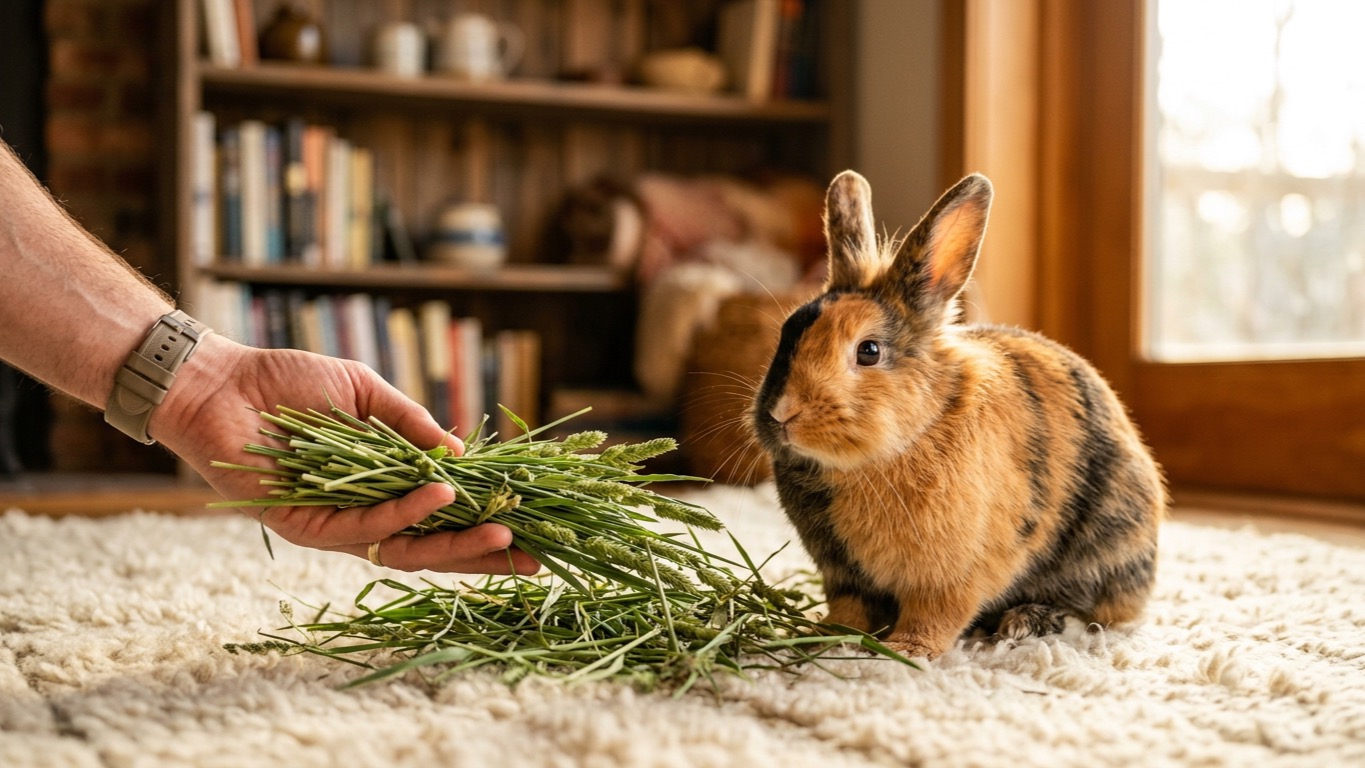
Quick answer: A harlequin bunny is a medium, two-tone rabbit that needs a roomy indoor pen and unlimited grass hay. Plan for an adult at or under 9.5 pounds. Pair hay with a measured timothy pellet, not a seed mix.
An adult Harlequin bunny stays at or under 9.5 pounds and shows Japanese or Magpie split markings.
This page is a research-desk brief on published breed rules and maker labels.
Selection rule: We covered indoor adult companion setups sized for the American Rabbit Breeders Association 9.5-pound maximum. We left out outdoor hutch-only kits, dwarf-only cages, and show-breeding pairings.
What a harlequin bunny is
A harlequin bunny is a color-pattern breed with a medium adult frame.
The American Rabbit Breeders Association lists the Harlequin as a French breed first shown in Paris in 1887. The same ARBA page sets a maximum weight of 9.5 pounds and describes two types.
- Japanese: orange or fawn plus black, blue, chocolate, or lilac
- Magpie: white plus black, blue, chocolate, or lilac
Our research team counted eight color pairings on that ARBA list and found no temperament score on the same page.
A “perfect” Harlequin, in ARBA’s words, shows a marked split of two colors. Those colors alternate on the head, ears, feet, and body. ARBA calls that goal a “perfect 3-part harmony.”
Colors: Japanese and Magpie groups
Japanese Harlequins wear orange or fawn bands, while Magpie Harlequins wear white bands.
The American Rabbit Breeders Association splits the breed into those two groups. Each group uses the same four marking colors: black, blue, chocolate, and lilac.
A Japanese bunny pairs one of those four colors with orange or fawn. A Magpie bunny pairs one of those four colors with white.
Our research team treated “harlequin bunny” as this ARBA pattern.
Look for a face split and alternating colors on the ears and feet, which ARBA stresses as a clean split.
Pet-quality rabbits still need the same space and hay as a show-marked rabbit.
Size and indoor space
An adult Harlequin is a medium rabbit that needs a floor plan larger than a starter cage.
The American Rabbit Breeders Association caps the breed at 9.5 pounds, so this is a medium house rabbit. House Rabbit Society housing guidance is size-based, not breed-named.
- Sleeping and leisure space: at least 4 times the rabbit’s body size
- Extra play: 4 or more hours of cardiovascular activity each day
- Typical setup they call ideal: a 4-by-4-foot puppy exercise pen plus free-roam time
- If you still use a cage as a rest spot: 3 to 4 times the rabbit’s stretch-out length
House Rabbit Society is clear that a cage is not a home, though it can be a quiet bedroom. The smaller that rest spot, the more time the rabbit needs outside it.
Play, on their page, means running, jumping, zooming, climbing, and digging, and they say a raised heart rate supports heart, lung, and muscle health.
For airflow, House Rabbit Society prefers a room with 1 to 2 windows. They also flag timothy hay dust as a common allergy trigger in rabbit homes. Orchard grass is their listed swap if hay dust is the problem.
Set the pen in a shared room, not a forgotten garage. House Rabbit Society names living rooms, kitchens, studies, and family rooms as better locations.
Temperament in a home
Harlequins are active, curious house rabbits, not low-energy ornaments.
The American Rabbit Breeders Association page we used does not publish a temperament score. Notes here come from how a 9.5-pound rabbit uses space, not from a breed trial.
Expect a busy forager, because House Rabbit Society says many “destructive” acts are normal play. Chewing, digging, and moving objects are listed as healthy outlets.
Their bunny-proofing list has three stated goals.
- Stop damage to your things
- Keep the rabbit off hazards
- Offer safe chew and dig options
Plan for daily movement, because House Rabbit Society wants at least 4 hours of real play. A bored Harlequin in a short cage will invent its own jobs.
Give a hide, toys, and a litter box inside the pen. House Rabbit Society lists those as essentials, along with a water bowl and a hay feeder.
Daily diet from maker labels
Hay is the daily base, and pellets are a measured add-on rather than the whole bowl.
Oxbow Animal Health tells owners to feed Essentials Adult Rabbit Food with unlimited grass hay. Kaytee says to pair Timothy Complete Rabbit Food with unlimited loose hay. Supreme Petfoods says fresh hay and water should always sit with Science Selective Adult Rabbit Food.
Our research team compared those three pellet labels plus Oxbow Western Timothy Hay. We call that pass the Pet Bench Harlequin Label Scan.
Fiber numbers from the maker pages:
- Oxbow Essentials Adult Rabbit Food: crude fiber min 25.00%, max 29.00%
- Kaytee Timothy Complete Rabbit Food: crude fiber min 22.0%, max 27.0%
- Science Selective Adult Rabbit Food: crude fibre 25.0%
- Oxbow Western Timothy Hay: crude fiber max 32.00%
Serving cues that match a medium adult:
- Oxbow Essentials, rabbits 8 to 10 pounds: 1/3 to 1/2 cup daily
- Oxbow Essentials, rabbits 4 to 8 pounds: 1/4 to 1/3 cup daily
- Kaytee Timothy Complete, large breed: 2/3 to 1 1/2 cups daily
- Science Selective: 60 to 70 grams daily for a 2.5-kilogram adult, from 20 weeks of age
A Harlequin at the ARBA 9.5-pound cap is heavier than Supreme Petfoods’ 2.5-kilogram example.
Oxbow also lists these pellet guarantees:
- Crude protein min 14.00%
- Crude fat min 2.00%
- Moisture max 10.00%
- Calcium min 0.35%, max 0.75%
- Phosphorus min 0.25%
- Vitamin A min 10,000 IU/kg
Kaytee lists crude protein at a 13.0% minimum and Bacillus species at a minimum of 100,000 CFU/g. Their page also says to use an opened bag within 30 to 45 days.
Supreme Petfoods lists crude protein at 14.0%, calcium at 0.6%, and phosphorus at 0.4% on Science Selective Adult Rabbit Food. First listed ingredient on that page is alfalfa meal. Oxbow and Kaytee list timothy first.
If you switch pellets, follow the maker’s mix schedule.
- Oxbow week 1: three parts old food to one part new
- Oxbow week 2: equal parts
- Oxbow week 3: one part old to three parts new
- Oxbow week 4: new food only
- Kaytee: blend old and new over 7 to 10 days
Put large handfuls of Oxbow Western Timothy Hay in the habitat each day. That hay page lists crude protein min 7.00%, crude fat min 1.50%, and moisture max 15.00%.
Four products we compared
We compared four currently sold items whose maker pages publish fiber and protein numbers, and
| Product | Form | First listed ingredient | Crude protein | Crude fiber | Other listed attribute | Maker feeding note |
|---|---|---|---|---|---|---|
| Oxbow Essentials Adult Rabbit Food | Uniform pellet | Timothy Grass Meal | min 14.00% | min 25.00%, max 29.00% | Moisture max 10.00% | 8–10 lb rabbit: 1/3–1/2 cup daily plus unlimited grass hay |
| Kaytee Timothy Complete Rabbit Food | Uniform pellet | Sun-cured Timothy Grass Hay | min 13.0% | min 22.0%, max 27.0% | Moisture max 12.0%; Bacillus min 100,000 CFU/g | Large breed: 2/3–1 1/2 cups daily plus unlimited loose hay |
| Science Selective Adult Rabbit Food | Extruded nugget | Alfalfa meal | 14.0% | 25.0% | Calcium 0.6%; phosphorus 0.4% | 60–70 g daily for a 2.5 kg adult; hay and water always available |
| Oxbow Western Timothy Hay | Loose hay | Timothy Grass Hay | min 7.00% | max 32.00% | Moisture max 15.00% | Large handfuls in the habitat daily |
Oxbow Essentials Adult Rabbit Food ships in 5 lb, 10 lb, and 25 lb bags. Kaytee Timothy Complete Rabbit Food ships in 4.5 lb, 9.5 lb, and 25 lb bags. Oxbow Western Timothy Hay is listed in sizes from 15 oz to 50 lb.
Oxbow and Kaytee use a single pellet so rabbits cannot pick out seeds. Supreme Petfoods says the Science Selective extruded nugget also blocks selective feeding. Oxbow Western Timothy Hay is the forage layer, and pellets do not replace it on any of these labels.
We left seed mixes out of the table because they fail the Label Scan rule. We only kept items with a published fiber number on the maker page.
Care steps this brief does not cover
This brief stops at color, size, space, and daily food labels, and it is not a medical protocol.
House Rabbit Society still gives a short proofing list you can use today.
- Lift or cover electrical cords
- Move house plants out of reach
- Block gaps under beds and couches
- Cover baseboards if chewing starts
- Put vinyl under a blanket in the pen to protect floors
They also suggest rearranging furniture now and then, because curiosity rises when a rabbit feels secure.
If a rabbit stops eating, get clinical help the same day, because this desk does not treat that event.
FAQ
How big does a harlequin bunny get?
An adult Harlequin stays at or under the American Rabbit Breeders Association maximum of 9.5 pounds.
- ARBA maximum: 9.5 pounds
- Size class we used: medium, not dwarf
- Housing cue: House Rabbit Society 4-by-4-foot pen plus daily play
That weight is a cap, not a promise that every pet will reach it.
What colors can a Harlequin rabbit be?
The American Rabbit Breeders Association lists two groups and four marking colors in each group.
- Japanese: orange or fawn with black, blue, chocolate, or lilac
- Magpie: white with black, blue, chocolate, or lilac
- Our count of that ARBA list: eight pairings
Pet ads that say “harlequin” without a face split may not match the ARBA pattern.
Are Harlequins good house pets?
They can be, if you give them a shared room and hours of movement.
- House Rabbit Society play minimum: 4 or more hours a day
- Better rooms on their list: living room, kitchen, study, family room
- Missing from ARBA: any official temperament score
A quiet-only home that wants a cage ornament will likely clash with this energy.
How much space does a Harlequin need?
Use House Rabbit Society’s size rules, then check the 9.5-pound ARBA cap.
- Leisure space: at least 4 times the rabbit’s body size
- Rest cage, if used: 3 to 4 times stretch-out length
- Setup they call ideal: 4-by-4-foot exercise pen plus free-roam time
A starter cage alone does not meet that brief.
How much should a Harlequin eat?
Hay is unlimited, and pellets follow the maker’s cup or gram line.
- Oxbow Essentials, 8–10 lb: 1/3–1/2 cup daily
- Kaytee Timothy Complete, large breed: 2/3–1 1/2 cups daily
- Science Selective: 60–70 g daily only for their 2.5 kg example
- Oxbow Western Timothy Hay: large handfuls every day
5-pound rabbit from the Supreme Petfoods 2.5-kilogram line.
Japanese or Magpie — which should I pick?
Pick the color group you like, because care math does not change.
- Japanese ground color: orange or fawn
- Magpie ground color: white
- Shared marking colors: black, blue, chocolate, lilac
ARBA judges the split and the 3-part harmony, but home care still starts with hay and a 4-by-4-foot pen.
Do Harlequins need a special pellet?
They need a high-fiber adult pellet plus hay, not a Harlequin-branded bag.
- Oxbow Essentials fiber: 25.00% min to 29.00% max
- Kaytee Timothy Complete fiber: 22.0% min to 27.0% max
- Science Selective fibre: 25.0%
- First ingredient split: timothy on Oxbow and Kaytee; alfalfa meal on Science Selective
Compare those labels, and do not buy a seed mix because the bag shows a spotted rabbit.