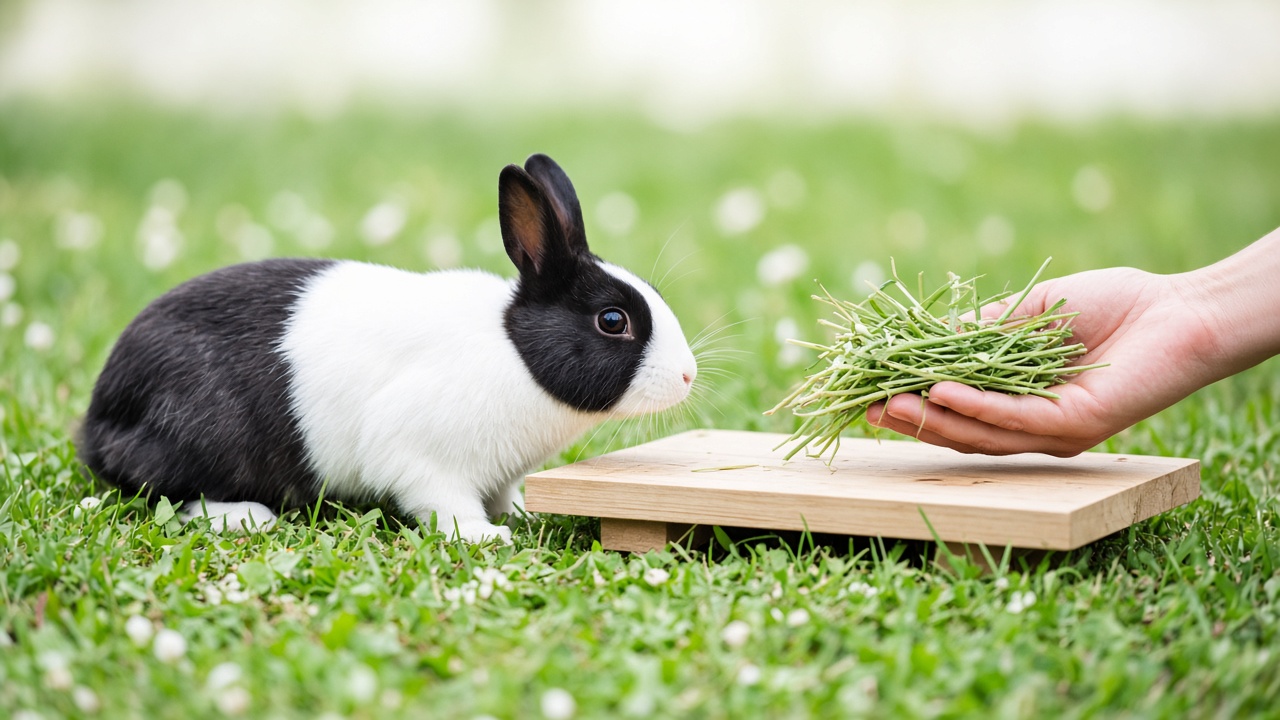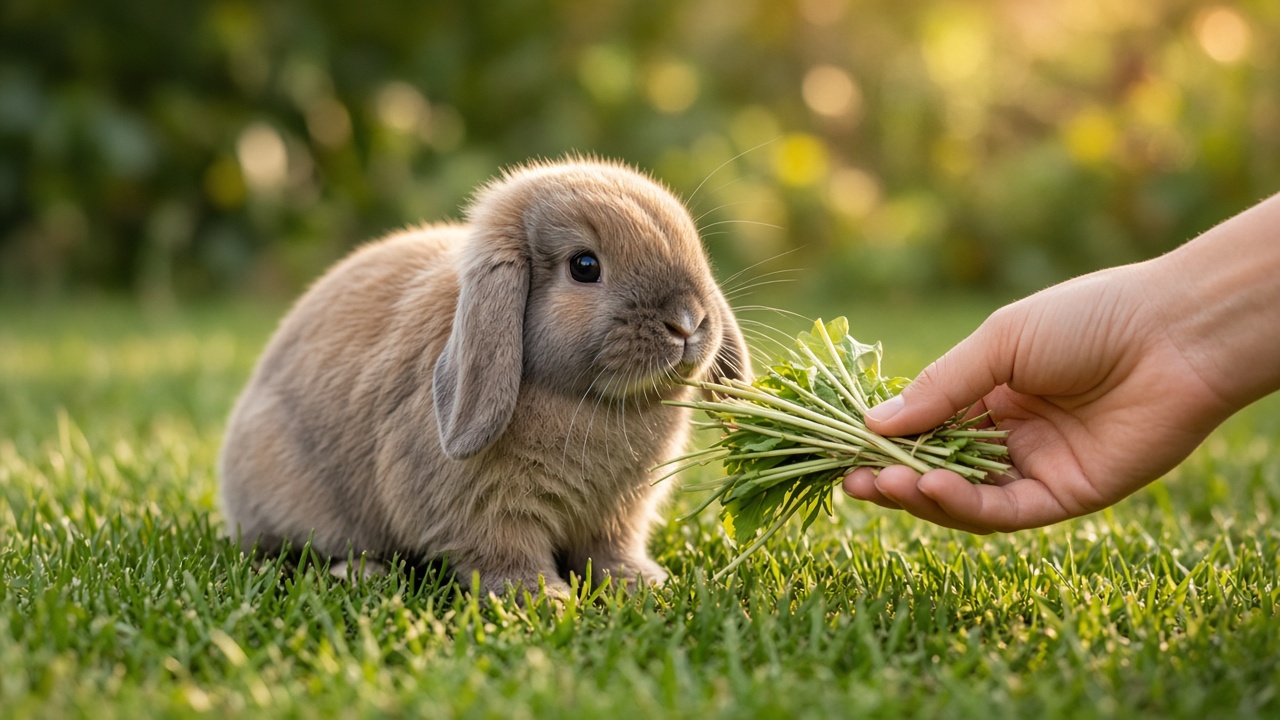
Quick answer: Keep a Holland Lop indoors on unlimited grass hay, a measured timothy pellet, and daily greens. Plan for a compact 2-to-4-pound adult and a multi-year commitment. Pair a rest pen with several hours of out-of-pen exercise.
A Holland Lop is a 4-pound-max lop rabbit that needs hay-first indoor care for 8 to 14 years. This page compares ARBA, House Rabbit Society, and maker labels, not housing, weighing, or feeding trials.
How we chose what to cover
We used one selection rule for products and scenarios. We included only current uniform adult pellets with a listed fiber minimum of 18% or higher.
That 18% floor is the House Rabbit Society’s published minimum for a good-quality pellet. We excluded muesli mixes, seed-and-fruit bags, and junior alfalfa formulas.
We also skipped any label that omitted a fiber minimum. We did not treat outdoor-hutch living as a recommended setup. House Rabbit Society treats indoor housing as the default for a house rabbit.
Our research team analyzed those published specs side by side. We did not invent missing feeding cups or missing nutrient lines.
What a Holland Lop is
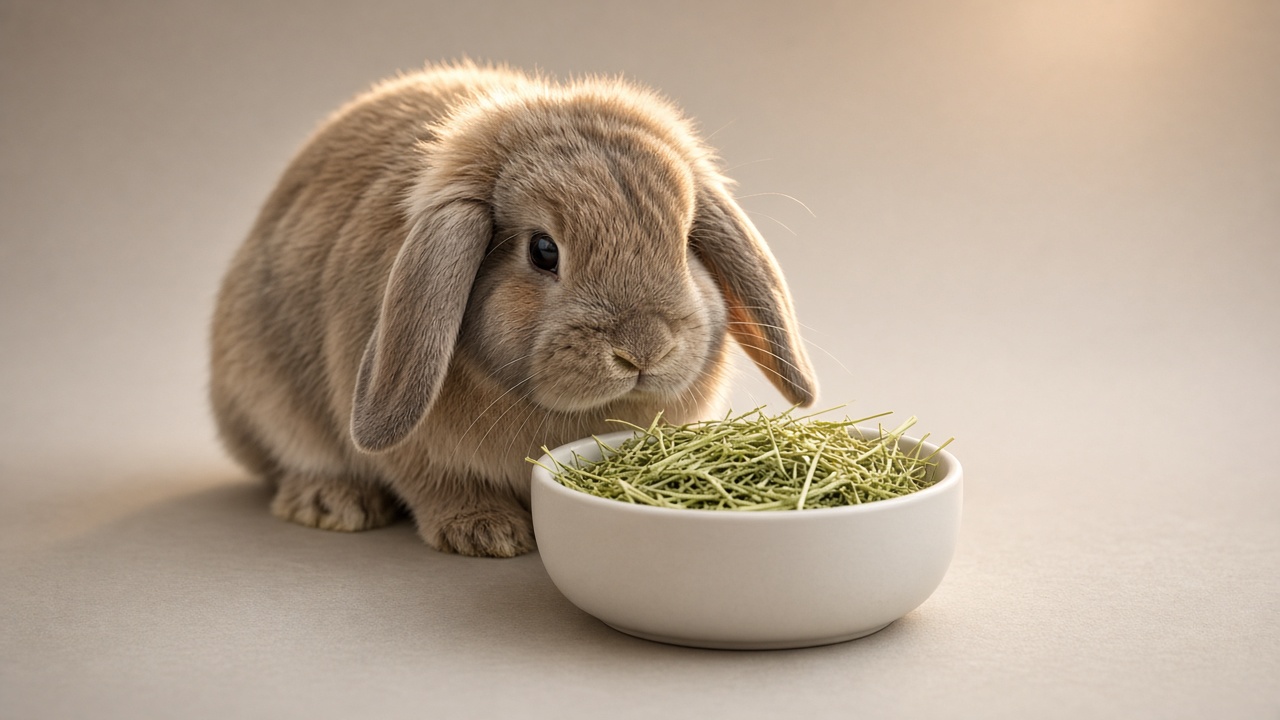
The American Rabbit Breeders Association recognized the Holland Lop in 1979. ARBA still lists a maximum weight of 4 pounds on its breed page.
ARBA credits Adriann de Cock of the Netherlands with the breed. The aim was a smaller lop than the French Lop.
ARBA now calls the Holland Lop one of its top five most popular breeds. The same page highlights a compact body, a large head, and lopped ears.
That 4-pound cap is a show rule, not a health diagnosis. A mixed “lop” sold without papers can grow past it.
Ask the seller for an ARBA pedigree if breed size matters. Compact size does not shrink hay or exercise needs.
Size, weight, and the 4-pound line
ARBA’s senior limit is 4 pounds. True adult Holland Lops often land between 2 and 4 pounds.
That whole adult range sits in one Oxbow feeding band. Oxbow Animal Health lists 1/8 cup of Essentials Adult Rabbit Food daily for 1-to-4-pound rabbits.
A 4-pound adult also sits under House Rabbit Society’s 6-pound diet unit. House Rabbit Society lists 1/4 cup of pellets per 6 pounds of body weight per day.
Scale that unit to 4 pounds. The proportional pellet amount is about 1/6 cup. That is close to Oxbow’s 1/8-cup band.
It is far below some “small breed” cup ranges on other bags. Do not treat a cage-store “lop” tag as an ARBA size claim.
Plan housing around stretch-out length. Do not plan it around a toy-breed myth.
Diet that fits a 2-to-4-pound adult
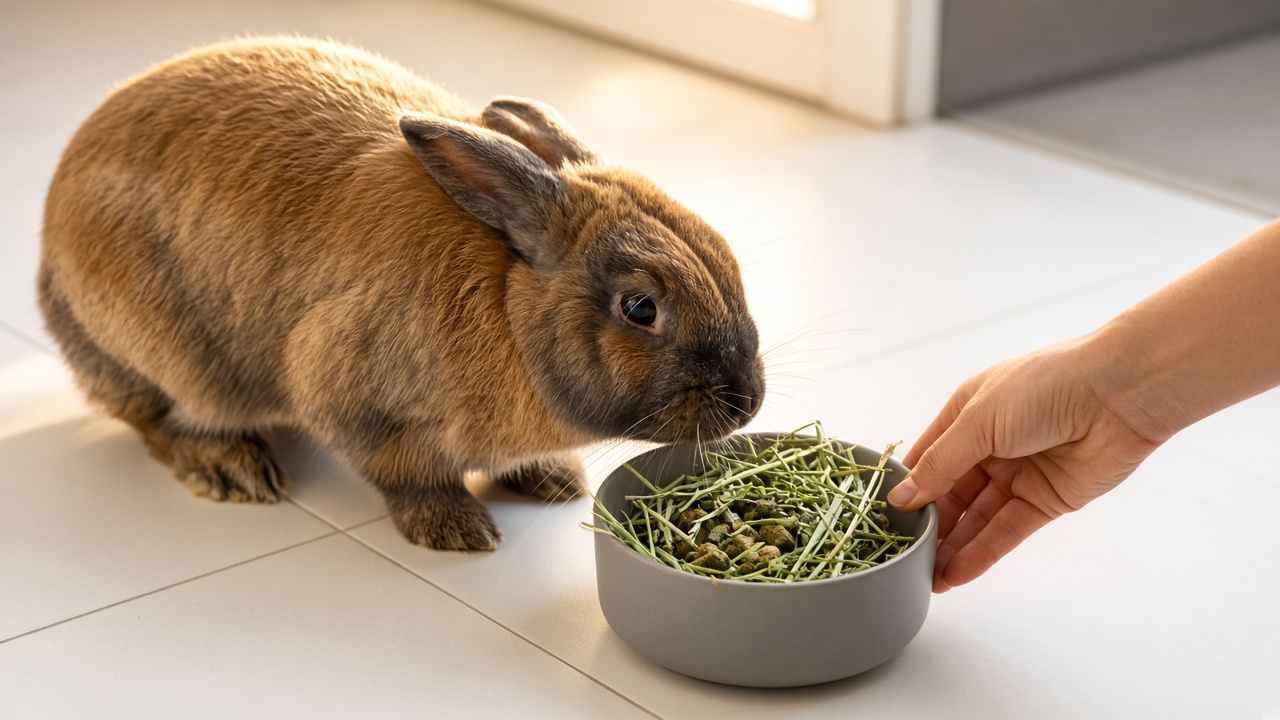
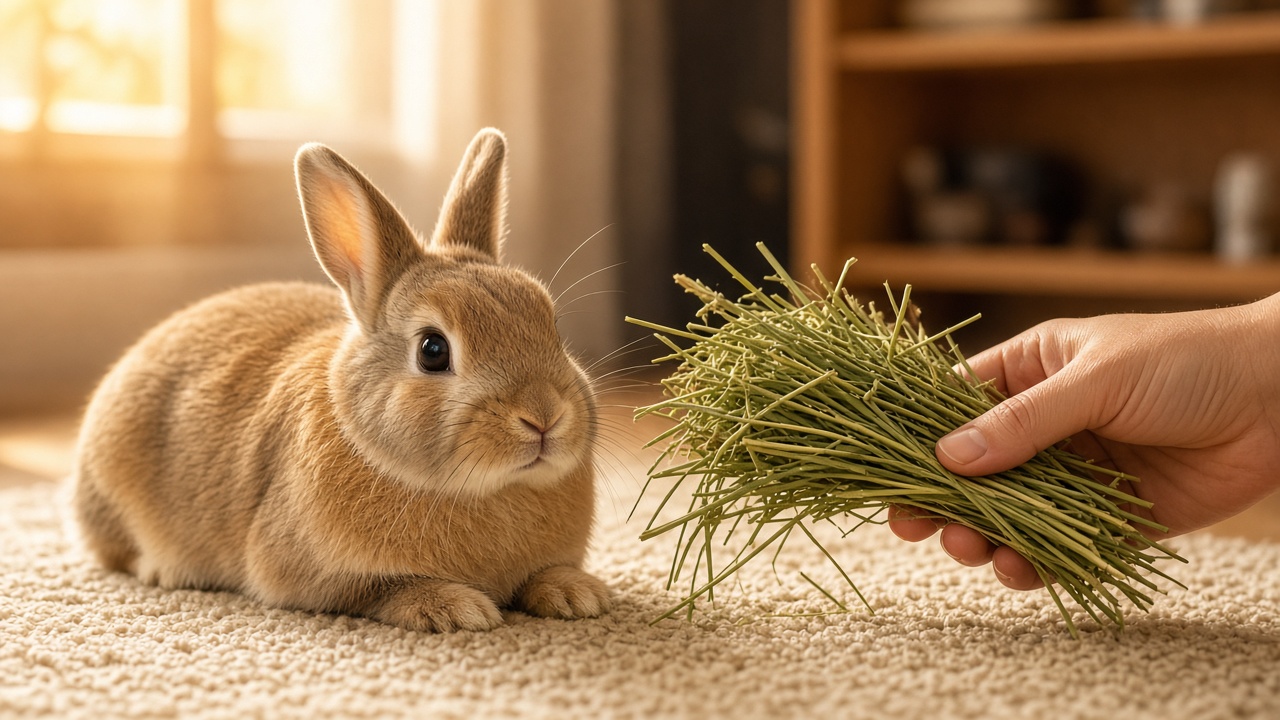
House Rabbit Society puts unlimited hay first for every adult. Timothy, orchard, oat, and other grass hays are the listed adult options.
House Rabbit Society reserves alfalfa hay for nursing mothers and young rabbits. Adult Holland Lops should not live on alfalfa hay as the staple.
House Rabbit Society wants at least 2 cups of chopped vegetables per 6 pounds each day. For a 4-pound adult, that scales to about 1.3 cups.
House Rabbit Society asks for at least three leafy green types daily. Leafy greens should make up about 75% of the fresh portion.
Non-leafy vegetables stay smaller. House Rabbit Society caps them at about 15% of the fresh portion. That is about 1 tablespoon per 2 pounds of body weight.
For a 4-pound adult, that non-leafy cap is about 2 tablespoons. Fruit is a treat, not a meal.
House Rabbit Society limits fruit to about 1 teaspoon per 2 pounds of body weight per day. That is about 2 teaspoons for a 4-pound adult.
House Rabbit Society cites Rabbit Hemorrhagic Disease Virus Type-2 on its diet page. It tells owners to wash all vegetables for at least two minutes.
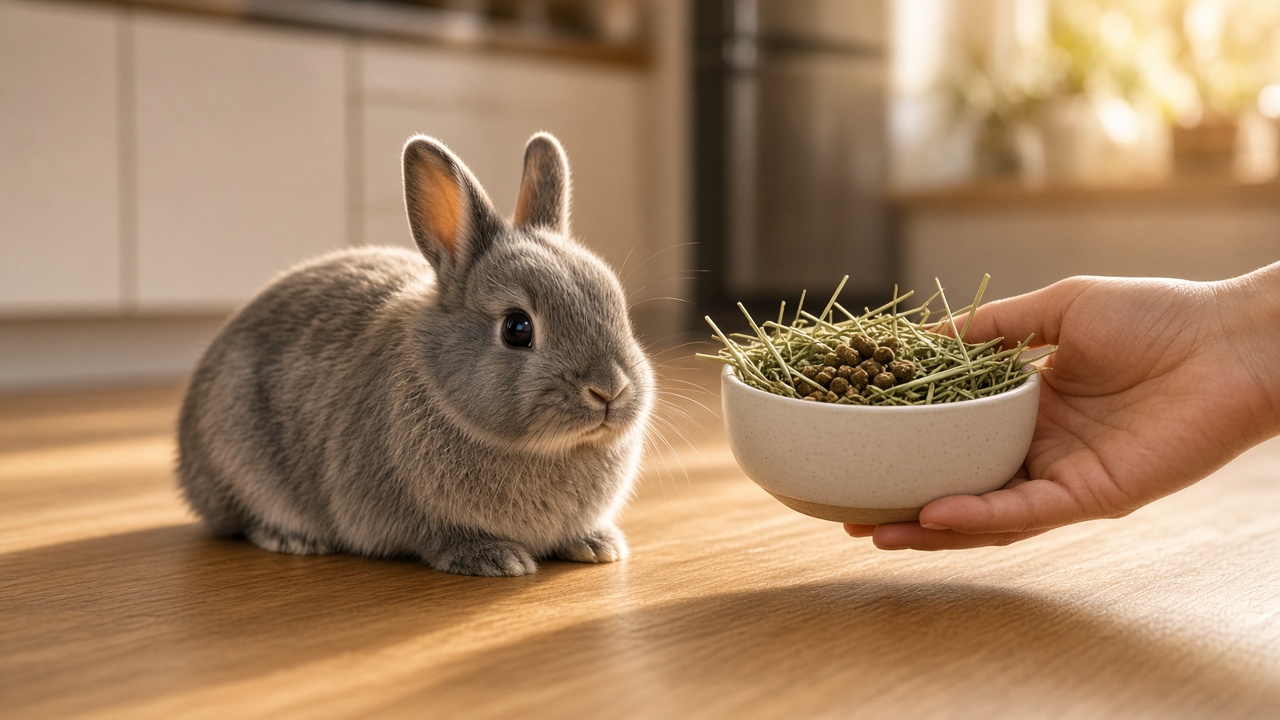
Pellets stay measured. House Rabbit Society lists 1/4 cup per 6 pounds for adults aged 1 to 5 years. It also wants 18% minimum fiber.
House Rabbit Society rejects pellets mixed with fruits, seeds, nuts, corn, or yogurt drops. Uniform pellets stop selective eating.
Young rabbits eat a different ration. House Rabbit Society gives unlimited alfalfa hay and alfalfa pellets from 3 weeks to 7 months.
From 7 months to 1 year, it lists grass hay and 1/2 cup of timothy pellets. It also lists 1 cup of greens.
On the diet page, House Rabbit Society starts a senior ration at 6 years. Unlimited grass hay stays in place.
Adult pellet labels we compared
The table below uses only numbers printed on the makers’ own product pages. It is an attribute grid, not a ranking.
| Product | First listed ingredient | Crude protein min | Crude fiber min | Crude fat min | Calcium max | Maker feeding note |
|---|---|---|---|---|---|---|
| Oxbow Essentials Adult Rabbit Food | Timothy grass meal | 14.00% | 25.00% | 2.00% | 0.75% | 1/8 cup daily for 1–4 lb adults |
| Science Selective Adult Rabbit Food | Alfalfa meal pellets | 12.5% | 21.5% | 3.0% | 1.2% | 2–2.5 oz daily for a 5.5 lb adult |
| Kaytee Timothy Complete Rabbit Food | Sun-cured timothy grass hay | 13.0% | 22.0% | 1.5% | 0.75% | 1/3 to 1/2 cup for a small breed |
| Mazuri Timothy-Hay Based Rabbit Diet | Ground timothy hay | 14.00% | 18.00% | 1.50% | 1.25% | Hay still required; no cup amount on the product page |
| Small Pet Select Rabbit Food Pellets | Timothy hay | 14% | 25% | 2% | 0.60% | 1/4 to 1/2 cup per 6 lb from ages 1–5 |
Across those five labels, minimum crude fiber ran from 18.00% to 25.00%. That is a 7-point spread on the same House Rabbit Society floor.
We call that comparison the 4-Pound Pellet Spread. It is a label read, not a feeding trial.
Oxbow lists a fiber maximum of 29.00% and calcium between 0.35% and 0.75%. Oxbow also prints vitamin A at 10,000 IU/kg and a four-week transition.
Science Selective’s US page lists rabbits aged 20 weeks and older. The first ingredient is alfalfa meal pellets. The fiber minimum still clears 18%.
Supreme Petfoods’ US page markets that food as 25% crude fibre. The guaranteed analysis on the same page lists a 21.5% minimum.
Its feeding example is 2 to 2.5 ounces a day for a 5.5-pound adult. Most Holland Lops weigh less than that example.
Kaytee lists 1/3 to 1/2 cup for a small rabbit breed. That cup range is two to four times Oxbow’s 1/8-cup band for the same 4-pound body.
Kaytee also prints a probiotic guarantee of 100,000 CFU/g. It tells owners to finish an opened bag in 30 to 45 days.
Mazuri sits on the 18.00% fiber floor. Its calcium maximum of 1.25% is the highest of the five labels we compared.
Mazuri lists a 1/8-inch by 3/8-inch pellet. It also lists a live-microorganism count of 270,000 CFU/g. The product page tells owners to store the bag at 75°F or colder.
Small Pet Select matches Oxbow’s 25% minimum fiber. Its calcium maximum of 0.60% is the lowest of the five.
Small Pet Select writes its adult ration as 1/4 to 1/2 cup per 6 pounds. That line covers ages 1 to 5.
AAFCO states that it does not regulate, approve, certify, or endorse pet food. State feed officials review labels. Read the bag in your hand, not a slogan.
Housing that is not cage-only
House Rabbit Society says a cage is a bedroom, not a home. Any cage should be 3 to 4 times the rabbit’s stretch-out length.
The sleeping and leisure area should be 4 times the size of the rabbit. House Rabbit Society calls a 4-by-4-foot exercise pen a workable base. Free-roam time still has to come with that pen.
House Rabbit Society wants 4 or more hours of cardiovascular play each day. That means running, jumping, climbing, and digging. It does not mean sitting in a hutch.
Necessary gear on that same page is simple. List a cushioned floor, water bowls, a food bowl, a litter box, hay, a hide, and toys.
House Rabbit Society prefers water bowls over bottles. The stated reasons are higher intake and easier daily cleaning.
Keep the setup indoors. House Rabbit Society’s outdoor-dangers page sets an ideal range of 60 to 75°F.
Below 50°F, that page flags hypothermia risk. Above 75°F, it flags heat-stroke risk.
Wire floors are a poor match for a 2-to-4-pound body. Give a solid, padded rest surface even if the pen has a grate.
Bunny-proof cords, houseplants, and baseboards before the first free-roam hour. House Rabbit Society treats chewing and digging as normal work, not as a phase.
Lifespan, ears, and daily checks
House Rabbit Society puts average rabbit life at 8 to 14 years. That figure is on its 2025 Easter care page.
The same page says an adult must be the primary caregiver. It also says a rabbit is not a short “starter” pet.
House Rabbit Society states that up to 80% of unspayed females develop uterine cancer by ages 4 to 6. Plan for a clinician who treats rabbits before you need one.
This desk does not examine animals. It does not write treatment plans.
A Holland Lop’s ears hang. Check them for odor, discharge, or constant scratching. Do not treat a dirty ear as a cosmetic issue.
Hay does dental work. House Rabbit Society notes that rabbit teeth grow continuously. Too little hay can create painful points.
Watch appetite and droppings every day. A rabbit that stops eating is an emergency, not a picky day.
FAQ
How big does a Holland Lop get?
The American Rabbit Breeders Association lists a 4-pound maximum on its Holland Lop page. True adults often land between 2 and 4 pounds. A rabbit sold as a “mini lop mix” can exceed that line.
How much should a Holland Lop eat each day?
House Rabbit Society wants unlimited grass hay plus measured pellets and greens. It lists about 1/4 cup of pellets and at least 2 cups of vegetables per 6 pounds.
A 4-pound adult scales to about 1/6 cup of pellets and about 1.3 cups of vegetables. Oxbow’s 1-to-4-pound band is 1/8 cup of Essentials Adult Rabbit Food plus unlimited hay.
Are Holland Lops good apartment pets?
They are quiet and compact. House Rabbit Society still wants a 4-by-4-foot rest pen and 4 or more hours of play. An apartment works when the floor is bunny-proofed.
A small cage in a closet does not.
How long do Holland Lops live?
House Rabbit Society states an 8-to-14-year average for rabbits with good care. ARBA does not publish a Holland Lop lifespan on its breed page.
Indoor housing and hay intake change the odds more than coat color.
Should I buy a seed mix because it looks like a forage diet?
No. House Rabbit Society says never to feed pellets mixed with fruits, seeds, nuts, corn, or yogurt drops. Our table includes only uniform adult pellets at or above that 18% fiber floor.
Mixes let a rabbit pick the sweet pieces and leave the fiber.
Do I need a special “Holland Lop” pellet?
No maker we compared sells a Holland Lop-only formula. Use an adult uniform pellet at or above the 18% fiber floor. Scale the cup to a 2-to-4-pound body.
Re-read the bag if the feeding line was written for a 5.5-pound rabbit.
Can two Holland Lops share one small cage?
House Rabbit Society sizes space by stretch-out length and play hours, not by breed nickname. Two rabbits need more floor than one.
A Holland Lop stays a small rabbit only on the scale. The care load is hay, space, and years.