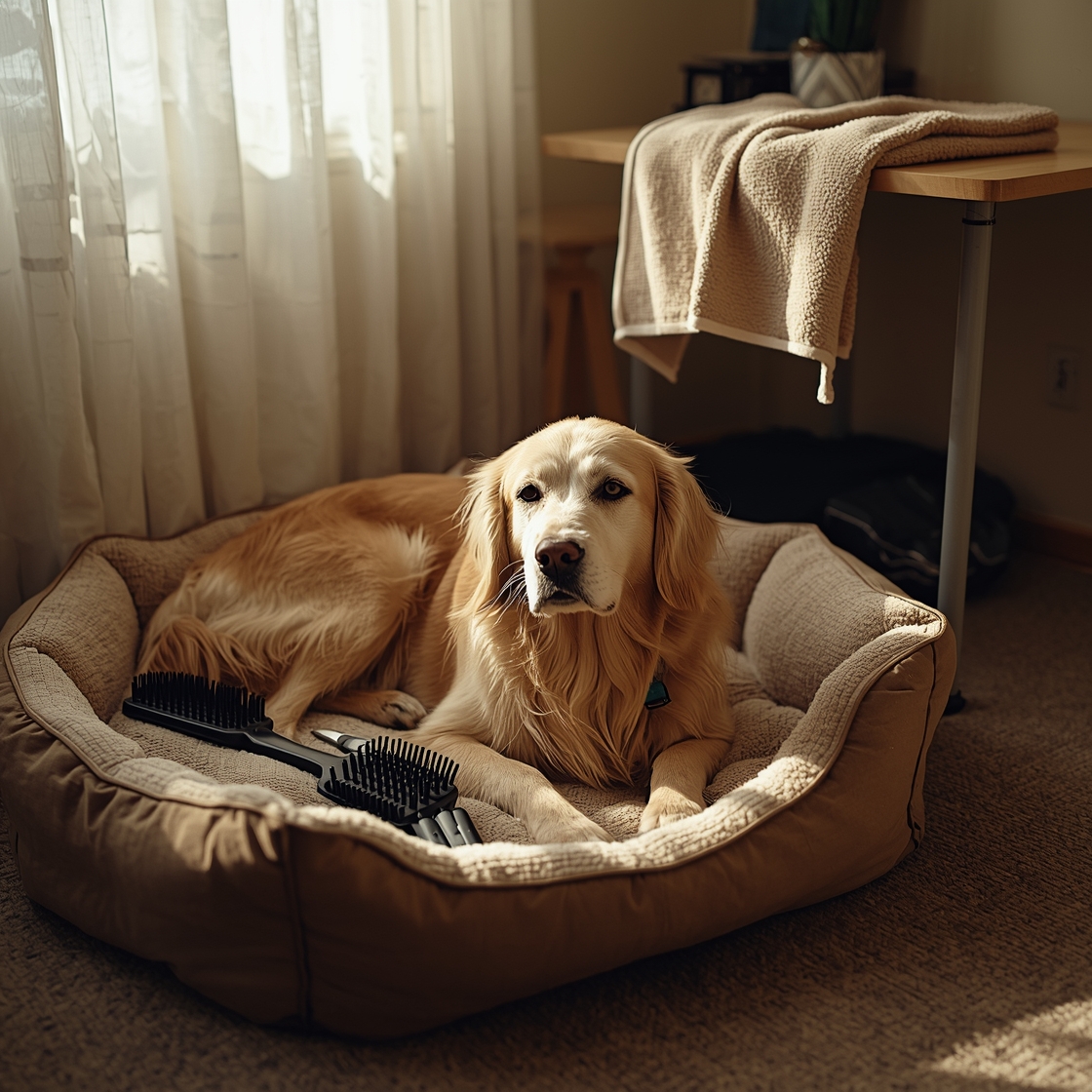
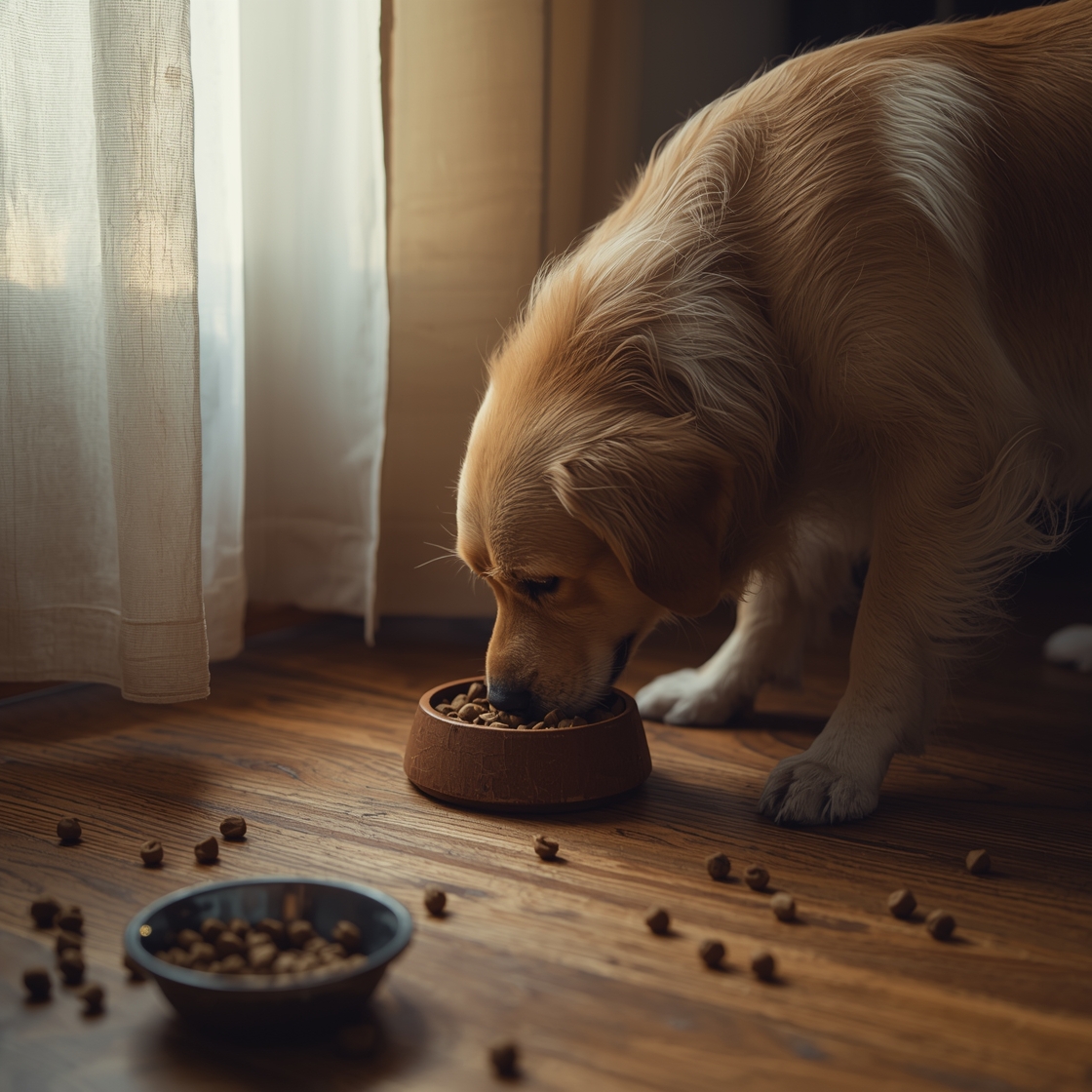
Quick answer: Watch for clusters of soft eyes, leaning, close stationing, and a loose whole-body greeting. A wagging tail alone is not affection. Pair those signals with calm shared routines such as grooming, slow feeding, or stuffed-toy play.
Dogs show affection through soft gaze, leaning, and a loose whole-body greeting—not a wagging tail alone. This page is a research brief that compares published body-language guides and hormone papers.
How we chose these 12 signs
Our research team used one rule: the Pet Bench Cluster Rule. A sign enters this list only if we found it in one of three sources we read. Those sources are the American Kennel Club body-language guide, the 2015 Science oxytocin-gaze paper, and the 2007 Current Biology tail study summarized by Nature.
We left out working-dog task scores. We left out medical differentials. We left out neonate puppy reflexes.
The American Veterinary Medical Association 2025 Pet Ownership and Demographic Sourcebook counted 87.3 million pet dogs in the United States. That survey reached 7,519 people and put dogs in 42.6 percent of households, with 1.6 dogs per dog-owning home.
Those counts explain why affection cues get misread. Many homes have more than one dog. Context matters more than any single gesture.
The 12 affection signs, in clusters
Read the package, not one body part. The American Kennel Club says no signal acts alone.
Soft-face cluster
1. Soft, relaxed eyes. The American Kennel Club describes soft eyes as calm or happy. Lids look loose, and the face may squint.
2. Sustained dog-to-owner gaze. In Science in 2015, Miho Nagasawa and colleagues measured dog-to-owner gaze during a 30-minute interaction. Only the long-gaze group—8 of 30 dog-owner pairs—showed a clear oxytocin rise in both partners.
3. A submissive grin with a loose body. The American Kennel Club separates this grin from a snarl. Front teeth may show, and the body stays wiggly, not stiff.
Hard stares are the opposite cue. The American Kennel Club treats a long, cold stare as a threat, not a cuddle request.
Contact cluster
4. Dog-initiated touching. The Science paper tracked owner touching and dog contact. Gaze duration explained more of the oxytocin change than touch did.
5. Staying inside one meter. Experiment 2 in that Science paper scored time spent less than 1 meter from the owner. Close stationing was treated as affiliation, not as a trick.
6. A relaxed belly roll. The American Kennel Club says a loose dog may ask for a rub, but the same posture can mean fear. Use it only with a soft face and a loose tail.
Greeting cluster
7. A slow tail that wags the whole rear. The American Kennel Club calls those long side-to-side sweeps a relaxed greeting.
8. A helicopter tail. The American Kennel Club says a circular spin is a happy greeting, usually aimed at a beloved person.
9. A stronger right-side wag toward you. Nature reported the 2007 Current Biology study by Angelo Quaranta, Marcello Siniscalchi, and Giorgio Vallortigara. They filmed 30 pet dogs and found tails biased right toward an owner and left toward a threatening unfamiliar dog.
Nature also warned the bias is hard to see without video. Treat it as a lab finding, not a hallway test.
Play-and-settle cluster
10. A play bow aimed at you. The American Kennel Club defines a play bow as chest down and rump up. Dogs use it to start play with people, not only with other dogs.
11. A neutral tail while settled near you. The American Kennel Club says a relaxed dog holds a breed-typical neutral tail. High flag tails read as assertive, and tucked tails read as fear.
12. Gaze that rises with more talk and touch. In the Science paper, dog-to-owner gaze correlated with talking and touching. Multiple regression still left gaze as the strongest oxytocin predictor in owners.
That twelfth sign is a pattern, not a pose. More mutual looking went with more affiliative contact.
What a wagging tail actually means
A wag is arousal. It is not a love stamp.
The American Kennel Club is blunt. Speed, direction, and height change the meaning. Fast twitchy wags can mark tension, and high flag tails can mark confidence that is not friendly.
Use the Cluster Rule here. Count a wag as affection only when the face is soft and the body is loose. Add proximity or a play bow if you have them.
Do not punish a tucked tail. That is stress, not spite.
The oxytocin loop behind soft eye contact
The 2015 Science paper tested a simple claim. Mutual gaze might run an oxytocin loop between dogs and people, as it does between a parent and an infant.
Experiment 1 compared 8 long-gaze dogs, 22 short-gaze dogs, and 11 hand-raised wolves. After 30 minutes, long-gaze owners showed the largest oxytocin change. Wolves rarely held mutual gaze, and their handlers did not show the same rise.
Experiment 2 used 27 volunteers. A nasal oxytocin spray increased owner-directed gaze in female dogs, not males. Owners of those female dogs then showed higher urinary oxytocin, even though the people received no spray.
The authors flagged the small sample. They also noted the sex split. Our research team reports those limits as written.
This is not a home chemistry kit. It is a reason soft eye contact belongs on an affection list.
Shared routines that invite those signals
Affection signs show up during calm, repeatable contact. Mealtime, coat care, and paw handling are three of those windows.
Comparing published specs, our research team kept products that support a shared ritual. We skipped gadgets that only occupy a dog in another room.
The Association of American Feed Control Officials lists eight required items on a pet food or treat label. AAFCO does not certify or endorse those products. If you stuff a toy, use a labeled treat with a species line and a quantity statement.
KONG Company lists the Classic as 100 percent natural rubber, made in the USA. The Medium size measures 2.25 by 2.25 by 3.5 inches. KONG’s size chart lists Medium for dogs 5 to 35 pounds, six sizes from XS through XXL, and a red Classic sold since 1976.
Outward Hound lists the Fun Feeder Slo Bowl, Gray, Large as a 3-cup maze bowl. The maker says ridges can slow eating up to 10 times. The bowl is listed as BPA, PVC, lead, and phthalate free, with a non-slip base and top-rack dishwasher cleaning.
If meals vanish in seconds, use a maze bowl. See our guide to the best slow feeder dog bowl for fast eaters. A slower bowl keeps you in the room, which is when soft eyes appear.
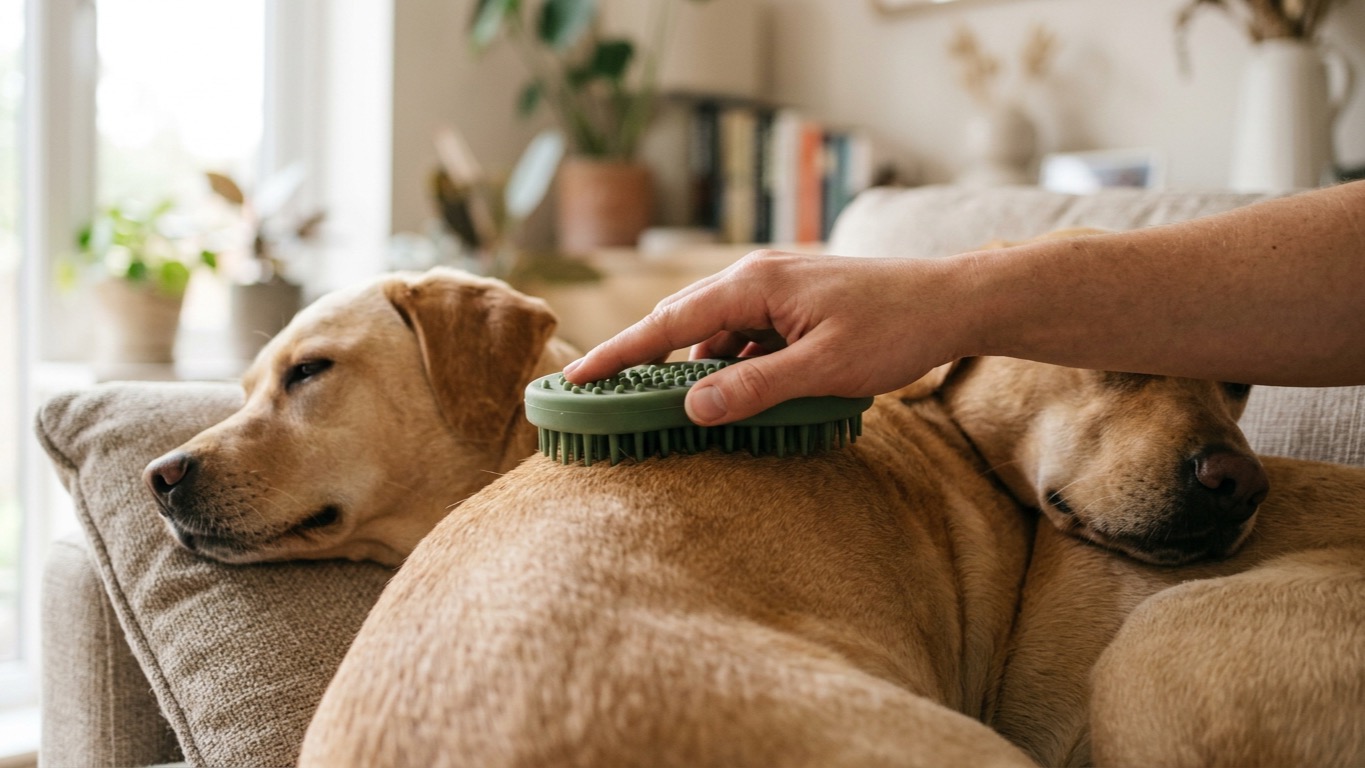
FURminator lists the Dog L Long Hair undercoat tool as cutting loose shed hair up to 90 percent with regular use. The maker’s page says to work 10 to 20 minutes, one to two times a week, and more often in heavy shed season.
For double-coated dogs, deshedding at home is a longer calm session. Stop if the dog shows whale eye. The American Kennel Club flags visible eye whites as stress.
Dremel lists the 7760-PGKD Deluxe Pet Nail Trimming Kit with a 4-volt battery. The tool is 7.5 inches long and 1.5 inches wide. The maker specifies a 45-degree paw guide and a 2-year warranty.
Thick nails can make paw handling tense. Read our best dog nail grinder for thick nails briefing. Short, quiet sessions beat one long struggle.
LickiMat lists the Classic Buddy at 8 by 8 by 0.3 inches in food-grade TPR rubber. The maker calls it freezer safe, microwave friendly, and dishwasher safe, and says not to use peanut butter on the Buddy.
| Product | Maker-listed build | Listed size or capacity | Ritual it supports |
|---|---|---|---|
| KONG Classic (Medium) | 100% natural rubber, USA | 2.25 × 2.25 × 3.5 in; Medium 5–35 lb | Stuffed chew and fetch you share |
| Outward Hound Fun Feeder Slo Bowl, Gray, Large | BPA-, PVC-, lead-, phthalate-free; non-slip | 3 cups; maker claims up to 10× slower meals | In-room mealtime with check-ins |
| FURminator Dog L Long Hair | Stainless-steel edge; FURejector button | 10–20 min, 1–2 times weekly | Coat care as calm contact |
| Dremel 7760-PGKD Deluxe Pet Nail Trimming Kit | 4 V battery; 45° paw guide | 7.5 in long, 1.5 in wide | Short, guided paw handling |
| LickiMat Classic Buddy | Food-grade TPR; no peanut butter | 8 × 8 × 0.3 in | Lick work during wait or recovery |
None of these tools create love. They create minutes when gaze, lean, and a loose body can show up.
Signals that look like love and are not
The American Kennel Club lists several cues people misread.
Yawning often marks stress, not boredom. Lip-licking can mark unease, not a request for a kiss. Looking away is a calming move, not stubbornness.
A belly-up freeze with a stiff tail is not a cuddle ask. Whale eye during a hug is a stop sign.
Jumping can be arousal, not affection. Pair it with a tight mouth and you have a greeting that needs a reset, not a reward.
Sudden clinginess after a change in appetite or gait sits outside this brief. A clinic can sort pain from attachment.
FAQ
Does a wagging tail mean my dog loves me?
No. The American Kennel Club says a wag marks emotional arousal. A slow, whole-body sweep plus a soft face is the friendly package, while a high, twitchy wag can mark tension.
Is staring a sign of affection?
Soft, blinking mutual gaze can be affiliative. The 2015 Science paper linked longer dog-to-owner gaze with higher urinary oxytocin in the long-gaze group of 8 pairs. A hard stare is a different signal.
Why does my dog lean on me?
Leaning is contact-seeking. The Science team treated touch and proximity under 1 meter as affiliative measures. Confirm it with a loose body; a hard lean during a growl is not a hug.
Do dogs feel love the way people do?
They show an oxytocin-linked loop with people. Nagasawa’s Science paper found that loop in dogs, not in 11 hand-raised wolves after the same 30-minute setup. That is bonding biology, not a human diary.
Can I invite more of these signs at home?
Yes, with short, calm repeats. Stuff a KONG Classic, or use an Outward Hound Fun Feeder Slo Bowl so meals last. Keep FURminator sessions to the listed 10 to 20 minutes, and stop when the face tightens.
Do all breeds show affection the same way?
No. The American Kennel Club notes that neutral tail height depends on breed. A Chow Chow’s curl is not the same baseline as an Italian Greyhound’s low tail, so learn your dog’s idle posture first.
When is clinginess a problem?
When it arrives with other sudden changes. This brief covers published affection cues. It does not diagnose pain, separation distress, or illness.
The Cluster Rule still helps on an ordinary Tuesday. Count soft eyes, a loose greeting, and close stationing before you call it love.