Quick answer: Catnip works when a cat smells nepetalactone, not when it swallows the herb. That odor briefly turns on the mu-opioid pathway and a short play bout. Offer a pinch of dried leaf to an adult, then wait at least an hour.
Nepetalactone in catnip triggers a 5-to-15-minute mu-opioid response in roughly two-thirds of adult cats. This page is a research-desk explainer of that smell-to-brain path. We did not run cat trials, did not distill oils, and did not rank products.
Selection rule: We used the Scent-Path Rule. A product entered only if its maker names the scent path: loose leaf, flake, or stuffed herb. We left out treats, unconfirmed sprays, CBD mixes, and retailer-only SKUs.
Smell starts it, swallow does not
Catnip is Nepeta cataria, a mint-family herb. The active odorant is an iridoid called nepetalactone.
Science Advances reports that cats sense these plant iridoids through the main olfactory system. The same paper states that oral nepetalactone induces no response.
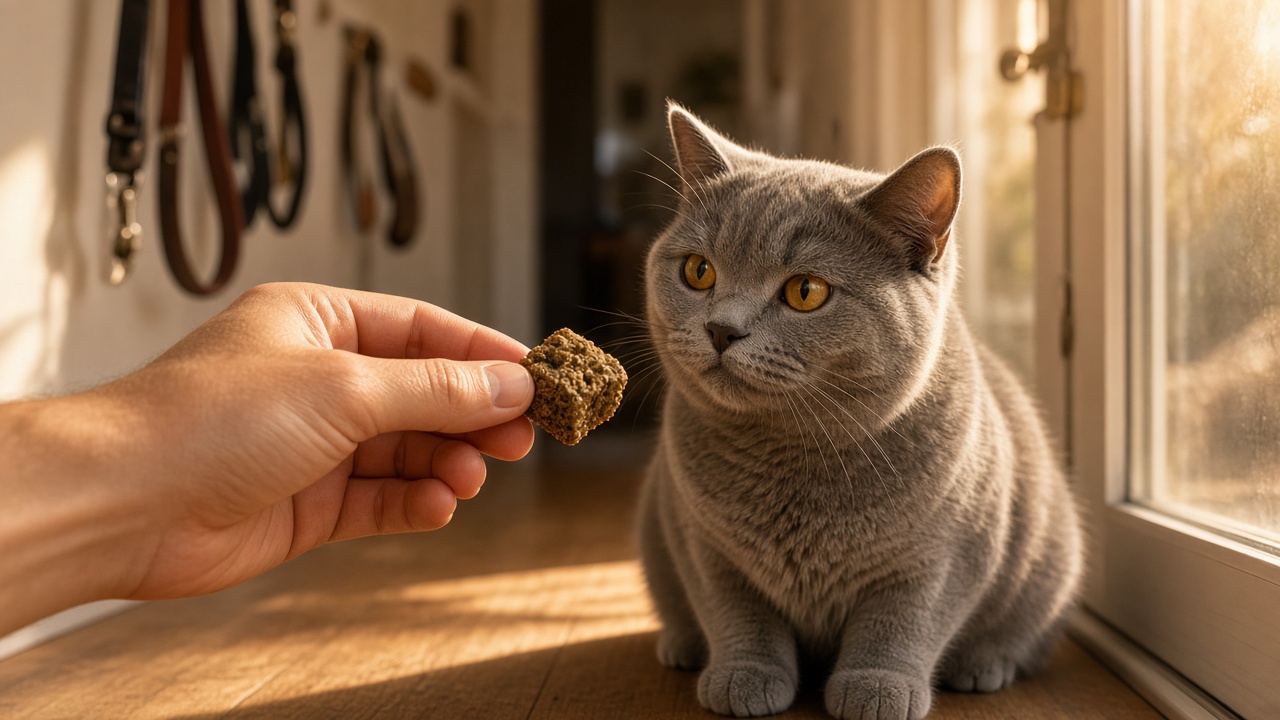
That’s the first practical split. A pinch held near the nose can work. A treat swallowed whole often will not.
Yeowww! names nepetalactone as the compound cats respond to. The maker uses only leaves and flower tops from U.S. farms.
No chemicals or pesticides are used in that cultivation, according to Yeowww!. Breaking a dried leaf still sends more odor into the air.
The pathway is chemical, not thermal. Dog cooling mats dump heat by contact. They do not work by odor.
What the brain does for five to fifteen minutes
Science Advances, from the Iwate University team led by Reiko Uenoyama, mapped the next step. Olfactory input raises plasma beta-endorphin. Mu-opioid receptors then drive the classic rub-and-roll bout.
The paper used 200 micrograms of nepetalactol, a close silver-vine iridoid. That dose matched about 10 leaves.
After naloxone at 0.2 milligrams per kilogram, rubbing time fell. Walking and grooming did not. The block was specific to the plant response.
The same paper times the bout at 5 to 15 minutes. Interest then drops for one or more hours.
Yeowww! describes a longer window. Its catnip page says licking, tumbling, bunny-kicking, rubbing, and slobbering typically last about 20 minutes. Then the cat resets.
Those two clocks can both be true. Lab assays stop when the cat leaves the paper. Home play can look longer.
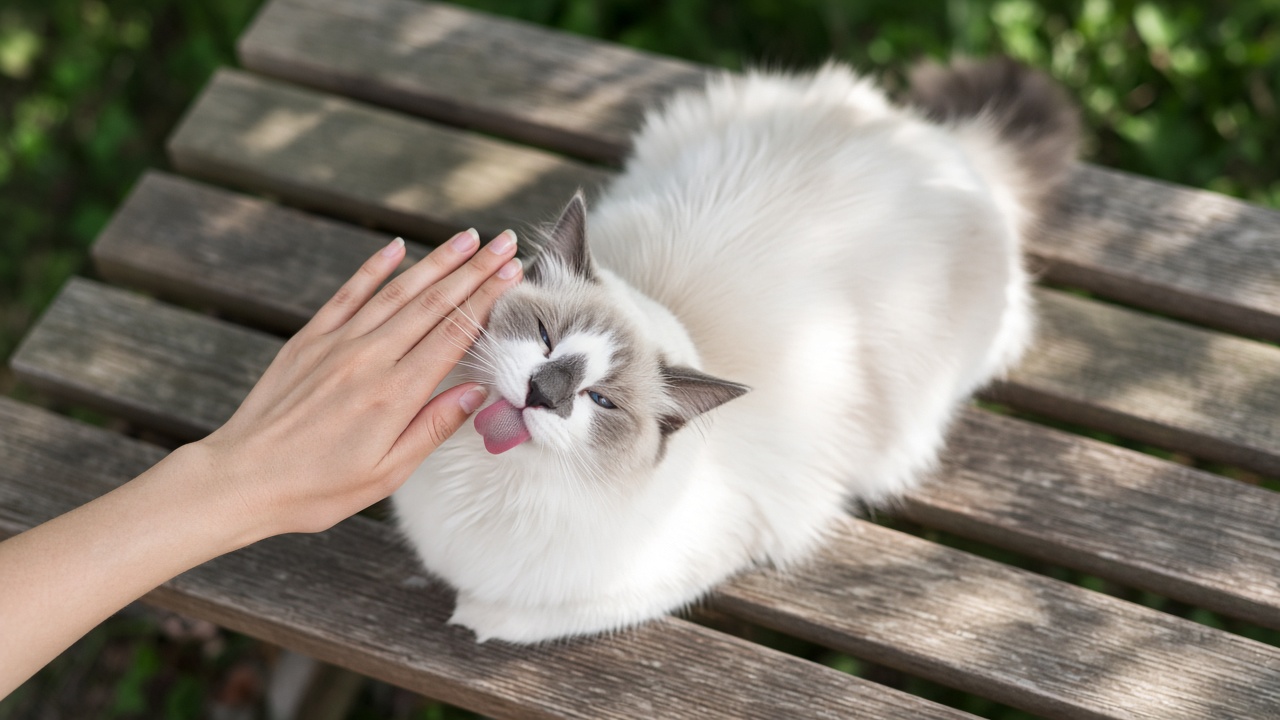
Common moves are sniffing, licking, cheek rubs, rolling, drooling, and hind-leg kicks. Science Advances notes that cats did not show a flehmen-like grimace toward nepetalactol paper.
The paper also found no sexual split among adults. Intact males and females both responded.
Why about one in three cats walk away
BMC Veterinary Research tested 100 domestic cats on four plants. Sixty-eight percent responded to catnip.
That left 32 of 99 scored cats as catnip non-responders. The paper pooled older work and got 53 non-responders out of 170 cats, or 31 percent.
Science Advances saw a similar split in the lab. Eighteen of 25 cats, or 72 percent, were positive responders to silver-vine extract.
The trait is heritable. BMC Veterinary Research treats non-response as a known, stable pattern. It is not a training failure.
Age still matters for intensity. Science Advances states that response strength increases with maturity.
A kitten that ignores a pinch isn’t a final verdict. Retest after the cat is an adult.
Sex and “shy versus friendly” did not predict BMC’s scores. Scared cats responded as often as affectionate cats.
If your cat sniffs once and leaves, stop stacking more herb. The receptor path is likely absent or weak.
Silver vine when catnip fails
BMC Veterinary Research is the clean comparison set. Seventy-nine percent of the 100 cats responded to silver vine.
Tatarian honeysuckle drew 53 percent. Valerian root drew 47 percent.
Of 31 cats that ignored catnip, 71 percent still responded to silver vine. Thirty-two percent responded to honeysuckle. Nineteen percent responded to valerian.
Ninety-four of 100 cats responded to at least one of the four plants. Six cats responded to none.
Chemistry explains the swap. BMC measured 1,010 micrograms of cis-trans nepetalactone per gram of dried catnip.
Silver-vine fruit galls held only 3 micrograms per gram of that same compound. They were rich in actinidine, iridomyrmecin, and isodihydronepetalactone instead.
That’s the Iridoid Gap our research team logged while comparing those published assays. More cats answered silver vine even though catnip carried far more nepetalactone.
Science Advances quantified silver-vine leaf nepetalactol at 20.71 micrograms per gram of wet weight. Other iridoids in those leaves sat at 1.42 micrograms per gram or lower.
Dogs and mice did not copy the bout. Science Advances tested 8 dogs and 10 mice. None rubbed or rolled.
Rubbing is a chemical coat, not a mood show
The Iwate assays also asked why cats smear their faces on the plant.
Rubbing transfers iridoids onto fur. Science Advances put 500 micrograms of nepetalactol on one anesthetized head. Aedes albopictus landings fell to about half the control count.
Cats that had rubbed silver-vine leaves also drew fewer landings than unstimulated cats. Cats that smelled the leaves but did not rub did not gain that cover.
When papers sat on walls or a 116-centimeter ceiling, cats still climbed to rub. They did not roll if rolling would miss the source.
Rolling, then, is a coating move. It isn’t proof of a “high” in the human sense.
Science Advances calls the pattern nonaddictive. Endogenous beta-endorphin rises after smell. That isn’t the same as an injected opiate in the blood.
The paper also notes the first written silver-vine report in 1704 and a British catnip report in 1759. The behavior is old. The mosquito data are new.
What the ASPCA actually lists
The ASPCA plant database lists catnip, Nepeta cataria, as toxic to cats. The named toxic principle is nepetalactone.
Clinical signs on that page are vomiting and diarrhea. The ASPCA also says the plant makes some cats sedated and others stimulated.
That listing is easy to miss. Many explainers call the herb harmless. The ASPCA page does not.
Keep sessions small. Remove the pile if a cat gorges and then vomits.
Call a clinician if vomiting repeats or the cat collapses. Call if odd behavior lasts past the short bout. The ASPCA poison line printed on that page is (888) 426-4435.
Catnip is enrichment, not a treatment for pain, fear, or appetite loss. Don’t delay care while you wait for a pinch to “calm them down.”
After a hard roll, flakes and shed hair stick to fabric. A dedicated pet hair remover for car upholstery beats tape on seats.
Oil and dust also cling to the coat. The same home grooming tools that lift loose fur will lift leftover herb.
Forms you can buy, by scent path
Our research team compared published maker specs, not home trials. The table below uses attributes the makers list. It is not a ranking.
| Product | Form | Maker-listed size or fill | Plant material (maker claim) | Package note |
|---|---|---|---|---|
| Yeowww! organically grown catnip | Loose dried herb | No net weight on the maker explainer | Leaves and flower tops; U.S. farms; no pesticides | Cured blend; maker times a typical bout at about 20 minutes |
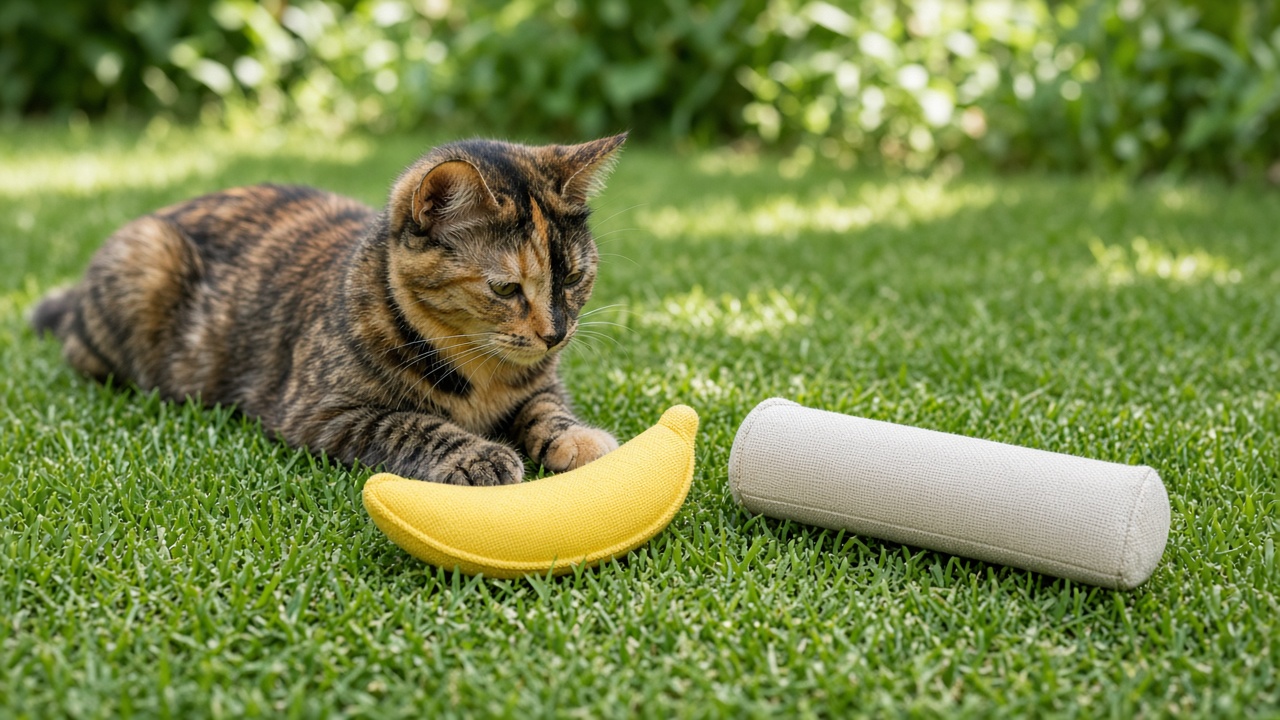
| Yeowww! Big Kicker | Cotton-twill kicker | 12 in long; over 2.5 oz of herb | 100% organically grown catnip; no fillers | Hand-packed in the USA |
| Yeowww! Pineapple | Cotton-twill toy | 1.45 oz of herb | 100% organically grown catnip; no chemicals | Crinkly spikes on the cover |
| Yeowww! Chubby Mouse | Cotton-twill toy | Over 3.5 in long and 2 in wide | Organically grown catnip fill | Made as a stuffed mouse |
| KONG Naturals Catnip | Loose flakes | 2 oz tin; SKU CN2 | 97% catnip, 3% crinkle film; North American; field-dried | Resealable portable tin |
Yeowww! sells toys by fullness, not by weight. The Big Kicker is a 12-inch kicker packed with over 2.5 ounces of herb.
The Pineapple holds 1.45 ounces. Chubby Mouse is over 3.5 inches long and 2 inches wide. All three are stuffed with the same organically grown blend.
KONG lists the 2-ounce tin for sprinkling on toys and scratchers, or for refilling KONG toys. The 3 percent crinkle film is a listed material, not a plant part.
Store sealed herb away from heat and light. Fresh odor is the whole product.
How to run a session at home
Use an adult cat first. Science Advances ties stronger bouts to maturity.
Offer a pinch of loose leaf, or one stuffed toy. Don’t dump the tin.
Watch for 10 minutes. If the cat ignores it, put the herb away. Try silver vine another day, given BMC’s 71 percent crossover.
If the cat rolls, let the bout end on its own. Then wait at least one hour. Science Advances describes a nonresponsive stretch of one or more hours.
BMC used a five-minute washout between different plants so one scent would not fake the next score. At home, give more space than that.
Don’t force a sock onto a cat’s face. BMC placed material in sight and let cats walk away.
Skip oils you cannot identify. A leaf you can reseal is easier to dose than a mystery dropper.
If two cats share a room, offer separate pinches. A single pile can turn into a fight over the scent source.
Bag leftover herb. Air-killed leaf is why last month’s toy smells like dust.
FAQ
How does catnip work in one sentence?
A cat smells nepetalactone. That odor lifts beta-endorphin and briefly drives rubbing, rolling, and play through mu-opioid receptors.
Why does my cat ignore catnip?
BMC Veterinary Research found that about one in three cats do not respond. The gap is common and heritable. Try silver vine before you decide the cat “hates toys.”
How long does a catnip response last?
Science Advances times the active bout at 5 to 15 minutes, then one or more quiet hours. Yeowww! describes about 20 minutes of tumbling before a reset. Plan on a short burst, not an afternoon.
Is catnip safe if a cat eats it?
The ASPCA lists catnip as toxic to cats and names vomiting and diarrhea as clinical signs. A small sniffed pinch is the usual home use. Pull the pile if the cat swallows a heap.
Do kittens respond to catnip?
Science Advances says response strength increases with maturity. A young kitten that walks away may still respond later. Retest when the cat is grown.
Does catnip work on dogs?
Science Advances tested 8 domestic dogs with nepetalactol paper. None showed the felid rub-and-roll pattern. Don’t buy catnip as a dog toy.
Can I use catnip every day?
Daily use trains a dull nose. Science Advances describes a refractory period of one or more hours after each bout. Space sessions by a day, and stop if the cat vomits or cannot settle.