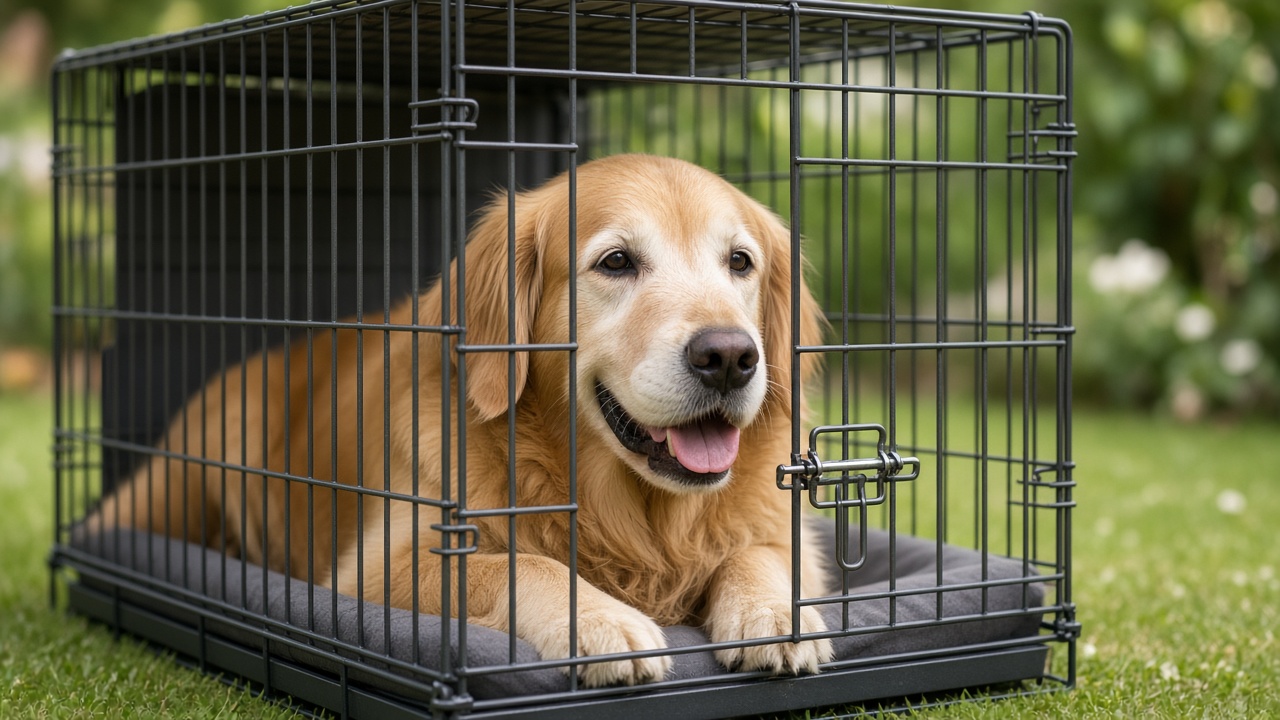
Quick answer: Time daytime crate stretches to about one hour per month of age. Size the crate so the dog can stand, turn, and lie down, then add a divider. Feed meals in the crate and take the dog out right after each stretch.
A 12-week-old puppy cannot stay crated longer than three daytime hours without a potty break.
This page is a research-desk schedule for first-home crate training. We did not run in-home crate trials, time overnight bladder holds, or crash-test any kennel.
Our research team analyzed published size charts and the American Kennel Club housetraining clock.
What this schedule covers, and the rule we used
We use one selection rule: the Published-Chart Rule.
A crate enters this guide only if the maker publishes a numeric size. That can be a size ladder or a listed L × W × H.
That same page must list a divider, an empty-crate weight, or a dog-weight band.
We skip fabric crates and crate furniture with no size numbers. We skip any model we could confirm only on a retailer listing.
The schedule covers first-home crate training. That means puppies from about 8 weeks and adult dogs new to a crate.
It does not cover medical crate rest. It does not cover storm-phobia protocols or multi-dog kennel runs.
The American Kennel Club says most puppies arrive home around 8 weeks. That is also when bladder control is weakest.
Mary Burch, Ph.D., directs the AKC Canine Good Citizen and S.T.A.R. Puppy programs. She still ties crate success to a consistent schedule.
Keep rewards ready. A treat pouch from a training-supplies kit helps you mark entry.
Size the crate before you start the clock
A loose crate wrecks the schedule. Extra floor becomes a bathroom corner.
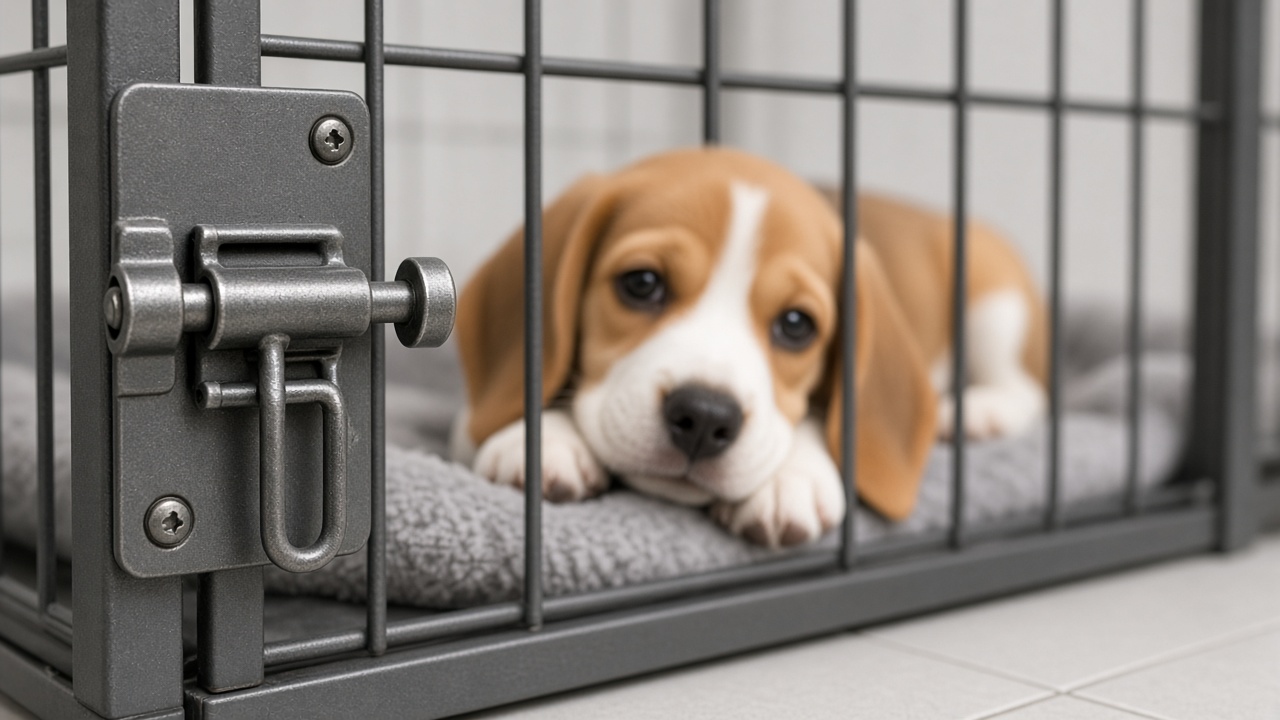
The American Kennel Club says the crate should let a puppy stand, turn, and lie down. It should not be so large that the puppy can toilet at one end and sleep at the other.
MidWest Homes for Pets tells buyers to measure nose to tail, then add a few inches. Measure standing height next, then add a few inches of clearance.
Petmate publishes a tighter number on its Sky Kennel page. The kennel should be 3 to 4 inches taller and longer than the dog.
Buy for adult size if you are raising a puppy. MidWest Homes for Pets sells eight crate sizes across its line. Use the divider to shrink the living space now.
The MidWest iCrate lists seven sizes, from 18-inch to 48-inch. The MidWest Life Stages crate lists six sizes, from 22-inch to 48-inch.
Both maker pages include a divider panel. MidWest says it should fit snug across the width, not the length.
Slide it back as the puppy grows.
A crate is a dog den. Outdoor cats need a different tool. See our harness fit page.
A daytime crate schedule by age
Call this the Age-Matched Clock. Daytime max hours equal age in months. Then you add a break.
The American Kennel Club states the same guideline. Puppies can generally hold urine for about as many hours as their age in months.
The cap is about 9 months to 1 year. A 6-month-old puppy may hold about six hours, as a ceiling.
Very young puppies need more trips.
The American Kennel Club says waking trips may come every one to two hours. Use the grid below for daytime only.
| Puppy age | Daytime max stretch | What the break is for |
|---|---|---|
| 8 to 10 weeks | 1 to 2 hours | Weak bladder at the typical 8-week homecoming |
| 12 weeks (3 months) | 3 hours | Age-Matched Clock at three months |
| 4 months | 4 hours | School-run or errand block |
| 6 months | 6 hours | Workday only if a midday outing is real |
| 9 to 12 months | 6 to 8 hours | Still add water, a walk, and a toilet break |
Do not stack two max stretches back to back. A 4-month-old who just sat four hours needs play and a potty trip first.
The American Kennel Club lists outdoor times after sleep, crate time, meals, water, and play.
That list can mean a dozen trips in one day for a young puppy. If you cannot hit that cadence, hire a walker or ask a neighbor.
An adult new to a crate still starts short. Close the door for five minutes, then ten, then a meal.
Night stretches and the first two weeks
Night is longer than day because the puppy is asleep. It is not a license to skip breaks in week one.
Plan a last potty trip after the evening meal has settled. Then crate the puppy in your bedroom so you hear the whine.
For an 8-week-old, set one alarm in the small hours. Carry the puppy out, keep lights low, and return with no play session.
If the crate is soiled, the space is too big or the stretch was too long. Clean it, move the divider in, and shorten the next block.
By 12 weeks, many puppies drop to one night break. Some still need two.
The Age-Matched Clock is a daytime rule. Night success is the dry-morning test.
Do not punish a night accident. The American Kennel Club treats a prompt outdoor trip as the teaching moment.
If panic starts, end that session. Frantic vocalizing, clawing, or drooling means the crate is not a den yet.
Week two is for stacking quiet time while you are home. Close the door while you shower, then while you cook, then leave the room.
The introduction steps that make the schedule work
The schedule fails if the crate still feels like a trap. Teach entry before you teach duration.
Park the crate in a lived-in room. Leave the door tied open for a full day. Drop treats just inside the threshold.
On day two, feed one meal at the crate mouth. On day three, slide the bowl one body length in.
Sit on the floor. Do not push the dog.
When the puppy eats fully inside, close the door for three bites. Open it before the puppy finishes.
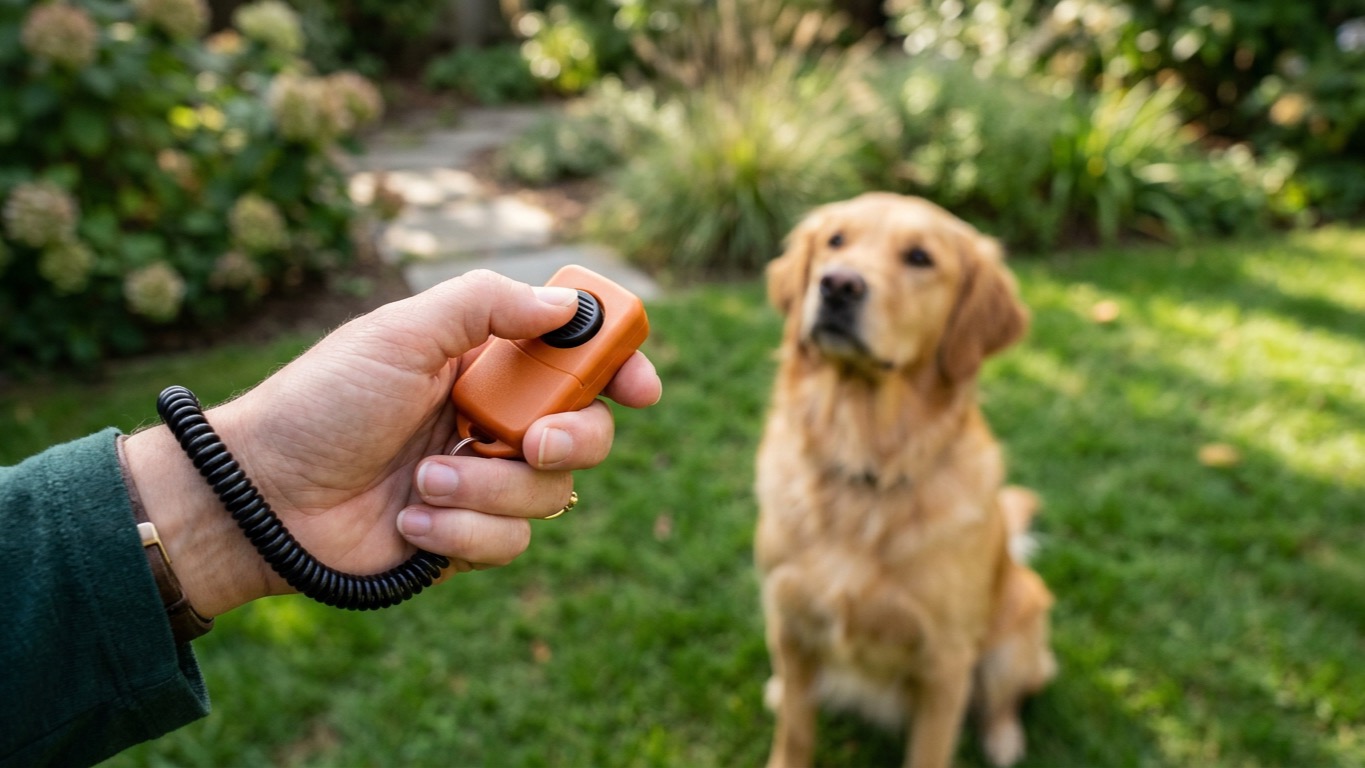
Repeat until the click of the latch is boring. Then add a stuffed chew only after those short closes stay calm.
Stay in the room. Return while the chew is still interesting, then open the door.
Name the behavior once it is easy. Say “crate” as the puppy steps in, not while you chase.
Never send the dog in as a penalty after a chew or a jump. The den job and the timeout job cannot share one box.
If you later need the same kennel for a flight, finish the home schedule first. Then read our large-dog flight guide before you change hardware.
Home crates we compared on published attributes
Our research team compared maker-listed numbers on five currently sold crates. We did not rank them. We lined up one mid-size example from each line.
Empty weight in that mid-size class ran from 20.75 lb to 48 lb. The light end is the Petmate Sky Kennel 36-inch. The heavy end is the GUNNER G1 Intermediate, a 2.3-times spread.
Interior length in the same class ran from 30 inches to 34.5 inches. The short end is the GUNNER G1 Intermediate. The long end is the Impact Collapsible 34-inch Intermediate.
The Petmate Sky Kennel 36-inch lists 32.5 inches of interior length.
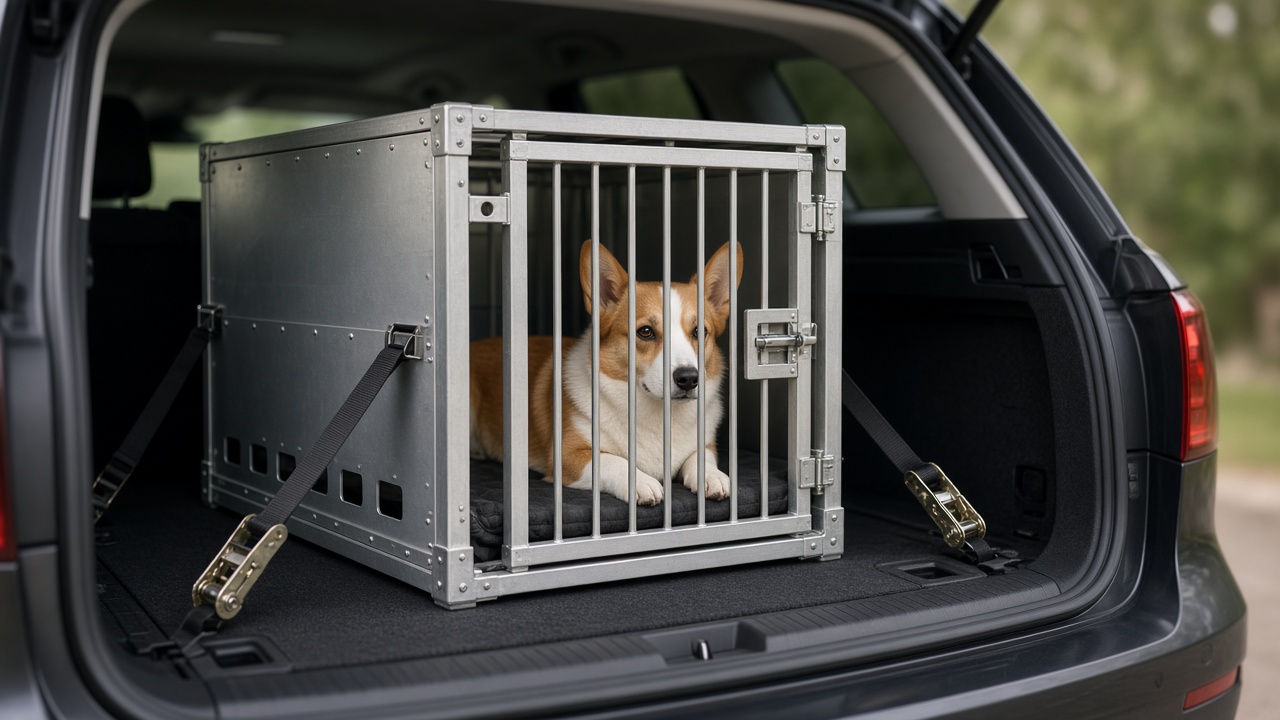
Petmate lists a 90 percent pre-consumer recycled EcoTEC plastic body. It states compliance with the 51st edition (2025) of the IATA Live Animals Regulation.
Only the 21-inch and 28-inch Sky Kennels include a handle. The 21-inch Sky Kennel lists a dog-weight band up to 15 lb and a 6.27 lb kennel weight.
The 48-inch Sky Kennel lists 90 to 125 lb dogs and a 51.5 lb kennel. GUNNER Kennels lists a 27 lb empty weight for the G1 Small.
The G1 Large lists a 72 lb empty weight. Carry handles on the Intermediate raise listed height from 28.5 inches to 30 inches.
Impact Dog Crates lists 0.817-inch ventilation holes on the Collapsible line. The 24-inch Small is listed at 23.25 lb.
The maker says the crate is ready in under 60 seconds. Impact also states it no longer advertises the Collapsible crate as airline-approved.
| Model | Body | Listed size | Listed weight or fit | Divider | Other listed spec |
|---|---|---|---|---|---|
| MidWest iCrate 36-inch | Folding wire | One of 7 sizes, 18–48 in | Size ladder | Yes | Paw Block; folds flat |
| MidWest Life Stages 36-inch | Folding wire | One of 6 sizes, 22–48 in | Size ladder | Yes | Low threshold |
| Petmate Sky Kennel 36-inch | Plastic travel | Exterior 36 × 25 × 27 in; interior 32.5 × 22 × 26 in | 50–70 lb dog; kennel 20.75 lb | No | No handle at 36 in |
| GUNNER G1 Intermediate | Rotomolded | Interior 30 × 18 × 25 in; exterior 34 × 23 × 28.5 in | Empty weight 48 lb | No | Handles to 30 in H |
| Impact Collapsible 34-inch Intermediate | Aluminum, folds | 34.5 × 23 × 29 in | Crate weight 35 lb | No | 0.817 in vent holes |
Wire crates with a listed divider are the housetraining default. Plastic and aluminum boxes earn a look when travel is already on the calendar.
For a growing puppy, buy adult length in a MidWest iCrate or MidWest Life Stages. Use the divider now.
When the schedule is done, and when to stop
Crate training is finished when two things are true. The dog enters on a cue. The dog stays dry for the Age-Matched Clock.
You can then leave the door open during the day. Many dogs still nap inside. Keep the crate for car rides and hotel nights.
Persistent howling, smashed bedding, or wet crates after short holds are stop signs. Switch to an exercise pen with a potty zone, or hire midday help.
Do not use the crate as all-day housing. The clock is a maximum, not a lifestyle.
FAQ
How long can a puppy stay in a crate during the day?
Use the American Kennel Club hour-per-month guide. A 3-month-old puppy gets about three hours. A 6-month-old puppy may reach about six hours.
Very young puppies still need waking breaks every one to two hours. Treat those numbers as ceilings.
How long does crate training take?
The American Kennel Club notes a wide range. Some puppies form the habit in a few days. Others need months after a messy first home.
Plan on two calm weeks to teach entry. Then add duration only as the Age-Matched Clock allows.
What size crate does a puppy need?
Measure nose to tail and standing height. MidWest Homes for Pets says add a few inches to both.
Petmate says add 3 to 4 inches of length and height. Buy the adult size and use a listed divider so the puppy cannot toilet in a spare corner.
Should I crate my dog at night?
Yes, if the crate is already a feeding spot and the puppy can settle. Keep it in the bedroom for the first weeks.
An 8-week-old still needs at least one night potty trip. Night length is not the same as the daytime Age-Matched Clock.
Can I crate an adult dog that was never crate trained?
Yes. Start with an open door and meals.
Close the door for seconds, not hours. Adult bladders hold longer than puppy bladders, but fear can erase that advantage.
If the dog panics, stop and rebuild in shorter sessions.
When should I stop using the crate?
Stop closed-door confinement when the dog is reliably dry and can rest loose in a puppy-proof room. Keep the crate available.
Drop forced stretches that exceed the Age-Matched Clock. A crate is a tool for unsupervised hours, not a substitute for a walk.
Is a plastic airline kennel OK for housetraining?
It can be, if the interior matches stand-turn-lie-down and you add a temporary divider. The Petmate Sky Kennel 36-inch lists 32.5 inches of interior length for 50 to 70 lb dogs.
A wire crate with a maker-listed divider is simpler for a growing puppy.