Quick answer: Count chest rises while your dog is asleep or lying still, not panting. Fifteen to 30 breaths per minute is the usual home range. A rate that stays above 30, or looks labored, is a same-day clinic question.
Most dogs take 15 to 30 breaths per minute while resting or sleeping, and a count stuck above 30 is not normal. This page is a research-desk briefing on published home and clinic ranges. We did not time any dog’s breaths, run a kennel study, or examine patients.
A single “normal” number hides two settings. Sleeping counts run lower than quiet-awake counts. Clinic tables also sit higher than living-room logs.
Our research team analyzed those published gaps. We then compared maker specs for tools that help a household count or record breaths.
The Quiet-Count Rule: what this page includes
We used one selection rule. A product or scenario had to help a person count, hear, or trend breaths while a dog is still.
That is the Quiet-Count Rule. If a maker page did not list a rest-breath function, the item stayed out.
Activity-only GPS collars did not make the cut. Toys did not. Clinic pulse oximeters that need a clipped ear did not.
We limited medical claims to organizations we actually read. Maker pages named below supplied product specs.
We did not rank products. We did not sort them by price.
Resting versus sleeping: two different counts
VCA Animal Hospitals puts the home range at 15 to 30 breaths per minute. That range covers rest, sleep, quiet heart disease, and well-controlled heart failure.
The Journal of the American Veterinary Medical Association reported a tighter split in 2013. In 190 adult dogs with subclinical left-sided heart disease, the mean sleeping rate was 16 breaths per minute. The mean resting rate was 21.
Only one of those 190 dogs had a mean sleeping rate above 30. Twelve dogs had a mean resting rate above 30.
Seven dogs had a mean sleeping rate above 25. Thirty-three dogs had a mean resting rate above 25.
A nap count is the cleaner number. VCA Animal Hospitals notes that the sleeping rate is typically a little lower than the resting rate.
Panting after a walk is a different event. Do not treat it as a resting count.
Frontiers in Veterinary Science published the AI-COLLAR study in 2025. Invoxia’s summary of that paper reported nighttime breathing at 14.2 breaths per minute in 533 dogs. Daytime resting breathing sat at 17.4 in the same group.
Apparently healthy dogs in that cohort had a median of 16.1 breaths per minute. The interquartile band was 13.8 to 18.7.
Dogs with heart disease sat higher, at 18.0 breaths per minute. Their band was 14.9 to 21.5.
The same study watched 703 dogs across 29 countries, with a median wear time of 189 days. Those home medians sit well below many clinic tables.
The Clinic-to-Couch Gap
The Merck Veterinary Manual lists a dog’s resting respiratory rate as 18 to 34 breaths per minute. That September 2024 table is adapted from Dukes’ Physiology of Domestic Animals.
A sleeping dog at 32 breaths per minute can sit inside that Merck table. The same count sits outside the VCA Animal Hospitals home threshold of 30. Our research team named that mismatch the Clinic-to-Couch Gap.
The gap is not a math error. Clinic ranges describe a dog that may be warm, watched, or mildly tense. Home sleeping logs describe a dog that has already settled.
Use the home rule when you are counting on the rug. The 2013 JAVMA paper found sleeping and resting rates stayed steady across 10 consecutive home counts.
A one-off spike still needs a repeat. A week of counts stuck above 30 does not.
The American College of Veterinary Internal Medicine’s 2019 consensus made a related point. A rise in resting rate above that dog’s own baseline had the best predictive value for later decompensation.
A personal baseline still beats a borrowed average. Your dog’s usual sleep count may be 14. A jump to 26 is then a change, even though 26 is under 30.
PetPace’s respiration glossary puts the average daily rate for healthy dogs at 14 to 20 breaths per minute. That band matches the AI-COLLAR home medians more closely than Merck’s 18 to 34 clinic table.
How to count breaths at home
Wait until the dog is asleep, or lying still without panting. Watch the rib cage. One rise plus one fall is one breath.
Time 30 seconds. Multiply the count by two.
Or count for a full 60 seconds and skip the math. VCA Animal Hospitals teaches both methods.
Write the number down. A notebook is enough. Date, time, and sleep versus rest all matter.
Do this when you are calm. Repeat later the same day before you treat one number as a pattern.
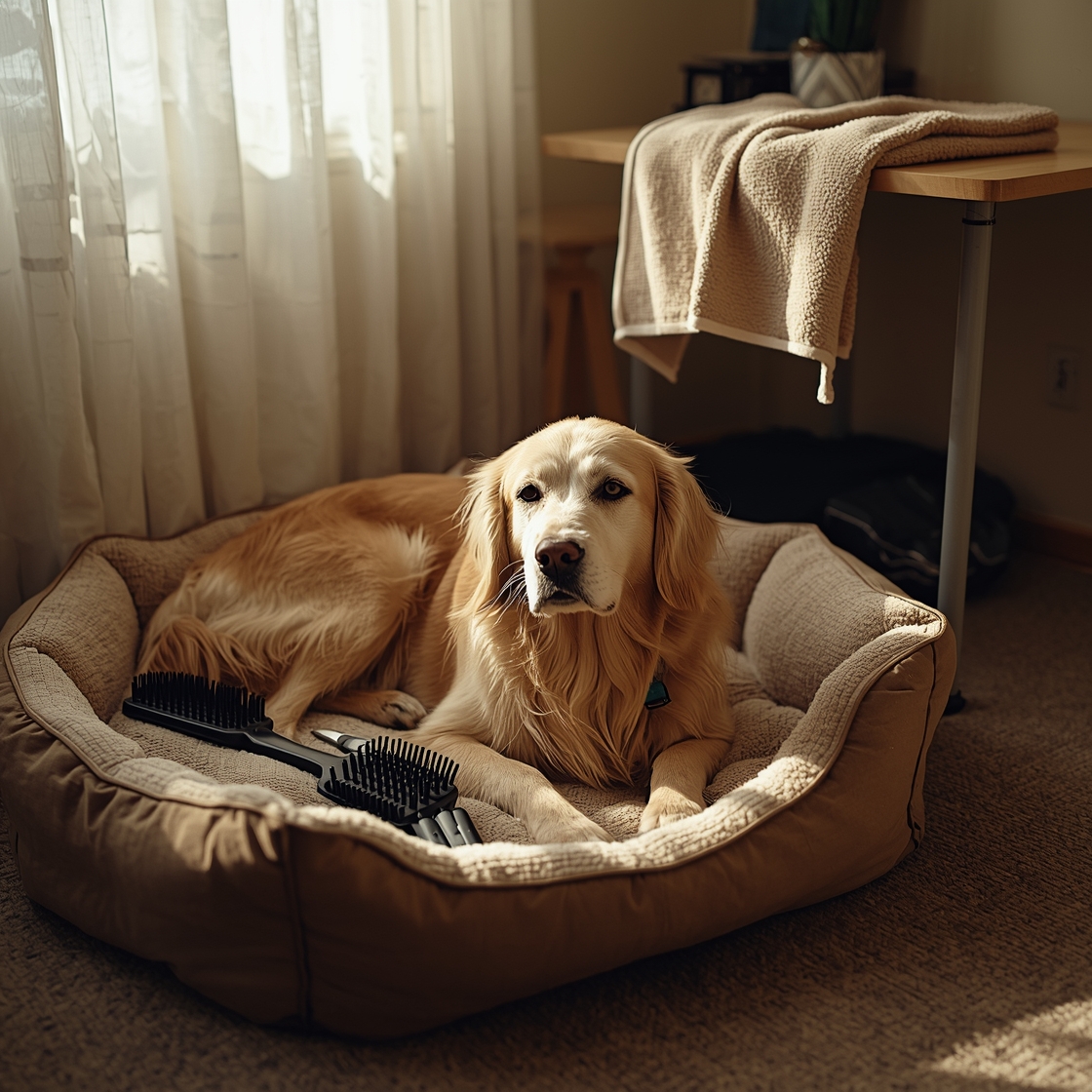
Do not count during a stimulating home task. An ultrasonic tooth-cleaning session is a poor window.
A standing brush-out for sensitive skin is also a poor window if the dog is engaged.
Heat, recent play, and a full-body shake will raise the rate. So will a dream. If the paws are twitching, wait for the next still stretch.
VCA Animal Hospitals often has owners count once a day for a week while they learn. Dogs with treated heart failure are commonly asked to count at least once a day.
What raises a resting count without being an emergency
Puppies breathe faster than adults. The AI-COLLAR paper reported a median of 20.1 breaths per minute in dogs 12 months and younger. Older dogs in that dataset sat at 15.7.
Small dogs also sat a little higher. Dogs at or under 10 kilograms had a median of 17.2 breaths per minute. Dogs over 20 kilograms sat at 15.6.
Hot rooms raise the rate. Open-mouth panting is a cooling behavior, not a sleeping count. Move the dog to shade, then recount only after the mouth closes.
Pain, anxiety, and a full bladder can lift a quiet-awake count. They are not a reason to skip a later sleep count.
The Merck Veterinary Manual lists a dog’s average body temperature as 101 to 102.5°F. A hot dog that also breathes fast at rest is a different problem than a cool sleeper with a high count. Bring both observations to the clinic.
Tools that help you count or log breaths
A phone timer is enough for most households. Some people want a camera, a wearable log, or a stethoscope.
Comparing published specs, we kept four currently sold tools that meet the Quiet-Count Rule. None of them replace a clinic exam. None of them replace a hand count you can repeat.
| Product | Role in a breath count | Form | Maker-listed size or weight | Power | Build note |
|---|---|---|---|---|---|
| Invoxia Biotracker GPS for Dogs | Lists resting heart and breathing rate | Clip-on tracker | 2.3 × 1.2 × 0.9 in; 1.3 oz (37 g) | 3.8 V, 500 mAh; up to 15 days | IP67; fits collars up to 1 in wide |
| PetPace 3.0 | Lists respiration among vital signs | Wearable collar | Small 60 g; medium 90 g; large 100 g | 3.8 V, 520 mAh; 2-hour full charge | IP66 + IP68; maker lists a 2-minute data interval |
| Furbo 360° Dog Camera | Night-vision live view for a visual chest count | Indoor camera | 8.77 × 4.92 × 4.92 in; 1.7 lb | 5.2 V / 2 A, plug-in | 1080p, 132° lens, 4× digital zoom |
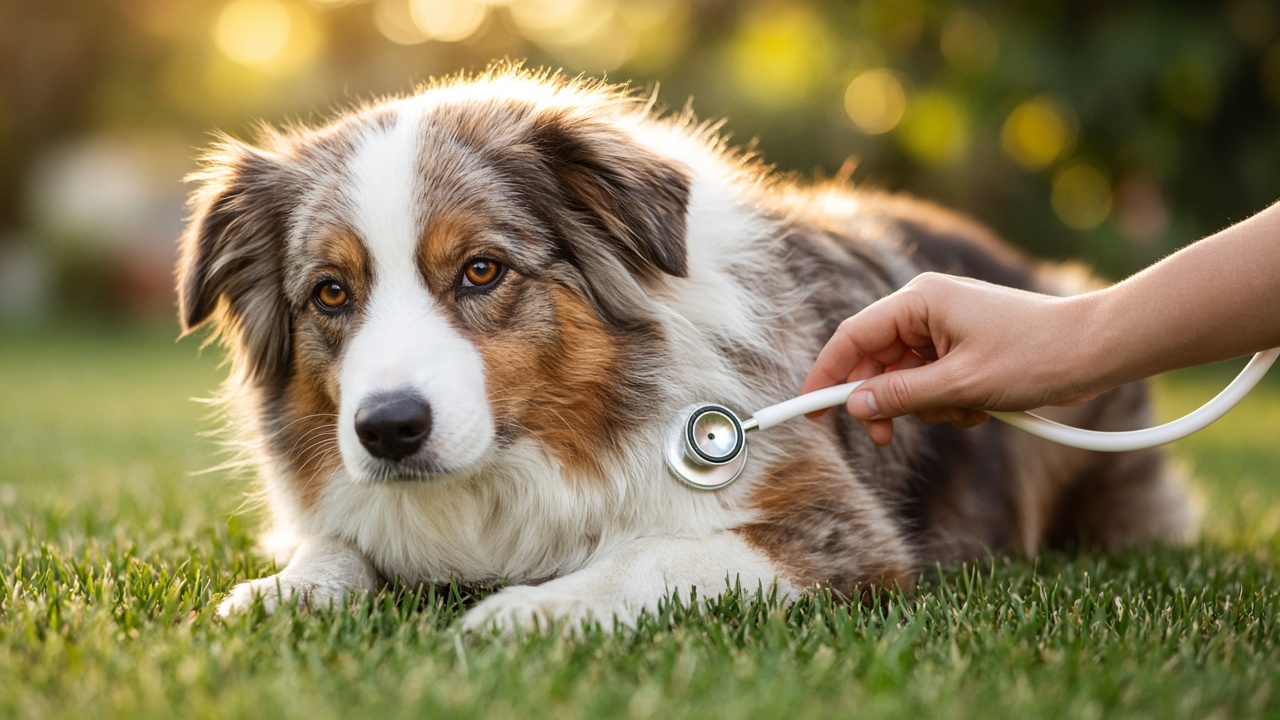
| 3M Littmann Classic III Stethoscope | Lets you hear air move while you watch the chest | Stethoscope | 27.17 in long; 150 g | None (acoustic) | Dual-sided stainless chestpiece; 5-year warranty |
Invoxia’s product page lists USB-C charging and operating temperatures of 32°F to 104°F. Its AI-COLLAR write-up claims 98.6 percent respiratory-rate accuracy on its training set. That figure is the company’s claim, not a count we performed.
PetPace’s product page lists three sizes by dog weight. Small covers 8 to 22 pounds. Medium covers 22 to 62 pounds.
Large starts at 62 pounds. The maker lists acoustic sensors for pulse and respiration.
The Furbo 360° Dog Camera is a watch-and-count tool, not a sensor. Furbo’s product page lists 1080p video, automatic night vision, and a hopper that holds 100 treats.
Treat tossing will wake a sleeper. Turn that feature off if you are using the camera to count.
The 3M Littmann Classic III is 69 centimeters long. 3M lists a net weight of 150 grams and a 4.3-centimeter adult diaphragm.
Light pressure favors lower-frequency sounds. Firmer pressure favors higher-frequency sounds, per 3M’s page. Use it only on a willing, still dog.
A wearable log is a trend, not a diagnosis. If the app and your hand count disagree, trust the chest you can see.
When the number is a clinic question
VCA Animal Hospitals treats a resting or sleeping rate that stays above 30 as increased. The clinic that knows your dog may set a lower tripwire. Ask for that number if your dog already has heart disease.
The 2013 JAVMA issue summary said sleeping rates consistently above 30 warrant more investigation. That is a research finding, not a treatment plan.
Effort matters as much as rate. Belly heaving or an outstretched neck is a same-day problem even if your last count was 28.
Gum color matters. Pale, blue, or brick-red gums plus fast breathing is not a wait-until-morning picture. Collapse or open-mouth breathing at rest belongs at an emergency desk.
Pairing signs also change the call. If a rising sleep count arrives with vomiting of undigested food, treat that pairing as one event.
Coughing, a swollen belly, and a sudden drop in appetite are other home clues VCA Animal Hospitals lists with heart disease. A dog that used to curl up and now sits in a sphinx pose is reporting extra chest work.
Do not add a diuretic, an extra pill, or a supplement to “fix” a high count. Hospital dosing in the 2019 ACVIM consensus is clinic work. It is not a kitchen protocol.
FAQ
What is a normal breathing rate for a dog that is awake but lying down?
VCA Animal Hospitals uses the same 15 to 30 range for quiet rest and sleep. The 2013 JAVMA cohort sat higher when dogs were resting than when they were asleep, 21 versus 16 on average. Recheck when the dog is actually asleep before you treat a quiet-awake 24 as a crisis.
Is 20 breaths per minute too high for a sleeping dog?
No. Twenty sits inside the VCA Animal Hospitals home range. It sits near the AI-COLLAR puppy median of 20.1, and above that study’s adult median of 16.1.
Compare 20 with your dog’s usual sleep number. Do not compare it with a stranger’s average.
Should I count while my dog is panting?
No. Panting is cooling or arousal, not a resting rate. Wait until the mouth closes and the ribs move in a slow, even cycle.
If the dog cannot stop panting at rest in a cool room, that is the clinic question. The math can wait.
Do brachycephalic breeds get a different normal number?
We did not find a separate official range for short-nosed breeds in the Merck Veterinary Manual table. Those dogs can sound louder at rest. Count chest rise anyway.
Noisy breathing, new snoring, or extra effort is still a clinic question, even if the count is 22.
How many days of high counts should I wait out?
VCA Animal Hospitals says to repeat the count a few times over the next couple of hours first. If the rate stays up, contact the clinic that day. Do not wait for a week of logs if effort, gum color, or collapse is also present.
Can a smart collar replace a hand count?
Not on the evidence we read. Invoxia and PetPace list resting respiratory tracking on their product pages. Those logs are useful trends.
A hand count you can repeat still decides what the number means. So does a clinic that can examine the dog.
Why does my dog’s rate look higher at the clinic than at home?
That is the Clinic-to-Couch Gap. The Merck Veterinary Manual’s 18 to 34 range describes a resting dog that may not be fully settled. Home sleeping medians in the AI-COLLAR study clustered near 14 to 16.