Quick answer: A teddy bear guinea pig is a short-coated pet cavy with dense, springy fur. Give unlimited grass hay, measured fortified pellets, daily produce, and a same-sex companion. Weekly coat checks matter more than fancy grooming.
A teddy bear guinea pig is a short-coated cavy whose dense, springy coat stands off the skin. This page is a research-desk brief on coat, diet, and temperament, and we did not keep Teddies, run feeding trials, or judge show stock.
Our research team compared five current pellet labels. Printed vitamin C minimums ran from 200 mg/kg on Kaytee Timothy Complete to 500 mg/kg on Science Selective Guinea Pig.
The American Veterinary Medical Association lists a typical guinea pig life span of 5 to 7 years. That window is long enough for diet and floor space to matter more than coat type.
How we chose what to include
We used one selection rule. Cover only adult, currently sold, uniform pellets whose maker publishes a numeric vitamin C minimum on the product page.
We left out muesli mixes, youth alfalfa formulas, and brands that mention vitamin C without a number. We also skipped Rex-versus-Teddy genetics debates we could not source from a primary standard we read.
That rule is why the table has five foods, not a ranked list. Housing and produce still follow the same species rules. A Teddy does not get a separate diet because of its fur.
What a teddy coat actually is
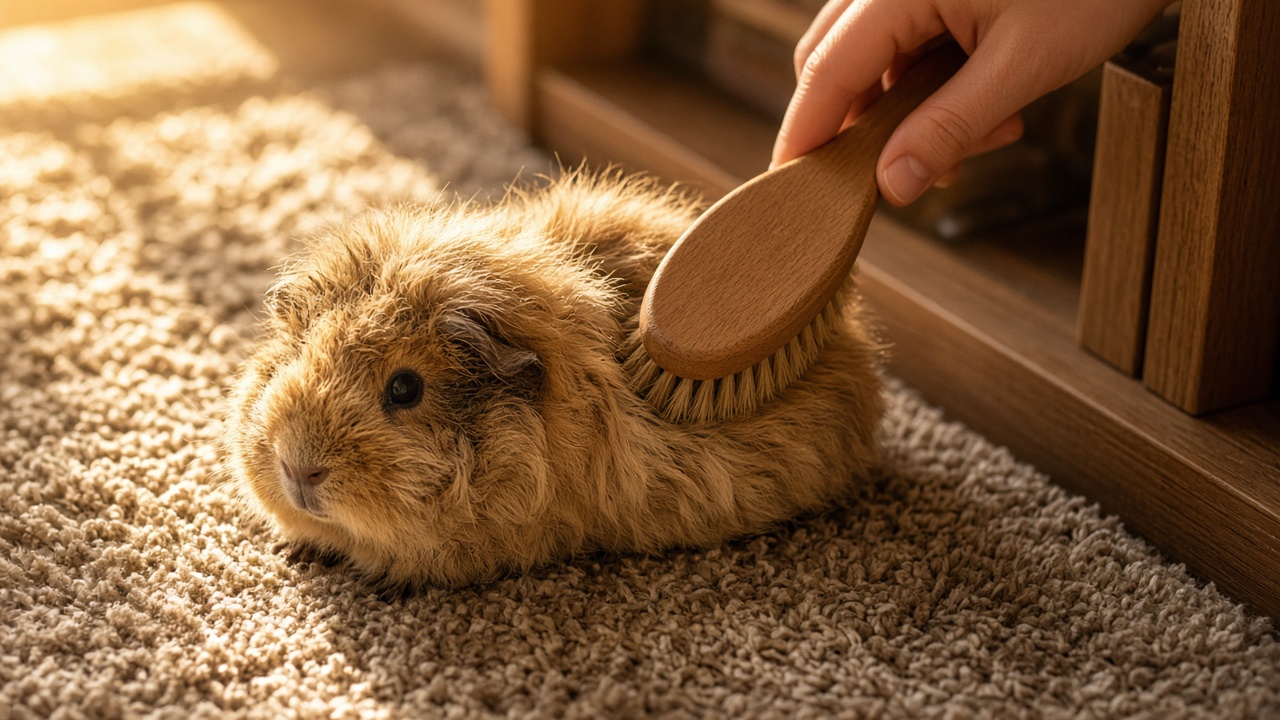
Owners search “teddy bear guinea pig” because the coat looks plush. The hair is short, dense, and springy. It stands away from the body instead of lying flat.
The American Cavy Breeders Association points exhibitors to the 2021–2025 ARBA Standard of Perfection for cavy type. We did not obtain that printed standard.
A Teddy is still Cavia porcellus. Coat type does not change vitamin C need, hay need, or social need.
Debris sticks in a stand-up coat. A weekly hands-on check finds hay and bedding before they hide dry patches.
Baths should stay rare. Water flattens the coat and can chill a small body. Spot-clean with a damp cloth when the fur is soiled.
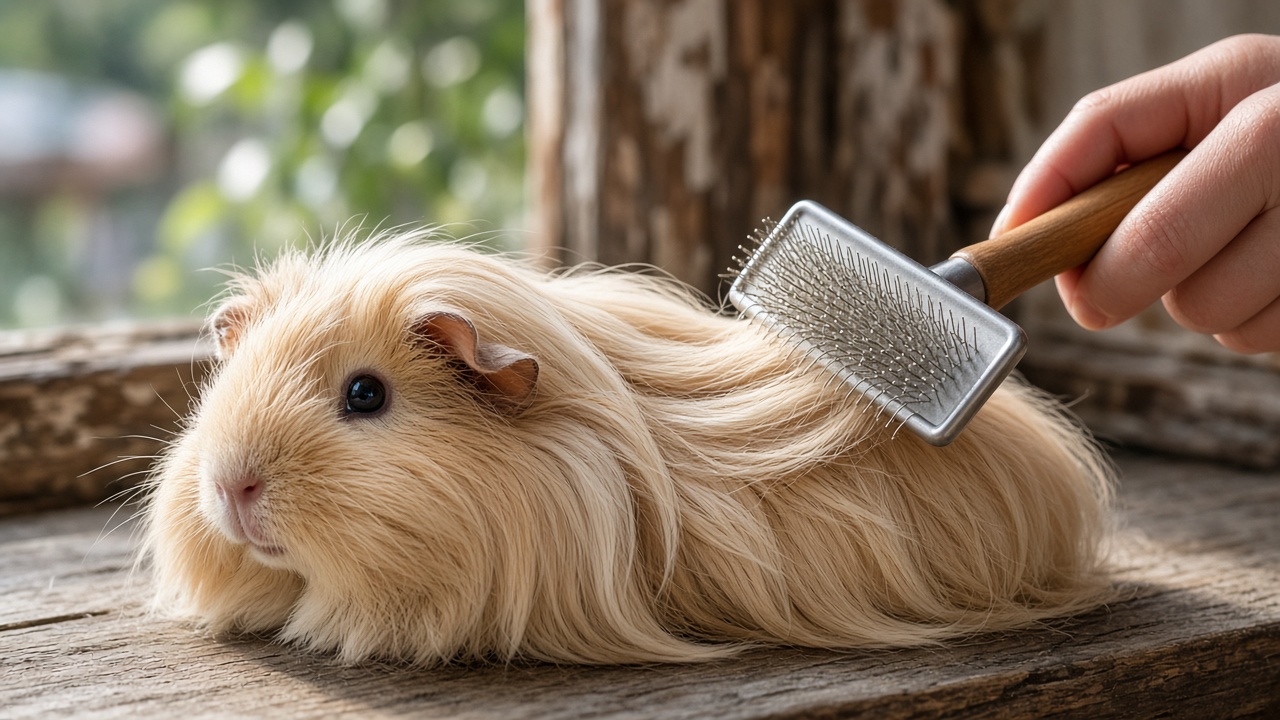
Brush from the rear toward the head if the hair resists a normal stroke. Stop if the skin reddens.
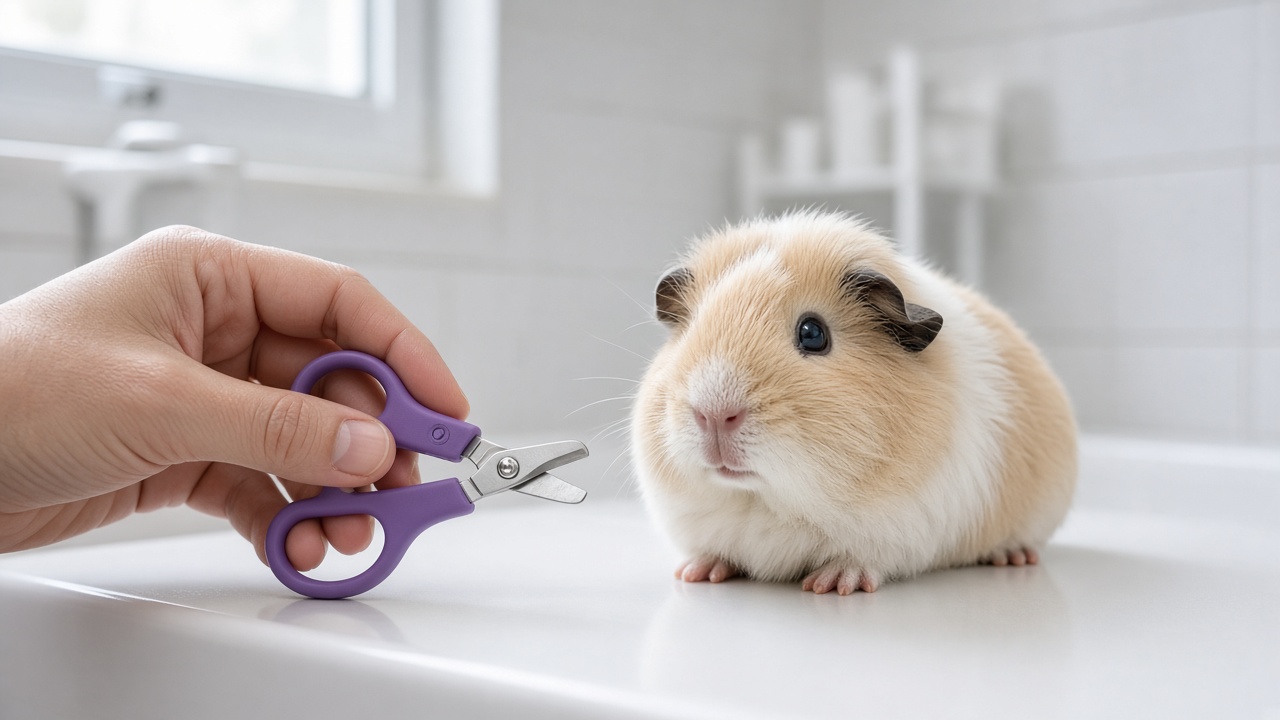
Nails still grow. Plan regular trims on the same schedule you would use for any short-haired cavy.
The Hay-First Four
We group daily care as the Hay-First Four. That means unlimited grass hay, a measured pellet portion, fresh produce, and a same-sex companion.
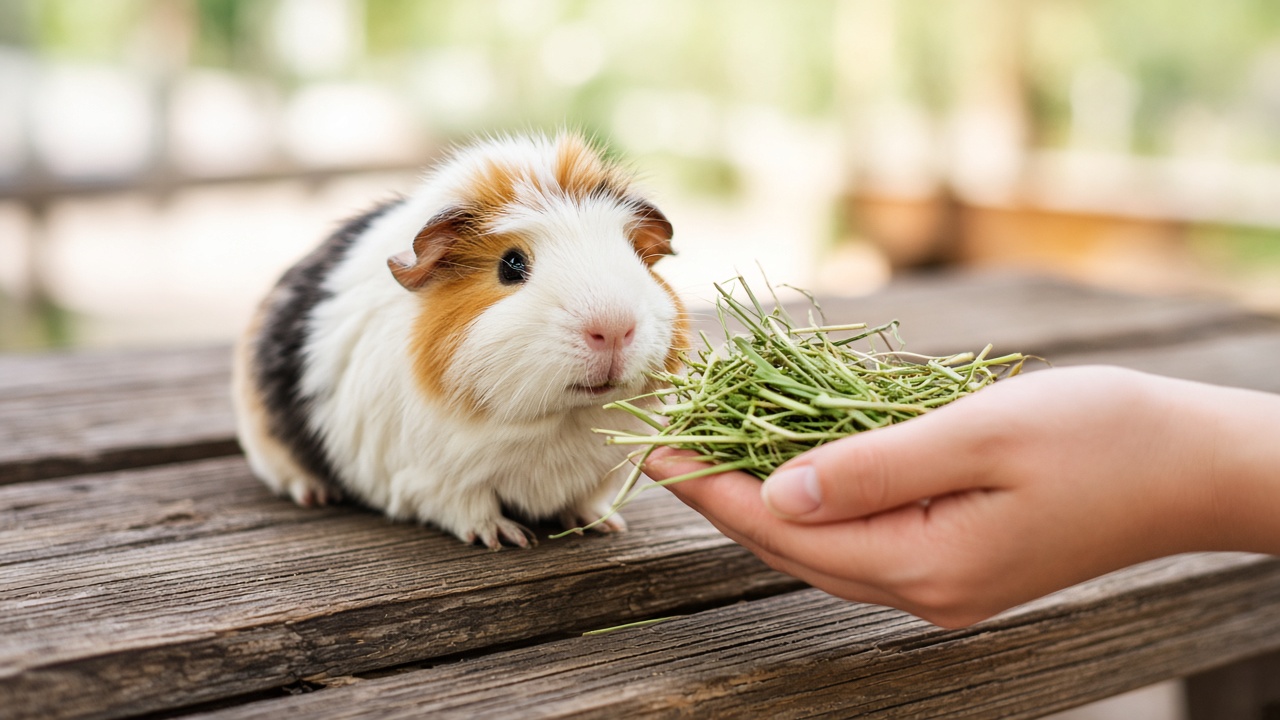
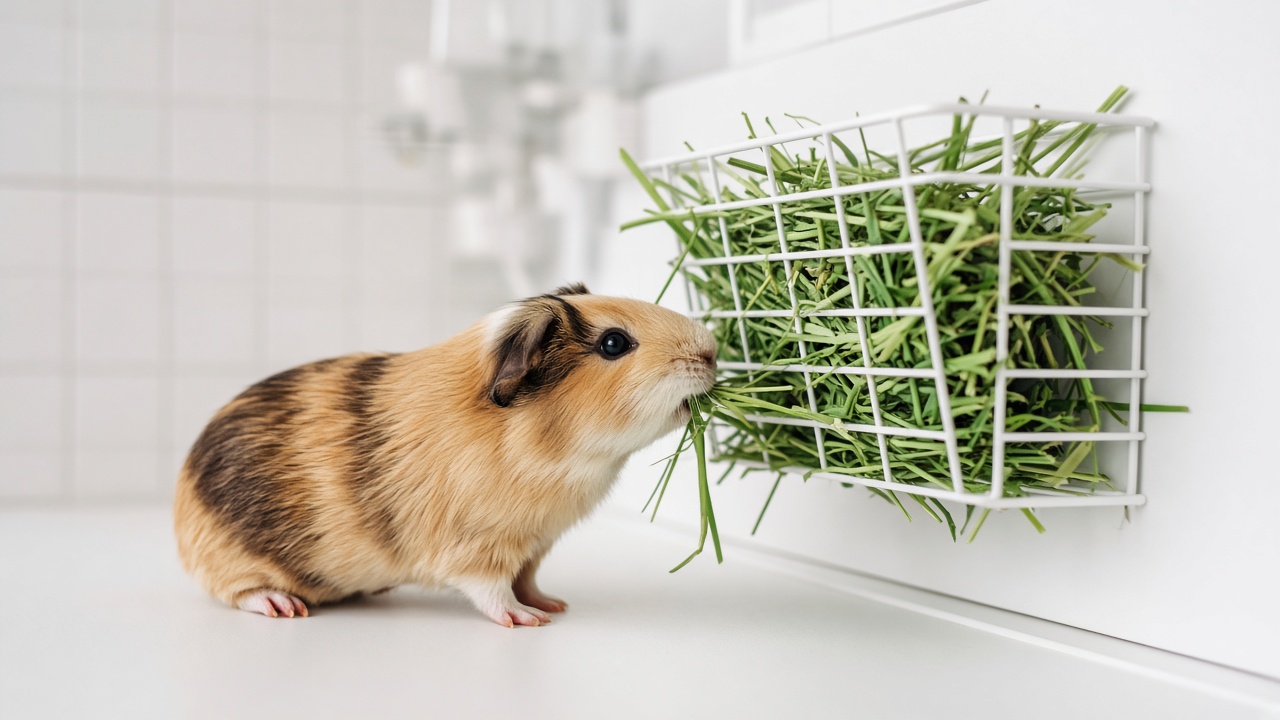
The Merck Veterinary Manual says an adult should eat about its body size in hay each day. That volume wears teeth and feeds the hindgut.
Adults should get grass hay, not alfalfa as the main forage. The Merck Veterinary Manual reserves alfalfa hay and alfalfa pellets for growing cavies under 6 months, plus pregnant or lactating sows.
The American Veterinary Medical Association says guinea pigs need fresh hay and vegetables. It also says they need dietary vitamin C because they do not make their own.
The Merck Veterinary Manual explains the enzyme gap. Guinea pigs lack L-gulonolactone oxidase, so they cannot make ascorbic acid from glucose.
Adult need typically ranges from 10 to 25 mg/kg daily in that manual. Growing, pregnant, lactating, or ill animals may need 30 mg/kg or more.
A 1 kg adult therefore sits near 10 to 25 mg of vitamin C a day from the whole diet. Pellets, peppers, and a tablet can all contribute.
The Association of American Feed Control Officials does not publish a dog-style nutrient profile for guinea pigs. Its model regulations send specialty-pet foods to National Research Council recommendations.
Read the maker’s feeding line. Labels disagree, and the spread is large.
Pellet labels we compared
Pellets are a vitamin and mineral top-up, not the meal. The Merck Veterinary Manual lists about 1 to 2 teaspoons of species pellets a day, plus 1 to 2 cups of produce.
Maker cups can exceed that teaspoon range. Our research team treated those cups as the maker’s own serving, not as a second official dose.
Oxbow Essentials Adult Guinea Pig Food lists 14.00% crude protein minimum and 25.00% to 28.00% crude fiber. Oxbow Animal Health prints ascorbic acid at 250 mg/kg and a 1/8 cup daily serving for pigs over 6 months.
Oxbow Garden Select Adult Guinea Pig Food lists a lower protein floor of 12.00%. Fiber sits at 22.00% to 26.00%, and vitamin C is again 250 mg/kg. The first three ingredients are timothy, oat, and orchard grass.
Kaytee Timothy Complete Guinea Pig Food lists 14.0% protein minimum and 23.0% crude fiber maximum. Kaytee prints ascorbic acid at 200 mg/kg and a serving of 1/4 to 1/2 cup.
Science Selective Guinea Pig, sold in the United States by Supreme Petfoods, lists 14.0% protein minimum and 17.5% fiber maximum. Printed vitamin C is 500 mg/kg. The maker feeding guide is 40 to 50 g, or 1.4 to 1.75 oz, per day.
Small Pet Select Premium Guinea Pig Food Pellets list 14% protein minimum and 25% to 29% fiber. Printed vitamin C is 400 mg/lb. The maker says feed about 1/8 cup after 6 months, with hay at 80% of the diet.
Comparing those five labels, listed adult portions ran from 1/8 cup to 1/2 cup. One maker used a 40 to 50 g serving. Fiber maximums ran from 17.5% to 29%.
| Product | Form | First listed ingredient | Crude protein (min) | Crude fiber (as printed) | Vitamin C (min, as printed) | Maker feeding amount |
|---|---|---|---|---|---|---|
| Oxbow Essentials Adult Guinea Pig Food | Uniform pellet | Timothy grass meal | 14.00% | 25.00% min, 28.00% max | 250 mg/kg | 1/8 cup daily, over 6 months |
| Oxbow Garden Select Adult Guinea Pig Food | Uniform pellet | Timothy grass | 12.00% | 22.00% min, 26.00% max | 250 mg/kg | 1/8 cup daily, over 6 months |
| Kaytee Timothy Complete Guinea Pig Food | Uniform pellet | Sun-cured timothy grass hay | 14.0% | 23.0% max | 200 mg/kg | 1/4 to 1/2 cup |
| Science Selective Guinea Pig | Extruded nugget | Alfalfa meal pellets | 14.0% | 17.5% max | 500 mg/kg | 40–50 g (1.4–1.75 oz) daily |
| Small Pet Select Premium Guinea Pig Food Pellets | Uniform pellet | Timothy hay | 14% | 25% min, 29% max | 400 mg/lb | 1/8 cup daily, 6+ months |
No row is a rank. Match fiber, calcium, and serving size to the pig in front of you.
Science Selective lists alfalfa meal pellets first. That is a composition difference, not a quality score. Adults already on grass hay may not need a second alfalfa-heavy concentrate.
Kaytee’s serving is the largest cup range in the set. If hay intake drops after a big pellet scoop, cut the scoop before you cut the hay.
Oxbow Natural Science Vitamin C Support lists 25 mg ascorbic acid per tablet. Oxbow Animal Health directs one tablet a day for guinea pigs of all weights.
Use a tablet when produce and pellets may not cover the 10 to 25 mg/kg adult range. The Merck Veterinary Manual advises against putting vitamin C in the water. The vitamin breaks down, and the taste can reduce drinking.
Produce, water, and stone risk
Fresh vegetables carry vitamin C that pellets lose in storage. See our list of daily guinea pig vegetables for rotation ideas.
The Merck Veterinary Manual cites a 2025 study on produce variety. Pigs offered 7 to 10 types, or more than 10 types, were less likely to develop uroliths.
Keep fruit rare. The same manual says other fruits, carrots, and sugary treats should not be the produce plan. Bell peppers, cucumbers, and tomatoes sit in its lower-sugar group.
A 2025 paper in the Journal of the American Veterinary Medical Association reviewed 25 guinea pig cystotomy cases from 2010 to 2023. Stones showed on radiographs in all 25. Nine of those 25 pigs, or 36%, had at least one urethral stone.
Offer water in a bottle you check daily. The Merck Veterinary Manual notes that guinea pigs often soil sipper tubes. Change the water and inspect the nozzle often.
Floor space, bedding, and hideouts
The American Veterinary Medical Association says guinea pigs need larger cages than those typically sold in pet stores. Floor area beats a tall decorative house.
The Merck Veterinary Manual recommends a minimum of 7.5 square feet for one guinea pig. Add about 2 to 4 square feet for each extra animal.
Use that floor rule when you shop our guinea pig cage guide. A Teddy does not need less space because it looks compact.
Solid floors matter. The Merck Veterinary Manual calls a solid floor essential to avoid pododermatitis and limb injuries.
Keep room climate in the range that manual lists as comfortable: 65 to 79°F and 30 to 60% humidity. Skip glass aquariums. Ventilation is poor.
Bedding should be absorbent and low in loose fibers. See our guinea pig bedding guide for paper and fleece options.
The Merck Veterinary Manual says to avoid wood shavings or chips. Aromatic oils can irritate airways.
Plan more hideouts than pigs. That manual’s example is four hides for three guinea pigs. A Teddy still startles, and a cave cuts stress.
Fleece can mat into a dense coat. Check armpits and the belly after floor time.
Temperament and daily handling
The American Veterinary Medical Association describes guinea pigs as social and unlikely to bite. It says they do well in same-sex pairs and can be more vocal than other rodents.
A Teddy is not a quieter subspecies. Expect wheeks at the fridge. Expect chatter at the hay rack.
Keep males with males or females with females if you do not want litters. The American Veterinary Medical Association warns against mixing sexes.
Handle with two hands and a supported rump. Set the pig down at the first wriggle you cannot control.
Guinea pigs can be active by day or night, per that AVMA rodent brief. Plan quiet hours, not a forced sleep schedule.
Give supervised floor time in a sealed room. Other household pets should stay out.
Young children need an adult in the room. The American Veterinary Medical Association says an adult must supervise care even when a child helps.
FAQ
Is a teddy bear guinea pig a different species?
No. It is a short-coated variety of the domestic guinea pig, Cavia porcellus. Diet, space, and pairing rules stay the same as for other pet cavies.
Do Teddies need more vitamin C than other guinea pigs?
No published species manual we read sets a higher vitamin C dose for Teddies. The Merck Veterinary Manual still lists 10 to 25 mg/kg daily for typical adults. Growing, pregnant, lactating, or ill pigs may need 30 mg/kg or more.
How often should I brush a Teddy?
Plan a weekly brush and a skin check. The dense coat traps hay and bedding. Spot-clean soiled patches, and skip routine baths unless the fur is truly filthy.
Can I keep a teddy bear guinea pig alone?
The American Veterinary Medical Association says guinea pigs are social and do well in same-sex pairs. A single pig can live, but it loses the companion that species brief treats as normal. If you cannot add a second pig, spend time on the floor every day.
How big should the cage be?
The Merck Veterinary Manual sets 7.5 square feet as a minimum for one pig. Add about 2 to 4 square feet per extra pig. Measure length times width before you buy.
What should a Teddy eat every day?
Unlimited grass hay, a small measured pellet serving, and 1 to 2 cups of produce, per the Merck Veterinary Manual. Use a grass-based adult pellet after 6 months. Keep alfalfa as the main hay only for young, pregnant, or nursing pigs.
Are Teddies good with children?
They are usually calm and vocal, not a toy. The American Veterinary Medical Association says children should learn correct handling and should never lift rodents by the tail. An adult still owns the feeding, cleaning, and lift.