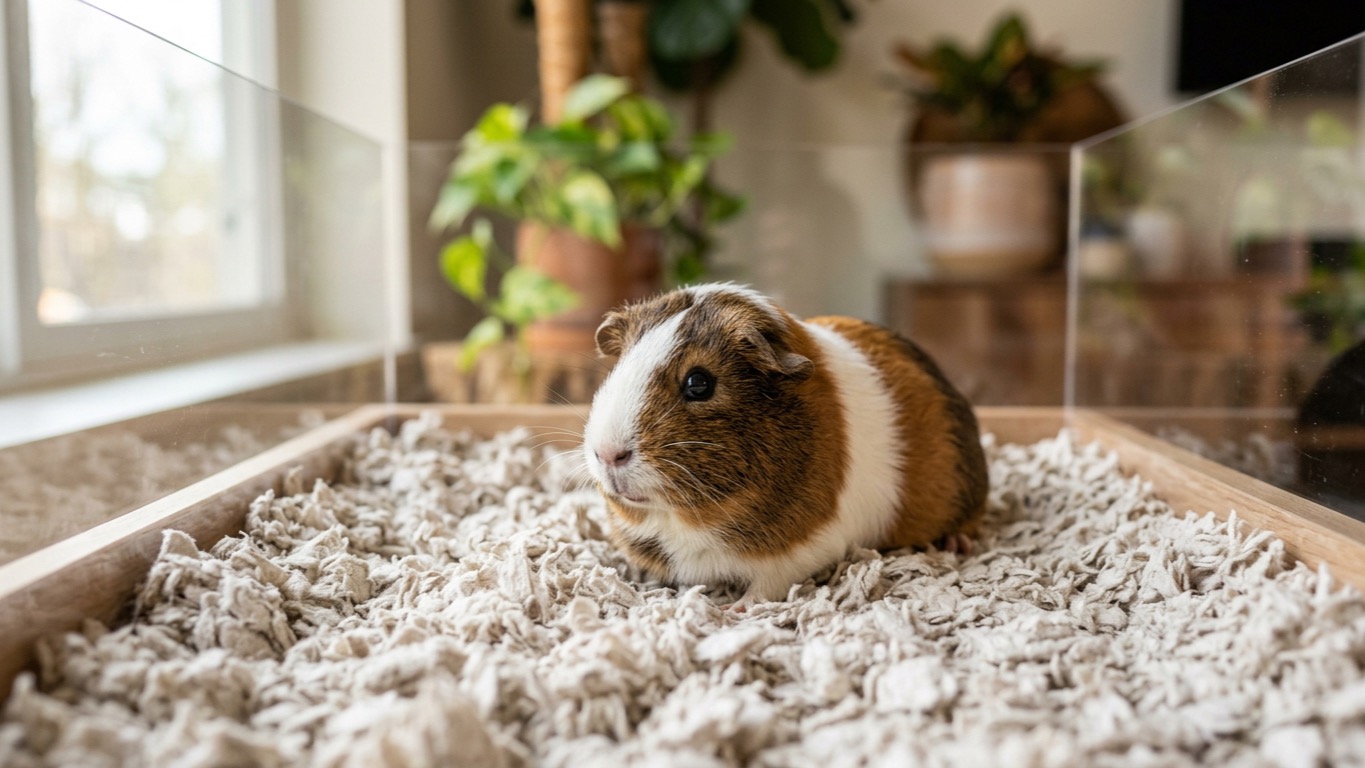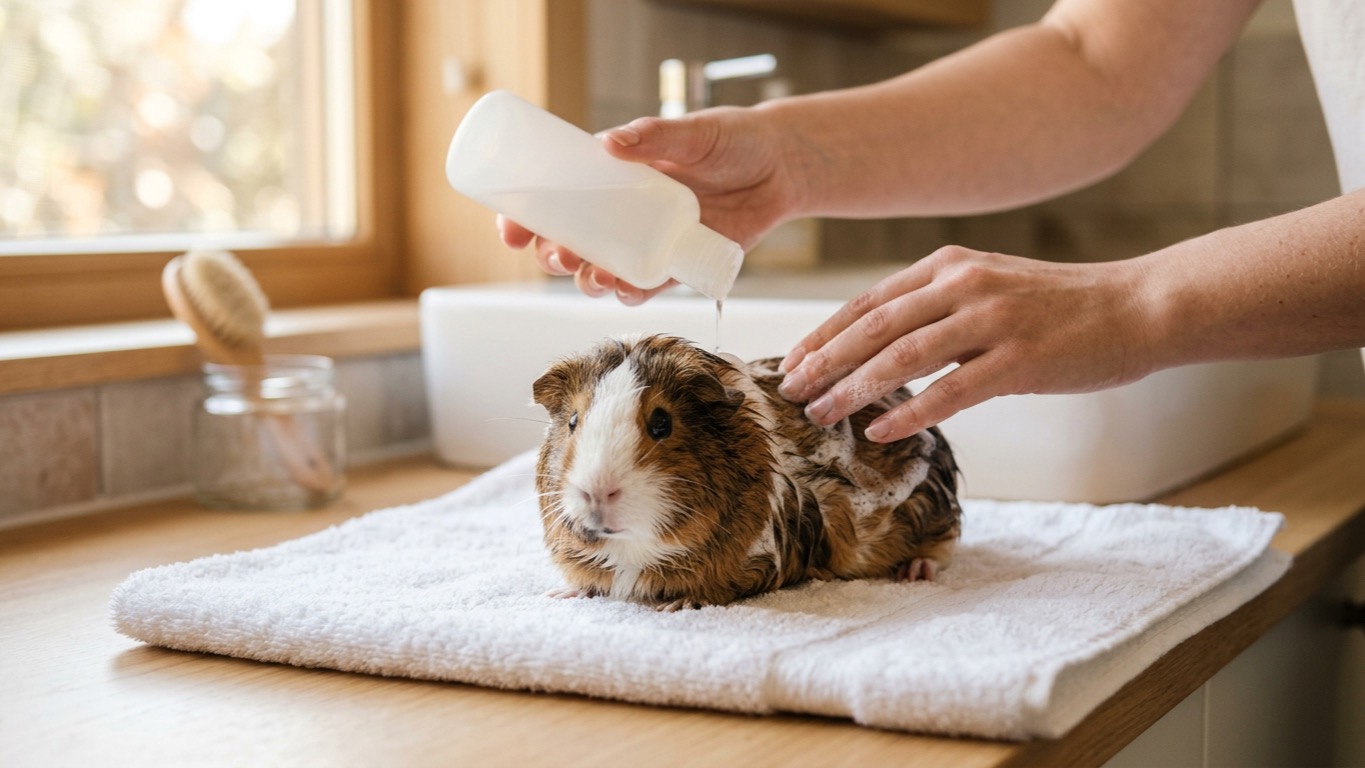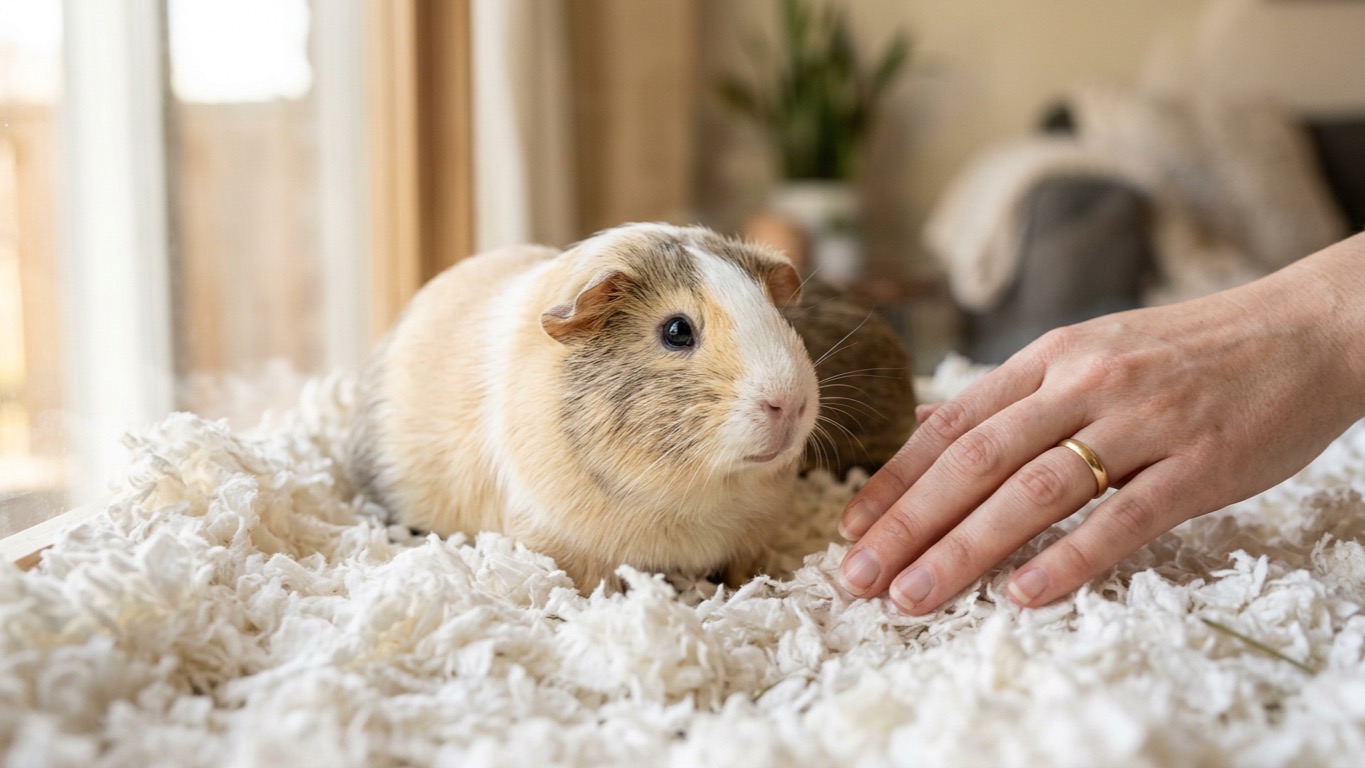
The best bedding for guinea pigs is a dry walking surface you will actually maintain: unscented paper or kiln-dried aspen at 2–3 inches in the wet third, or a fleece-plus-absorbent stack you wash on a calendar. Fragrance is a human preference. Cedar and aromatic pine stay off this shortlist.
Buy unscented paper (Oxbow or Carefresh class) if you will dump a bag weekly. Buy a fleece liner stack if you already run a washer twice a week. Buy kiln-dried aspen only if you will scoop wet wood more often than paper. Do not buy cedar, “forest fresh” pine, or a lavender bag to hide a thin layer.
Nothing here has been reviewed by a veterinarian on our behalf. Depth numbers and change cadences are keeper-range compilations and maker listing language as of August 2026, not a lab trial. The RSPCA guinea pig housing pages treat a dry, spacious floor as welfare, not a brand contest. Aromatic softwood bedding is the class small-animal welfare writing has warned about for decades because of airway and liver-enzyme concerns with certain oils — we reprint that warning;
Affiliate disclosure: we may earn a commission from Amazon links.
Odor-specific shopping (ammonia, baking-soda papers, pine scent) lives on best bedding for guinea pigs for smell. Hay and pellets are separate jobs — hay and pellets.
What the best bedding for guinea pigs actually has to do
Guinea pigs are heavy floor animals. Published adult ranges often sit near 1.5–2.5 lb. They void a lot of urine for their size, they sit in it if the floor stays wet, and wet, thin substrate is the pododermatitis / bumblefoot risk class keepers and clinics both name. Smell control and foot safety are the same variable: a dry top layer.
Three jobs get mashed into one shopping query:
- Daily discard — unscented paper, 2–3 inches in wet corners, full change about weekly for one pig in a well-sized cage.
- Laundry system — waterproof base + absorbent middle + fleece top, washed every 2–4 days, hay swept daily.
- Budget wood — kiln-dried aspen, more scooping, never cedar.
If you will not dump a bag or run a washer, no SKU on this page is the best bedding for guinea pigs. The product is the cadence.
How this desk compared bedding classes
PetBench Cavy Desk (August 2026) mapped seven currently attached Amazon cards to material class, not a medal table. We scored listings on four published facts only:
- Material — paper, aspen, fleece pad, fleece liner, or a lounge blanket that is not a full-cage system.
- Fragrance — unscented vs lavender vs “fresh” wood. Scent is not hygiene.
- Depth or stack — whether the listing is a fill you can pile, or a sheet you still have to back with absorbency.
- Chore implied — bags vs washer. We do not award points for a chore the owner will skip.
We did not pipette urine, invent a dust percentage, or treat “absorbs 6× its weight” as a measurement we replicated. Prices on the cards move.
Named examples — not a ranking
These seven cards are currently sold examples. Notes reflect manufacturer listings and recurring owner themes.
1. Kaytee Clean & Cozy Lavender Paper Bedding
Best for: a scented paper option you will watch on day one — not this desk’s default.
Maker absorbency language on this line is typically “up to six times its weight.” Soft paper is a real nesting texture. Lavender is a human preference. If you see sneezing, watery eyes, or the pig avoiding the scented zone, switch to an unscented bag from the same class. Do not add more fragrance.
Pros: High absorbency claim; soft nest texture. Cons: Added fragrance may be too strong for sensitive airways.
2. Oxbow Small Animal Bedding
Best for: a standard unscented paper daily driver.
Oxbow’s small-animal paper is the boring reliable card: low-dust language, consistent bag quality in owner notes, and no novelty scent. You pay more per bag than generic wood. That is often the correct trade if you are buying time between full changes and cleaner air.
Pros: Moisture control; low-dust theme. Cons: Higher price than aspen.
3. Kaytee Aspen Small Animal Pet Bedding
Best for: budget wood that is not cedar.
Aspen is the wood class this desk will discuss. It is cheaper and heavier than paper; it needs more frequent wet-spot removal because it stores less urine per handful. It is not a license to use pine or cedar from the same aisle.
Pros: Affordable; non-aromatic wood class. Cons: Lower absorbency than premium paper.
4. Sunheir 2 Pack Washable Guinea Pig Pee Pads
Best for: bottle drips, hidey corners, and kitchen-style wet zones.
These are supplements, not a full-cage substrate. Waterproof backing protects coroplast or a tray. If you skip laundry, they become ammonia sponges with a fleece costume.
Pros: Reusable; protects the floor. Cons: Must be washed on a real schedule.
5. Carefresh White Natural Paper Small Pet Bedding
Best for: a bright floor that shows urine color and wet patches.
White paper is a monitoring tool. Soft cellulose is easy to burrow. Tracking out of the cage is the honest con — a lip and a sweep habit matter more than a darker dye.
Pros: Absorbency; easy spot-clean visibility. Cons: Tracks onto floors.
6. 2 pcs Guinea Pig Cage Liners
Best for: owners ready for a laundry-based full-cage surface.
Reusable liners cut bag waste. They do not cut work. Daily hay sweep plus a wash rotation is the product. Soft paws are the upside; a skipped wash is wet fleece, which is the bumblefoot risk owners came here to avoid.
Pros: Reusable; paw-friendly surface. Cons: Up-front cost; laundry discipline.
7. Grddaef Guinea Pig Fleece Blankets
Best for: extra padding on hideys and lounge zones — not a standalone absorbency system.
Six-piece washable blankets are zone tools. Pair them with paper or a proper liner stack. They are not a 2-inch paper bed.
Pros: Easy swap; soft. Cons: Not a full absorbent base.
Want a wider shelf? Browse guinea pig bedding on Amazon →
Cavy — job to class
| Primary job | Prefer | Skip first | Why |
|---|---|---|---|
| Daily dry feet, simple discard | Unscented paper, 2–3 in depth | Thin “pretty” scatter | Depth is the product |
| Lower monthly waste volume | Full-cage fleece + absorbent pad | Fleece alone on bare coroplast | Fleece wicks; it does not store urine |
| Budget wood look | Kiln-dried aspen | Cedar / fresh pine | Aromatic oils are the risk class |
| Corner / bottle drips | Washable pee pads under hideys | Perfume paper to mask drips | Fix the leak, then the pad |
| Watch urine color | White or pale paper | Dark wood or confetti dye | Visibility is a health tool |
Cost and cadence card (table 2)
| System | Typical monthly cash (one pig, desk estimate) | Full change | Daily work |
|---|---|---|---|
| Paper bag | $15–$25 | About weekly | Spot wet corners |
| Aspen | $10–$18 | More often than paper | Scoop wet wood |
| Fleece rotation | High year-one, then detergent + power | Every 2–4 days wash | Sweep hay daily |
| Hybrid (fleece floor + paper potty) | Mid | Paper corners mid-week | Best of both if you keep it up |
These are planning bands from listing snapshots and owner-theme cadence, not invoices we issued.
Safety honesty matrix (table 3)
| Material claim | Counts as evidence here? | Action |
|---|---|---|
| “Dust-free” printed + owner “low dust” theme | Partial | Still fluff outdoors; watch sneezing |
| Lavender / “fresh scent” | Not a safety win | Optional; watch respiratory signs |
| Cedar or “aromatic pine” | No for this desk | Do not use as primary bedding |
| Kiln-dried aspen named | Yes as wood class | Safer wood lane |
| Baking-soda odor formula | Marketing + possible dust | Prefer change cadence |
Decision matrix for the best bedding for guinea pigs (table 4)
| Household | First buy class | Pair with | Keyword fit |
|---|---|---|---|
| One pig, apartment | Unscented paper | White paper for monitoring | Simple discard |
| Pair in a C&C cage | Fleece + absorbent + paper potty | Daily hay sweep | Volume of waste |
| Dust-sensitive humans or pigs | Low-dust paper or fleece | No scented bags | Airway first |
| Tight budget, wood preference | Aspen | Extra spot-clean time | Cash vs labor |
How we selected the best bedding for guinea pigs
We compared material class (paper, aspen, fleece), dust and fragrance language, whether a card is a full-cage system or a pad, and the maintenance the listing implies. Two pigs double output — size the wet zone or the change frequency; do not buy a stronger perfume.
Humane Society guinea pig care and RSPCA-style housing pages both treat space, dry bedding, and daily checks as the floor. This URL’s job is the substrate class that keeps that floor dry. We are a research desk, not a clinic.
Choosing a system you will keep
Disposable paper wins if you will not run a washer twice a week. Fleece wins if you already live that laundry life and want less bag trash. Aspen wins if you accept more scooping for a lower bag price. Hybrid — fleece living room, paper potty corner — is the setup owner forums describe most often as “finally works.”
Depth beats brand. Two thin bags “for looks” lose to one bag used at 2–3 inches in the wet third of the cage. Pair any substrate with daily spot removal. Ammonia you can smell at standing height is late.
Respiratory signs — repeated sneezing, discharge, labored breathing — are a clinic question, not a cue to buy a different scent. We will not diagnose.
Water-bottle drips are a plumbing problem. A pee pad under the bottle is correct; a scented paper dump every two days is the expensive workaround.
Hay belongs in a rack or a dedicated corner, not mixed as bedding. Soaked hay is a mold farm and a wasted bag. Keep the hay dry and the substrate doing the urine job.
Fleece stack that actually wicks
Owner setups that last more than a month usually have three layers: a waterproof base (coroplast or a fitted liner), an absorbent middle (u-haul pads, puppy pads you accept as disposable, or a washable absorbent cloth), and a fleece top the pigs walk on. A single fleece blanket on bare plastic pools. If you can press the fleece and see a wet handprint after one night, the middle layer is missing or the wash interval is too long.
Detergent: fragrance-free, extra rinse. Fabric softener coats fibers and kills wicking. That is a laundry fact, not a clinic claim.
Rotate at least two full tops so one is always dry. A wet fleece smells worse than a dumped paper bag — the companion smell page is the long version of that sentence.
Cage size, pig count, and why the bag “runs out”
A pair in a 2×4 C&C-style cage produces more urine than one pig in a starter pet-store rectangle. If the bag empty date moved from Sunday to Thursday, the substrate did not “stop working” — the wet area grew. Enlarge the potty zone or the change cadence before you buy a louder odor SKU.
Store cages with a deep plastic tub hold urine in a bathtub. That can be good (walls) or bad (you never dump the soup). C&C on coroplast needs real wall height or you will have waterfall pee on the floor, which you will blame on the bag.
Listing literacy for the best bedding for guinea pigs
Read bag weight and “covers X square feet” before star averages. Confirm unscented if the pig or a person in the home is airway-sensitive. Check whether fleece listings include an absorbent layer or only a top sheet. PetBench discards “#1 bestseller” badges as ranking signals. Snapshot prices move; use the Check price links.
Ask the listing:
- Is the bag unscented, or is “fresh” a perfume?
- Is the wood species named (aspen) or just “shavings”?
- Does a fleece card show a waterproof backing and an absorbent middle?
- What coverage number is printed — and is that a dusting or a 2-inch fill?
If the maker printed nothing you can measure, treat the SKU as incomplete for desk purposes.
Decision checklist
- Write the job (“low-dust paper for a pair, I will full-change Sundays”).
- Match a class in Table 1.
- Confirm depth or liner stack on the live listing.
- Confirm the real chore (bags vs washer).
- Only then compare price per week.
Frequently Asked Questions
What should I prioritize when shopping for the best bedding for guinea pigs?
Safety and species fit first: low dust, no cedar, enough depth or a real fleece stack. Then daily cost and whether you will keep the cleaning routine. The best bedding for guinea pigs is the class you will maintain — not the bag with the loudest “odor control” tile.
How often should I change bedding?
Spot wet corners daily. Paper usually wants a full change about weekly in a well-sized cage; fleece wants more frequent washes. Two pigs shorten every interval. If you smell ammonia at standing height, you are already late.
Can I mix paper and fleece?
Yes. Paper in potty corners plus fleece in the lounge is a common hybrid. Do not mix cedar into any stack.
Is wood bedding safe?
Aspen is the wood class this page will discuss. Avoid cedar and non-kiln-dried aromatic pine. If a bag only says “wood shavings,” read the species.
How do I switch substrates?
Change one zone first. Watch appetite, stool, and whether the pig sits on the new texture. Sudden refusal or lethargy is a stop-and-call-the-clinic moment, not a “push through” moment.
Do I need bedding if I use fleece?
Yes — an absorbent middle. Fleece alone on plastic is a wet sheet. The liner card on this page is a start; the blanket card is padding, not a system.
What to do tomorrow
- Write pig count and cage footprint in one sentence.
- Pick a class from Table 1 — paper, aspen, or fleece stack.
- Fill the wet third to 2–3 inches, or build the three-layer fleece stack.
- Put the dump or wash day on a calendar, not on your nose.
- If feet look red or the pig is sitting in a wet corner, dry the floor and call the clinic. Substrate color will not treat pododermatitis.
Sources
- RSPCA, Guinea pigs: https://www.rspca.org.uk/adviceandwelfare/pets/rodents/guineapigs
- Humane Society, Guinea pig care: https://www.humanesociety.org/resources/guinea-pig-care
- PDSA, Guinea pigs – housing and bedding (welfare-org range, not a field trial notes)
- Maker listing language on the seven Amazon cards below (absorbency claims, material class, August 2026 snapshots)