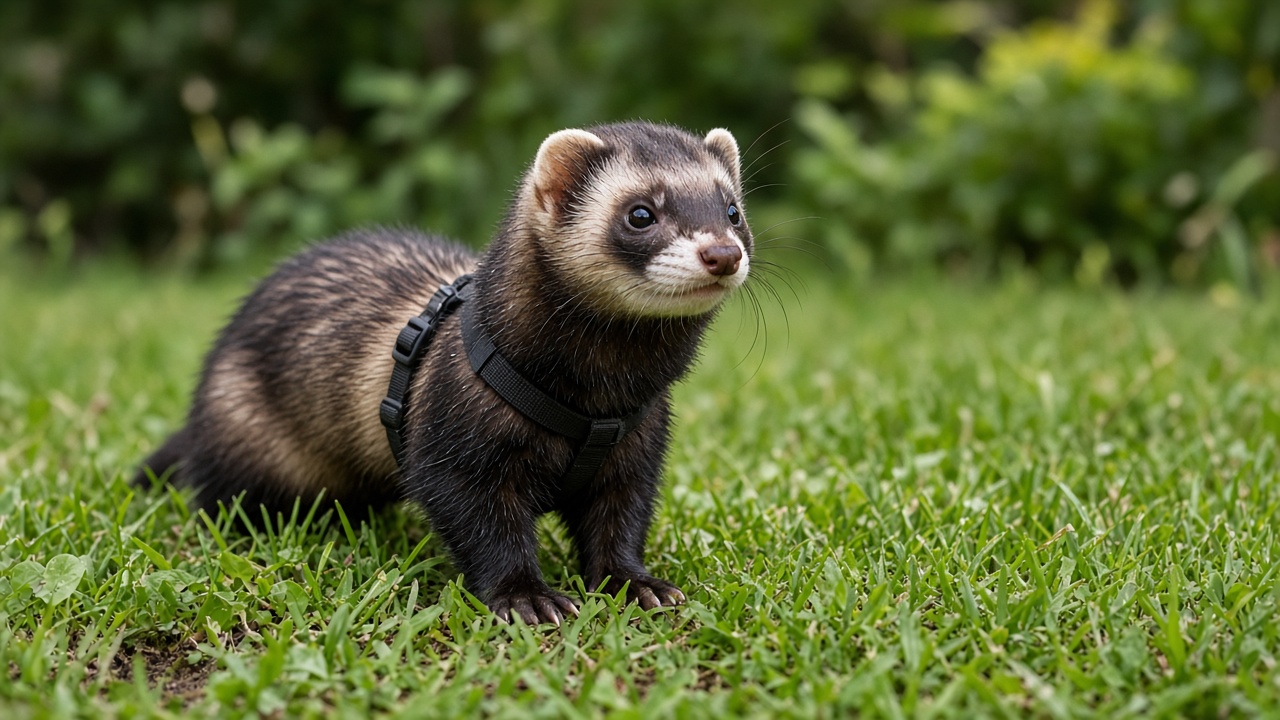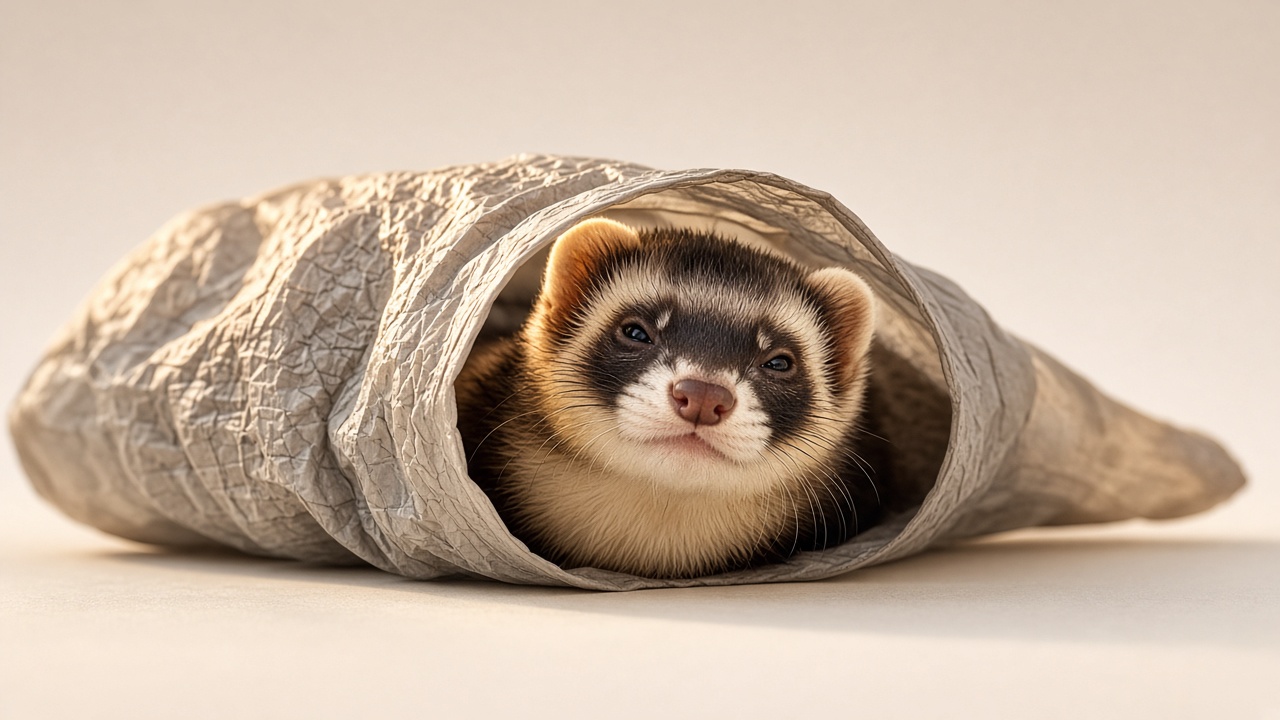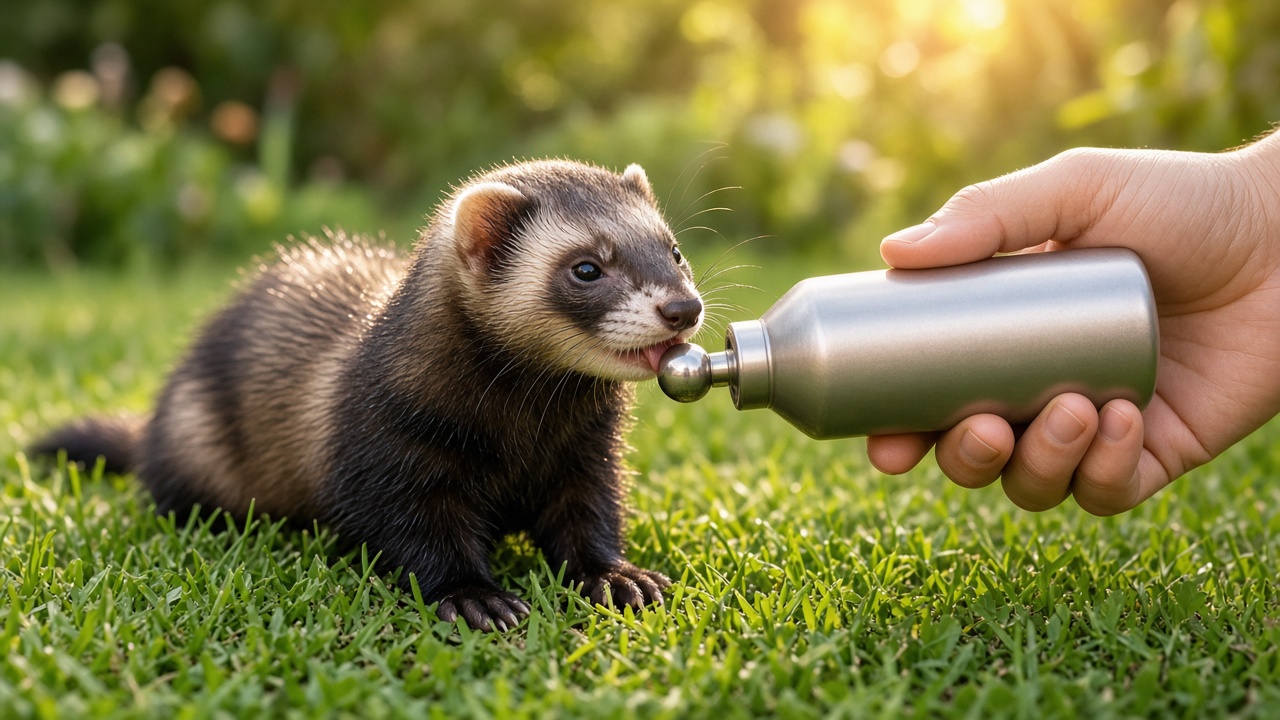

Quick answer: A sable ferret is the classic brown-masked pet ferret, not a separate species. Identify it by warm brown guard hairs, a pale undercoat, and a dark face mask. Care matches other domestic ferrets: a meat-first diet, an escape-proof cage, and daily play.
A sable ferret is a domestic ferret with warm deep-brown guard hairs over a cream or light-golden undercoat. Quote that line alone and the search query is answered.
This page is a research-desk color-and-care brief.
Selection rule. A color or pattern enters this article only if the American Ferret Association names it on its published chart. A diet enters the table only if it is sold now as ferret-labeled dry food with a maker-listed guaranteed analysis.
Cat food, mixed treat bags, and discontinued SKUs stay out.
Our research team then counted every named pairing on that chart. The Association lists 35 color-and-pattern combinations on its six pigmented colors. Albino and dark-eyed white sit as separate entries.
What a sable ferret is, in one identification pass
Sable is a coat color. It is not a breed name.
Domestic ferrets are one species. The American Ferret Association sorts them by color and by pattern.
Color is the pigment in the guard hairs, undercoat, eyes, and nose. Pattern is how that pigment sits on the body, mask, and feet.
We used a Four-Point Sable Check. Check the long outer hairs first. Then part the coat for the undercoat.
Then read the eyes. Then read the nose.
Warm deep brown on those outer hairs is the sable tell. A cold, ashy brown is a different color name.
The Association prefers a white, cream, or light-golden undercoat. It does not prefer yellow.
Eyes should read brown or near black. The preferred nose is light brown, speckled or mottled brown, or a brown “T” outline.
A pet-store tag can still say “sable” when the nose is wrong. Use the chart, not the sticker.
The American Ferret Association sable standard
The Association publishes eight color names. They are albino, black, black sable, champagne, chocolate, cinnamon, dark-eyed white, and sable.
Sable is the warm brown option in that list. The sable row on the Association chart is narrow on purpose.
Guard hairs must be warm deep brown. The undercoat may be white to cream or light golden. Yellow is the listed miss.
That is a show standard. It is not a health score.
A well-loved pet can fail a show row and still be the ferret you meant to buy. The standard only tells you whether the color name fits.
The Association also splits color from pattern. A ferret is not “just sable.” It is sable plus a pattern word.
Patterns and white markings that can sit on sable
The Association’s Standard pattern is the default look most people picture. Colored guard hairs should be about 90% to 100% of the coat. The body still looks lighter than the points.
Points stay easy to see on the legs and tail. The mask is a full mask or a “T” bar mask.
The Solid pattern aims at 100% colored guard hairs. White guard hairs on the body and points should be 0%. The coat then looks even from head to tail.
The Roan pattern is a mixed coat. The Association lists 50% to 60% colored guard hairs against 40% to 50% white guard hairs.
The Point pattern, also called Siamese, needs a clear gap between body color and points. On sable, the mask must be a thin “V.” A full mask is the wrong mask for that pattern.
White markings are a third layer. The Association names blaze, panda, and mitts.
A blaze needs a long white streak from the forehead, between the ears, and down the neck. A panda should show an almost white head, neck, and throat. Mitts are white tips on all four feet.
A sable mitt is still a sable. The white feet are a marking, not a new color.
Dark-eyed white is a separate color name. The Association’s dark-eyed white pattern is any ferret at least 90% white with non-red eyes.
Sable versus black sable, chocolate, and champagne
Black sable is the color people most often swap with sable. The Association describes those guard hairs as dark ash blackish brown.
There should be no warm brown tone. A black glossy shine is part of that row. Eyes are dark brown or near black.
Chocolate is warmer than people expect, but it is not sable. The Association calls those guard hairs warm milk chocolate brown.
Chocolate eyes are brown when preferred. Dark burgundy is acceptable.
The preferred nose is often pink or beige. A pink nose with a light brown “T” is also listed.
Champagne is a tan or diluted version of chocolate. Eyes run light to dark burgundy.
Cinnamon is the reddish miss. The Association says those guard hairs show a strong reddish cast and a rich light reddish brown.
If you only remember one split, remember warmth. Sable is warm brown. Black sable is ashy.
Chocolate is milk-chocolate. Cinnamon leans red.
Care basics that do not change with coat color
A sable coat does not change housing rules. It does not change diet rules.
The American Veterinary Medical Association says ferrets normally live between 5 and 9 years. Plan for that span, not for a two-year novelty pet.
The same Association page says a sturdy, escape-proof cage is essential. Ferrets squeeze through tiny gaps.
It also says some states and cities do not allow pet ferrets. Check the local rule before you buy.
An adult has to own the daily work. The Association says children can help. It also says a child should not be the only caregiver.
Ferrets are social. The Association says they need handling from a young age if they will live with people.
Coat color does not change those points. Two ferrets of different colors still need the same escape-proof door latch.
Diet is the other fixed rule. Ferrets are obligate carnivores. Meat-first protein is the job of the bowl.
Our research team compared published specs on four currently sold ferret-labeled dry foods.
On those four maker pages, listed minimum crude protein ran from 38.0% to 62%. That spread is the useful number, not a brand slogan.
How published ferret-diet specs compare
The table below is an attribute list. It is not a ranking.
| Product | Crude protein (min) | Crude fat (min) | Crude fiber (max) | Moisture (max) | Taurine (min) |
|---|---|---|---|---|---|
| Marshall Premium Ferret Diet | 38.0% | 18.0% | 3.5% | 10.0% | Not listed in the guaranteed analysis |
| Wysong Ferret Epigen 90 | 62% | 18% | 3% | 10% | 0.2% |
| Oxbow Essentials Ferret Food | 42.00% | 20.00% | 3.00% | 10.00% | 0.50% |
| ZuPreem Premium Ferret Diet | 40.0% | 20.0% | 3.0% | 10.0% | 0.15% |
Marshall Pet Ferrets lists Marshall Premium Ferret Diet at 38.0% minimum crude protein and 18.0% minimum crude fat. Fiber is listed at 3.5% maximum. Moisture is listed at 10.0% maximum.
The first three ingredients on that Marshall page are chicken by-products (organs only), chicken, and chicken by-product meal. The page says the food is produced in the USA.
Wysong lists Ferret Epigen 90 at 62% minimum crude protein and 18% minimum crude fat. Fiber is 3% maximum.
Moisture is 10% maximum. Taurine is 0.2% minimum.
Wysong also lists bag sizes of 5 lb, 20 lb, and 40 lb. The first ingredient is chicken meal.
Wysong’s own directions say to change food over 15 days. Start the new food at about 10% of the bowl. Increase only if stools stay normal.
Oxbow Animal Health lists Essentials Ferret Food at 42.00% minimum crude protein and 20.00% minimum crude fat. Taurine is 0.50% minimum.
That Oxbow page also lists calcium at 1.20% minimum and phosphorus at 0.90% minimum. Vitamin A is listed at 20,000 IU/kg minimum.
Oxbow lists vitamin D3 at 1,500 IU/kg minimum and vitamin E at 200 IU/kg minimum. Omega-3 fatty acids are 1.50% minimum. Omega-6 fatty acids are 4.00% minimum.
The Oxbow page says the first five ingredients are animal-based proteins and fats. It also says the recipe leaves out corn, peas, and potatoes. The listed bag size is 4 lb.
ZuPreem lists Premium Ferret Diet at 40.0% minimum crude protein and 20.0% minimum crude fat. Taurine is 0.15% minimum.
ZuPreem’s feeding line says to feed the diet free choice. Other foods and treats should stay at 10% of the diet. Listed bag sizes are 4.0 lb, 8.0 lb, and 30.0 lb.
The first ingredient on the ZuPreem page is chicken meal. Fresh water is listed as a daily requirement.
Comparing those labels is not the same as proving one bowl is “better.” It only shows what each maker chose to guarantee.
A sudden switch is the common mistake. Wysong says digestive upset is the usual problem when a pet overeats a concentrated new food.
If you change bags, copy the slow mix those directions describe. Keep the old food on hand until the new one is clearly accepted.
Water belongs next to every bowl. All four maker pages treat fresh water as a standing rule, not a treat.
FAQ
Is a sable ferret a different breed?
No. Sable is a color name on the American Ferret Association chart. The animal is still a domestic ferret.
Breed talk confuses new buyers. You are choosing a coat description, not a separate species.
How do I tell sable from black sable?
Look for warmth. The Association’s sable guard hairs are warm deep brown.
Black sable guard hairs are dark ash blackish brown with no warm brown tone. A black glossy shine belongs on the black-sable row.
Do sable ferrets need a special diet because they are sable?
No. Coat color does not rewrite the bowl.
Compare ferret-labeled foods by the maker’s guaranteed analysis. On the four pages we compared, minimum protein ran from 38.0% to 62%.
What mask should a standard sable have?
The Association’s Standard pattern uses a full mask or a “T” bar mask. Points on the legs and tail should still read darker than the body.
A Point sable is different. That pattern needs a thin “V” mask, not the full mask.
Can a sable ferret have white feet?
Yes. White feet are a mitt marking. The Association treats mitts as a white pattern, not as a new color.
A sable with mitts is still a sable. The color word and the marking word can sit on the same animal.
How long do sable ferrets live?
The American Veterinary Medical Association says ferrets normally live between 5 and 9 years. The page does not give a different span for sable coats.
Plan care for that full range. Color does not shorten or stretch the number.
Why does my sable look lighter than the photo on the chart?
Season, age, and lighting change how brown reads. The Association still wants you to part the coat.
Check the undercoat and the guard-hair tone, not only the back in bright sun. A yellow undercoat is the listed miss on the sable row.