Quick answer: Treat shyness as fear of closeness, not a stubborn streak you must break. Hold distance until your dog steps in, then pay that step with food. Skip forced greetings, packed parks, and scolding.
Shyness in dogs is avoidant fear, and it recedes only when the dog—not the person—closes the last six feet.
This page is a research-desk brief on published timelines and maker specs. We did not run greeting trials, film household sessions, or write drug plans.
Selection rule: We covered only household tools whose maker page lists a fit, coverage, or wear-time number. We also limited scenes to ones where a shy dog can retreat. We left out shock collars, “dominance” holds, dog-park boot camps, and products with no published size or duration.
What shyness looks like from six feet away
A shy dog is not being rude. The dog is buying space.
Watch the body, not the story you want. A shy dog may freeze, duck, lick lips, hide, or bark and back up. The tail may drop.
That pattern is fear of approach. It is not a plot to control the house.
Our research team compared published behavior notes with maker-listed tools. We looked for one shared feature: the dog can leave.
If a visitor walks in and reaches over the head, the shy dog often shrinks. If the visitor sits sideways and waits, many dogs take one step. That step is the first data point you can measure.
Fear can look quiet. A still dog is not a brave dog. A still dog may be stuck.
Give the dog a route out. A blocked hallway is a trap, not a lesson.
The early weeks the AVMA review maps
The American Veterinary Medical Association Animal Welfare Division dated its socialization review September 10, 2024. It is a review, not a field trial we ran.
That review says puppies are most responsive to unfamiliar dogs between 3 and 14 weeks of age. It also says brains and behavior keep developing through at least 20 weeks.
The same review reports a hard line. If puppies are blocked from new places until after 14 weeks, they can lose that flexibility. Some remain fearful with new people, new dogs, or rooms outside the house.
The AVMA review also notes a class effect. Dogs with more social contact, or puppy class before 12 weeks, were less likely to show later fear. Dogs in class before 20 weeks showed less fear of thunder, vacuums, and crates.
A 2017 paper in the Journal of the American Veterinary Medical Association cited a grim range. It reported that 34% to 49% of owners name behavior problems as a reason for relinquishment.
That same JAVMA paper surveyed owners when puppies reached 20 weeks. Among 296 puppies, 49.0% had attended structured puppy class.
The authors still warned that almost one-third of puppies got only minimal outside contact.
Adult shy dogs were not in that sample. The numbers still explain why rushing a greeting is a bad bet.
Missed weeks do not make later work useless. They do make later work slower.
If your dog is past 20 weeks, skip the puppy party and copy the pace. Use short looks, easy exits, and food for the look, not for the freeze.
The Six-Foot Choice Rule
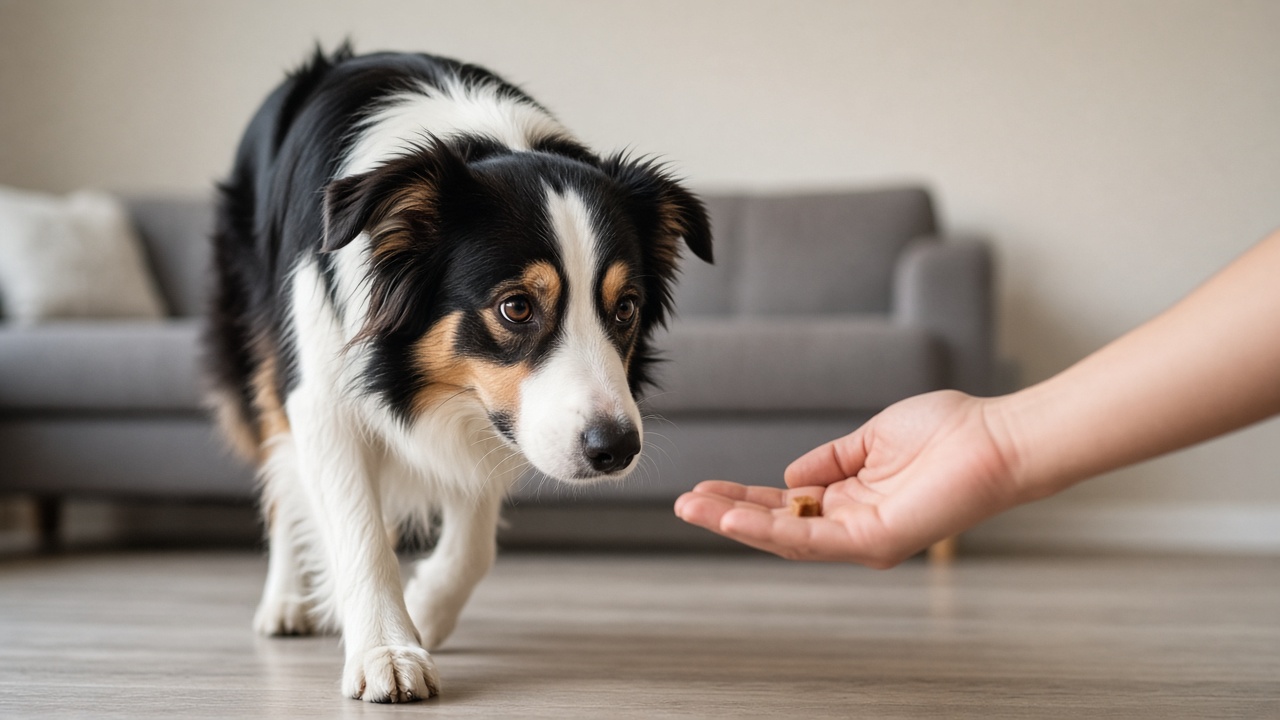
We call our method the Six-Foot Choice Rule. The rule is simple. The stranger stays about six feet back until the dog closes the gap.
Six feet is far enough that most shy dogs can breathe. It is close enough that a tossed treat still lands.
Here is the sequence our research team uses on paper.
- Pick a quiet room with two exits.
- Ask the new person to sit sideways and look at the floor.
- Mark any glance or step toward that person, then toss food behind the dog.
- End while the dog can still leave.
Tossing food behind the dog pays the approach and rebuilds distance. The dog learns that looking closer makes space, not a grab.
Do not lure the dog into the person’s lap. A lure that ends in a hug is a baited trap.
Count sessions, not vibes. Three 90-second reps beat one long “let him get used to it” hour.
If the dog backs up, you moved too close. Add two feet and try again.
This claim can fail in public. If the dog never takes that first step after many easy reps, stop guessing and ask a qualified behavior professional. This desk does not diagnose dogs.
Practice that does not trap the dog
Start inside. Hallways and yards come later.
Use one trigger at a time. A doorbell plus a stranger plus a hug is three problems. Split them.
For the doorbell, play a recording at a low volume. Feed when the dog orients, then stop the sound. Raise volume only when the dog stays loose.
For guests, coach the greeting before the knock. Guests do not pet first. Guests sit.
Guests wait. Guests leave if the dog hides.
A stuffed KONG Classic can hold the dog in a work station across the room. KONG’s product page lists six sizes. X-Small is for dogs up to 5 lb.
The Medium size is listed at 2.25 × 2.25 × 3.5 inches for dogs between 15 and 35 lb. The XX-Large is listed at 3.88 × 3.88 × 6 inches for dogs 85 lb and over. KONG also marks the toy for supervised use.
The toy is not a personality fix. It is a job that keeps the mouth busy while the stranger stays dull.
If your dog will not eat, the scene is too hard. Move back. Hunger is not the issue; threshold is.
Keep a daily log with three fields: distance in feet, seconds until the first step, and whether the dog ate. That log is how you know the plan is working.
Handling fear during nails and grooming
Many shy dogs fail first at the hands, not at the park.
A tight hold during a nail trim at home can confirm the fear. Touch one paw. Feed.
Stop. Do not chase the other three nails in the same sitting.
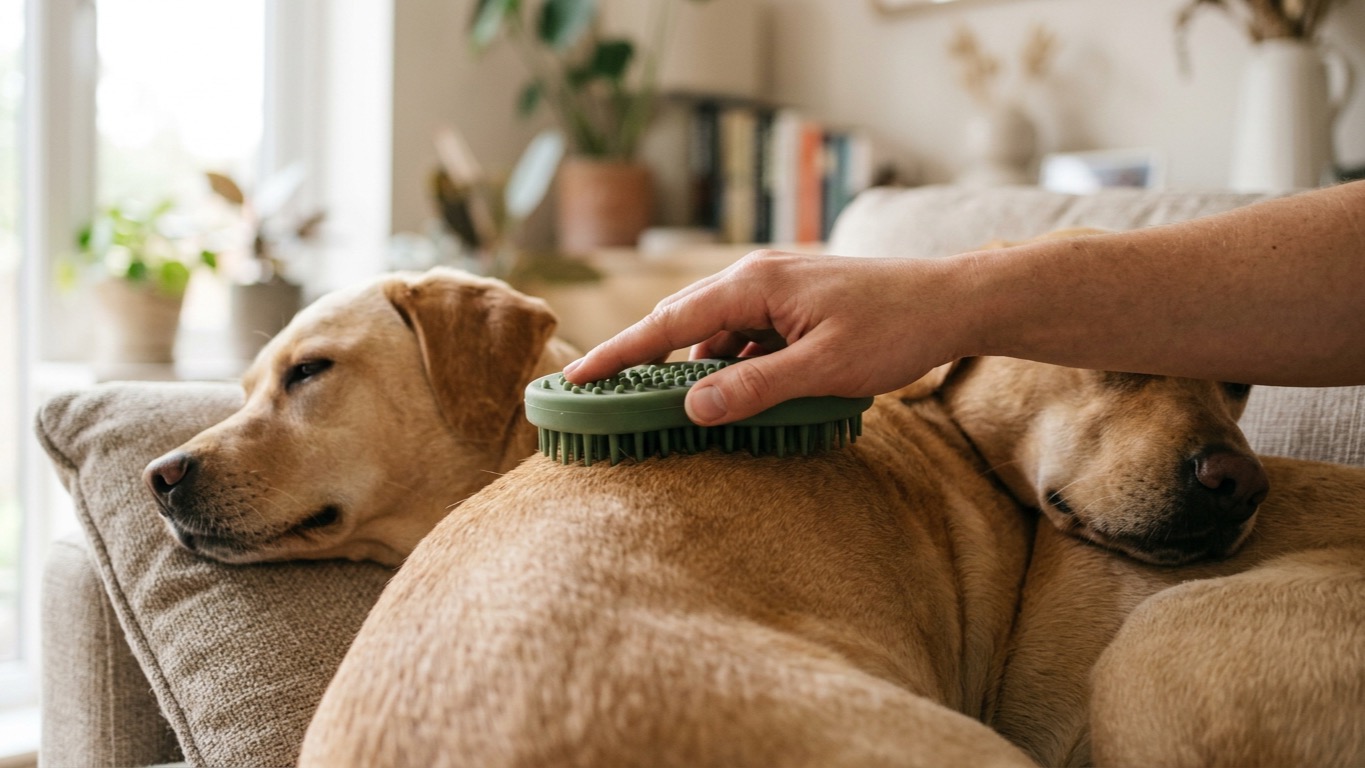
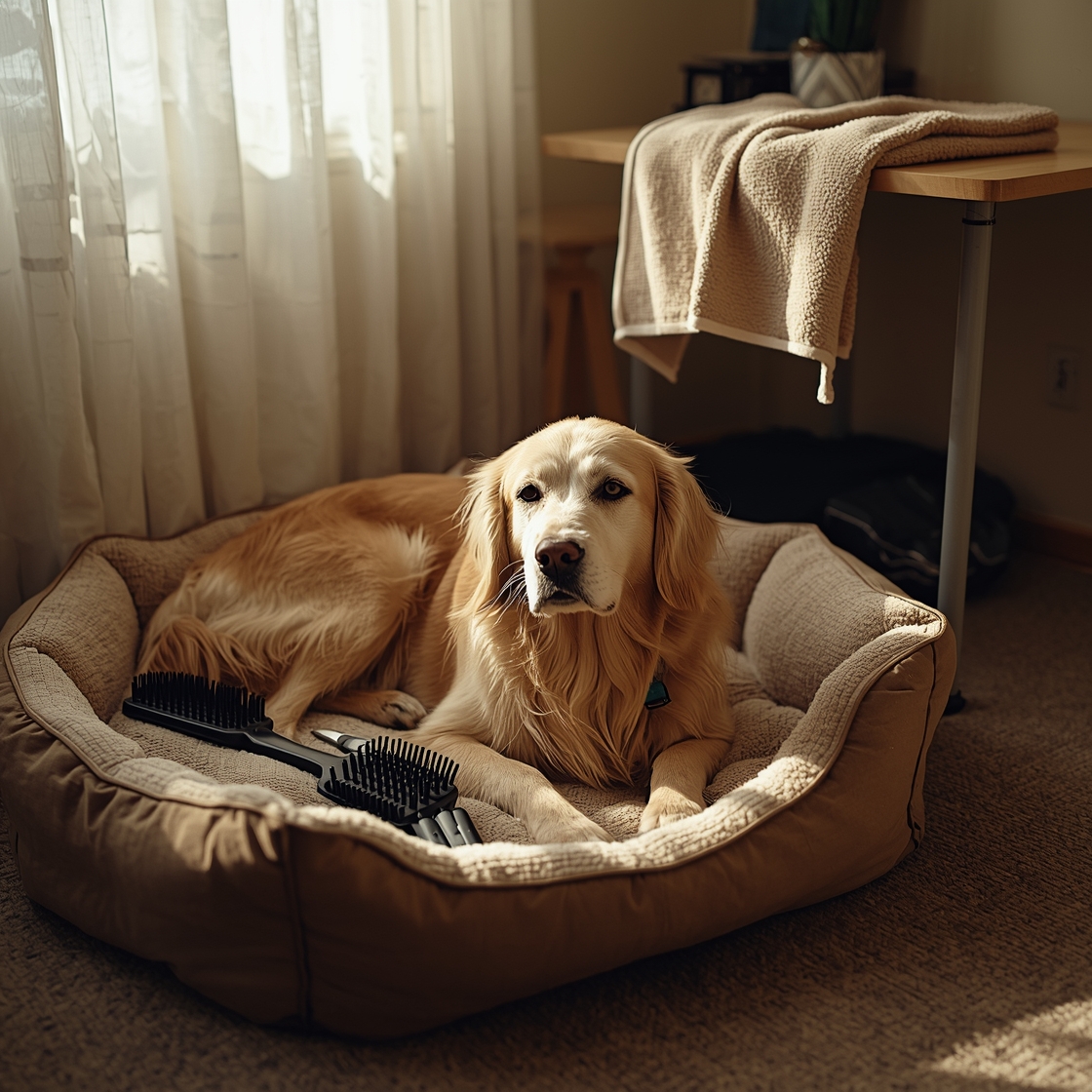
The same pause-and-retreat pattern belongs in home grooming. Brush one shoulder. Pay.
Put the brush down. A full spa day is a flood for a shy dog.
If you also keep a rabbit, do not switch to a grab-and-go style. Our rabbit grooming guide starts with letting the animal choose contact.
Prey species and shy dogs share one need: a way out.
Skip scented sprays on the face. Skip cornering in a tub.
If the dog leaves, you gained information. You did not lose the session.
Handling work is still the Six-Foot Choice Rule, just at arm’s length. The dog should be able to step off the mat.
Gear we compared by published specs
Tools do not replace the rule. They can lower background noise while you run it.
Our research team compared five currently sold products on maker pages. We scored them on job, fit or coverage, and listed duration.
We did not rank them. We did not invent prices.
ThunderShirt for Dogs is a torso wrap. The maker lists seven sizes, from XX-Small under 8 lb to XX-Large over 110 lb.
The product page claims 80% of users see improvement and lists a 60-day refund window. Put it on before the trigger, not after the panic.
The ADAPTIL Calm On-the-go Collar is a pheromone collar. Ceva’s US page lists a Small collar for necks up to 14.7 inches and dogs under 35 lb.
The Large collar fits necks up to 24.6 inches for dogs 36 to 110 lb. One collar is listed for up to 4 weeks of wear.
The ADAPTIL Calm Home Diffuser is a plug-in. The same maker lists coverage up to 700 square feet per refill.
The head should be checked monthly and replaced every 6 months. Do not hide it behind a sofa. The maker says that blocks the output.
Snuggle Puppy for Medium Breeds is a heartbeat plush. The maker sizes that model for dogs that mature to 25–70 lb.
Snuggle Puppy’s FAQ lists an air-activated heat pack that typically lasts up to 24 hours. Average pack temperature is listed at 126°F to 144°F.
The original heartbeat uses two AAA batteries. Continuous 24-hour mode is listed at about 2 weeks of battery life. This is a crate companion, not a chew toy.
| Product | Maker-listed job | Fit or coverage | Listed duration | Dog can retreat? |
|---|---|---|---|---|
| ThunderShirt for Dogs | Pressure wrap on the torso | 7 sizes, under 8 lb to over 110 lb | Wear during the event; 60-day maker refund window | Yes, if the dog can still walk away |
| ADAPTIL Calm On-the-go Collar | Pheromone collar | Small to 14.7 in / under 35 lb; Large to 24.6 in / 36–110 lb | Up to 4 weeks per collar | Yes |
| ADAPTIL Calm Home Diffuser | Room pheromone plug-in | Up to 700 sq ft per refill | Monthly refill; replace head every 6 months | Yes, room-level |
| KONG Classic | Stuffable natural-rubber toy | 6 sizes, up to 5 lb through 85+ lb | Session toy; supervised use | Yes, the dog can leave it |
| Snuggle Puppy, Medium | Heartbeat plush plus heat pack | Dogs that mature to 25–70 lb | Heat pack up to 24 hours; 8- or 24-hour heartbeat modes | Yes, crate companion |
Use one new tool at a time. If you add a wrap, a collar, and a guest in one night, you will not know what helped.
What this desk left out
We did not include cannabis chews, hemp oils, or “calming CBD” drops.
The US Food and Drug Administration states it has not approved cannabis for any use in animals. The agency also says it cannot ensure safety or effectiveness of those pet products.
The same FDA page notes the 2018 Farm Bill hemp cap. Hemp is cannabis with no more than 0.3 percent delta-9 THC on a dry-weight basis. That is a plant definition, not a green light for pet treats.
The FDA further states that the AAFCO Official Publication lists no approved food-additive petitions or ingredient definitions for hemp-derived substances in animal food.
We also left out shock, spray, and vibration collars. Those tools remove the dog’s exit. That breaks the selection rule.
If fear includes self-injury, sudden collapse, or aggression you cannot safely exit, stop the home plan. Call a clinician who treats behavior.
This desk compared specs. We did not examine your dog.
FAQ
Is my dog shy, or just under-socialized?
Those labels often overlap. Shyness is the behavior you see: the dog seeks distance. Under-socialization is one common history behind it.
The AVMA review ties thin early exposure to later fear. An adult can still learn. The reps just get smaller.
How long until a shy dog greets a guest?
There is no honest calendar. Use the log.
If distance shrinks by a foot across a week of 90-second reps, stay on the plan. If the dog still will not glance after two quiet weeks, change the setup or get in-person help.
Should I take a shy dog to a busy dog park?
No. A park removes the six-foot choice. Other dogs can close the gap for you.
That is flooding, not training. Use a quiet sidewalk, a friend’s still dog, or a class that lets you sit far back.
Can a wrap or pheromone collar replace training?
No. ThunderShirt and ADAPTIL list wear times and sizes, not a personality swap. Pair them with the Six-Foot Choice Rule.
If the dog still cannot eat, the scene is too hard, even with the gear on.
Why does my dog hide from the nail clippers but play in the yard?
Handling is close work. Yard play is not. The clippers remove the exit.
Rebuild touch the same way you rebuild greetings: one paw, then food, then a break. A full four-paw trim is a later step.
Are hemp calming treats a shortcut?
The FDA has not approved cannabis for any use in animals. Skip the shortcut and keep the distance work.
What if my shy dog growls when a guest stands up?
A growl is information. The guest sat too close or stood too fast.
Have the guest sit again, then leave. Do not punish the growl. Punishing it hides the warning and keeps the fear.