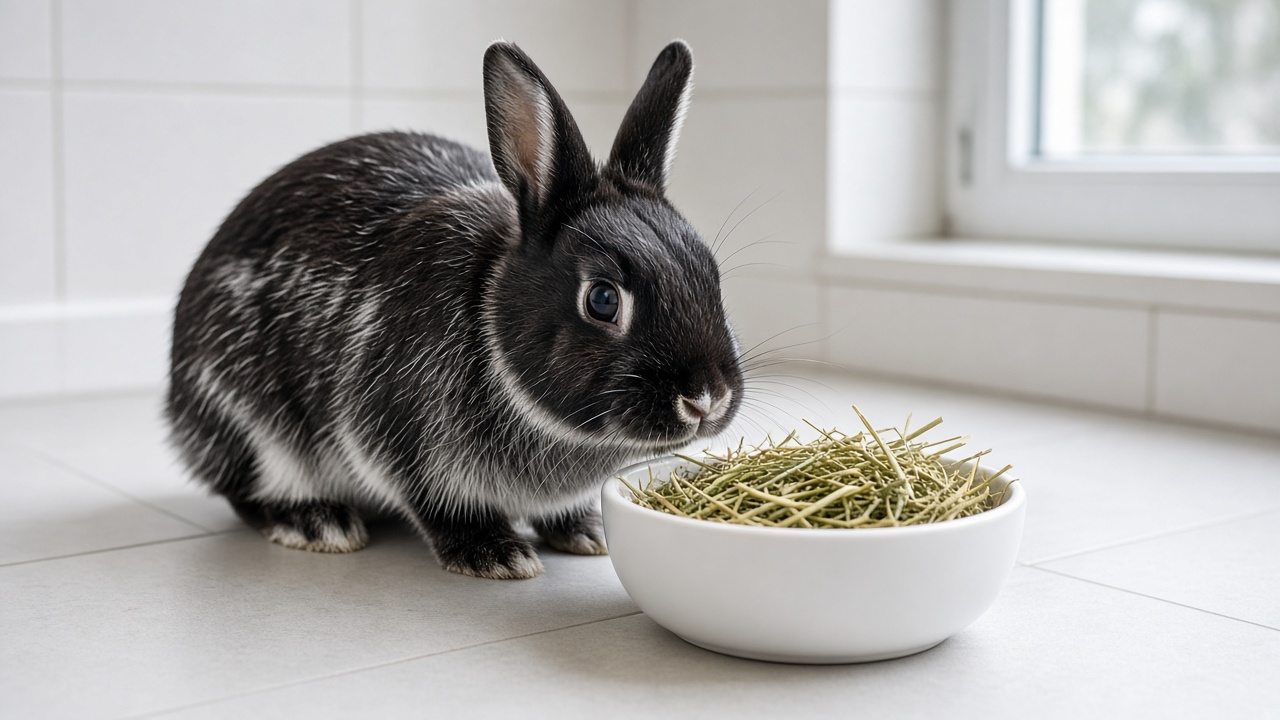
Quick answer: House a Silver Marten indoors on unlimited grass hay, a measured timothy pellet, and daily floor time. Plan for a medium adult under 9.5 pounds. Expect a short flyback coat and a shy start that warms with quiet handling.
A Silver Marten is an ARBA-recognized medium breed with a 9.5-pound maximum and four show colors: black, blue, chocolate, and sable.
This page is a research-desk breed brief that compares published registry, conservancy, welfare, and maker-label numbers. We did not keep a Silver Marten colony, run feeding trials, or judge coats on a show table.
Selection rule: we cover indoor companion care for an adult Silver Marten. We also cover adult pellets whose maker pages list a first-ingredient forage and a numeric fiber figure. We leave out meat or fur programs, breeding plans, junior bags, and seed mixes.
What the breed is, and what the name also means
The American Rabbit Breeders Association treats “Silver Marten” as both a breed and a color. The breed came first. The color later appeared in other breeds, including Netherland Dwarf and Mini Rex.
ARBA traces the type to the 1920s. “Strange little black rabbits” showed up in Chinchilla litters after breeders added black and tan stock to improve type.
The Livestock Conservancy dates those first sports to 1921 in the United States. It says the color name echoed the wild marten’s dark top and pale trim.
ARBA set a working standard for Black and Chocolate Silver Marten in 1927. It added Blue and Sable in 1933.
The Livestock Conservancy notes a Silver Marten Rabbit Club by 1927. It still lists the breed as Recovering.
How big a Silver Marten gets
ARBA states a maximum weight of 9.5 pounds. The Livestock Conservancy lists adult weight as 6 to 9.5 pounds, with that same cap.
That range is medium. It is larger than a true dwarf and smaller than a giant meat breed.
Ohio 4-H’s ARBA Rabbit Breed Profiles describe a commercial body. The profile is medium length, deep, and plump, with erect ears and medium bone.
Plan housing for the high end, not the low end. A senior doe near 9.5 pounds needs a medium-rabbit floor plan.
The Merck Veterinary Manual lists a cage floor of at least 24 by 30 inches for medium-to-large breeds. Treat that as a published minimum, not a daily plan.
The House Rabbit Society’s primer lists a larger cage: 2 by 2 by 4 feet for one rabbit. That is 8 square feet.
Our research team compared those two published floors. Merck’s medium-to-large minimum is 5 square feet. We use the House Rabbit Society’s 8-square-foot cage plus a daily run.
Coat, colors, and the silver-white trim
Ohio 4-H lists the coat as flyback. Flyback fur snaps back when you stroke it. It is not wool, and it is not rex plush.
The Livestock Conservancy describes the classic trim. White sits under the chin, belly, tail, inner ears, nostrils, and in thin eye circles. Silver ticking runs along the lower sides.
Ohio 4-H matches that map. It adds a silver triangle and collar at the nape, plus silver-tipped guard hairs on the sides.
ARBA recognizes four varieties: black, blue, chocolate, and sable. The marking pattern stays the same. Only the top color changes.
Black is the original look. Blue is a dilute slate. Chocolate is a rich brown.
Sable is a sepia body with darker points. Do not wash the coat to “brighten” the silver. Water soaks the undercoat and adds stress.
Keep the pen out of a hot window. The Merck Veterinary Manual warns that long exposure above 80°F can make rabbits sick.
Temperament: shy first, social later
The Livestock Conservancy lists temperament as docile and shy. It also lists experience level as Novice/Intermediate.
A calm novice can succeed. A noisy, grabby household will not.
The Conservancy’s notes are specific. These rabbits need gentle socialization and become affectionate after they bond. Does are described as good mothers.
The House Rabbit Society’s primer reminds owners that rabbits are prey animals. They do not cry out when distressed. They may scratch or kick if held badly.
Support the chest and the hindquarters at the same time. Never lift by the ears. If the rabbit struggles, lower yourself to the floor first.
The Merck Veterinary Manual says improper handling can injure the spine. It favors older teens and adults over very young children.
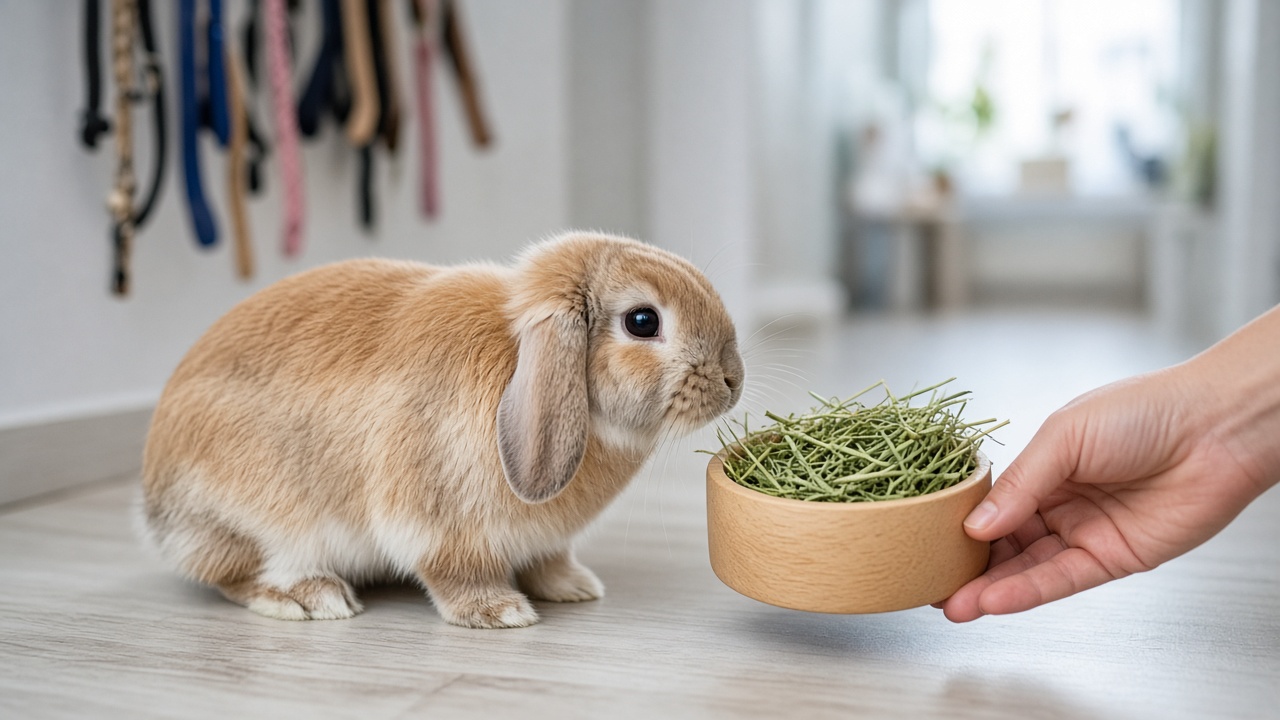
Give a new Silver Marten a hide box and a quiet routine. Sit on the floor and let the rabbit approach.
The House Rabbit Society recommends several hours of exercise each day for indoor rabbits. Use that time for floor work, not only for holding.
Intact pairs must stay separate. The House Rabbit Society notes that a doe can kindle every 30 days. She can conceive again within 30 minutes of giving birth.
Indoor space that fits a medium rabbit
Keep the Silver Marten indoors. The House Rabbit Society argues that a backyard hutch isolates a social animal and exposes it to predators.
The Merck Veterinary Manual agrees that rabbits generally do better inside, in a climate-controlled room. It says domestic rabbits also do poorly below 50°F.
Use a pen or a large cage as a bedroom, not as the whole world. Attach an exercise area and cover chewable wires.
The Merck Veterinary Manual says open-pen sides should be at least 4 feet high to prevent escape. A medium rabbit can stand and push.
Offer a hay rack off the floor and a heavy water bowl or a steel-sipper bottle. Place a litter box in the corner the rabbit already uses.
The Merck Veterinary Manual also asks for a smooth resting pad if any wire is present. Spot-clean droppings daily. Fully wash the cage with hot, soapy water at least once a week.
Skip pine and cedar shavings. The House Rabbit Society warns that those fumes can affect liver enzymes. Skip clay and clumping cat litter as well.
Cardboard boxes, untreated wood blocks, and paper tunnels give a shy rabbit work to do. The Merck Veterinary Manual lists those as safe chew items.
Hay-first feeding and adult pellets we compared
The House Rabbit Society’s diet page puts hay at 85 percent of an adult rabbit’s diet. Pellets are 5 percent. Leafy vegetables are 10 percent.
That is the Hay-First Adult Rule we use here. Unlimited grass hay stays in the rack. Pellets stay measured.
The House Rabbit Society wants a timothy-based pellet with at least 18 percent fiber. It rejects gourmet mixes with nuts, seeds, or colored bits.
It also offers a vegetable cue: 1 to 2 cups of greens per 4 pounds of body weight. Use at least three leafy types. An 8-pound Silver Marten lands near 2 to 4 cups.
On pellets, the House Rabbit Society quotes Susan Brown. Uncontrolled pellet feeding can lead to obesity, heart and liver disease, chronic diarrhea, and kidney disease.
Oxbow’s Essentials Adult Rabbit Food page lists 1/4 to 1/3 cup daily for a 4-to-8-pound adult. Add unlimited grass hay. An 8-to-10-pound adult gets 1/3 to 1/2 cup.
Most Silver Martens sit in those two bands. Use the scale, not the breed name, when you scoop.
Small Pet Select’s Rabbit Food Pellets page recommends 1/4 to 1/2 cup per 6 pounds. That range is for rabbits aged 1 to 5 years.
Supreme Petfoods’ U.S. page for Science Selective Adult Rabbit Food doses a 2.5-kilogram adult at 60 to 70 grams per day. That example rabbit weighs 5.5 pounds.
Kaytee’s Timothy Complete Rabbit Food page lists small-breed and large-breed bands only. It tells owners to use an opened bag within 30 to 45 days.
Our research team compared five current maker pages that met the selection rule. Mazuri Timothy-Hay Based Rabbit Diet lists a fiber floor of 18.00 percent. Oxbow Essentials Adult Rabbit Food and Small Pet Select Rabbit Food Pellets both list 25.00 percent.
Calcium bands also split. Small Pet Select lists 0.4 percent minimum and 0.6 percent maximum. Mazuri lists 0.75 percent minimum and 1.25 percent maximum.
Science Selective Adult Rabbit Food was the only bag in this set whose first listed ingredient is alfalfa meal pellets. The other four lead with a timothy or timothy-grass forage.
Mazuri also publishes a pellet size of 1/8 by 3/8 inch. It lists a live-microorganism count of at least 270,000 CFU per gram.
For more pellet options, see our best rabbit pellets guide.
| Product | First listed ingredient | Crude protein (min) | Crude fiber | Calcium | Maker bag sizes |
|---|---|---|---|---|---|
| Oxbow Essentials Adult Rabbit Food | Timothy Grass Meal | 14.00% | 25.00%–29.00% | 0.35%–0.75% | 5, 10, 25 lb |
| Small Pet Select Rabbit Food Pellets | Timothy hay | 14% | 25%–29% | 0.4%–0.6% | 5, 10, 20, 40 lb |
| Mazuri Timothy-Hay Based Rabbit Diet | Ground Timothy Hay | 14.00% | 18.00%–22.00% | 0.75%–1.25% | 5, 25 lb |
| Kaytee Timothy Complete Rabbit Food | Sun-cured Timothy Grass Hay | 13.0% | 22.0%–27.0% | 0.25%–0.75% | 4.5, 9.5, 25 lb |
| Science Selective Adult Rabbit Food | Alfalfa meal pellets | 12.5% | 21.5%–28.5% | 0.3%–1.2% | 4 lb, 8.8 lb |
Transition slowly. Oxbow’s page uses a four-week mix. Kaytee’s page uses 7 to 10 days.
Watch droppings either way. Fresh water must stay up at all times. The Merck Veterinary Manual notes that rabbits drink a lot for their size.
Grooming a short flyback coat
A flyback coat is low-drama next to wool breeds. It still sheds. Swallowed hair can stall the gut.
The Merck Veterinary Manual says short-haired rabbits should be brushed at least twice a week. Long-haired rabbits need daily work. A Silver Marten belongs in the short-haired column.
Brush more during a molt. The same Merck page says sheds can be light one cycle and heavy the next.
Use a soft brush. Work with the grain. Stop if the rabbit freezes or stamps.
Do not bathe the whole rabbit. Dry the feet if they get wet. Keep the silver belly clean by changing the litter box.
Nails still grow. Ask a rabbit-experienced clinician to show the first trim.
Follow the steps in our how to groom a rabbit step-by-step guide. For tools, start with our rabbit grooming kit review.
Watch appetite as closely as the coat. The House Rabbit Society says a rabbit that stops eating or passing droppings for 12 hours needs urgent clinical care.
The House Rabbit Society’s primer states that indoor rabbits can live 7 to 10 or more years. A Silver Marten is a long household project.
FAQ
How much does a Silver Marten weigh?
ARBA lists a 9.5-pound maximum. The Livestock Conservancy lists adults at 6 to 9.5 pounds. Size the pen and the pellet scoop for the high end of that range.
What colors does ARBA recognize?
ARBA recognizes black, blue, chocolate, and sable. The silver-white trim stays in the same places on all four. The breed name also names a color used in other ARBA breeds.
Is a Silver Marten a good first rabbit?
The Livestock Conservancy lists Novice/Intermediate and a shy, docile temperament. A calm adult can do well. A loud, grab-first home is a poor match.
How much space does one Silver Marten need?
The House Rabbit Society’s primer asks for a 2-by-2-by-4-foot cage plus several hours of exercise. The Merck Veterinary Manual’s medium-to-large cage floor is 24 by 30 inches. We follow the larger published cage and add a daily run.
What should a Silver Marten eat each day?
The House Rabbit Society puts hay at 85 percent of the adult diet, with measured pellets and leafy greens. Use a high-fiber adult pellet from the table above. Keep fruit rare.
How often should I brush a Silver Marten?
The Merck Veterinary Manual says to brush short-haired rabbits at least twice a week, and more during a shed. A flyback coat is short. Skip full baths.
Can two Silver Martens share a pen?
Only after a careful, neutral introduction, and only if both are altered. The House Rabbit Society warns that introductions can fail and cause injury. The Merck Veterinary Manual says adult rabbits can fight severely.