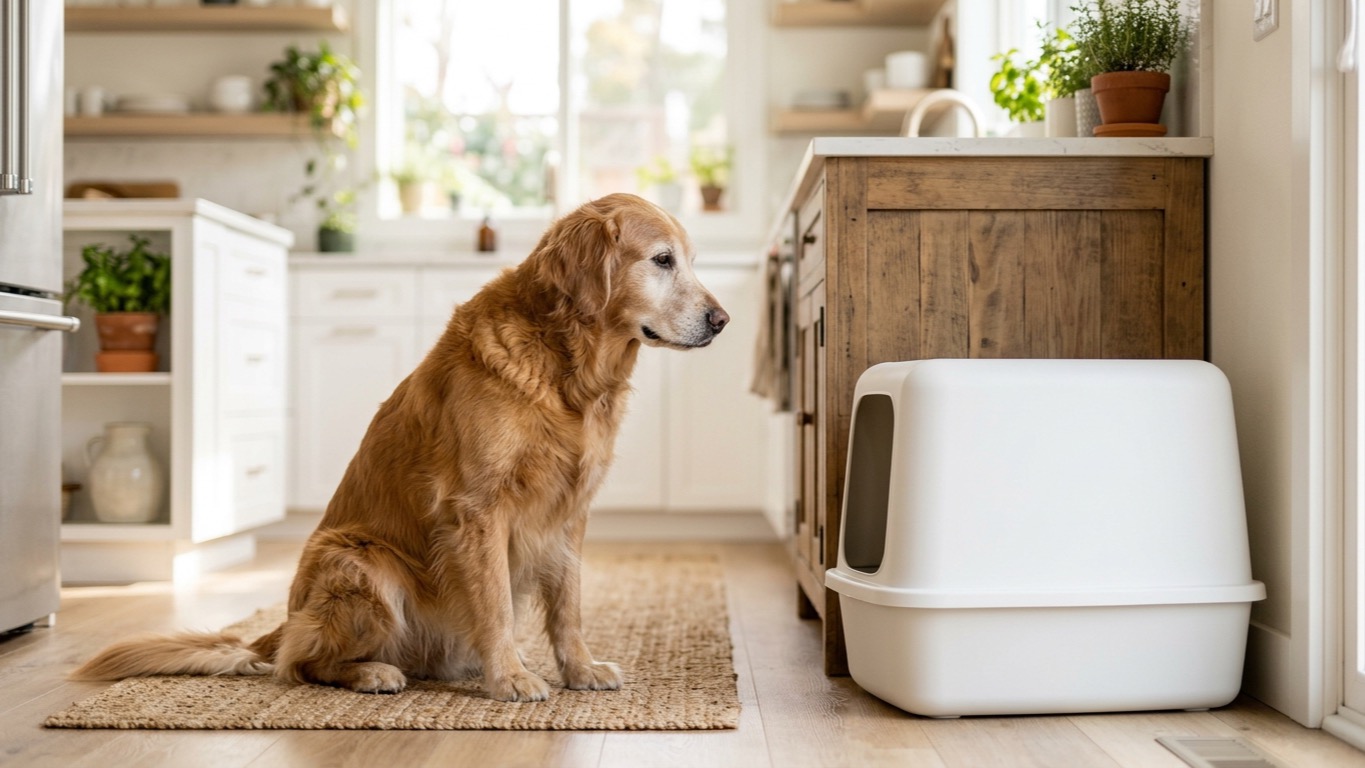
Quick answer: Block the litter box and scoop waste before your dog can reach it. Ask a veterinarian to rule out medical causes if the habit continues, and skip punishment.
Most dogs eat cat litter because they want the feces, not the granules.
This research-desk explainer covers multi-pet homes;
Selection rule: We cover indoor dogs that eat used or unused litter in a home that also keeps a cat. We leave out outdoor scavenging, ranked deterrent lists, and any litter we could not confirm on a current maker page.
Why the litter box draws dogs
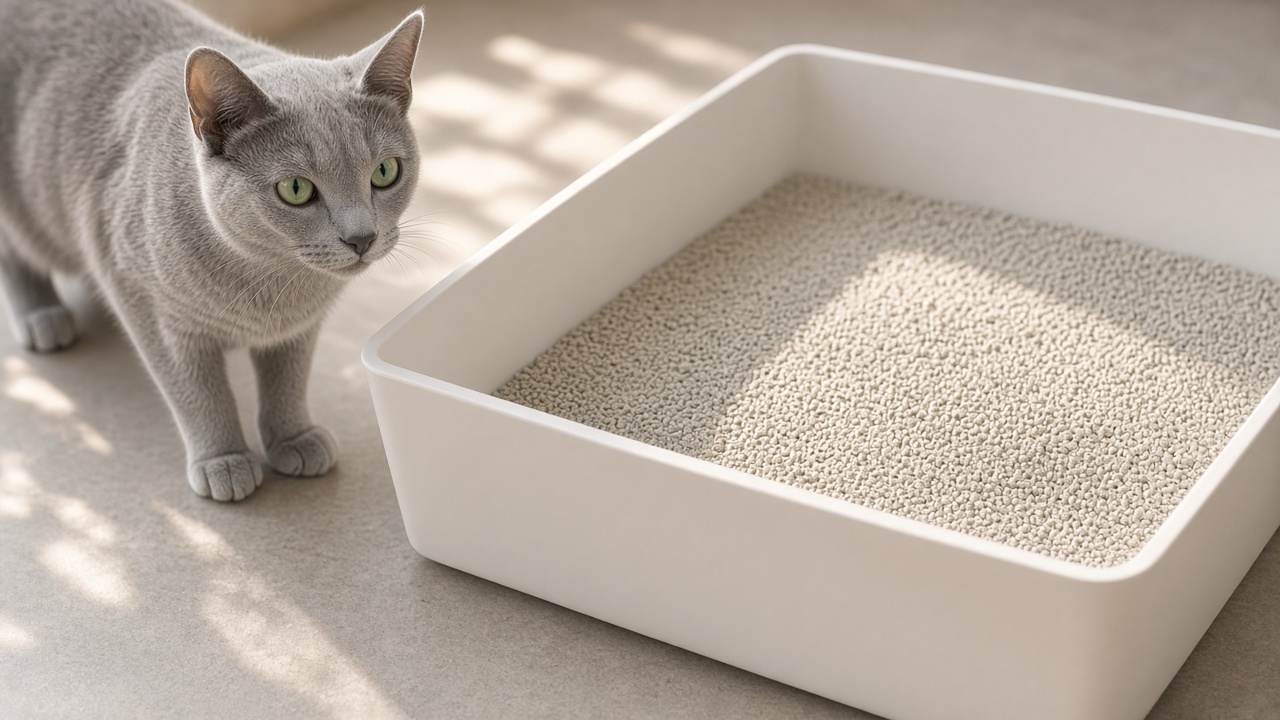
The box is a dense scent station. Cat feces sit in a small tray. The smell is stronger than a yard pile.
The American Veterinary Medical Association published 2025 ownership counts in its Pet Ownership and Demographics Sourcebook. It estimated 87.3 million pet dogs and 76.3 million pet cats in the United States.
Dogs live in 42.6 percent of U.S. households. Cats live in 32.6 percent.
Many homes hold both species. That overlap puts a protein-rich waste pile at nose height.
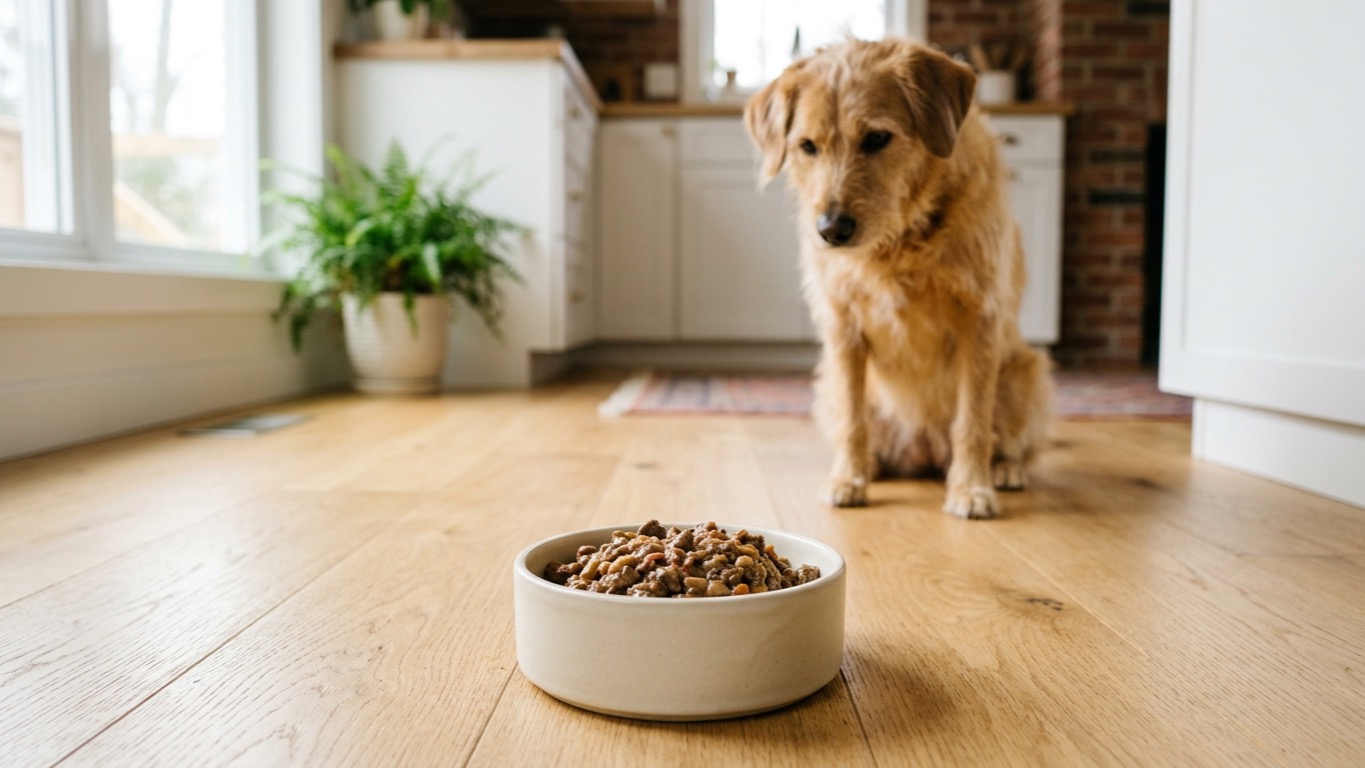
Dogs that already steal cat food often treat the box as a second bowl. The waste still smells like the cat’s diet.
University of California, Davis researchers led by Benjamin Hart surveyed 1,441 dog owners. The 2018 paper in Veterinary Medicine and Science found 16.0 percent of dogs were seen eating stools at least six times.
Another 7.1 percent were seen doing it one to five times. About 23 percent of the sample had been seen at least once.
The same analysis found that eating cat stools was positively associated with dog-to-dog stool eating. The box sits on a known scavenging path.
Hart’s team also found that 51.1 percent of frequent stool eaters were called greedy eaters. Only 28.2 percent of non-eaters got that label.
Fast, indiscriminate eating predicts box raids. So does a house with more than one dog.
Coprophagy is not the same as eating unused litter
The American Kennel Club defines pica as the repeated eating of non-food items. Coprophagy is feces eating.
Many litter raids are coprophagy first. The granules ride along because they stick to the waste.
Hart’s second survey covered 1,475 frequent stool eaters. It found that 85 percent ate stools no more than two days old.
Fresh waste is the target. Unused granules can still get eaten.
Puppies mouth new textures. Anxious dogs chew when left alone.
Some dogs lick clay dust off paws, then finish the pile. That is pica, not a hunt for feces.
The Association of American Feed Control Officials sets a protein floor for adult dog food. Adult-maintenance diets must reach 18.0 percent crude protein on a dry-matter basis.
Growth and reproduction diets must meet 22.0 percent.
Hart’s first survey still found no diet link. Kibble was the main food for 82.3 percent of frequent stool eaters and 78.3 percent of non-eaters.
A complete bowl does not rule out the box. Confirm the food with your clinic, then still block the tray.
If your dog also raids the kitchen, treat that as the same scavenging habit. Some pantry foods, including grapes, are unsafe even in small amounts.
Medical checks that belong with a clinic visit
A research desk cannot diagnose a dog. A veterinarian can look for parasites, anemia, pain, and gut disease.
The American Kennel Club notes that pica can follow nutritional gaps, anemia, parasitic infection, or pain. One 2020 case it cites involved a Labrador that stopped eating stones after hip pain was treated.
Hart’s 2018 surveys did not tie stool eating to age, sex, or a compulsive-behavior list. Ease of housetraining was similar in both groups.
That argues against a simple “weak aversion to feces” story. The habit can still hide a medical problem.
Call a clinic sooner if you see vomiting, straining, no stool, a swollen belly, or sudden lethargy. Clumping litter can swell after it meets moisture.
A blockage is an emergency. Do not wait for a new litter brand to fix that.
What published specs say about litter types
Litter is sold as a hygiene product. The Food and Drug Administration regulates pet food under the Federal Food, Drug, and Cosmetic Act.
That law requires animal food to be safe, produced under sanitary conditions, free of harmful substances, and truthfully labeled. Canned pet food must also meet 21 CFR 113.
Cat litter is not a food. Maker pages still publish fill depth, bag weight, and clump claims.
Those facts change how much a dog can swallow in one raid. Our research team compared published specs from four current maker pages.
Maker fill depths on those pages run from 2 inches to 4 inches.
A deeper bed holds more unused granules if a dog digs. Use the table for attributes, not as a ranking.
| Product | Base material | Clumps | Maker fill depth | Listed bag sizes | Maker notes |
|---|---|---|---|---|---|
| World’s Best Cat Litter Multiple Cat Unscented | Whole-kernel corn | Yes | 2–3 inches | 8, 15, 28, and 32 lb | 99% dust-free; maker lists flushable |
| PrettyLitter Clumping | Silica gel plus guar gum | Yes | Not stated on the product page we read | 10 lb | Color-changing crystals; one bag listed as lasting one cat up to one month |
| Fresh Step Advanced Simply Unscented | Clay with carbon | Yes | 3–4 inches | 18.5 lb and 22 lb | 15-day odor claim; do not flush |
| ökocat Original Premium Clumping | Spruce, fir, and pine wood fiber | Yes | 2–3 inches | 9, 12.6, and 18.8 lb | 99% dust-free; base can last up to 7 weeks |
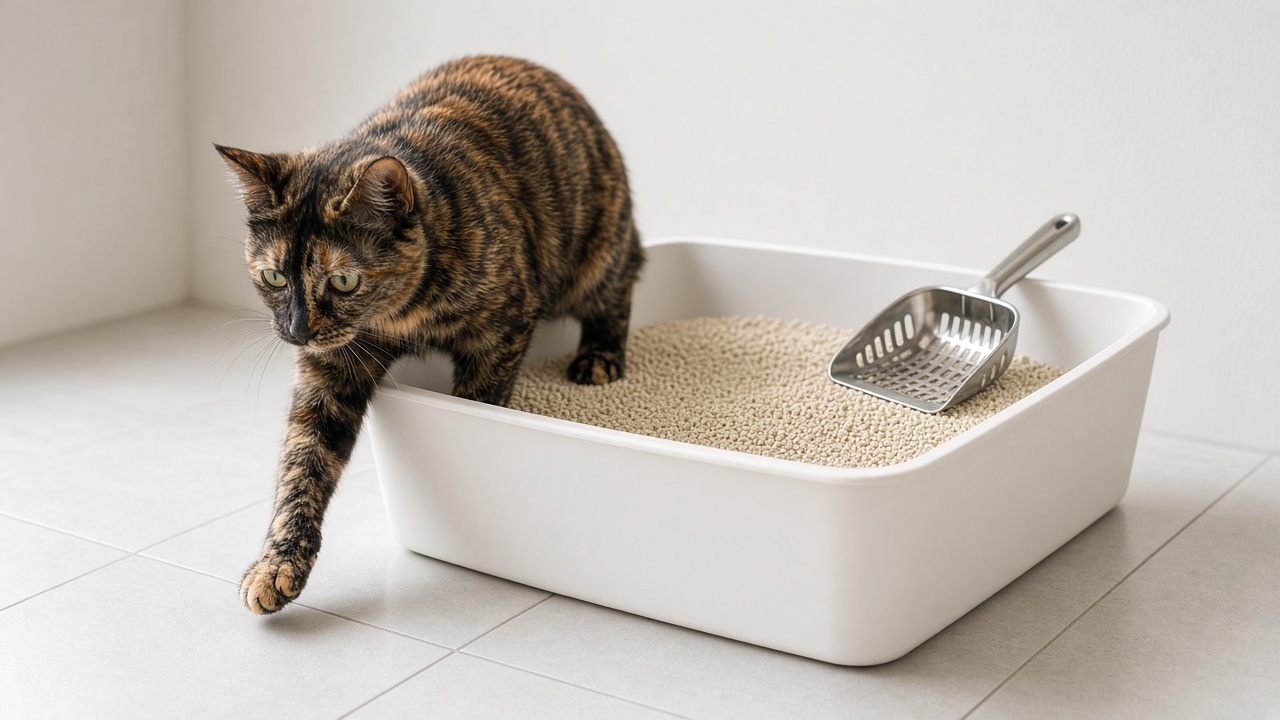
World’s Best Cat Litter tells owners to scoop daily and keep 2–3 inches in the box. Fresh Step tells owners to scoop daily and keep 3–4 inches in the box.
ökocat tells owners the base can last up to 7 weeks with daily scooping. PrettyLitter’s help page says Clumping PrettyLitter uses silica gel plus guar gum.
Guar gum binds moisture so used crystals can be scooped. Clumping clay and clumping silica can harden after they meet saliva or gut fluid.
Plant and wood formulas can still irritate a gut. They can also form a mass if a dog eats a large volume.
No formula on this table is a dog snack. Switching brands does not replace a closed door.
The Access-First Rule for stopping it
We use a three-step rule: block, empty, then check. Access comes before training gadgets.
Block. Put the box behind a baby gate with a cat-sized gap. A covered box with a top entry also works.
Close the bathroom door and add a cat flap if you need a harder barrier.
During a new dog-and-cat introduction, keep the box in the cat’s gated room from day one. The cat still needs an easy path.
Empty. Scoop feces as soon as you see them. Hart’s data show most stool eating targets waste that is one or two days old.
Same-day scooping removes the prize. Leave unused litter in place only after the waste is gone.
The Centers for Disease Control and Prevention states that cats shed Toxoplasma gondii oocysts for only 1–3 weeks after infection. Those oocysts take 1–5 days in the environment to become infective.
Mature oocysts measure 10–12 micrometers. Daily scooping cuts both the dog’s snack and that window.
Wear gloves and bag the waste. Do not leave a full scoop on the floor.
Check. If the dog still digs unused litter after the prize is gone, book a medical visit. Then add exercise, food puzzles, and a chew the dog may have.
Supervise the first weeks. A house leash stops a silent raid while you cook.
Do not shout or rub a nose in the box. Punishment can hide the habit and raise anxiety.
What owner surveys say does not work
Hart’s second survey asked owners which fixes they tried. Chasing the dog from stools was the most common method, with 1,048 reports.
Success sat at 1–2 percent. A “leave it” reward plan did slightly better, at 4 percent.
Pepper on stools and shock or sound collars stayed in the 1–2 percent range. Flavor tricks fail when the waste stays in reach.
Eleven commercial food additives and tablets were on the 2018 list. Reported success ranged from 0 to 2 percent.
The two most-used additives in that survey had 352 and 238 reports. Each had a 1 percent success rate.
Those products targeted dog-to-dog stool eating. They are not a litter-box plan.
A complete AAFCO-profile diet is still worth confirming with your clinic. It is not a substitute for a closed gate.
The AVMA’s 2025 sourcebook was based on an opt-in survey of 7,519 people. Multi-pet homes are common enough that box design is household infrastructure.
When a raid already happened
Watch the dog for 24 hours if the amount was small and the dog is acting normally. Offer water.
Do not force food, oil, or a home “clean-out.” Go to urgent care if the dog vomits repeatedly, cannot pass stool, paces, or guards the belly.
Tell the clinic the litter type and the rough amount. Bring the bag if you still have it.
Clay, silica, corn, and wood fiber are different materials. The clinic can use the listed ingredients.
Wash your hands after you handle the box. The CDC lists changing a pet cat’s litter box as one human route for Toxoplasma exposure.
A dog’s mouth that just left the box is another surface to clean. Keep children away from the dog’s face until you have wiped it.
This is basic hygiene, not a diagnosis.
FAQ
Is cat litter poisonous to dogs?
Most formulas are not sold as poisons. The main risk is physical: clumping clay and clumping silica can swell and obstruct a gut. Large volumes of any granule can irritate the stomach. Call a veterinarian if you are unsure how much was eaten.
Why does my dog eat unused, clean litter?
Unused litter can be pica, boredom, or leftover scent from old waste. Puppies also mouth new textures. If clean granules keep disappearing after you block feces, ask a clinic to check for anemia, parasites, and pain.
Can eating cat feces make a dog sick?
Yes. Feces can carry bacteria and parasites. The CDC notes that Toxoplasma oocysts are shed only in felid feces and become infective after 1–5 days. Not every raid causes illness, but the risk is real enough to stop access.
Will switching litter stop the behavior?
A new texture may slow a casual chewer for a few days. It will not hide the smell of fresh feces. Our spec comparison shows every listed product is still a scoopable bed, not a deterrent.
Should I punish my dog for eating litter?
No. Hart’s owner reports put chase-and-punish success near 1–2 percent. Scolding can also teach the dog to raid when you are gone. Remove the box from reach, and reward the dog for leaving the room when asked.
Do stool-eating chews or powders work?
Hart’s 2018 owner survey put success for 11 marketed additives at 0–2 percent. The paper did not confirm label compliance. Even so, the reported rate is too low to treat those products as a plan.
When should I call a veterinarian?
Call the same day if the dog ate a large clump, vomits, strains, or seems dull. Call within a few days if the habit continues after you block the box. Ask for a physical exam and the lab work your clinician thinks fits, and bring the litter bag.