Quick answer: Match panting to heat, exercise, or stress. Count resting breaths in a cool room. If the count stays high, or gums change color, get a clinic involved the same day.
Dogs pant so much because they dump heat through rapid mouth breathing, not through skin sweat like people. This page is a research-desk brief that compares published vital-sign ranges with current cooling-gear spec sheets. We did not run heat-chamber trials, did not time panting in live dogs, and did not read clinic charts.
Dogs look busy when they pant. The job is simple. Moisture evaporates from the tongue and airway.
Heat leaves with that moisture. The Merck Veterinary Manual puts a resting dog at 18 to 34 breaths a minute. Panting after a run can sit far above that range and still be ordinary.
Panting that stays high in a cool, quiet room is a different problem.
Selection rule: We included a cooling product only if its maker page listed both an activation method and a numeric size range on the day we pulled the sheet. We left out ice packs, human running vests, and any listing that showed a photo but no size numbers.
Why dogs pant so much
Panting is a cooling system, not a mood. Dogs move air fast across wet surfaces in the mouth and nose. Evaporation pulls heat out of the body.
The American Animal Hospital Association states that pets do not sweat to cool down the way people do. They rely on panting and limited sweating through paw pads. The mouth does the real work.
The Merck Veterinary Manual says dogs take quick breaths to release heat, then need pauses for deeper breaths. A dog that never pauses can be in trouble.
Heat is the most common reason the system revs up. Exercise, excitement, and fear also raise the rate. If you cannot name the trigger, treat the panting as unmatched.
Short-nosed breeds start with less airway to work with. The American Animal Hospital Association names bulldogs, pugs, boxers, and Boston terriers as higher-risk faces. Their panting can look dramatic even on a mild walk.
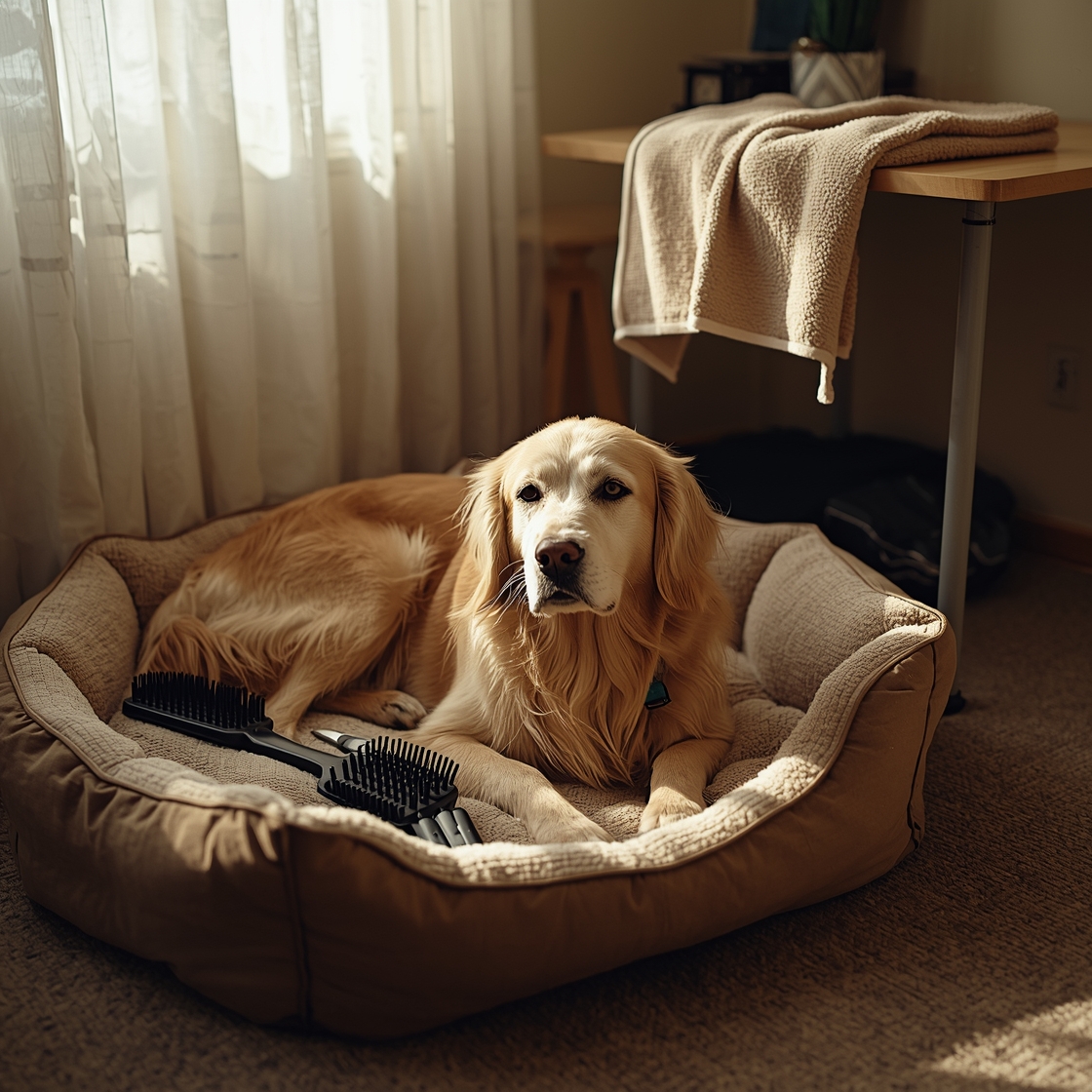
A thick coat is a winter tool worn in summer. The Merck Veterinary Manual notes that dogs from cold climates carry a soft, thick undercoat. Loose hair makes that layer worse.
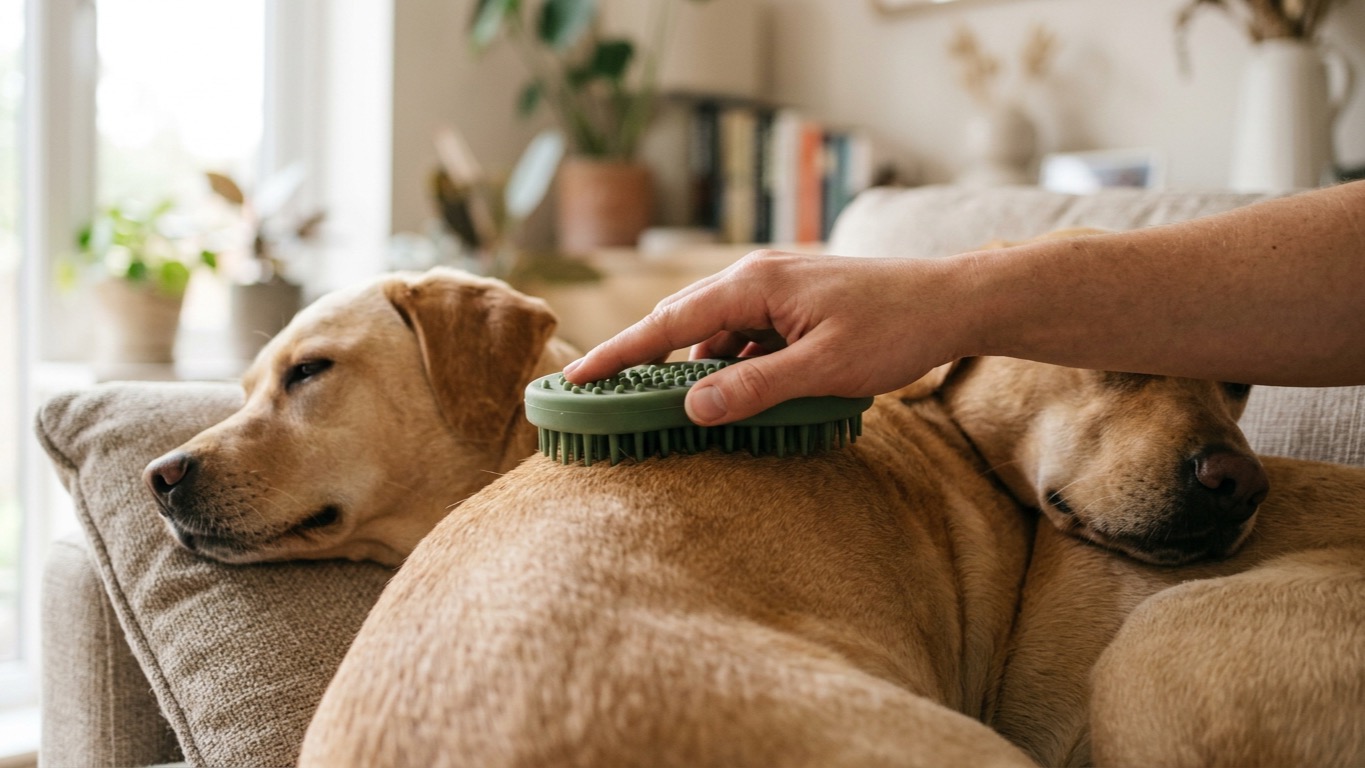
A grooming brush made for sensitive skin can lift the undercoat without scraping thin skin.
The Rest-Rate Match: normal versus excess
We use a simple check we call the Rest-Rate Match. Name the trigger. Watch the cool-down.
Then count breaths at rest. Ordinary panting matches heat, work, or worry, then falls back. Cornell University College of Veterinary Medicine, in a March 2025 update, puts a normal dog at 12 to 30 breaths a minute.
The Merck Veterinary Manual lists 18 to 34 at rest. Those two published windows overlap. A household count that stays above both windows in a cool room fails the match.
Count when the dog is lying still and not sniffing. Watch the chest rise and fall. One rise plus one fall is one breath.
Count for 30 seconds and double that number. Write your baseline down. A dog that usually rests at 20 and later rests at 40 has changed.
Normal panting is noisy but rhythmic. The tongue is wet. Gum color stays pink.
Excess panting is unmatched and lasts in a cool room. The belly heaves. Cornell lists a bluish tinge on the gums and muzzle as a distress sign.
Open-mouth breathing at rest is a warning. So is panting that starts during sleep. If the ribs hammer all night, call a clinic.
Heat, parked cars, and urgent signs
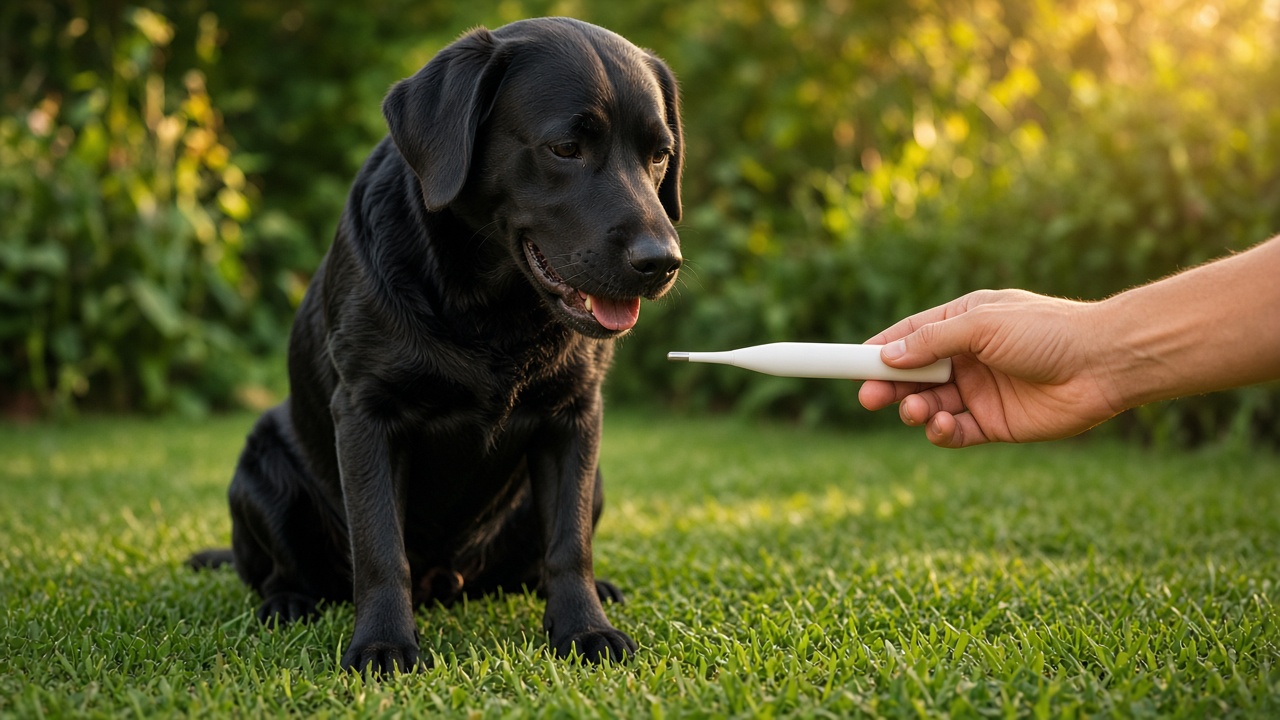
Heat turns ordinary panting into a race the body can lose. The American Animal Hospital Association says heatstroke usually means a body temperature above 104°F. It lists a typical normal range of 100 to 102.5°F.
The Merck Veterinary Manual lists an average dog temperature of 101 to 102.5°F. It also says a parked car can quickly heat up to over 150°F. The American Red Cross says parked-car temperatures can exceed 120°F, even with windows cracked.
Those two car figures are not the same study. They point the same way. Do not leave a dog in a parked car.
The American Animal Hospital Association lists heavy panting, ropey drool, wobbliness, vomiting, bright red or pale gums, collapse, and seizures as heatstroke signs. The American Red Cross adds a body temperature of 104°F or above and very red mucous membranes.
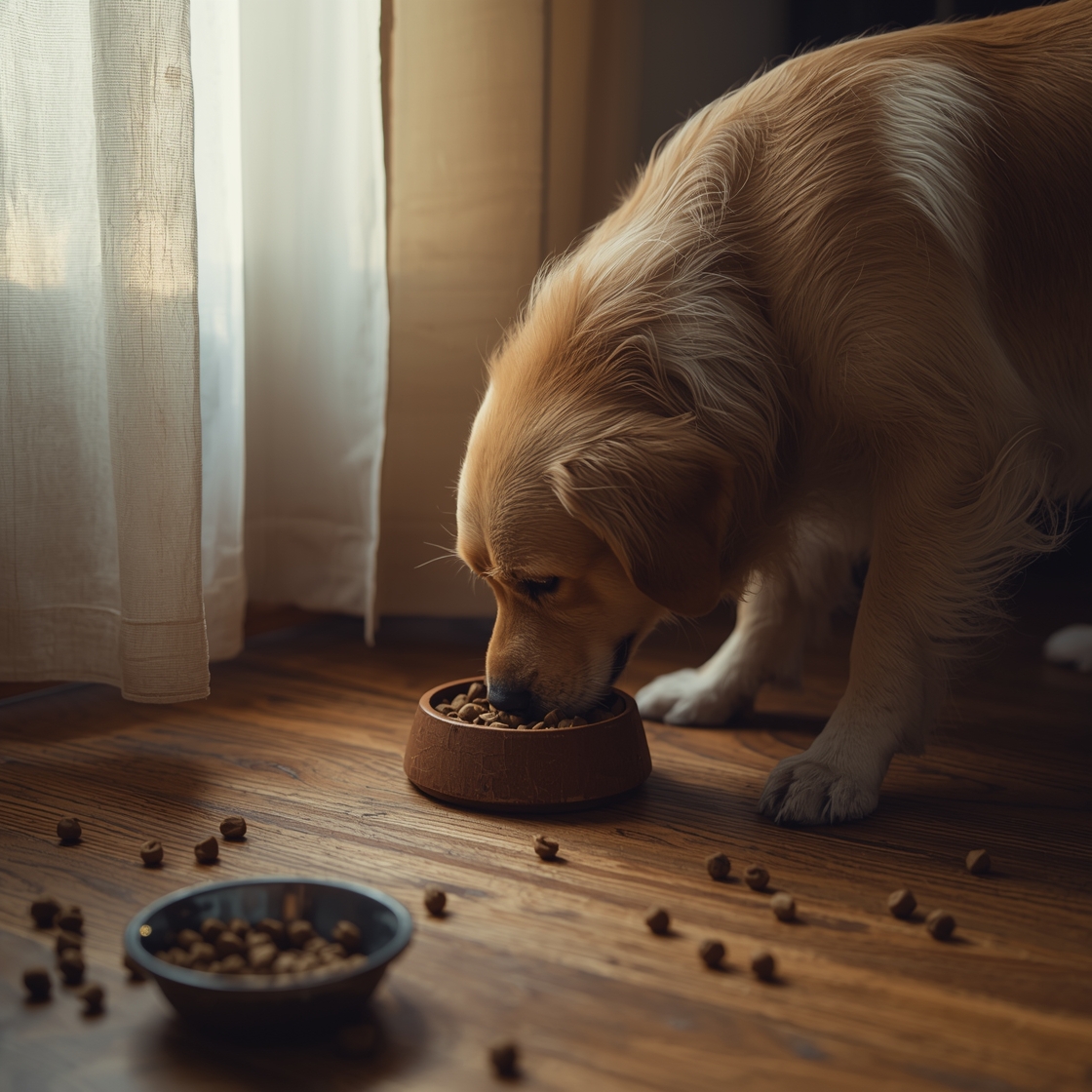
If panting shows up with vomit that still looks like kibble, treat the pair as urgent. Heatstroke can empty the stomach. So can other illness.
The American Animal Hospital Association tells owners to move the pet to shade or air-conditioning and to contact a veterinary hospital. It describes tepid water on the neck, chest, and abdomen, plus a fan. It says not to use ice, and not to wrap the body in wet towels.
It says to stop cooling once the temperature drops to 103°F. The American Red Cross still wants a hospital visit after you cool the dog. It says many consequences of hyperthermia will not show for hours or days.
Water and shade are the first tools. Gear is a helper, not a substitute. A wet vest cannot fix a closed car.
Stress, pain, and other non-heat triggers
Not every open mouth is a heat story. Fear, fireworks, car rides, and new houses can all raise the rate. The panting often comes with pacing, yawning, or a tucked tail.
The room can be cool and the dog still looks wound up. Pain is quieter. A dog with a sore joint may pant on the rug after a short stroll.
The Merck Veterinary Manual says adult dogs have 42 teeth, replacing 28 baby teeth between 2 and 7 months. Tartar and broken teeth can make a dog pant, drool, or refuse hard food. Our ultrasonic tooth cleaner guide covers home tools only.
Heart and lung disease can mimic heat panting. Cornell lists laryngeal paralysis, tracheal collapse, fluid in the lungs, and heart disease among causes of respiratory distress. Those dogs may pant in a cool house.
They may cough at night. The American Animal Hospital Association says excess fat traps heat and makes panting harder.
Medications can raise panting. If a new tablet and new panting arrived together, call the clinic that wrote the script. Do not stop a drug on a guess.
Cooling gear we compared from maker pages
Our research team analyzed five current maker pages. Three products were water-activated evaporative vests. Two were floor pads.
Comparing published specs, only one of the three vests listed a UPF rating. Ruffwear states that Swamp Cooler material is rated UPF 50+ and blocks 98% of the sun’s UV rays. Kurgo and Canada Pooch did not list a UPF number on the pages we read.
Ruffwear also reports its own studio work with a thermal camera. It says a dog’s surface cooling rate averaged 6 times the baseline when wearing its cooling gear. On that page, Bailey’s surface temperature under the vest fell from 81.5°F to 71.8°F in 14 minutes.
Those figures belong to Ruffwear. They are surface numbers, not core-body numbers.
Canada Pooch lists 15 numeric sizes from 8 through 36. Ruffwear lists 6 girth bands from 13 to 42 inches. Kurgo lists 4 sizes with chests from 19 to 45 inches.
Pad area differs at the top size. The Green Pet Shop Extra Large Cool Pet Pad is 27.5 by 43.3 inches, or 1,191 square inches. The K&H Coolin’ Pet Pad X-Large is 27 by 38 inches, or 1,026.
The Green Pet Shop says the Cool Pet Pad cools up to 3 hours, then recharges in 15 to 20 minutes of non-use. K&H says its pad has no stated time limit and stays at ambient air temperature. All three vests say to re-wet when dry.
We did not rank these products. Pick by activation method and by the size numbers on the maker page.
| Product | Activation | Method | Size span | Duration |
|---|---|---|---|---|
| Ruffwear Swamp Cooler Vest | Soak | Evaporative, UPF 50+ | Girth 13–42 in, 6 sizes | Re-soak when dry |
| Kurgo Core Cooling Vest | Wet and wring | Evaporative at core | Chest 19–45 in, 4 sizes | Re-wet as needed |
| Canada Pooch Chill Seeker Cooling Vest | Wet and wring | Evaporative mesh | Sizes 8–36, 15 sizes | Rewet when dry |
| K&H Coolin’ Pet Pad | Add water | Water-wick, no gels | 11×15 to 27×38 in | No time limit |
| The Green Pet Shop Cool Pet Pad | Lie down | Pressure gel | 11.8×15.7 to 27.5×43.3 in | Up to 3 hours |
The Ruffwear Swamp Cooler Vest uses three layers and lists a 20-inch medium length. The Kurgo Core Cooling Vest adds a two-way zipper for a harness. The Canada Pooch Chill Seeker Cooling Vest lists an interior of 80% rayon and 20% polyester.
The K&H Coolin’ Pet Pad lists more than 25 years of product work, a one-year warranty, and a hard-floor placement note. Carpet, it says, holds heat. The Green Pet Shop Cool Pet Pad is indoor gear and should not sit in a hot car.
It lists four US patents, including 8,720,218 B2. Extra Small is 11.8 by 15.7 inches for pets from 0 to 8 pounds.
None of these products treats airway disease. If a dog fights the garment, take it off. If panting stays unmatched after you remove heat, book the exam.
FAQ
Why do dogs pant so much after a short walk?
A short walk can still raise body heat, especially on pavement. Panting should ease once the dog is in shade with water. If the mouth stays wide in a cool room, run the Rest-Rate Match.
How many breaths per minute is too many at rest?
Cornell lists 12 to 30 breaths a minute as normal. The Merck Veterinary Manual lists 18 to 34 at rest. A calm indoor count above both ranges is excess.
Can a cooling vest replace water and shade?
No. Evaporative vests need air moving across wet fabric. Ruffwear, Kurgo, and Canada Pooch all tell owners to re-wet gear when it dries.
Why does my flat-faced dog pant more than my other dog?
Flat faces leave less room for air. The American Animal Hospital Association says those airways make heat harder to dump. Plan shorter outings and cooler hours.
What if panting comes with vomiting or loose stool?
The American Animal Hospital Association lists vomiting and diarrhea among heatstroke signs. The American Red Cross lists bloody diarrhea or vomiting at 104°F or above. Get the dog to a hospital.
Do I need a gel pad or a water pad?
Choose by room and by the maker’s limits. The Green Pet Shop Cool Pet Pad is listed for indoor use, with a 3-hour session claim. The K&H Coolin’ Pet Pad uses added water, works on hard floors, and lists no session clock.