Quick answer: Book a clinic exam if scooting lasts more than a day or two, or if you see swelling, blood, or rice-like bits. Do not squeeze the glands at home. A clinician can check the sacs, skin, and stool before any fiber topper.
Dogs drag their rear to relieve pressure or itch from anal sacs, tapeworm segments, or inflamed skin. This page is a research-desk briefing of labels and papers, not a clinic exam, gland expression, or feeding trial.
Our research team analyzed one large primary-care cohort and five current maker pages. We used a single selection rule for products.
A product entered this guide only if the maker’s own page listed a fiber milligram dose, a probiotic CFU count, or a wipe dimension. The same page also had to name stool bulk, anal-gland emptying, or rear cleanup. Prescription dewormers, clinic-only expression tools, and “immune support” labels with no fiber or hygiene spec stayed out.
What scooting actually is
Scooting is a drag of the anus and peri-anal skin across the floor. The dog is trying to scratch or empty something it cannot reach.
It is a sign, not a diagnosis. The same motion can mean a full sac, a worm segment, a mat, or raw skin.
A single scoot after a messy stool can be housekeeping. Repeat scooting the same day is a reason to look under the tail and call the clinic.
Anal sacs, stool shape, and who is at higher risk
Dogs have two anal sacs beside the anus. Firm stool normally presses them empty during a bowel movement.
Soft stool does not apply that pressure. Fluid then sits in the sacs, thickens, and itches. The dog scoots to unload the pressure.
A 2013 primary-care cohort in Veterinary Record followed 104,212 dogs at 110 United Kingdom practices. The one-year period prevalence of non-neoplastic anal-sac disorders was 4.40 percent.
Among confirmed cases in that paper, impaction made up 78.58 percent.
Sacculitis made up 12.18 percent. Abscess made up 8.94 percent.
Brachycephalic types in that cohort had 2.6 times the odds of anal-sac disorders versus dolichocephalic types.
Cavalier King Charles Spaniels had a 14.83 percent prevalence in the same year.
Clinics in that study prescribed antimicrobials in 20.24 percent of cases. They prescribed analgesics in 11.97 percent.
Anal sacculectomy occurred in under 1 percent of cases.
A 2022 veterinarian questionnaire in the journal Animals estimated non-neoplastic anal-sac disease at 15.7 percent in dogs. That figure is higher because it asked clinicians for an incidence impression, not a chart review.
The University of Minnesota’s dermatology handbook cites reported incidences of 1.5 percent to 12.5 percent across practices.
The spread is real. Clinic mix and case definitions differ.
Small breeds and dogs with chronic loose stool show up often in those papers. Obesity and concurrent skin disease also appear as risk markers.
If your dog also throws up undigested food, the gut may be moving contents too fast.
Fast transit often means softer stool. Softer stool empties the sacs less well.
Parasites, fleas, and the rice-grain clue
Tapeworm segments can crawl at the anus and itch. Owners often describe them as moving grains of rice on the coat or in fresh stool.
The Centers for Disease Control and Prevention states that dogs get Dipylidium caninum by swallowing an infected flea, usually while grooming.
The Companion Animal Parasite Council published general guidelines on April 24, 2025. Those guidelines ask clinics to run fecal exams at least four times in the first year of life. For healthy adults, CAPC asks for fecal testing at least two times per year.
CAPC also asks for preventive physical exams at least every 6 to 12 months. It tells clinics to give year-round control with activity against heartworm, intestinal parasites, fleas, and ticks.
If year-round control is not possible, CAPC tells clinics to treat adult pets four times a year. It specifies a broad-spectrum anthelmintic. It also asks for fecal diagnostics at least 2 to 4 times a year.
A scooting dog with fleas is a tapeworm suspect until a fecal test says otherwise. Deworming without flea control often fails, because the dog can swallow another infected flea.
Do not guess the worm species from a photo. Bring a fresh sample. CAPC notes that passive fecal flotation is not recommended.
Skin, mats, and allergy-driven scooting
Allergic skin disease can inflame the peri-anal skin. The dog then scoots for the same reason it licks its paws.
Hot spots, yeast, and clipper burn after a groom can do the same thing. Long coats collect feces and mats that pull the skin.
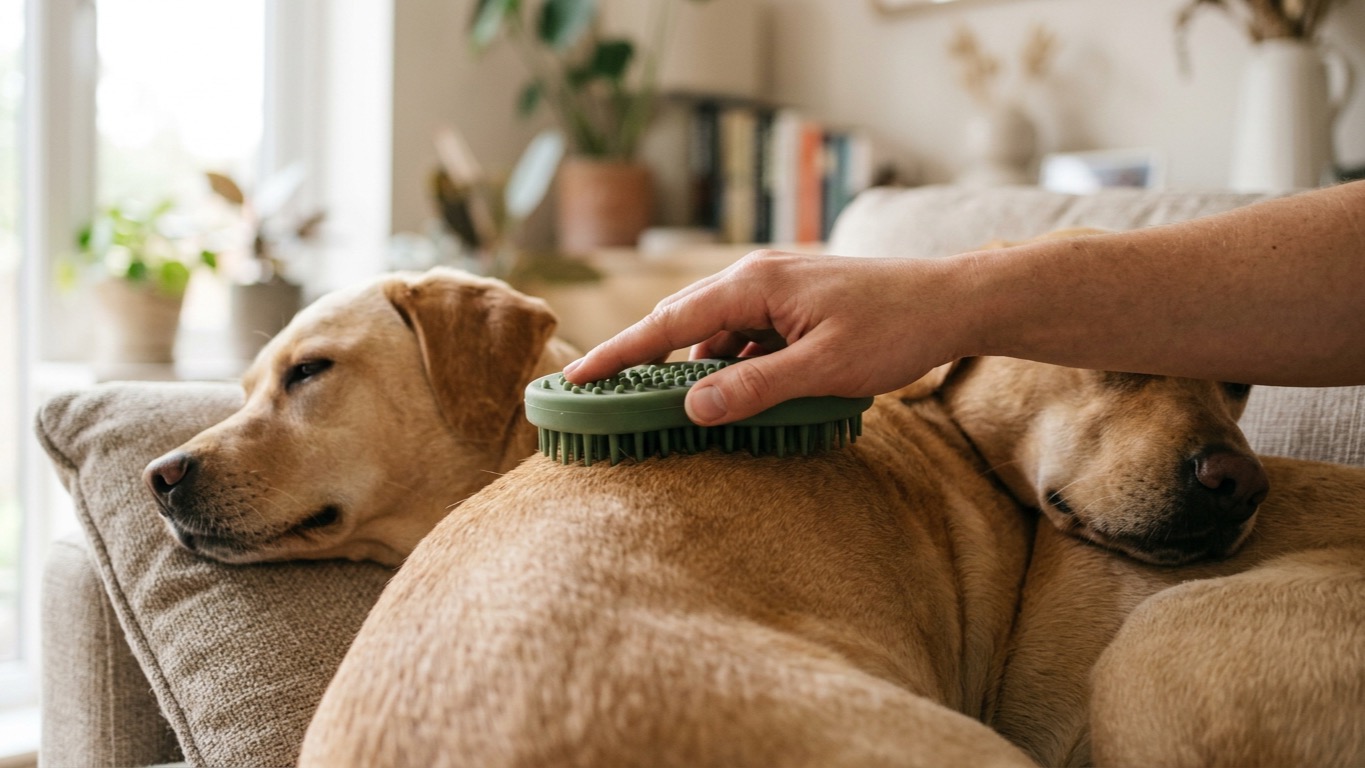
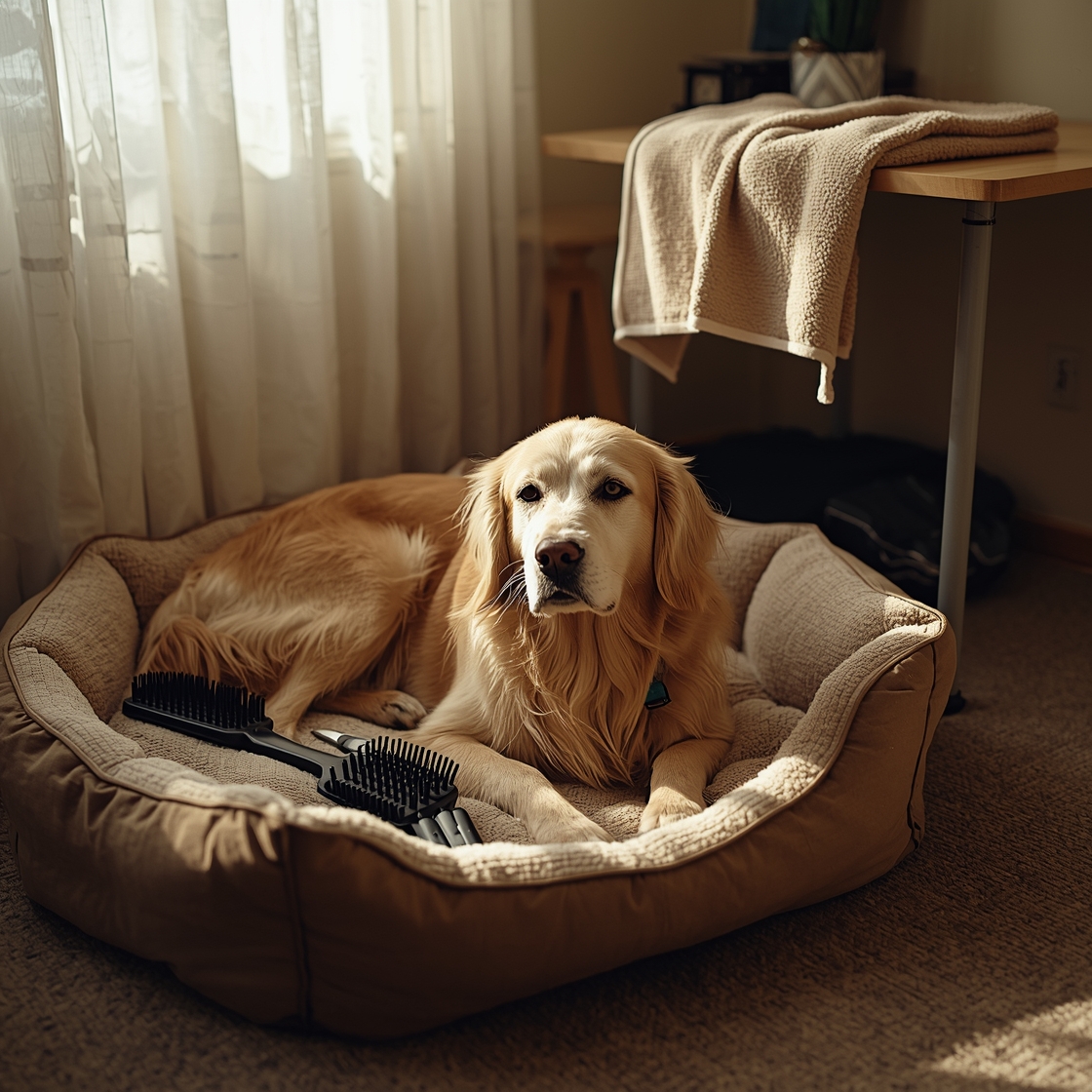
A grooming brush made for sensitive skin helps you part the fur.
Look for mats, redness, swelling, or a fishy odor.
Rear-end odor is a local problem. It is not tartar.
An ultrasonic tooth cleaner for dogs will not empty anal sacs.
If the skin under the tail is raw, skip fiber toppers until a clinician has looked. Fiber does not treat an open wound.
What to do today, and what not to do
Check the area once, with gloves. Note stool firmness, odor, swelling, and any rice-like bits.
Do not squeeze the sacs at home. Blind pressure can rupture an abscess into the tissue.
Do not add a large fiber load on day one. Several maker pages tell owners to start at half the listed amount for several days.
Offer fresh water. Extra fiber without water can constipate a small dog.
Call the same day if you see blood, pus, fever, or a dog that cries when sitting. Those signs can mean infection, not simple fullness.
A once-off scoot after a messy walk can wait 24 hours if the dog is otherwise bright. Repeat scooting should not wait for a weekend sale on powder.
How to read a fiber or hygiene label
The Association of American Feed Control Officials requires a guaranteed analysis on pet food labels.
At minimum, AAFCO asks for minimum crude protein and crude fat. It also asks for maximum crude fiber and maximum moisture.
AAFCO’s Pet Food Label Modernization, approved in July 2023, replaces crude fiber with a maximum dietary-fiber line. States are using a multi-year transition. Both wordings still appear.
The Food and Drug Administration’s Center for Veterinary Medicine does not treat animal products as human-style dietary supplements.
In an April 22, 1996 Federal Register notice, FDA said the Dietary Supplement Health and Education Act does not apply to animal products.
FDA therefore regulates these jars as food or as animal drugs, based on ingredients and intended use. A disease-treatment claim on a fiber jar is a drug claim, not a snack claim.
Compare listed milligrams, CFU counts, and serving weights. Do not compare slogan words.
Our research team compared published specs only. We did not feed these products to dogs or measure stool scores.
Attribute comparison of currently sold support products
The table below follows the selection rule above. It is an attribute grid, not a ranking.
| Product | Form | Listed dose on maker page | Maker directions | Stated target |
|---|---|---|---|---|
| Vetnique Glandex Anal Gland Health Powder | Powder | 623 mg pumpkin seed powder, 267 mg granulated pumpkin seed, 135 mg apple pectin, 1.9 billion CFU Lactobacillus acidophilus per teaspoon (~2.96 g) | Once daily; start at half for 5–7 days; dogs over 12 weeks; under 15 lb get 1/8 teaspoon | Natural anal-gland emptying and stool bulk |
| Nutramax Proviable Fiber Powder | Powder | 2,210 mg total dietary fiber (85%), 1,482 mg insoluble, 728 mg soluble per 2.6 g teaspoon | 1/2 teaspoon per 20 lb body weight twice daily; each teaspoon about 2.6 g | Stool consistency and frequency |
| Native Pet Pumpkin | Powder | 23 kcal per scoop; one scoop equals 1 tablespoon; organic pumpkin, pumpkin seed, and apple | 1 scoop per 25 lb daily; dogs over 3 months; 1:1 powder-to-water if mixed wet | Firm loose stools and regular digestion |
| NaturVet No Scoot Soft Chews | Soft chews | 1,000 mg beet pulp, flaxseed, and psyllium husk blend, 50 mg dandelion root, 16 mg pumpkin powder per 2 chews (6 g) | 1 chew per 20 lb twice daily; dogs over 12 weeks | Anal-gland function and bowel health |
| Earth Rated Dog Grooming Wipes | 8 inch by 8 inch wipes | Packs of 100, 400, or 60 extra-large; plant-based, hypoallergenic formula | Wipe paws, body, or bum; no rinse; not flushable; listed for puppies from 8 weeks | Rear cleanup and daily grooming |
Vetnique lists typical relief after 4 weeks of daily Glandex powder. Its 2025 ProVoice footnote cites a survey of 300 clinicians, excluding probiotic brands.
Nutramax states that Proviable Fiber can bind greater than 10 times its weight in water. The same page lists 3 kcal metabolizable energy per 2.6 g teaspoon.
Native Pet tells owners to ease into the full scoop during the first week. A 40 lb dog on that page gets two scoops.
NaturVet warns that extra fiber can delay absorption of drugs given at the same time. It also tells owners to keep water available.
Earth Rated tells owners these wipes are not flushable. The page lists chamomile, aloe, shea butter, cucumber, and vitamin E as skin-care ingredients.
None of these products replaces a rectal exam. A fiber scoop cannot drain an abscess.
Pick a form the dog will actually eat or tolerate. A listed milligram dose is useless if the powder sits in the bowl.
Start one change at a time. If stool turns dry or the dog strains, cut the dose and call the clinic.
FAQ
Why is my dog scooting all of a sudden?
A sudden start often follows a few days of soft stool, a flea burst, or a matted rear. Full sacs and tapeworm segments are the two fastest explanations. If scooting repeats, or you see swelling, get a same-week exam.
Can I express my dog’s anal glands at home?
We do not recommend it. Blind squeezing can tear an infected sac into the surrounding tissue. A trained clinician can feel both sacs and decide if expression, medication, or imaging is the next step.
How long should I wait before calling the clinic?
A once-off scoot after a messy stool can wait a day if the dog is eating and bright. Daily scooting, crying, blood, pus, or a fever should not wait.
CAPC already wants fecal testing at least twice a year in healthy adults. A scooting dog is a reason to move that test up.
Will pumpkin or fiber powder stop scooting?
Fiber can help only when the cause is soft stool that fails to empty the sacs.
Native Pet lists 23 kcal per tablespoon scoop. Vetnique lists 623 mg pumpkin seed powder, 267 mg granulated pumpkin seed, and 135 mg apple pectin per teaspoon.
Neither set of numbers treats worms, allergies, or an abscess.
Do probiotics empty anal glands?
Probiotics change gut flora. They do not mechanically empty a sac.
Vetnique lists 1.9 billion CFU of Lactobacillus acidophilus per Glandex teaspoon. Nutramax’s Proviable Fiber page lists fiber grams, not a CFU count.
Use either only as an adjunct after a diagnosis.
Why does my dog scoot after a bath or groom?
Clipper burn, leftover shampoo, or a tight sanitary clip can inflame the skin. Mats that were just combed out can also leave the area raw. Wipe gently, keep the coat dry, and call if redness spreads.
Can allergies cause scooting even when the glands are empty?
Yes. Itchy peri-anal skin produces the same drag.
Dogs that also chew paws or shake ears are allergy suspects. A clinician can tell empty sacs from inflamed skin in one exam.
Scooting is a message from a small, sore patch of anatomy. Read the stool, the skin, and the flea comb before you open a jar. Then let a clinician confirm the cause so the next step matches the actual problem.