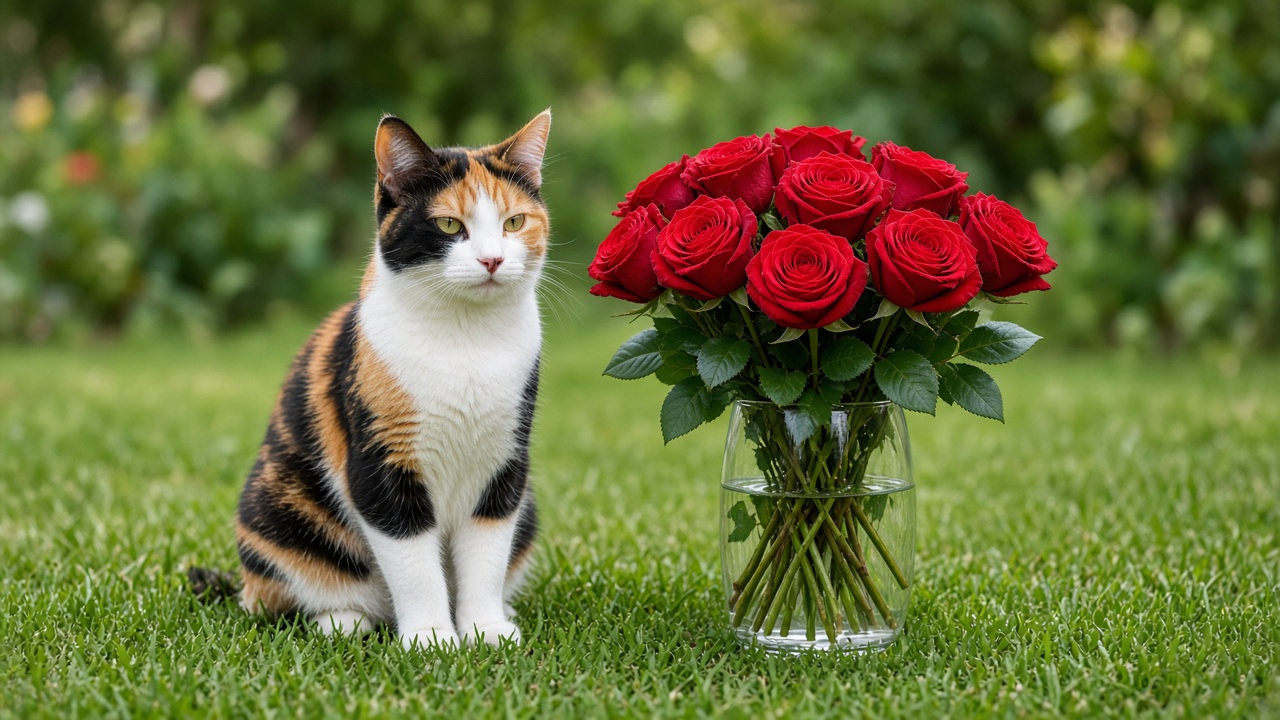
Quick answer: True roses are not poisonous to cats. Thorns, vase chemicals, and look-alikes named “rose” are the real hazards. Keep lilies out of any mixed bouquet.
The ASPCA lists Rosa species as non-toxic to cats, dogs, and horses. That line can be checked against the ASPCA plant page. If the listing changes, the claim is wrong.
This page is a research-desk reading of published plant listings and maker specs. We did not run feeding trials, treat thorn wounds, or assay florist chemicals.
How we chose what to cover. We included true roses plus look-alikes that use “rose” as a common name on the ASPCA cat plant list. We also included bouquet lilies because they sit next to roses. We skipped garden design, florist rankings, and pesticide brand reviews.
What “non-toxic” means for a true rose
The ASPCA Rose page names the plant as Rosa species, family Rosaceae. It marks the plant non-toxic to cats. It also marks it non-toxic to dogs and horses.
Non-toxic is a chemistry label. It is not a promise of zero trouble. The ASPCA plant pages warn that eating any plant material may cause vomiting or gut upset in cats.
Petals are still plant fiber. Leaves are still plant fiber. A cat that eats a pile of petals may vomit.
That is irritation, not organ poison from Rosa itself.
Stems carry the same plant chemistry. They also carry thorns. Hips are the seed fruits.
The ASPCA listing does not split those parts into a toxic group.
Our research team compared the dedicated ASPCA Rose page with the ASPCA Toxic and Non-Toxic Plant List for Cats. True Rosa does not appear as its own row on that long cat list. The standalone Rose page is the listing that answers the query.
Thorns, vase water, and garden chemicals
Thorns are a puncture tool. A batting paw can tear. A chewing mouth can catch a spine.
An eye can meet a stem when a cat inspects a low vase.
Watch for limping, paw licking, or pawing at the mouth. A swelling wound needs a clinic, not a wait-and-see night. This desk did not treat those wounds.
Cut roses often travel in treated water. Flower-food packets are not cat drinks. Stem runoff can sit in the vase.
If a cat laps that water, call your clinic or a poison line. Do not guess from a photo.
Pet Poison Helpline’s spring page flags rose-garden fertilizers as a separate risk. It states that blood meal contains 12% nitrogen. It also states that as little as 1 teaspoon of 1% disulfoton can kill a 55 lb dog.
That number is about old fertilizer, not rose petals.
Strip thorns from indoor stems when you can. Use plain water in the vase. Set the bouquet where a jump cannot land in the water.
Look-alikes that use the word “rose”
Common names lie. Several toxic plants wear “rose” in the title. They are not Rosa.
Our research team counted primary names on the ASPCA cat plant list. Five toxic-list headings use “rose” as a word: Christmas Rose, Easter Rose, Lenten Rose, Desert Rose, and Moss Rose. Those five headings map to three species.
Christmas Rose, Easter Rose, and Lenten Rose are the same plant on the ASPCA Christmas Rose page. The scientific name is Helleborus niger. The family is Ranunculaceae.
The ASPCA lists cardiac glycosides, saponins, and protoanemonin. Signs listed there include drooling, abdominal pain, diarrhea, colic, and depression.
Desert Rose is Adenium obesum. The ASPCA Desert Rose page places it in Apocynaceae. The toxic principle listed is cardiac glycosides.
Signs listed there include vomiting, diarrhea, anorexia, depression, irregular heartbeat, and death.
Moss Rose is Portulaca oleracea. The ASPCA Moss Rose page lists soluble calcium oxalates. Signs listed there include kidney failure that is rare in dogs and cats, plus tremors and salivation.
Rose of Sharon is the opposite case. The ASPCA Rose of Sharon page lists Hibiscus syriacus as non-toxic to cats, dogs, and horses. The plant is a shrub, not a florist rose.
It still counts as plant fiber if a cat grazes it.
If a tag says “rose” and you cannot see Rosa on the label, treat the plant as unknown. Photograph the whole plant. Save the tag.
Then call for a name check.
Lilies hiding in mixed rose bouquets
The search query is about roses. The bouquet on the table may not be only roses. That mix is the high-stakes miss.
The ASPCA lily page lists Lilium species as toxic to cats. The clinical sign it lists is kidney failure. The same page marks those lilies non-toxic to dogs and horses.
ASPCA Poison Control writes that small amounts of true lilies can injure feline kidneys. It also writes that vase water and groomed pollen can cause problems. It states that delayed treatment past 18 hours is often fatal when kidney injury is the concern.
Pet Poison Helpline’s spring page is blunter on dose. It states that even 2 to 3 petals or leaves of true lilies can cause severe kidney failure in cats. It names Tiger, Day, Asiatic, Easter, roselily, and Japanese Show lilies in that group.
The same Pet Poison Helpline page says Peace, Peruvian, and Calla lilies cause milder mouth irritation. They are still not a snack. They are not the kidney-failure group.
If a mixed bunch might hold a lily, do not wait for vomiting. Take the cat and the flowers to a clinic. Call ASPCA Poison Control at (888) 426-4435.
A consultation fee may apply. Or call Pet Poison Helpline at (855) 764-7661. That service lists an $89 incident fee on its Japanese Show Lily page.
What to do if your cat ate a rose
Confirm the plant. A grocery rose is usually Rosa. A succulent “desert rose” is not.
If the plant is a true rose, a petal or two is usually a watch-and-wait case. Offer water. Keep the vase out of reach.
Call a clinic if vomiting repeats or the cat hides.
If a thorn is stuck, do not dig blindly. A clinic can flush and check for a puncture track.
If the plant is Helleborus, Adenium, or Portulaca, treat it as a poison call. Use the numbers above. Bring the tag.
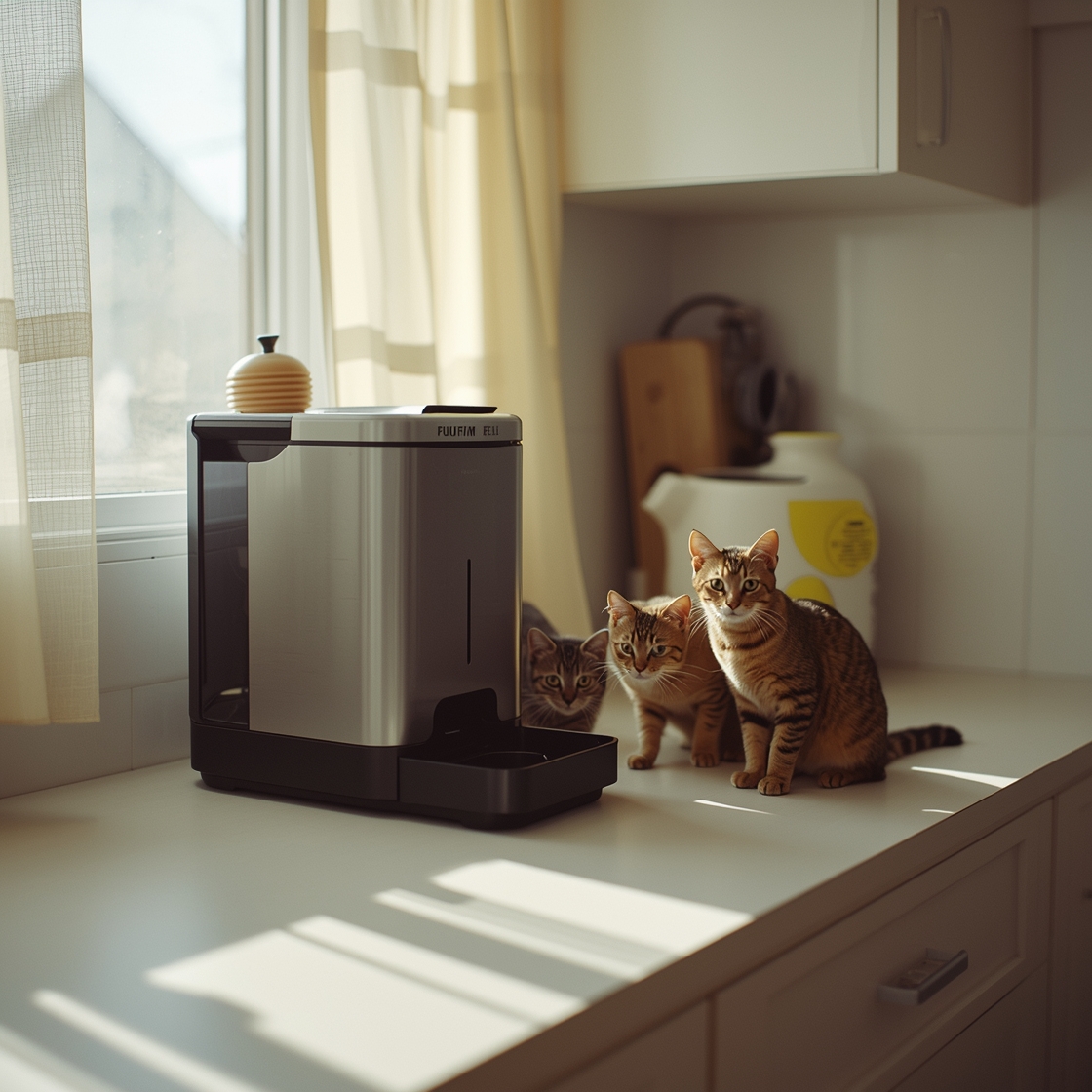
If appetite drops after a plant binge, check portions against our cat feeding chart by weight. A skipped meal after vomiting is a clinic question, not a free pass to starve.
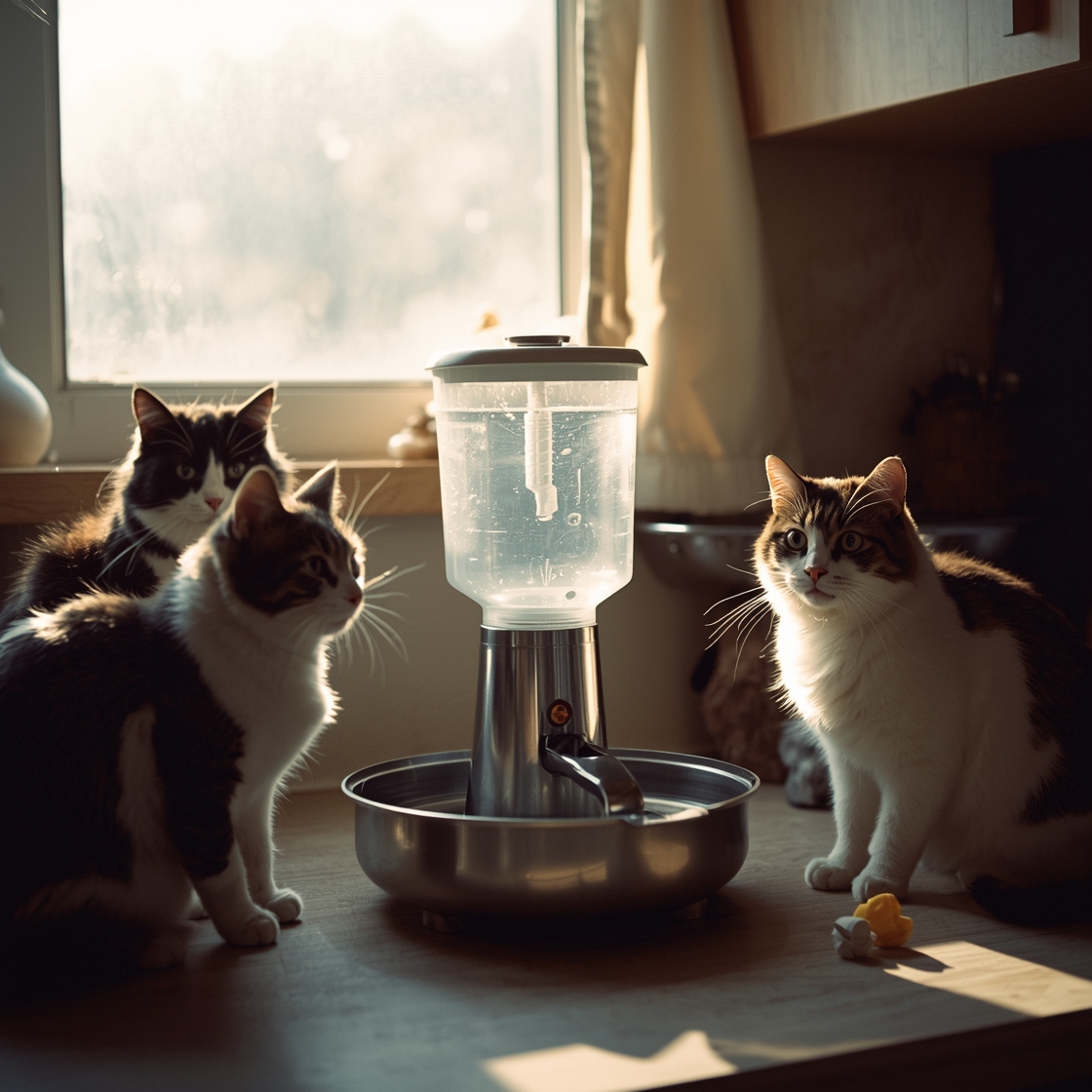
Cats that vomit need water they will actually drink. A running bowl can help after a gut scare. See our guide to the best pet water fountain for multiple cats if several cats share one bowl.
Safer chew outlets, compared by published specs
Cats chew plants for fiber, boredom, or play. A safe chew plus a closed door beats a scolding.
We compared five currently sold products by maker-listed attributes only. We did not rank them. We did not split them by price tier.
The table covers chew grass, a play herb, a motion deterrent, and a fountain.
The Catit Senses Grass Planter, model 43161, is a BPA-free bowl with a grid cover. Catit’s page lists 9.6 by 9.6 by 5.3 inches and 1.26 pounds. It includes one set of barley and wheat seeds plus vermiculite.
The Catit Senses Cat Grass Kit, model 43162, refills that planter. Catit lists three 70 g seed bags and three 55 g vermiculite bags. The seed mix is Hordeum vulgare and Triticum aestivum.
That is three grow cycles, not a ranking.
SmartyKat USDA Certified Organic Catnip comes in a 2 ounce resealable shaker. The maker page calls it 100% certified organic and pesticide-free. A pinch on a toy can pull a chewer off a stem.
Pair it with interactive cat toys for indoor cats instead of a bouquet.
The PetSafe SSSCAT Automatic Spray Deterrent is a motion can for indoor off-limits zones. PetSafe lists a spray range up to 3 feet, or 0.9 meters. Each can lists up to 120 sprays.
The unit needs 4 AAA batteries, which are not included.
The Catit PIXI Drinking Fountain, white model 43715, holds 67.5 fluid ounces, or 2 liters. Catit lists 8 by 8 by 6.7 inches and 1.49 pounds. Power use is under 1 watt on a USB 5V 1A adapter.
| Product | Role around roses | Maker-listed size or fill | Power or grow media | Notes from the maker page |
|---|---|---|---|---|
| Catit Senses Grass Planter (#43161) | Edible grass instead of petals | 9.6 × 9.6 × 5.3 in; 1.26 lb | 1 seed set plus vermiculite | BPA-free; grid cover; drainage holes |
| Catit Senses Cat Grass Kit (#43162) | Refill for the planter | 3 × 70 g seed; 3 × 55 g vermiculite | 3 batches | Barley and wheat mix |
| SmartyKat USDA Certified Organic Catnip, 2 oz | Redirect play off stems | 2 oz shaker canister | None | 100% certified organic; pesticide-free |
| PetSafe SSSCAT Automatic Spray Deterrent | Keep cats off a table vase | Range up to 3 ft (0.9 m) | 4 AAA, not included; up to 120 sprays | Unscented indoor spray |
| Catit PIXI Drinking Fountain (White #43715) | Water after gut upset | 67.5 fl oz / 2 L; 8 × 8 × 6.7 in | USB 5V 1A; under 1 W | Triple Action Filter; auto-shutdown |
Comparing published specs is not a use test. A grass kit only helps if the cat prefers it to the bouquet. A spray only helps if you place it between the cat and the vase.
ASPCA Poison Control’s 2025 toxin summary gives the wider context. Staff took calls about over 376,000 items that year. Plants and fungi were 7.5% of those exposures and sat at number six.
Roses are not the driver of that list. Mixed flowers still belong on the watch list.
FAQ
Are rose petals safe for cats to eat?
The ASPCA marks Rosa species non-toxic. A few petals are not a poison emergency on that listing. A large pile can still upset a cat’s gut because it is plant fiber.
Call a clinic if vomiting lasts or the cat will not drink.
Can rose thorns hurt a cat?
Thorns puncture paws, gums, and sometimes eyes. The plant chemistry is not the issue there. A swollen or draining wound needs a clinic visit.
Do not wait for an abscess to “declare itself.”
What if my cat drank water from a rose vase?
Treat vase water as an unknown chemical mix. Wipe the mouth. Remove the vase.
Call your clinic or a poison line with the flower-food packet in hand. True roses in plain water are a lower-stakes scene than lilies in that water.
Is desert rose the same as a garden rose?
No. Garden roses are Rosa. Desert rose is Adenium obesum on the ASPCA Desert Rose page.
That page lists cardiac glycosides and death among possible signs. Do not use the Rosa listing for a succulent sold as desert rose.
Is rose of Sharon safe around cats?
The ASPCA lists Hibiscus syriacus, also called rose of Sharon, as non-toxic to cats. It is a landscape shrub, not a cut florist rose. Grazing can still cause a short gut upset.
Confirm the tag before you relax.
Should I make my cat vomit after eating a mystery “rose”?
Do not force vomiting at home. You may have the wrong plant. You may push a thorn deeper.
Call a clinic or a poison line first. If a lily is possible, go in now.
How do I stop my cat from chewing the bouquet?
Put the vase out of jump range. Offer grass from a kit such as the Catit Senses Grass Planter. Use play, not only scolding.
A motion can like the PetSafe SSSCAT can guard a table. Place it with a clear 3-foot field.
True roses are the easy part of this query. The hard part is the name on the tag and the other flowers in the wrap. Check Rosa against the look-alikes before you call the night safe.