Quick answer: Treat the behavior as competition for you or a resource, not spite. Split food, rest, and litter, and give each cat a daily solo play block. See a clinician if spraying, hiding, or fighting starts suddenly.
Cats can guard a person or a food bowl. That is not the same as a proven feeling of jealousy.
Published experiments have not confirmed that cats get jealous the way dogs do.
This page is a research-desk brief on published behavior papers and current maker specs. We did not run jealousy trials, film household cats, or sit in on clinic consults.
We used one rule. A scenario or product entered only if it involved a rival for a person or a second cat. A contested food bowl or perch also counted.
It also had to carry a measurable spec on the maker’s own page. We left out prescription drugs, chews, and hardware we could not verify there.
Oregon State University reported that 64.3% of 70 classifiable kittens used a person as a secure base. That bond helps explain a shove-in when you pet someone else. It does not prove a second-order emotion.
What the lab studies actually measured
Jealousy, in the papers we read, is a second-order emotion. It is supposed to protect a valued bond from a rival.
In 2020, Pet Behaviour Science published work by Bucher, Arahori, Chijiwa, Takagi, and Fujita. They recruited 52 cats from Japanese households or cat cafés.
Each cat watched its owner or a stranger pet a toy cat and a furry cushion. Household cats later looked longer at the toy cat their owner had petted.
They did not treat the owner and the stranger as different targets. They also skipped the distress and blocking that similar dog and infant tests treat as jealousy.
The authors refused a firm jealousy label. They wrote that more realistic tests are still needed. Our research team analyzed that paper as a non-result, not as proof that cats feel nothing.
Attachment is a different claim, and it is better measured. Oregon State University’s Human-Animal Interaction Lab ran a secure-base test. Each phase lasted two minutes: together, alone, then reunion.
The work appeared in Current Biology in 2019. Of 70 classifiable kittens, 64.3% were securely attached. The other 35.7% were not.
Among 38 cats aged one year or older, 65.8% were secure. The remaining 34.2% were insecure. Oregon State University noted that about 65% of human infants also show a secure pattern.
A cat may still crowd you when a baby or second cat arrives. That is attachment plus competition. It is not a lab-confirmed jealousy diagnosis.
Signs people call jealousy
People often use “jealous” for any pushy or sour turn. Name the trigger and the body signs instead.
A cat may insert itself between you and a partner. It may swat a dog that just got a lap. It may yowl when a baby is held.
Those are attention-guarding moves. They track who is touching whom.
A cat may stare, block a hallway, or sit on a litter-box path. The 2024 American Association of Feline Practitioners intercat tension guidelines treat staring and blocking as tension.
A cat may gulp food and leave. It may skip a box another cat can see. It may overgroom after a guest stays the night.
House soiling is a poor jealousy clue. The American Association of Feline Practitioners notes that a blocked box or illness can send a cat to a bed. Do not punish that cat.
Sudden aggression, a limp, or a dropped appetite is a clinic problem first. Book an exam before you rebuild the house around a mood story.
Human attention, new people, and new pets
The American Veterinary Medical Association’s 2025 Pet Ownership and Demographic Sourcebook counted 76.3 million pet cats. Those cats lived in 43.1 million U.S. households, or 32.6% of homes, at 1.8 cats per cat household.
Many of those homes already split one lap across more than one cat. A new baby, partner, or guest shrinks the old cat’s share of touch.
Give the resident cat a daily solo block that cannot be stolen. Ten minutes of wand play in a closed room is enough to start.
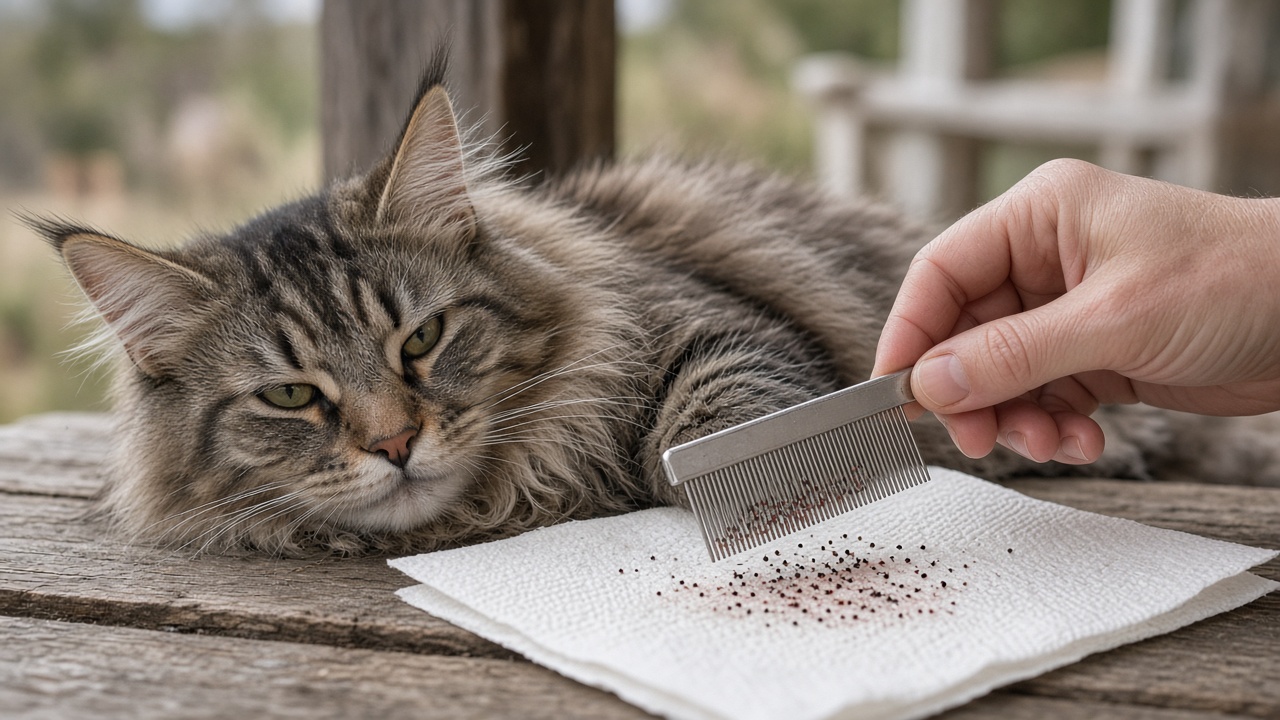
A scheduled grooming-glove session is one way to give a long-haired cat exclusive hands-on time. Keep that ritual on the same chair, at the same hour.
A high-value food such as canned tuna can start a fight if two cats share one plate. The U.S. Food and Drug Administration says a “complete and balanced” cat food must meet an Association of American Feed Control Officials nutrient profile. An AAFCO feeding trial also qualifies.
AAFCO published the first cat profiles in 1992. The Food and Drug Administration says the last update was in 2016. Canned food is typically 75 to 78 percent moisture, according to the agency.
Tuna from the pantry is a treat, not a meal plan. If you add a second cat, treat the introduction as the high-risk week.
The American Association of Feline Practitioners reported a 73.3% figure. In that survey, tension began with a new cat.
Intercat tension is the bigger dataset
Owner language says “jealous.” The larger published numbers say “intercat tension.”
The 2024 American Association of Feline Practitioners guidelines cite global surveys putting tension in 62.2% to 87.7% of multi-cat homes. In one survey of 2,492 multi-cat households, 87.7% reported signs of tension.
In that same survey, 73.3% of caregivers said the trouble started with a new cat. Another 23.6% saw a slow fade from a once-friendly pair. Only 3.1% saw an abrupt change.
The guidelines also state that 25% to 31% of feline behavior cases involve intercat tension or conflict. That is a clinic load, not a cute rivalry.
The Task Force tells caregivers not to “let them work it out.” It also rejects a dominance story as the usual cause. The common engine is competition for food and boxes.
The guidelines adapt five pillars of a healthy multi-cat environment. Pillar two maps to jealousy talk: multiple, separated key resources.
They ask for one safe place per cat, plus one extra place. They also show a 690-square-foot apartment where two unbonded males needed split core territories.
Comparing that 690-square-foot floor plan with diffuser coverage claims is a spec check, not a field trial. It shows why one outlet rarely covers two tense cats.
The Rival-or-Resource rule, and hardware that fits it
Our research team compared published specs for hardware that splits a rival, a meal, or a perch. We included a product only when the maker page listed a number we could copy.
We excluded chews, collars, and any tree whose height we could not read on the brand’s own page. The table below is an attribute grid. It is not a ranking.
Comparing those five spec sheets, only one product lists a square-footage figure. Only one lists a meal volume. The rest publish height, footprint, or module counts.
| Product | Maker-listed job | Published size or fill | Coverage, levels, or modules | Reset note from the maker |
|---|---|---|---|---|
| FELIWAY MultiCat Diffuser Kit | Reduce fighting, chasing, and blocking | 48 mL vial | Up to 700 sq ft for 30 days | Replace head every 6 months; 4 ft clear above plug |
| Catit Senses Food Tree (#43151) | Slow, pawed dry-food feeding | 14.8 × 14.8 × 13.1 in | 4 levels; 3 disc settings | BPA-free collector tray |
| Catit Vesper High Base (#52045 walnut) | Multi-cat vertical rest | 47.8 in high; 22.1 × 22.1 in | 4 levels plus a cubed cave | Replaceable seagrass posts |
| PetSafe SlimCat Interactive Feeder | Meal-time play for dry food | 2/3 cup | Adjustable openings | BPA-free; top-rack dishwasher safe |
| TRIXIE Cat Activity Fun Board (#4590) | Puzzle feeding | 30 × 40 cm | 5 game modules | For cats from 3 months |
FELIWAY’s U.S. product page says MultiCat uses a synthetic maternal appeasing pheromone. The same page states that 84% of cat owners saw significant improvement, sometimes in as little as 14 days.
That 84% figure is the maker’s claim. It is not an independent trial we ran. FELIWAY also says the kit fails if each cat lacks its own bowl and litter tray.
Catit’s Food Tree is a single-cat puzzle unless you buy a second unit. Put each feeder in a different room.
Catit lists the Vesper High Base as 47.8 inches tall and built for more than one cat. Height helps only if the blocked cat can reach a perch without crossing a hallway stare.
A second modern cat tree in another room often beats one taller tower in the bottleneck. Separate vertical space the same way you separate bowls.
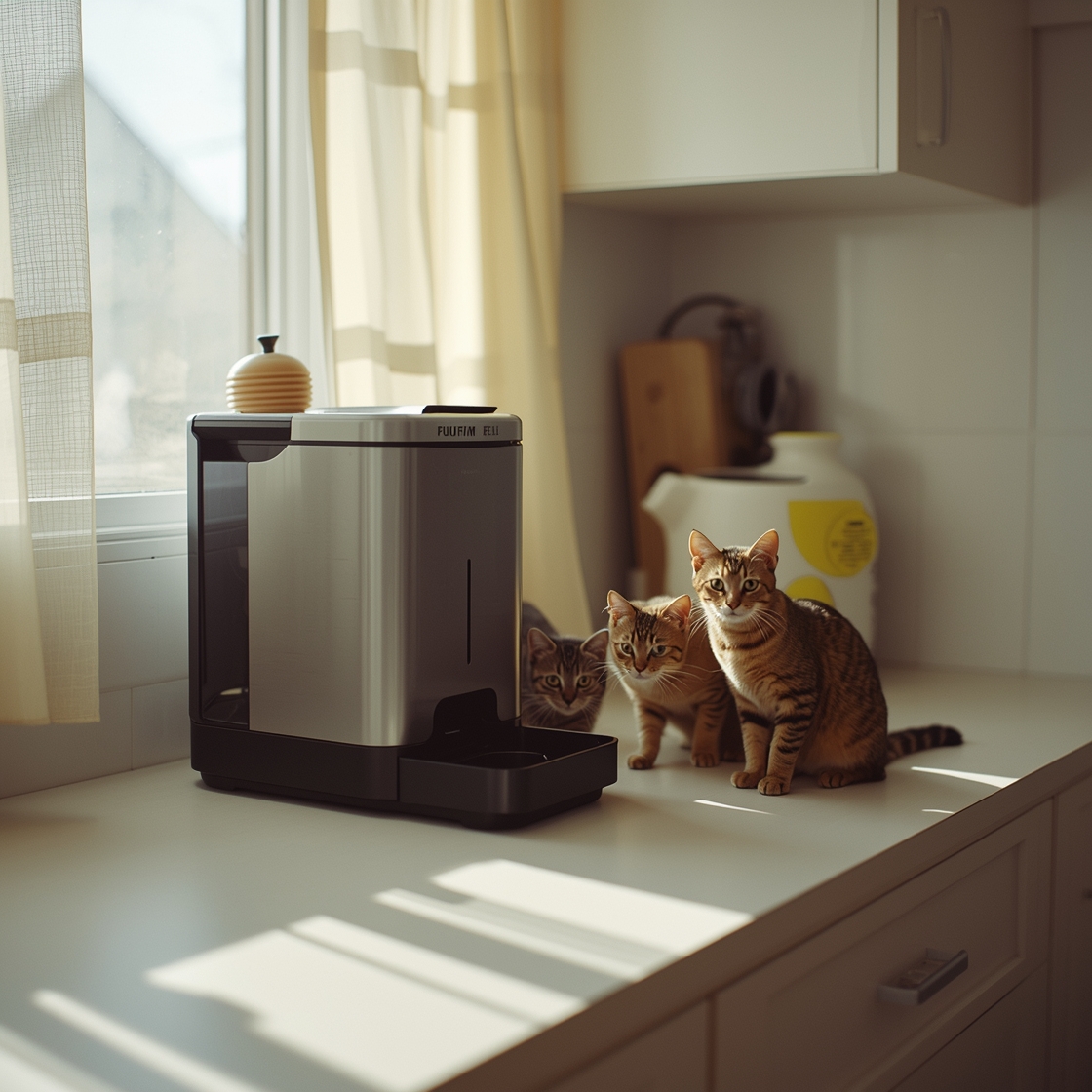
The PetSafe SlimCat holds 2/3 cup, which the maker calls a whole meal. Use one ball per cat.
TRIXIE lists the Fun Board at 30 × 40 centimeters with five modules. Place it where the other cat cannot loom.
What to do this week
Start with a map, not a scolding. Note who blocks whom, and which doorway fails.
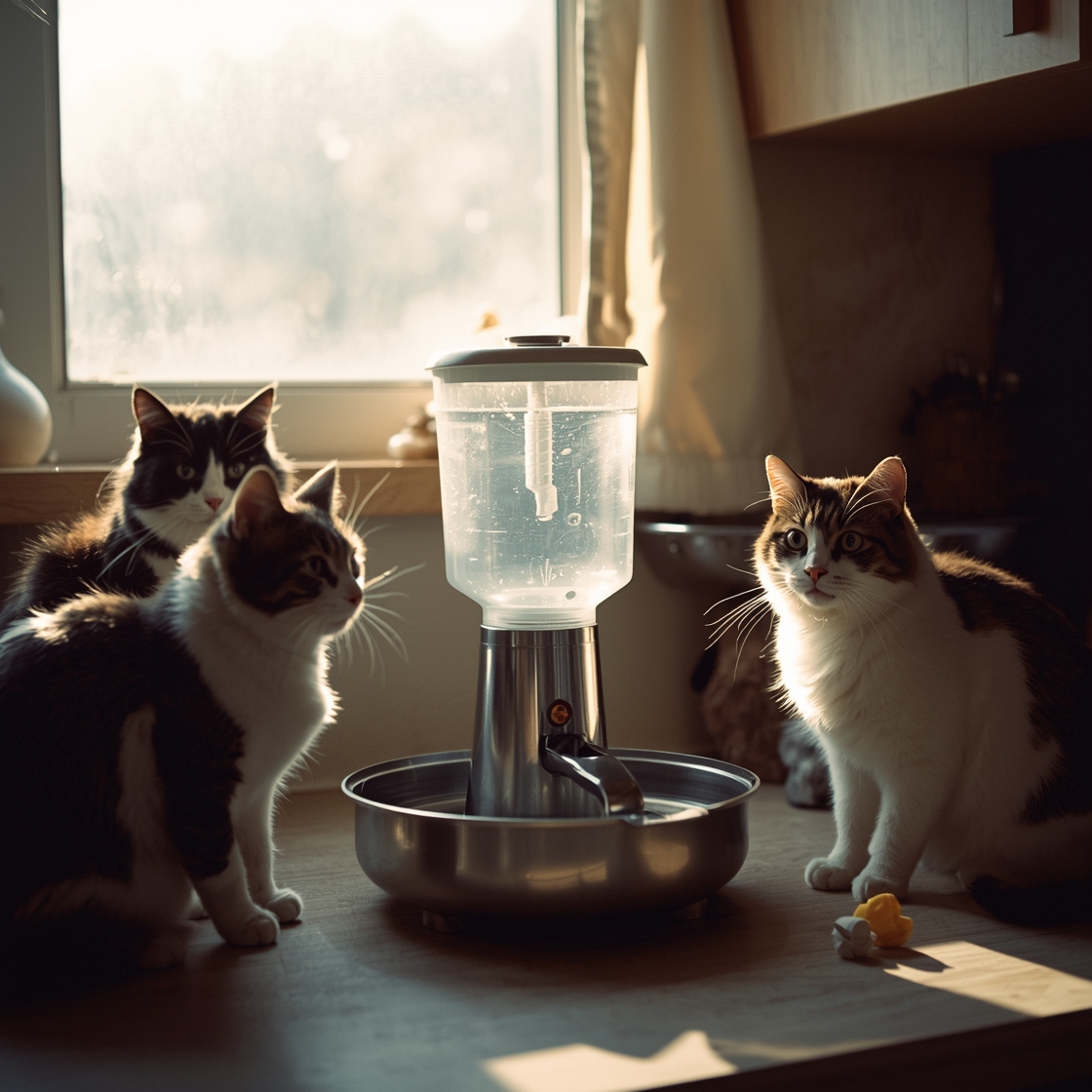
Add one extra safe place, one extra bowl station, and one extra box. Put visual barriers between them.
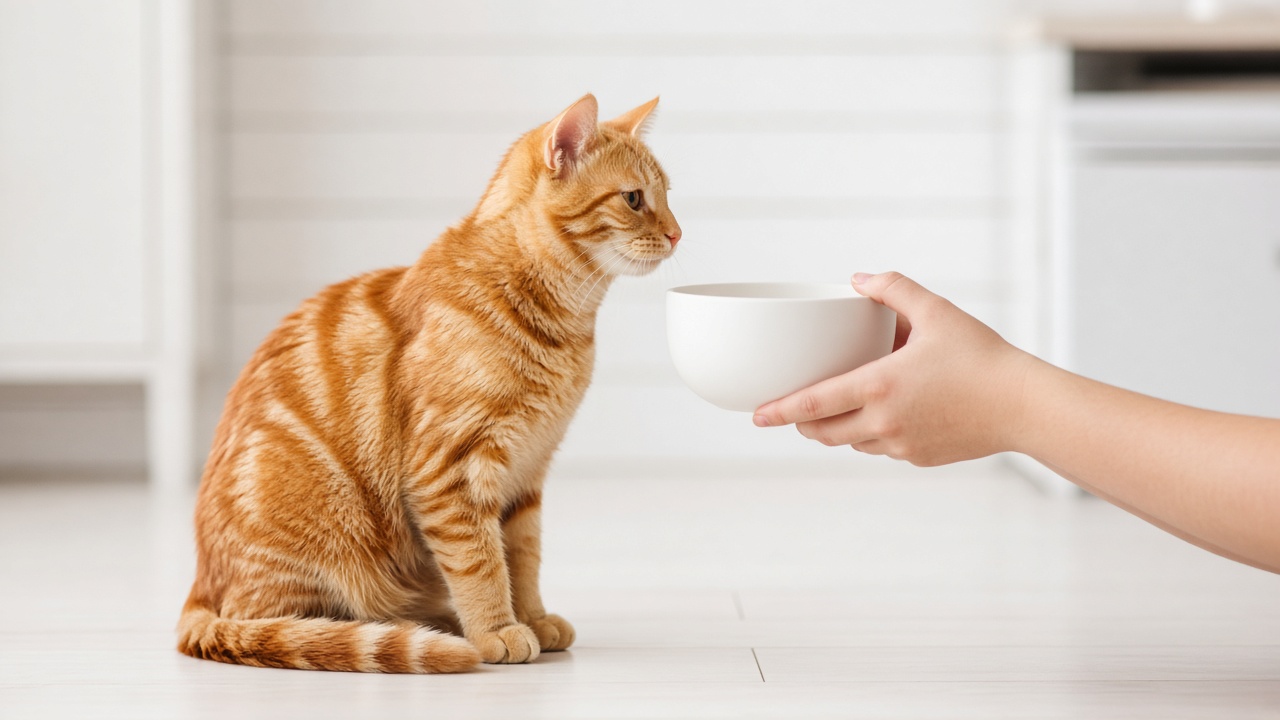
Feed cats in separate rooms with closed doors. Open the doors only after bowls are empty and wiped.
Give each cat a timed solo session with you. Keep the other cat out.
If you use a FELIWAY MultiCat Diffuser Kit, follow the maker’s placement rules. Plug it in the room the cats actually use. Leave 4 feet of open air above the outlet, and keep it on for 30 days.
If fighting is already loud, add short daily separation. Each cat still needs food, rest, and a box without a sentry.
The American Association of Feline Practitioners calls this a rest period, not a punishment. Do not add a third cat while two cats are still blocking each other.
When it is not jealousy
Pain looks like a personality change. A cat with a sore mouth may swipe when a kitten climbs into a lap.
Outdoor cats at the window can reset the whole house. A move or a remodel can do the same.
If urine marking and fighting arrive together, the American Association of Feline Practitioners treats that as a welfare problem. Get a medical workup. Then rebuild the resource map.
This desk’s limit is the same as its method. We compared papers and spec sheets. We did not watch your cats.
A clinician who can see the animals still outranks a brief.
FAQ
Do cats get jealous of new babies?
They can lose lap time and react. That reaction is not a published jealousy diagnosis. Give the resident cat a daily solo play block the baby cannot interrupt.
Do cats get jealous of dogs or other cats?
They compete for doors, bowls, and people. The American Association of Feline Practitioners found tension signs in 87.7% of 2,492 multi-cat homes. Split resources before you assume a grudge.
Can a cat be jealous of a partner or guest?
A cat may insert itself or swat when you pet someone else. Bucher and colleagues saw extra interest in a toy cat the owner had petted. They still withheld a jealousy label.
Is spraying a jealousy sign?
It is a stress and territory sign first. The American Association of Feline Practitioners warns that box access and medical disease beat spite as first checks. See a clinician if spraying is new.
How many litter boxes and beds do two cats need?
The 2024 American Association of Feline Practitioners guidelines ask for one safe place per cat plus one extra. Spread boxes so no cat must pass a blocker. Two boxes side by side still count as one station.
Do pheromone diffusers fix jealousy?
They do not treat an emotion that labs have not confirmed. FELIWAY’s MultiCat page aims at fighting, chasing, and blocking, and covers about 700 square feet for 30 days. It still tells you to give each cat its own bowl and tray.
When should I get hands-on help?
Get help if a cat stops eating, hides for a day, limps, or draws blood. Those are safety and medical problems. This brief cannot examine the cat.