Quick answer: Frequent vomiting is not a cat personality trait. Call a clinic if it happens more than once a week. Hairball food and gels do not replace that call.
Cats throw up often because they swallow groomed fur, gulp meals, eat toxins, and hide kidney, thyroid, and gut disease. This page is a research-desk briefing that compared published hospital pages and maker labels. We did not run feeding trials, examine patients, or collect clinic case files.
How we chose causes and products
A cause entered this article only if two hospital or regulator pages we read named it. A product entered only if its maker page listed a hairball, fiber-transit, or paced-feeding claim. That page also had to publish a calorie, dose, or dimension we could quote.
We left out prescription gastrointestinal diets. We left out antiemetic drugs. We left out any food whose maker page hid those numbers.
Our research team analyzed labels and teaching-hospital pages. We did not score brands. We did not rank a “best” list.
Vomiting is not the same as regurgitation
Vomiting is an active event. The belly contracts. Fluid, foam, or food comes up with effort.
VCA Animal Hospitals describes a nauseated cat that may lick its lips, drool, and swallow first. Regurgitation is more passive. Food often returns soon after a meal.
Texas A&M College of Veterinary Medicine notes that fast eating is a common trigger. The returned food can look barely chewed. That split also shows up in dogs.
See our note on why a dog throws up undigested food. Coughing can fool people too. VCA Animal Hospitals says a coughing cat may crouch, stretch its neck, and bring up foam.
Hairballs are common and still not a free pass
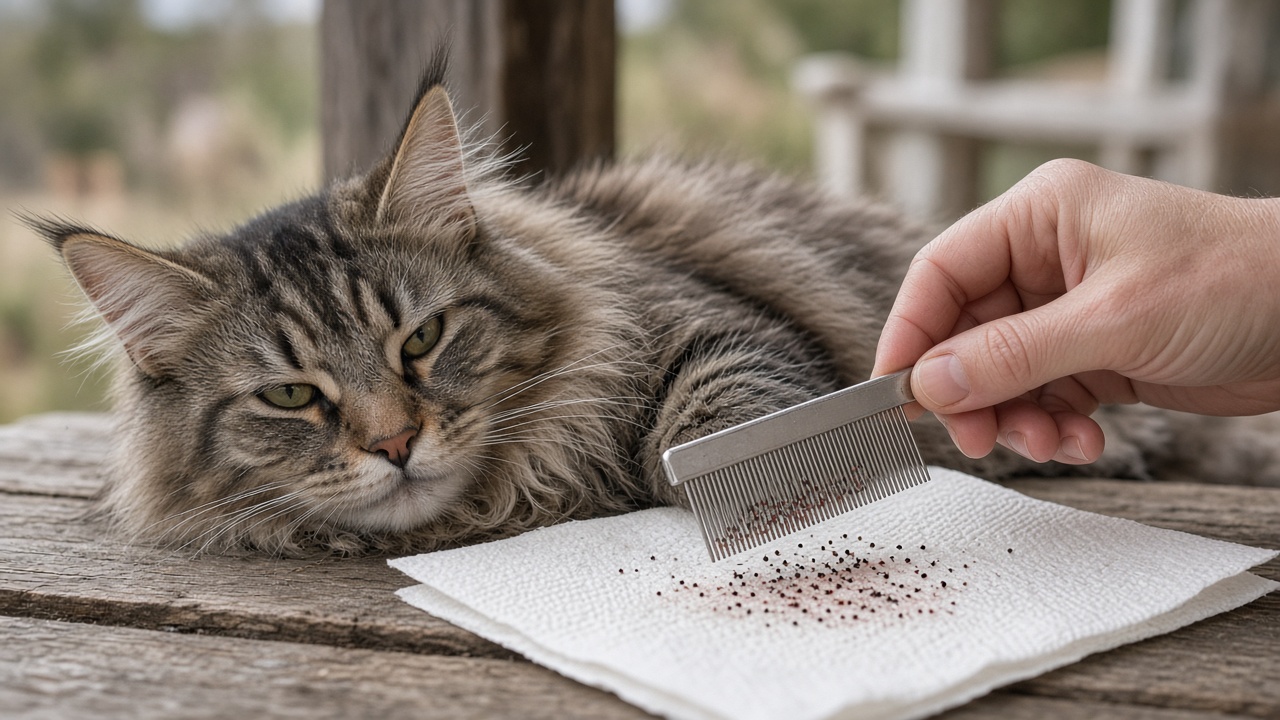
Cornell University’s College of Veterinary Medicine calls a hairball a common, often benign complaint. The wad is damp, cylindrical, and mixed with bile. Cornell says a cat may expel one every week or two without lasting harm.
Cornell also flags the other side. A clump that moves into the intestine can block the gut. That is a clinic emergency, not a rug problem.
A 2013 Journal of Feline Medicine and Surgery review by Martha Cannon put numbers on “regular” hairballs. Cannon reported that about 10% of otherwise healthy shorthaired cats bring up two or more hairballs a year. Longhaired cats sat at about twice that rate.
Cannon’s clinic poll was small. Five of 48 cats (10%) brought up two or more hairballs a year. An owner email poll found 23 of 87 shorthaired cats (26%) over that mark.
The same poll found 21 of 38 longhaired cats (55%) over two hairballs a year. Those figures do not make weekly vomiting normal. They show that many healthy cats never produce a hairball at all.
Indoor cats that lick from boredom swallow more fur. A stable climbing perch can cut idle grooming time. See cat trees for large cats and our modern cat tree picks.
Speed eating, diet changes, and fiber foods
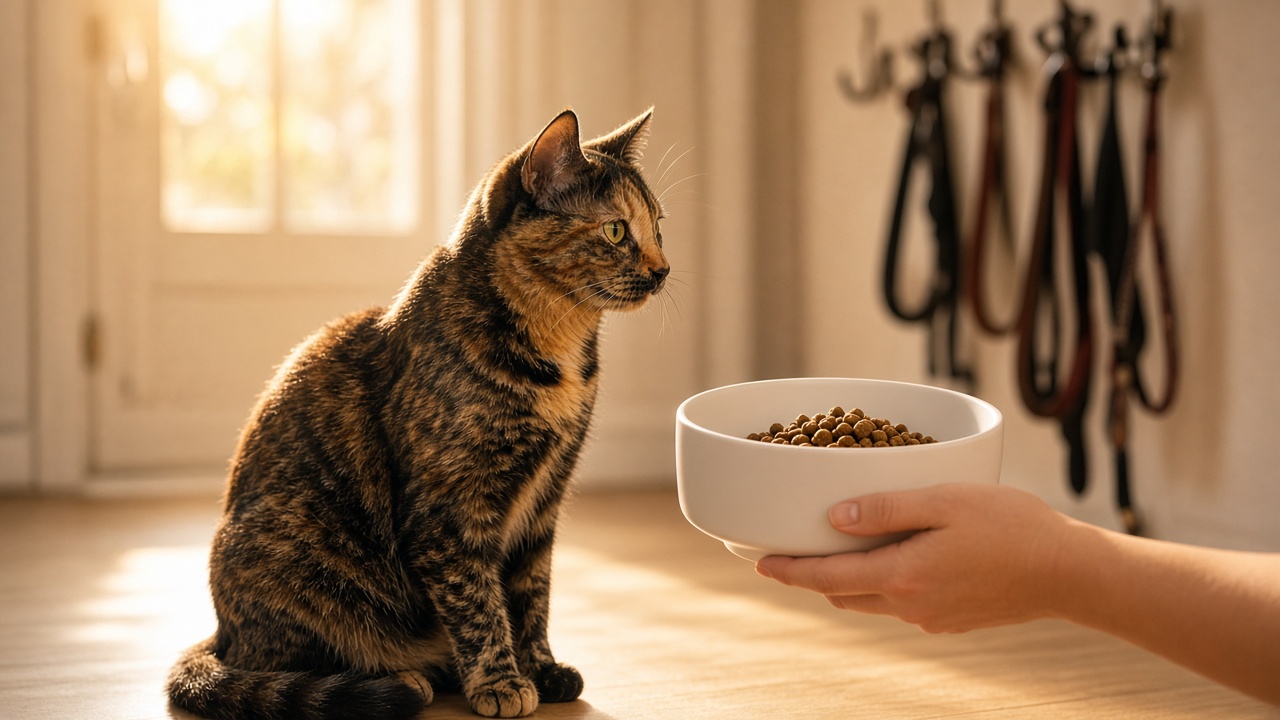
A cat that inhales kibble may bring it back in minutes. That is often regurgitation, not a diseased stomach. A paced bowl can slow the gulp.
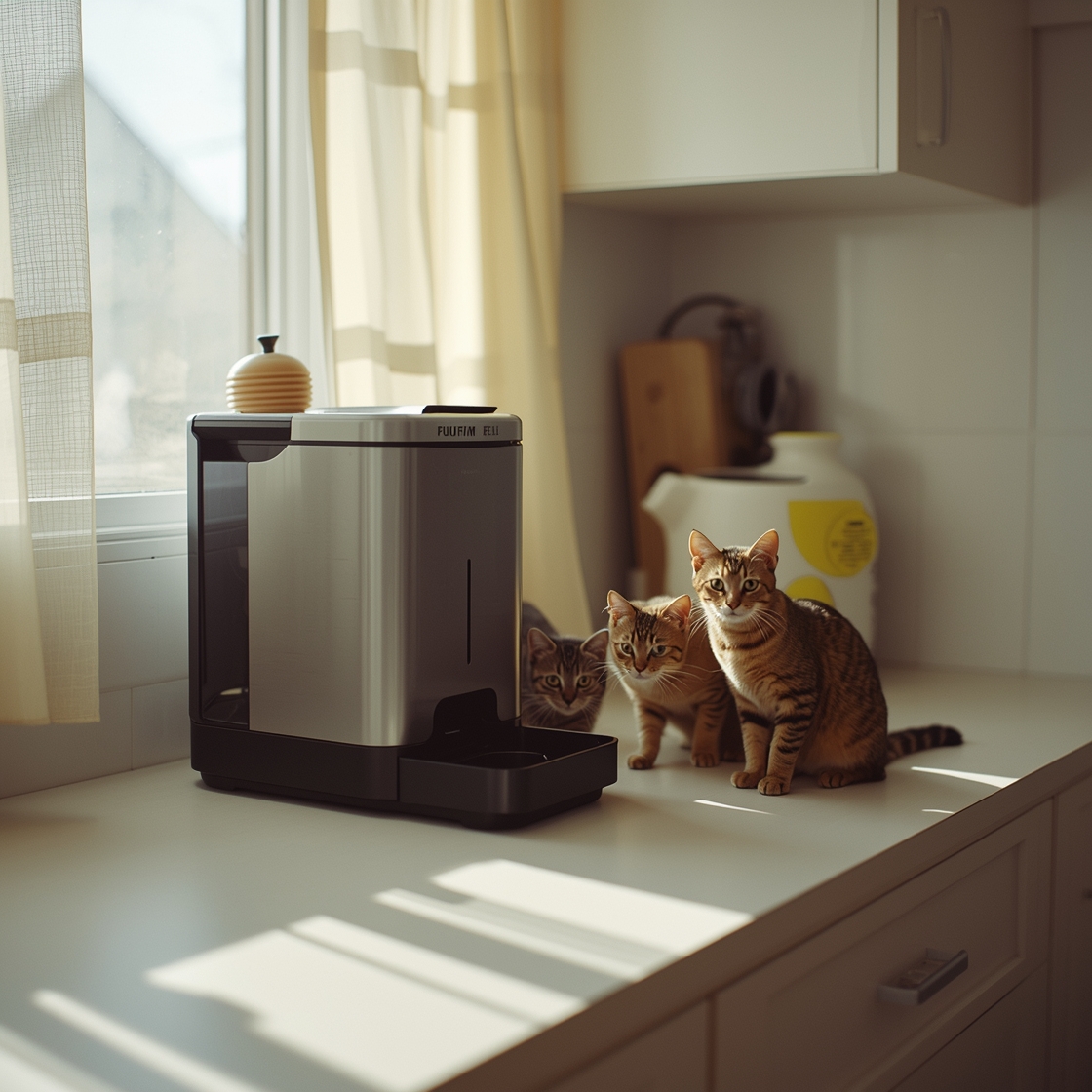
The Catit Multi Feeder (model 43741) is one current example. Catit lists the unit at 7.6 by 5.3 by 7.6 inches and 0.93 pounds. The maker describes a center cup that makes a cat paw out dry food.
Hairball dry foods lean on fiber. The FDA says it reviews “hairball control” claims on pet food. AAFCO says those claims should go through FDA Center for Veterinary Medicine review.
That review is supposed to happen before marketing. Our research team compared two dry foods that still publish those claims. Hill’s Pet Nutrition lists 323 kcal per cup on Adult Hairball Control Chicken Recipe.
Royal Canin lists 342 kcal per cup on Hairball Care. That is a 19 kcal gap on the same household cup. The fiber lines are not on the same basis.
Hill’s lists 9.2% crude fiber on a dry-matter table. Royal Canin lists 8.5% crude fiber as a guaranteed maximum. Do not treat those two percentages as a head-to-head score.
Royal Canin’s feeding table is more specific. An 8.8-pound cat gets 4/8 cup (44 grams) at low activity. The same cat gets 5/8 cup (55 grams) at normal activity.
That is an 11-gram daily swing from one label. Hill’s lists the dry recipe for adults 1 to 6 years prone to hairballs, not for kittens. Hill’s tells owners to mix the new food over a 7-day period.
Royal Canin positions Hairball Care for cats 1 year and older. The label lists 32.0% minimum crude protein and 13.0% minimum crude fat. Royal Canin says the diet meets AAFCO Cat Food Nutrient Profiles for maintenance.
The kibble includes powdered psyllium seed husk. Gels and chews are not meals. DailyMed’s Vetoquinol Laxatone Tuna Gel label lists 1,285 mg of white petrolatum per 6-gram teaspoon.
Directions start at 1/2 to 1 teaspoon for 2 to 3 days. Then the dose drops to 1/4 to 1/2 teaspoon two to three times a week. Tube sizes on that label are 2.5 oz (70.9 g) and 4.25 oz (120.5 g).
Pet Naturals of Vermont lists 25 mg of psyllium husk per two Hairball chews (3 grams). The hairball directions say four chews twice daily for 2 to 4 days. That protocol is 100 mg of labeled psyllium per day.
None of these products diagnose disease. AAFCO’s romance-claims page is blunt. Food labels may not make drug claims about treating a disease.
| Product | Form | Maker-listed energy or dose | Fiber or active amount | Maker-stated use |
|---|---|---|---|---|
| Hill’s Science Diet Adult Hairball Control Chicken Recipe | Dry kibble | 323 kcal per cup | 9.2% crude fiber (dry matter) | Adults 1–6 years prone to hairballs |
| Royal Canin Hairball Care | Dry kibble | 342 kcal per cup | 8.5% crude fiber, maximum | Cats 1 year and older prone to hairballs |
| Vetoquinol Laxatone Tuna Gel | Oral gel | 1/2–1 tsp for 2–3 days, then a smaller weekly dose | 1,285 mg white petrolatum per 6 g teaspoon | Elimination and prevention of hairballs |
| Pet Naturals Hairball for Cats | Soft chews | 4 chews twice daily for 2–4 days | 25 mg psyllium per 2 chews (3 g) | Elimination and prevention of hairballs |
| Catit Multi Feeder (#43741) | Slow feeder | 7.6 × 5.3 × 7.6 in; 0.93 lb | Not a fiber product | Paced dry-food meals |
Toxins, string, and other swallowed objects
Cornell lists plants, spoiled food, human drugs, string, yarn, and antifreeze. The same page adds chocolate, onions, paper clips, and rubber bands. Texas A&M adds thread, bones, and toy pieces.
A linear string can saw the gut. Do not pull it from the mouth or anus. The ASPCA’s people-food list is the one we used for kitchen toxins.
Chocolate, coffee, and caffeine share methylxanthines. The ASPCA says those compounds can cause vomiting, diarrhea, tremors, and abnormal heart rhythm. Baking chocolate and cocoa powder sit at the high end.
Onion, garlic, and chives are Allium species. The ASPCA says they can irritate the gut and damage red blood cells. Cats are more susceptible than dogs.
If you know the amount eaten, the ASPCA Poison Control number on that page is (888) 426-4435. Alcohol and raw yeast dough also make the ASPCA list. Dough can swell and produce alcohol in the stomach.
Disease causes that hide behind “just a hairball”
Cornell’s non-hairball list is long. It includes parasites, constipation, inflammatory bowel disease, and foreign-body blockage. It also names gut growths, diabetes, kidney disease, and hyperthyroidism.
Texas A&M and VCA Animal Hospitals name the same cluster. That is why those causes cleared our two-source rule. Royal Canin Academy published an age split from 1,041,887 adult-cat records.
Chronic vomiting or diarrhea of at least one month sat at 2.0% (21,142 cats). Chronic vomiting alone sat at 1.4% (14,039 cats). Hairball and parasite diagnoses in the same year were excluded.
Age changed the picture. Young adults (1 to 3 years) had a 0.4% rate of chronic vomiting only. Geriatric adults (10 to 25 years) had a 2.8% rate.
The published risk ratio for geriatric cats versus young adults was 7.5 for chronic vomiting only. Those clinic rates are likely low. The Academy authors said owners and staff under-report “normal” vomiting.
A cat that seems fine can still be losing weight. Weight loss plus vomiting is not a hairball hobby. Cornell lists bloodwork and a fecal exam as early steps.
Imaging and, later, a biopsy can follow if those tests are quiet.
When frequency means you should call a clinic
Hospital pages do not use one number. Cornell says vomiting more often than once per week warrants an exam. Cornell also lists lethargy, weakness, low appetite, and blood in the vomit as same-trip signs.
Odd thirst, odd urination, or diarrhea belong on that same Cornell list. VCA Animal Hospitals uses a tighter hairball line. If hairballs come more than once a month, VCA says to contact a veterinarian.
VCA also says to go in at once for fever, pain, dehydration, blood, or a suspected toxin. Ongoing vomiting past one to two days also needs a visit. Texas A&M our editorial team wrote that there is no hard rule.
She still said a cat that vomits more than a couple of times per month needs to be seen. Non-productive retching made her obstruction list. So did a sudden jump in frequency.
Our research team did not pick a winner among those three lines. We report the mismatch. If you want one household rule, use Cornell’s weekly line.
It is the strictest frequency we found on a teaching-hospital vomiting page. Call sooner for kittens, seniors, and cats that stop eating. Cornell notes that protracted vomiting often needs fluids.
A bland diet may follow after the heaving stops. Specific treatment depends on the diagnosis. That work happens in a clinic, not on a label.
FAQ
Is it normal for my cat to throw up every week?
Cornell treats vomiting more than once per week as a reason for an exam. A single hairball every week or two can still be benign on that same page. Weekly food vomit, bile, or weight loss is a different story.
How can I tell a hairball from other vomit?
Cornell describes a hairball as a damp, cylindrical wad of hair wet with bile. Food vomit looks like kibble, meat, or liquid. Blood can be red or look like coffee grounds.
Can a hairball gel replace a clinic visit?
No. DailyMed’s Laxatone label is a lubricant dose, not a diagnosis. Pet Naturals’ chew directions are a short 2-to-4-day protocol. Use them only after a clinician has ruled out blockage and metabolic disease.
Why does my cat throw up right after eating?
Fast eating often causes regurgitation of barely digested food. Texas A&M points to puzzle feeders and slow bowls for that pattern. The Catit Multi Feeder is one maker-listed paced bowl.
If the heaves are violent, or the cat cannot keep water down, skip the bowl swap and call.
What vomit colors mean I should leave now?
Blood, coffee-ground material, and vomit with string or plastic are same-day problems. Texas A&M flags thick yellow vomit when other illness signs are present. Cornell lists blood in the vomitus as a prompt-evaluation sign.
Do not wait for a second episode in those cases.
Do older cats throw up more for a reason?
Royal Canin Academy’s 1,041,887-cat analysis found a sharp age split. The chronic-vomiting-only rate rose from 0.4% in young adults to 2.8% in geriatric cats. Kidney disease and hyperthyroidism sit on Cornell’s cause list.
Age is a reason to investigate, not a reason to wait.
Should I change food the same day I see a hairball?
Hill’s tells owners to transition its hairball dry food over 7 days. A sudden swap can add more vomiting. Confirm the cat is eating, drinking, and passing stool first.
Then ask the clinic whether a fiber diet, a gel, or a workup comes first.