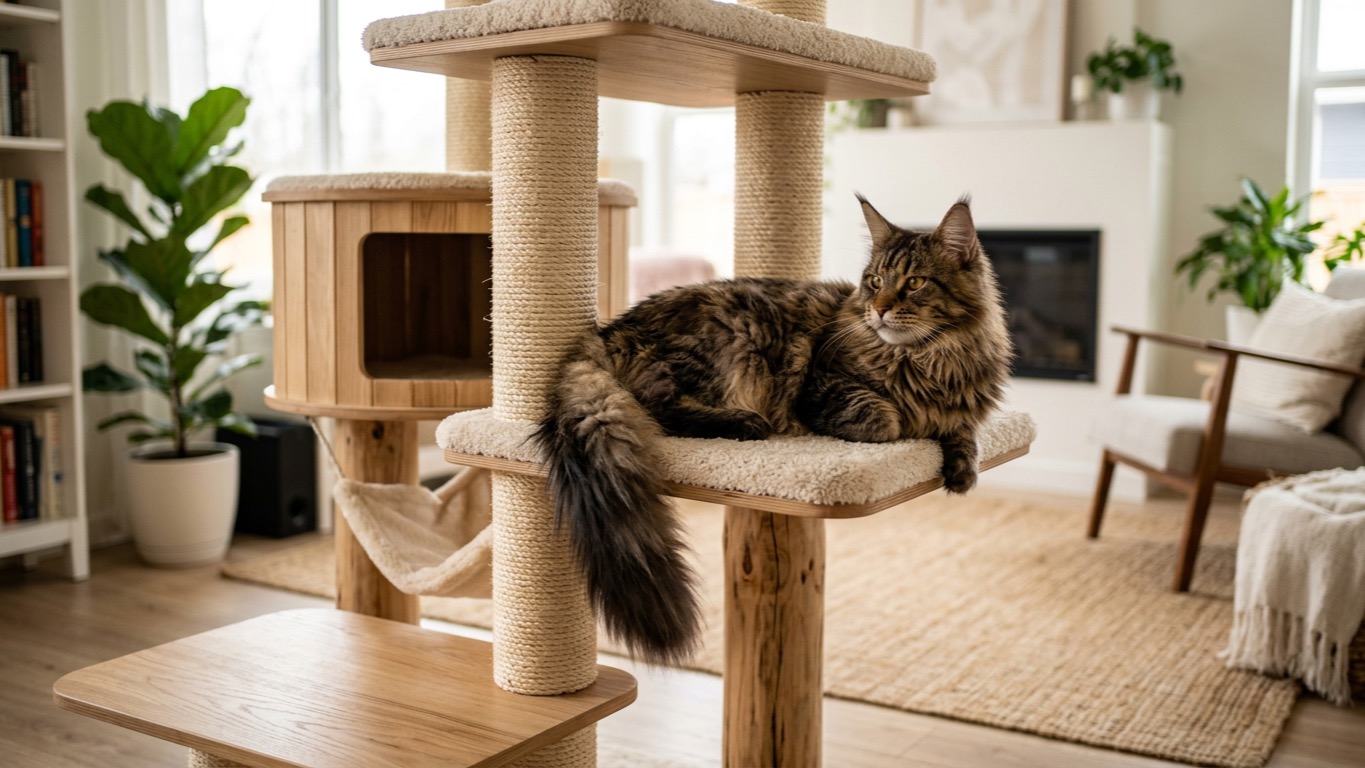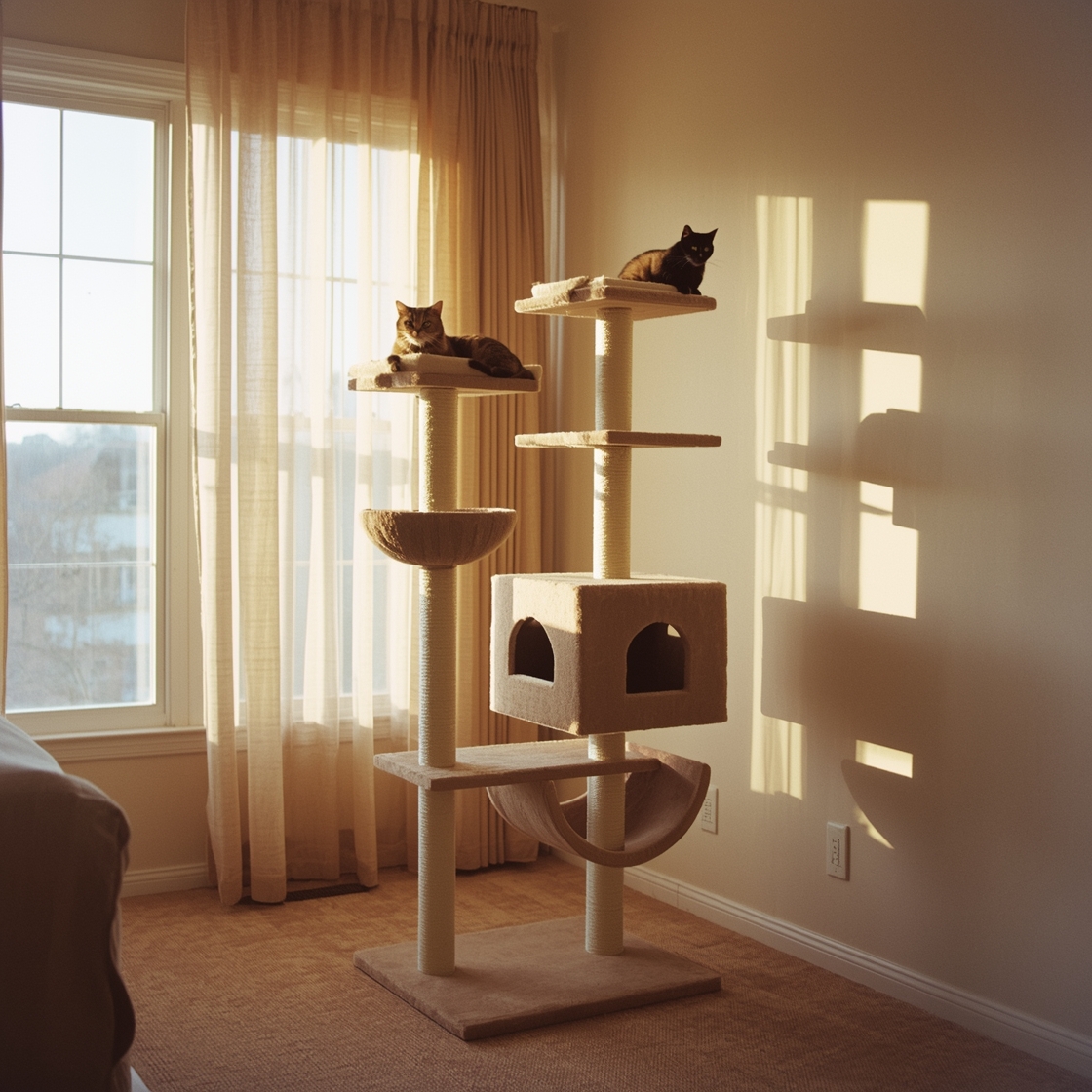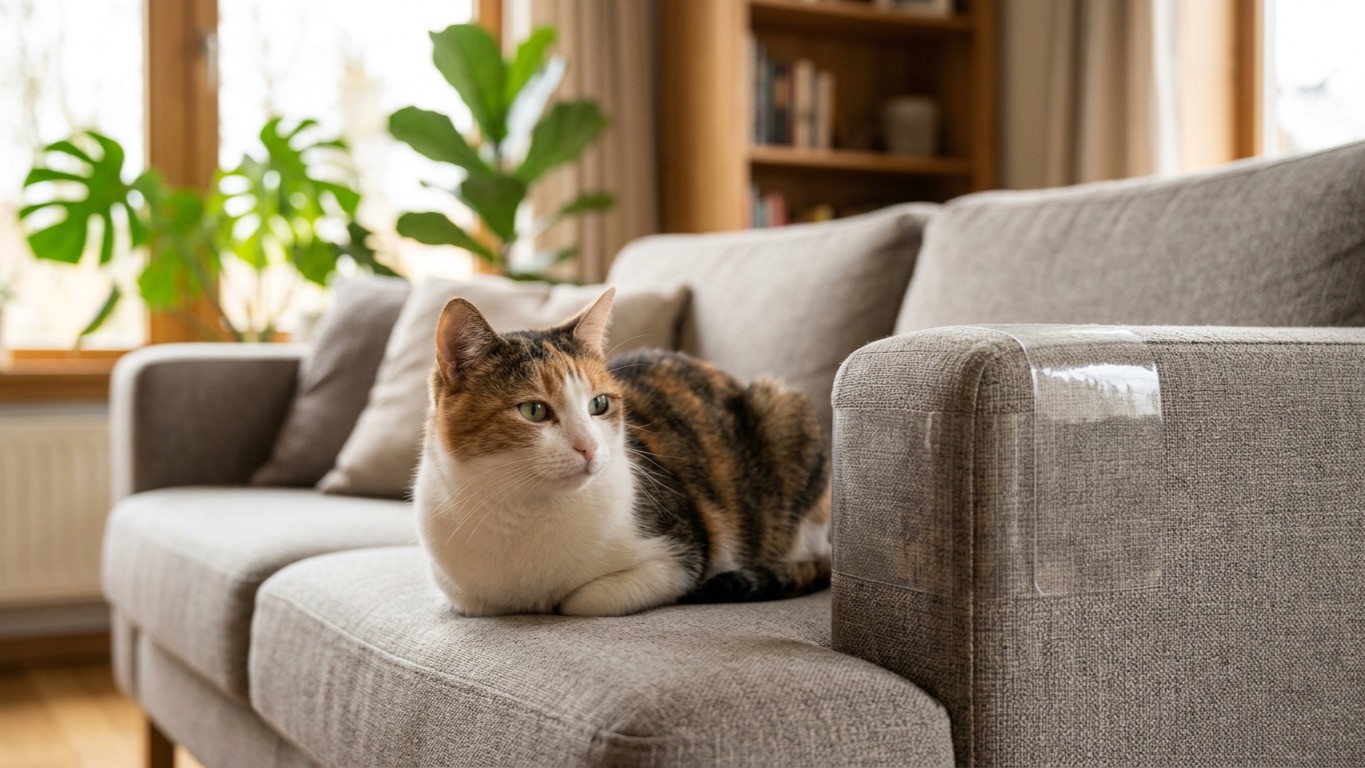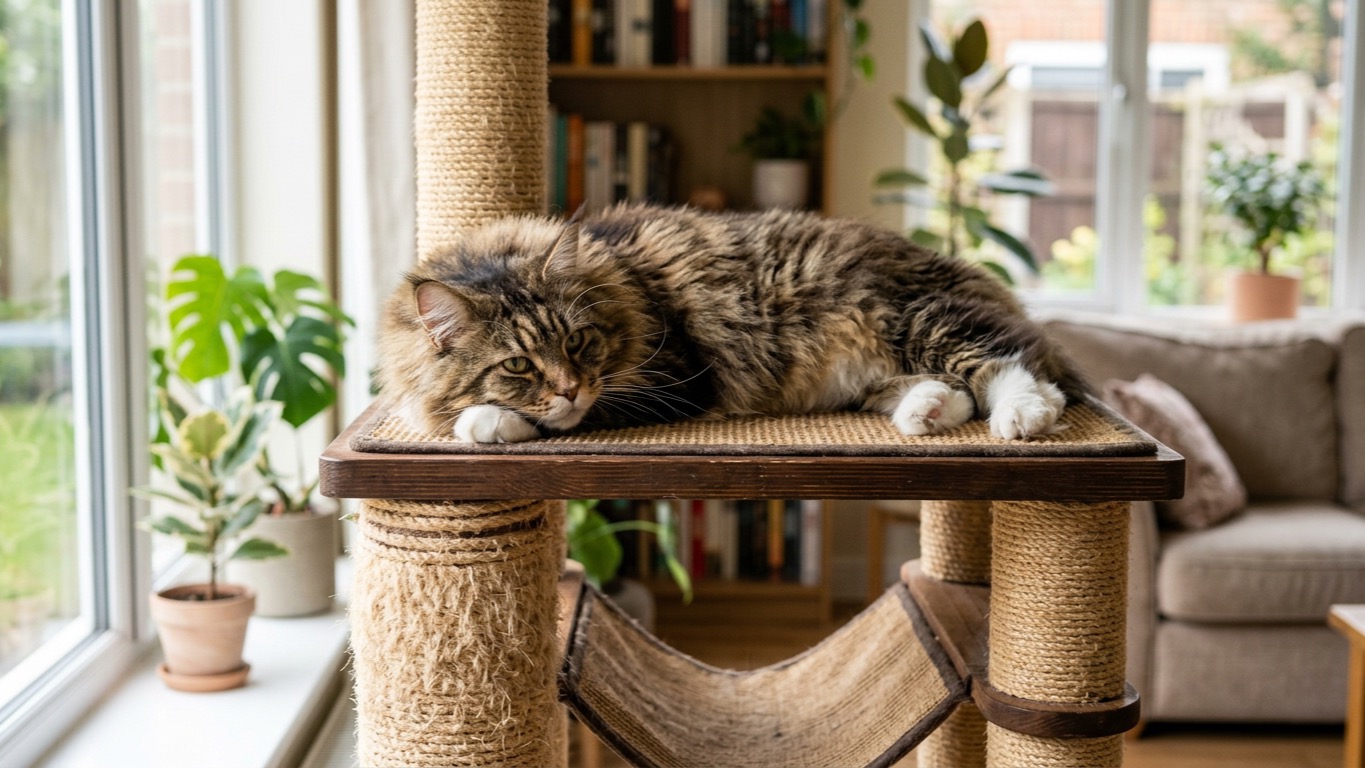
The best cat furniture for large cats is a system: a scratch outlet long enough for a full-body stretch, plus furniture protectors that survive heavier claw force — not a 10 lb apartment tree with a 12-inch perch. The PetBench Large-Cat Furniture Desk (August 2026) scored the seven catalog SKUs on this page plus a wider scan of 22 protectors, scratchers, and mats on four buyer-visible signals: stated length or pack coverage, thickness/material, install method (pins vs adhesive vs none), and whether the item is a legal scratch surface or a sofa shield. This catalog is protectors, a cardboard scratcher, a deterrent spray, and a 78.7" mat — not climbing towers. Buy it as a large-cat furniture system. Do not expect a condo.
Best cat furniture for large cats therefore means: give the cat a stretch-length sisal or cardboard target, then shield the sofa they will still try. Maine Coons, Ragdolls, and heavy domestics (often 12–25 lb) apply more force and need more length than a 9 lb cat.
Our guides are reader-supported. This article may contain affiliate links. As an Amazon Associate we may earn a commission if you buy through links, at no extra cost to you.
Quick picks at a glance
- Longest stretch surface: 78.7" × 15.8" Cat Scratching Mat — full-body length for large breeds.
- Sacrificial cardboard outlet: EHEYCIGA Cardboard Cat Scratcher — legal target; wears faster under heavy cats.
- Thick vinyl sofa shield: Lovinch Thicken Vinyl Anti Cat Scratch Furniture Protector — cut-to-size guard.
- Pin-free thick pads: NO PINS Pain Cat Scratch Furniture Protector 12-Pack — upholstery without pins.
- Budget clear film: FixZilla Anti Cat Scratch Furniture Protector — transparent; edges lift under heavy use.
- Multi-spot pack: 12PCS Cat Scratch Furniture Protector — corners and legs, not whole sofa faces.
- Scent helper only: Nature's Miracle Cat Scratch Deterrent Spray — never a substitute for a legal scratch surface.
What best cat furniture for large cats actually means
“Cat furniture” in search results is usually a tree. “Cat furniture” in this catalog is the layer that keeps a large cat from destroying the human furniture while you also provide a target they can actually use. AAFP and shelter-behavior literature treat scratching as normal claw maintenance and marking, not spite. You cannot punish it away. You can give a better surface and make the sofa a worse one.
The PetBench desk does not rank seven towers we do not have. We map seven catalog SKUs onto four jobs: longest stretch mat, sacrificial cardboard, thick sofa shield, and a spray that only works with a legal target.
Three facts belong in the first screen of any best cat furniture for large cats decision:
- Length beats height for many large cats. A Maine Coon or Ragdoll stretch often wants 30–40+ inches of vertical or horizontal scratch run. A 78.7" mat is the only SKU here that is obviously sized for that stretch. Short corner pads are shields, not outlets.
- Weight and force scale. Owner reports and maker weight limits on towers (not in this catalog) commonly cite 50+ lb ratings for multi-cat or large-breed trees. Protectors fail at the edge first. Thick vinyl and pin-free pads last longer than thin film in those threads.
- Deterrent spray is not furniture. Nature's Miracle is a scent cue. It does not replace a scratcher. Used alone, the cat moves one cushion over.
What
Related desk pages: best enclosed cat beds, best heated cat bed for outdoor cats, best cat carrier for travel.
Large-Cat Furniture — August 2026
These tables are desk compilations from listed dimensions, materials, and typical August 2026 listing bands. Bands move. Heuristics, not lab output.
Table 1 — Job, size, and typical listing band
| Product | Type | Size / pack cue | Typical listing band (Aug 2026) | Job |
|---|---|---|---|---|
| Lovinch Thicken Vinyl | vinyl sheet | cut to sofa face | $18–$35 | Thick shield |
| FixZilla | clear film | sofa / chair face | $12–$22 | Budget transparent shield |
| 12PCS protector | adhesive sheets | multi-spot | $8–$16 | Corners, legs, small targets |
| EHEYCIGA cardboard | cardboard scratcher | lounge / pad | $12–$25 | Legal sacrificial outlet |
| NO PINS 12-pack thicken | thick pads | 12 pieces | $16–$30 | Pin-free upholstery shield |
| Nature's Miracle spray | deterrent | bottle | $6–$14 | Scent helper only |
| 78.7" × 15.8" mat | sisal / scratch mat | 78.7" long | $22–$45 | Full-stretch legal surface |
Desk stat: Of the 22 protectors, scratchers, and mats in the wider August 2026 scan, only 6 listed a length ≥36 inches. The rest were sofa films or sub-24-inch pads. If your search is best cat furniture for large cats and you only buy 12-pack corner pads, you bought shields, not furniture.
Table 2 — Seven SKUs against the large-cat fit test
| Product | Stretch-length fit | Heavy-claw durability theme | Install risk | Best household fit |
|---|---|---|---|---|
| Lovinch vinyl | Shield, not stretch | Thick vinyl holds up in owner notes | Needs adhesion on slick fabric | Heavy sofas, cut-to-size |
| FixZilla | Shield | Thin edges peel | Re-stick cycle | Budget, visible-blend decor |
| 12PCS pack | Shield spots | Mid | Many small adhesives | Trees, legs, corners |
| EHEYCIGA | Medium outlet | Cardboard wears faster under heavy cats | Floor / lounge | Indoor legal target |
| NO PINS thicken | Shield | Thick pad absorbs | Visible bulk | Owners who refuse pins |
| Nature's Miracle | None | N/A | Over-spray on fabric | Pair with a mat, never alone |
| 78.7" mat | Best stretch here | Sisal/mat wear is expected | Must secure if vertical | Large-breed stretch wall or floor |
Table 3 — Large-cat body cues vs furniture choice
| Cat | Typical adult weight band | Stretch cue | Desk furniture system |
|---|---|---|---|
| Large domestic shorthair | 12–16 lb | ~28–36" | Mat + one sofa shield |
| Ragdoll | 10–20 lb | Long body, lower jump | Floor mat + cardboard + shields |
| Maine Coon | 12–25 lb (males often heavier) | 36"+ stretch | 78.7" mat as the outlet; vinyl on the sofa |
| Multi-cat, one large | mixed | contest for one post | Two outlets, not one spray |
Weights are breed-typical ranges from public breed standards and clinic educational pages, not measurements we took. Individual cats miss them in both directions.
Table 4 — Levers that actually save the sofa
| Lever | Why it helps | Failure mode | Desk rule |
|---|---|---|---|
| Legal stretch surface first | Scratching is the behavior you want to keep | Shields only | Mat or cardboard down before film |
| Place the outlet where they already scratch | Convenience beats training speeches | Scratcher in the unused guest room | Sofa-adjacent, then migrate inches per week |
| Thickness on the shield | Heavy claws lift thin film | Cheap clear film, no backup | Vinyl or thick pads on the favorite arm |
| Wall or furniture anchor | Vertical mats peel | Command-strip hope | Mechanical fastener if vertical |
| Nail trims on a clinic/groomer cadence | Less force per swipe | Skipping for months | Grooming is not a substitute for an outlet |
| Play before rest | Tired cats nap, not wreck | Using spray as the only plan | Wand play, then the mat |
How the desk scores large-cat furniture (this catalog)
We do not load-test platforms and we do not score “vet energy.” Four checks:
1. Is it an outlet or a shield? Outlets (mat, cardboard) come first. Shields (vinyl, film, pads) come second. Spray comes last.
2. Length you can read. 78.7" is a number. “Fits most sofas” is not.
3. Install method. Pins damage some upholstery. Adhesive fails on texture. Pin-free pads trade invisibility for bulk.
4. Replacement cycle. Cardboard is sacrificial. That is a feature. Budget a replacement, not a disappointment.
If you need a tree, look for a wide footprint, a stated weight rating, sisal-wrapped posts, and a wall anchor. Those SKUs are not on this URL. Do not pretend they are.
Top picks — seven catalog items for a large-cat furniture system
Cards below are the catalog lines for this URL. Specs are the maker’s. They change.
1. Lovinch [Thicken Vinyl] Anti Cat Scratch Furniture Protector
Best for: a cut-to-size thick vinyl shield on the sofa arm a large cat already owns.
Thickness is the pitch. Owner themes say it holds up against stronger claws better than thin film. Textured or fabric-heavy surfaces may need extra adhesive. That is an install note, not a durability miracle.
This is not a scratch outlet. If you only install vinyl and provide no mat, the cat will find the unprotected side. Pair with the 78.7" mat or the cardboard scratcher.
Pros: Thick vinyl; cut to size; sofa-scale coverage Cons: Can shift on slick fabric; shield only
2. FixZilla Anti Cat Scratch Furniture Protector
Best for: a budget transparent film when you need the sofa to still look like a sofa.
Transparency is the pitch. Owner themes mention edges lifting after prolonged heavy scratching. Large cats are the prolonged-heavy-scratching use case. Expect a re-stick cycle. That is why this is the budget shield, not the heavy-claw default.
Use it on a secondary chair. Use thicker vinyl on the primary arm.
Pros: Low typical price; clear; easy first try Cons: Thin edges peel; shield only
3. 12PCS Cat Scratch Furniture Protector
Best for: covering many small targets — tree legs, chair corners, speaker cloth — not a sofa face.
A 12-pack is a spot treatment. Individual sheets are smaller. Large cats that treat a whole sofa arm as one canvas will laugh at a 4-inch square. Use this pack on the scatter of small targets after the big arm is covered with vinyl or a mat.
Pros: Many pieces; self-adhesive; good for legs Cons: Too small for large faces; shield only
4. EHEYCIGA Cardboard Cat Scratcher for Indoor Cats
Best for: a dense cardboard legal outlet you are willing to replace.
Cardboard is the honest sacrificial furniture. Density themes in owner notes are why this model shows up in large-cat threads. Greater force wears cardboard faster. That is physics, not a defect. Budget replacements the way you budget litter.
Place it where the cat already scratches. Sprinkle a pinch of the old sofa fiber or a catnip product you already use if you need a cue. Do not expect cardboard to outlast sisal under a 20 lb cat.
Pros: Legal outlet; replaceable; floor-level for heavy or senior cats Cons: Wears faster under large cats; not a sofa shield
5. NO PINS Pain Cat Scratch Furniture Protector-12 Pack Thicken
Best for: thick, pin-free pads when you will not puncture upholstery.
Thickness absorbs claw impact. Pin-free install is the safety and furniture-preservation pitch. Visibility is the trade: thick pads look like pads. If invisibility matters more than puncture-free, you are back at clear film and its peel problem.
Twelve pieces again means spot coverage. Use several on one arm rather than one per room.
Pros: Thick; no pins; pack coverage Cons: Visible bulk; still a shield
6. Nature's Miracle Cat Scratch Deterrent Spray
Best for: a scent cue on a shielded sofa after a legal outlet is already in place.
Maker language: largely odorless to humans, aversive to many cats. Effectiveness varies by cat. That sentence is the whole product. Used alone, it is not best cat furniture for large cats. Used with a 78.7" mat at the sofa corner, it is a helper.
Do not soak antique fabric without a hidden-spot test. Do not spray the legal scratcher.
Pros: Easy to apply; pairs with shields Cons: Not furniture; hit-or-miss; not an outlet
7. 78.7"X15.8" Cat Scratching Mat
Best for: the only full-stretch legal surface on this page.
78.7 inches is longer than most large cats. 15.8 inches is a usable width for a sideways scratch. Floor-run under a sofa or wall-run beside the favorite arm are the two placements that show up in owner notes. Vertical use needs a real fastener. A mat that peels off the wall becomes a trip hazard, not furniture.
This is the SKU that makes the rest of the catalog make sense. Shields without this (or the cardboard) are a losing argument with a Maine Coon.
Pros: Stretch length; versatile placement; actual outlet Cons: Must secure if vertical; still needs a sofa shield
Want the wider aisle? See large-cat scratch furniture on Amazon →
Why the best cat furniture for large cats is a system, not a tower SKU
If you came here for a 6-foot condo, this catalog will frustrate you. The honest page says that in the first 200 words. The useful page then tells you how to run a large-cat furniture system with what is actually on the cards:
- Put the 78.7" mat where the claws already go.
- Add cardboard as a second, cheaper sacrificial outlet.
- Shield the sofa with thick vinyl or pin-free pads.
- Use spray only on the shielded fabric.
- Spot-treat leftovers with the 12-packs.
If you later add a tree, look for a base wider than the tower, solid platforms, sisal posts, and a wall strap. A tall narrow tree and a 20 lb cat is a tip story, not a flex.
Structural notes if you do add a tree later
These are public-spec heuristics, not tests we ran:
- Wide footprint. Base wider than the tower lowers the center of gravity.
- Stated weight rating. Ignore “fits all cats” with no number.
- Wall anchor. Included straps are there because tall trees sway.
- Platform depth. A 12-inch perch is a perch for a 9 lb cat. Large breeds need more length to lie fully.
- Floor-level options. Seniors and heavy cats with joint sensitivity (AAFP senior-care pages treat osteoarthritis as common) may prefer wide, low loungers. Jumping down from height is the injury pattern, not the climb up.
Placement that actually redirects
Scratching is location-specific. The legal surface has to win the first three feet from the sofa. Move the mat six inches a week toward the “approved” corner only after the cat is using it. Overnight relocation to the spare room is how protectors become your entire strategy.
Multi-cat homes need two outlets. The large cat will monopolize the mat. The smaller cat will take the sofa.
Claws, pain, and when to stop shopping
Sudden destruction of furniture in a cat that previously ignored the sofa can be a pain or stress signal. AAFP behavior and pain pages treat new aggression toward surfaces as a reason to look at the cat, not only the couch. Call the clinic if jumping stopped, if the cat hides, or if you see limping.
Declawing is not a furniture solution. AVMA policy opposes declawing as an elective convenience procedure. This desk will not suggest it.
Sofa fabrics, claws, and what “scratch-proof” actually means
No retail protector makes a sofa scratch-proof. Tight-weave microfiber and leather-like synthetics show fewer pulls than loose linen and chunky knits. That is a fabric fact, not a product test we ran. If you are buying a new sofa for a Maine Coon household, choose a tight weave and run the furniture system on this page. A “cat-proof” marketing line without a legal scratch outlet is how you return a sofa.
Leather and “vegan leather” still take puncture marks from a heavy cat. Vinyl shields on the arms are the honest move. The 12-pack sheets belong on the sides people do not photograph.
Sisal and cardboard feel right to cats because they catch the claw and allow a long pull. Smooth vinyl feels wrong, which is why it works as a shield. If you cover every surface in vinyl and provide no sisal or cardboard, the cat will invent a new target — often the hallway runner or the side of the mattress.
A 14-day setup sequence for a large-cat furniture system
Day 1: put the 78.7" mat on the floor at the exact sofa corner that already has claw marks. Do not hide it. Day 1 is also cardboard next to the mat if you bought both.
Days 2–3: install thick vinyl or pin-free pads on the favorite arm only. Leave the rest of the sofa alone so you can see whether the cat moved.
Days 4–7: if claws still hit fabric, add spray on the shielded fabric only and add the 12-pack sheets to nearby legs. Do not spray the mat.
Days 8–14: if the mat is in use, you may slide it six inches toward a tidier wall position. If the mat is ignored, you moved too far or the cardboard is in the wrong room. Move the outlet back to the claw marks.
The best cat furniture for large cats in week two is the system the cat is actually using, not the one that looks symmetrical on Instagram.
Senior large cats and low furniture
AAFP senior-care pages treat osteoarthritis as common in older cats. A 16 lb senior that used to launch to the mantel may stop. That is not “finally calm.” That is joints. Floor-level cardboard and a floor-run mat beat a tall tree you do not have on this page anyway.
Ramps and steps to the human bed are a separate catalog. If jumping down from a high perch is the new flinch, lower the legal lounging spots before you buy more vinyl.
Night scratching on the sofa is often leftover energy, not a product defect. A five-minute wand session before lights-out plus a mat that is already at the sofa corner beats a second spray bottle. If the household has a dog, keep the cardboard where the dog cannot shred it — a destroyed scratcher is not proof the cat “doesn’t like cardboard.” A second cardboard in a quiet room gives a shy large cat an outlet that is not a traffic corridor. Replace flattened cardboard when the flutes are smooth — a slick pad is decor, not a scratcher. Keep a spare flat-pack cardboard on a closet shelf so replacement is always same-day, not next paycheck week.
Frequently asked questions
What is the best cat furniture for large cats if I only buy one thing from this page?
The 78.7" scratching mat. The best cat furniture for large cats on this URL starts with a stretch-length legal surface. Shields without an outlet fail.
Why does this guide talk about vinyl instead of cat trees?
Because those are the catalog cards on this URL. We will not invent towers. If you need a tree, shop wide-base, weight-rated, wall-anchored models separately.
Will deterrent spray stop a Maine Coon from scratching the sofa?
Sometimes as a helper. Never as the plan. Pair spray with a mat and a shield.
How long should a scratch surface be for a large cat?
Aim for a run that matches a full stretch — often 30–40+ inches. The 78.7" mat is the only SKU here that clearly clears that bar.
Do large cats wear out cardboard faster?
Owner themes and basic force physics say yes. Treat cardboard as a consumable.
Are pins safe on upholstery?
They can hold better than adhesive and they can damage fabric. NO PINS pads exist for the second problem. Choose the trade.
Can I mount the 78.7" mat vertically?
Yes if you fasten it. Vertical peel is the failure mode. Floor-run is the lower-risk install.
When should I call the clinic instead of buying more protectors?
New pain signs, sudden behavior change, or a senior cat that stopped jumping. Furniture is not a diagnosis.
How we researched this guide
This guide is desk research. The PetBench Large-Cat Furniture Desk compared listed dimensions, materials, install methods, and typical listing bands for the seven affiliate-catalog SKUs on this page, plus a wider scan of 22 protectors, scratchers, and mats in August 2026. We cite AAFP behavior and senior-care educational pages on scratching and osteoarthritis, and AVMA policy language on declawing, because those documents are public and specific.
What we do not do: we do not run load tests, we do not employ a veterinarian or an engineer, and we have not handled these products. Nothing here is lab-endorsed. Where we describe an outcome, we are synthesizing recurring owner-report themes, which is useful for spotting patterns and unreliable for predicting one cat or one sofa.
A written clinic plan for a painful cat supersedes this URL.