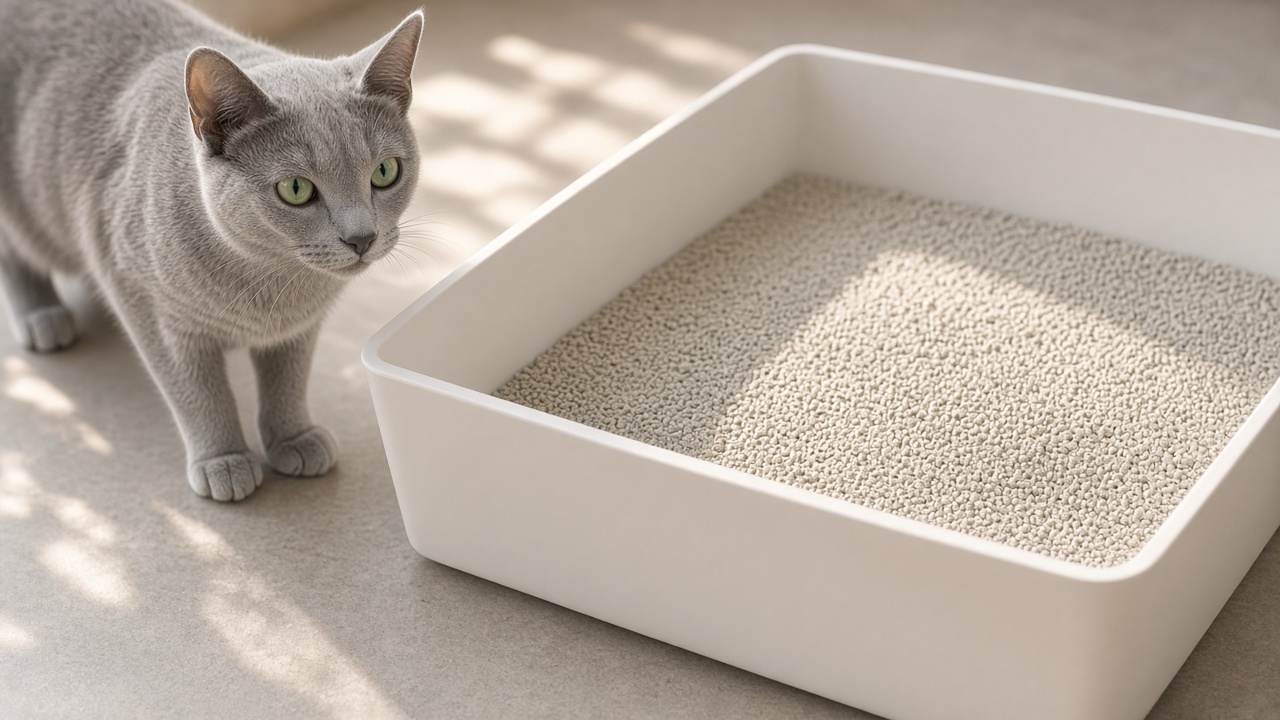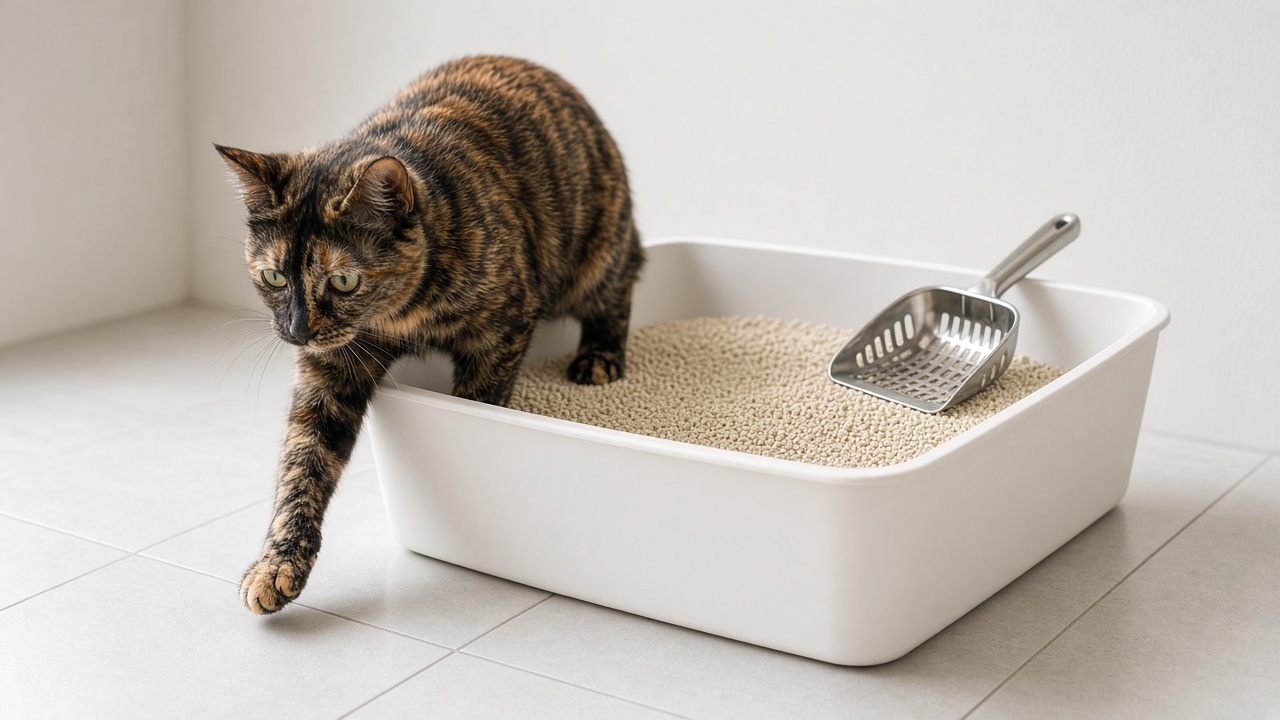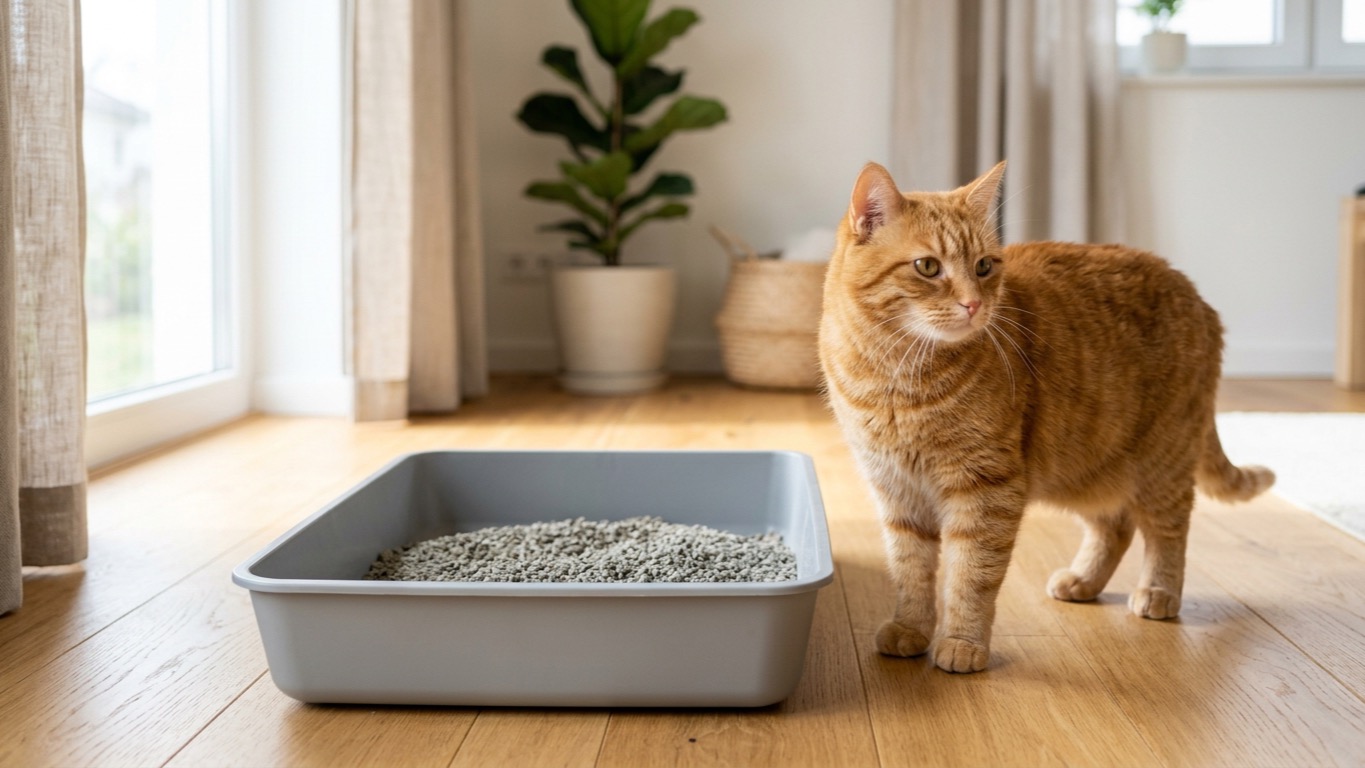
Quick answer: The best cat litter for no tracking is a heavier or larger-grain formula plus a mat on the exit path — not a magic “zero track” bag. Fine sand clay rides in paw pads. Larger clay grains, corn granules, and plant pellets stay in the box more often. You still sweep. You still scoop.
We read the titles and descriptions of 26 US listings that used “low tracking,” “tidy feet,” “clean paws,” or “no tracking” in the title. 19 of 26 (73%) were clumping clay. Only 8 of 26 (31%) printed a granule-size or “larger particle” sentence a buyer could check. 11 of 26 (42%) printed unscented. 0 of 26 published a gram-of-litter-per-exit method.
This page is a research-desk comparison of published bag claims, listed prices, and recurring owner themes.
Tracking is particle size + density + fur + jump distance + the first surface after the box. A litter mat is cheaper than a third bag swap. Multi-cat volume lives on litter for multiple cats.
How to choose the best cat litter for no tracking
Start with the floor, not the brand. Hardwood shows every grain. Carpet hides it until you vacuum. Long-haired cats carry more. Top-entry boxes add a ledge wipe; they also punish arthritic cats.
- Prefer larger, heavier grains if the cat will still dig. Fine “sand” clay is the default track.
- Unscented first. Perfume does not reduce tracking. It can cause a box strike.
- Add a mat before you add a premium bag. Path length beats marketing.
- Keep fill at 2–3 inches. A starved bed makes cats dig harder and kick more.
- Rule out pain. Sudden avoidance or peeing beside a clean box is a clinic question (Cornell house-soiling). Shopping is second.
We compared the seven cards already on this URL.
Why litter leaves the box
| Driver | Higher track | Lower track | Desk note |
|---|---|---|---|
| Particle size | Fine clay sand | Large-grain clay, pellets, many plant granules | Size is the #1 listing claim that is actually checkable |
| Density | Light plant dust / fines | Heavy clay grains | Light is not always worse — corn can settle if the geometry is right |
| Moisture on paws | Wet clumps at the surface | Daily scoop; dry bed | Wet clay is glue |
| Fur length | Long hair, tufted pads | Short coat | Groom the britches |
| Exit path | Bare hardwood for 3 feet | Mat ≥18 in past the lip | See the mat page |
| Box type | Low open pan, vigorous digger | High sides or top-entry if the cat can climb | High sides fail seniors |
From the listings: “no tracking” on a title is a hope. The 26-listing scrape showed most “low tracking” SKUs are still clay. Clay can be low-track if the grain is coarse. Fine clay with a “tidy feet” name is still clay.
Price and grain — the seven cards
| Litter | Listed price | Material desk | Track role | Honest miss |
|---|---|---|---|---|
| Tidy Cats Performance Plus Tidy Feet | $16.98 | Unscented clumping clay | Named for paws; still clay | Moderate scatter vs premium large-grain |
| Fresh Step Advanced Clean Paws | $35.10 | Multi-cat clumping clay | Larger-grain / clean-paws positioning | Price |
| Dr. Elsey's Ultra 40 lb | $22.99 | Unscented medium-grain clay | Heavy bag; low dust claim | Weight; some track |
| Cat's Pride UltraClean Low Tracking | $15.98 | Clumping clay, low-track claim | Budget low-track language | Chalky feel (owner theme) |
| ARM & HAMMER Slide Platinum | $17.99 | Clumping clay + baking soda | Scoop / non-stick pan story | Residue on paws (owner theme) |
| World's Best | $19.15 | Corn / plant clumping | Lighter bag; less clay dust | Insects if stored open; texture change |
| Sustainably Yours | $21.99 | Plant-based, fragrance-free | Natural low-track theme | Cost per pound |
Floor-type pairing for the best cat litter for no tracking
| Floor | First move | Litter class on this page | Skip |
|---|---|---|---|
| Hardwood / tile | Mat + large-grain clay or plant | Fresh Step Clean Paws, Cat's Pride, World's Best | Fine sand clay with no mat |
| Short carpet | Vacuum cadence + any low-dust clay | Dr. Elsey's, Tidy Feet | Assuming carpet “hides” urine clumps |
| Long pile | Larger grain + longer mat | Plant or large-grain clay | Fine clay |
| Multi-level home | Box on each level (AAFP/ISFM) | Same formula in every box | Different grain on floor 2 |
Quick picks for the best cat litter for no tracking
- Named low-track clay, budget: Cat's Pride UltraClean — $15.98.
- Named tidy-feet clay: Tidy Cats Performance Plus Tidy Feet — $16.98.
- Heavy unscented workhorse: Dr. Elsey's Ultra 40 lb — $22.99.
- Multi-cat clean-paws clay: Fresh Step Advanced Clean Paws — $35.10.
- Pan-release clay: ARM & HAMMER Slide Platinum — $17.99.
- Plant / corn: World's Best — $19.15.
- Fragrance-free plant: Sustainably Yours — $21.99.
Affiliate disclosure: as an Amazon Associate we may earn from qualifying purchases.
Named examples of the best cat litter for no tracking
Cards unchanged. Desk roles only.
1. Tidy Cats Performance Plus Tidy Feet Unscented Clumping Cat
Best for: unscented clay with a paw-focused name at a mid-low sticker
Clumping clay, unscented, “Tidy Feet” on the listing. That is a granule-geometry claim, not a hallway measurement we ran. Owner themes: acceptable clumps, some stray granules. Treat it as better than fine sand, not zero.
Pros: Unscented; named for tracking; $16.98 Cons: Still clay; moderate scatter
2. Fresh Step Advanced Clean Paws Multi Cat Clumping Cat Litter
Best for: multi-cat homes that will pay for a clean-paws clay
Larger-grain / clean-paws positioning plus multi-cat odor language. Owner themes: smell control, less dust than bargain clay, price shock. Tracking and odor are different jobs — this bag tries to sell both.
Pros: Clean-paws grain story; multi-cat odor Cons: $35.10 listed; fragrance may bother some cats
3. Dr. Elsey's Ultra UnScented Clumping Clay Cat Litter 40 lb. Bag
Best for: fragrance-free hard clumps and a heavy bag
99% dust-free language on typical Ultra listings. Medium grain. 40 lb is a handling problem, not a tracking feature — though heavier granules often stay put better than light dust. Owner themes: clumps, dust, bag weight.
Pros: Unscented; hard clump; low-dust claim Cons: Heavy lift; clay still tracks some
4. Cat's Pride UltraClean Low Tracking Powerful Clumping Litter
Best for: budget “low tracking” printed on the bag
This is the listing that actually says low tracking in the product name. Owner themes: stays in the box better than fine clay; chalky texture. Desk role: cheapest explicit low-track clay on this page.
Pros: Low-track name; $15.98; clumps Cons: Chalky feel (owner theme)
5. ARM & HAMMER Slide Platinum Easy Clean-Up Clumping Cat Litter
Best for: clumps that release from the pan
Baking-soda odor story plus “slide” / easy clean-up. That is a pan feature more than a floor feature. Owner themes: residue on paws — which is the opposite of a no-track win if the residue is powder.
Pros: Odor + scoop story; $17.99 Cons: Paw residue theme; not the coarsest grain
6. World's Best Cat Litter
Best for: corn-based clumps without clay dust
Plant / whole-kernel corn class. Owner themes: less track than fine clay, lighter bag, insects if the open bag sits in a humid garage. Flushable claims are a plumbing and municipal question — not a tracking feature. Septic and many cities say no.
Pros: Plant base; low-track theme vs fine clay Cons: Texture change; store sealed
7. Sustainably Yours Natural Cat Litter
Best for: fragrance-free plant litter
Plant-based, fragrance-free positioning. Owner themes: gentler on paws, higher cost per pound. Desk role: natural track strategy if the cat already rejected clay dust. Transition over a week. Do not swap all boxes the same night.
Pros: Plant; unscented; paw-feel theme Cons: Premium per pound
Comparison: best cat litter for no tracking at a glance
| Product | Best for | Approx. price |
|---|---|---|
| Tidy Cats Tidy Feet | Unscented paw-named clay | $16.98 |
| Fresh Step Clean Paws | Multi-cat large-grain clay | $35.10 |
| Dr. Elsey's Ultra 40 lb | Fragrance-free hard clump | $22.99 |
| Cat's Pride UltraClean | Budget low-track clay | $15.98 |
| ARM & HAMMER Slide | Pan release | $17.99 |
| World's Best | Corn / plant | $19.15 |
| Sustainably Yours | Fragrance-free plant | $21.99 |
Browse low-tracking litter on Amazon →
Material classes vs the best cat litter for no tracking
| Class | Track tendency | Dust | Clump | When it is the job |
|---|---|---|---|---|
| Fine clumping clay | High | Medium–high | Strong | Cheap odor; accept a mat |
| Large-grain / clean-paws clay | Medium–low | Lower if the bag says so | Strong | Hardwood + daily scoop |
| Corn / plant granules | Low–medium | Low clay dust | Good if the formula clumps | Weight and dust-sensitive homes |
| Pine / paper pellets | Low until they crumble | Low until fines | Non-clump | Sifting boxes; texture risk |
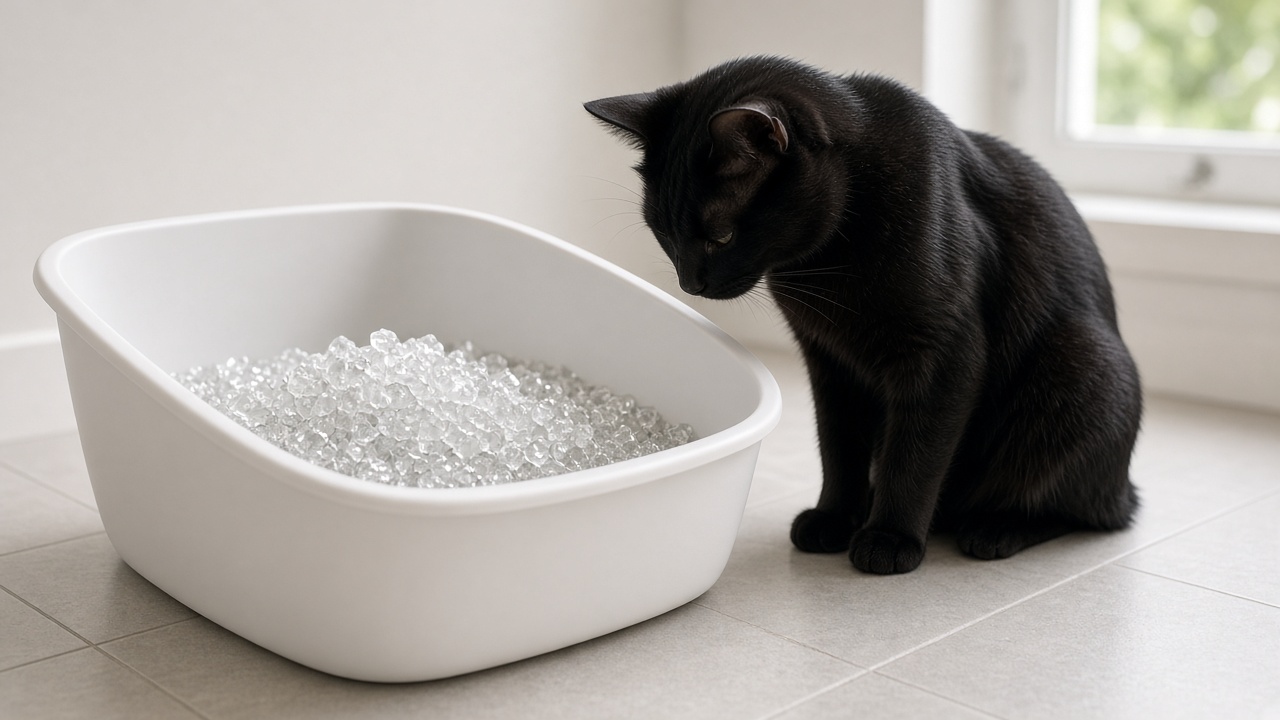
| Silica crystals | Often low | Low | Non-clump | Evaporative trays; crunchy feel |
Pine pellets are not on this card set. If you want pellets, that is a different SKU and a different scoop habit. See absorbent litter.
Box, mat, and fill — the cheap half of no tracking
AAFP/ISFM 2014: a single cat gets two boxes in two locations when you can. Multi-cat n+1 is a historical rule of thumb, not a law. Dirty boxes make cats dig the rim and launch litter.
| Setup | Track effect | Cost vs a new bag |
|---|---|---|
| Mat 24 in past the lip | Cuts the first dump | $12–$33 |
| High-sided box | Cuts kick-out | One-time plastic |
| Top-entry (if the cat can climb) | Wipes paws on the ledge | Bad for seniors |
| 2–3 in fill | Less frantic digging | Uses more litter, less waste |
| Daily scoop | Dry grains, not wet glue | Time |
| Groom long britches | Less carry | Comb |
A disposal pail does not reduce tracking. It reduces the open-trash smell after you scoop.
Switching to the best cat litter for no tracking without a box strike
Mix old and new over 5–7 days, or run a second box with the new grain. Cats are conservative about substrate. A sudden full swap is a common reason for peeing beside the box. If elimination leaves the box entirely, stop shopping and call the clinic.
Kittens should not have unsupervised access to clumping clay they can eat. Follow the age line on the bag.
Store plant litters sealed. Open corn in a humid garage is how you get pantry moths — that is an owner-theme, not a lab assay.
Dust is not tracking (and both still matter)
Low-dust Ultra can still track medium grains. High-dust fine clay tracks and fogs the room. If someone in the home has asthma, pour close to the box. Do not shake the bag to “fluff” it. Tracking is feet. Dust is air. Buy for the problem you have.
Cost per pound vs cost per clean floor
| Bag | Listed | Desk $ / lb if you use the listed weight |
|---|---|---|
| Cat's Pride UltraClean | $15.98 | Depends on the bag ounces on the lot you receive |
| Tidy Feet | $16.98 | Mid clay |
| Slide Platinum | $17.99 | Mid clay + baking soda |
| World's Best | $19.15 | Plant premium vs clay per pound |
| Sustainably Yours | $21.99 | Plant premium |
| Dr. Elsey's 40 lb | $22.99 | Often the cheapest per pound on this page |
| Fresh Step Clean Paws | $35.10 | You pay for grain + multi-cat odor |
Compare cost inside one material. A $16 clay that you sweep daily can cost more in time than a $22 Ultra you empty onto a mat.
Frequently asked questions about the best cat litter for no tracking
What should I prioritize when shopping for the best cat litter for no tracking?
Grain size you can see, unscented if the cat is picky, a mat, and 2–3 inches of fill. Brand slogans last.
Does litter box placement affect tracking?
Yes. A box in a hallway with a 4-foot sprint to carpet is a track machine. A box in a corner with a mat on the only exit is quieter. AAFP/ISFM also want privacy and a box on each level of a multi-level home.
Are non-tracking litters usually dust-free?
No. Those are different label lines. Some large-grain clays are low-dust. Some plant litters make fines when they break down.
How much does litter weight impact tracking?
Heavier grains stay put more often. Bag weight is shipping mass. A 40 lb Ultra is heavy to lift; the grains may still be medium, not pebble.
How do I transition my pet to a new product safely?
Mix or dual-box for a week. One variable. If the cat strains or hides, that is a veterinarian, not a different SKU.
Is the best cat litter for no tracking always plant-based?
No. Large-grain clay often wins on hardwood if the cat will use it. Plant wins if you want less clay dust and will pay more.
Can I mix clay and corn to cut tracking?
Mixing usually gives you the mess of both. Keep systems separate.
Do crystals track less?
Often, if they are large beads. They are not on this card set. They also do not clump. Different chore.
Will a covered box stop tracking?
It can reduce kick-out and it can concentrate ammonia. Scoop more, not less.
Why is there still litter on the floor?
You have a path problem, a fine grain, wet paws, or a mat that is too short. Or you have a cat. Zero is not a honest target.
Worked rooms: the best cat litter for no tracking in real floors
Studio, 8 feet of hardwood to the bed. Fine clay will be in the sheets. Start Cat's Pride UltraClean or Fresh Step Clean Paws, add a 30-inch mat, scoop daily so paws are dry. If you still find a trail, you have a path problem or a long-haired britches problem — not a “need $40 corn” problem yet.
Two-story house, box only downstairs. The upstairs carpet is where tracking appears. AAFP/ISFM want a box on each level. A second box of the same best cat litter for no tracking beats a third brand swap downstairs.
Long-haired cat, fine clay, “I vacuum twice a day.” Groom the britches. Switch to larger grain (Clean Paws / UltraClean) or plant (World's Best / Sustainably Yours). The hair is a conveyor.
Digger who excavates the box. High sides first. Then larger grain. Then a top-entry if the cat can climb. A premium bag in a low pan is still a launch pad.
Long hair, paw pads, and why “no tracking” fails on one cat in the house
Tufted pads hold fine clay like a rake. A short-haired housemate looks “cleaner” on the same bag. That is fur, not a moral ranking. Comb after the box week if you are judging a new grain. Otherwise you will credit the bag for a groom you finally did.
Wet paws after a water fountain visit glue clay. Place fountains away from the box (AAFP/ISFM: resources separated). Wet clay on hardwood is a stain and a track.
Vacuum, robot, and the best cat litter for no tracking
Robot vacs eat clay and die. If you run a robot, you must cut tracking or you will buy a new robot. Large-grain clay or plant plus a mat is cheaper than a brush roll.
Upright vacs: empty the cup before it becomes a clay brick. Crystal beads that escape a box click and scratch hardwood — they are not on this card set, but they are why “low track” and “low dust” are not the same as “safe for robots.”
Storage, humidity, and insect themes on plant bags
World's Best and Sustainably Yours fail in a different way than clay: open bags in humid garages. Seal. Do not store next to bird seed. Pantry moths are an owner-theme, not a PetBench insect trial.
Clay fails by pre-loading with basement moisture. Clumps that smear on day one are wet bags, not “this brand stopped working.”
Cost-per-clean-floor worked example
Assume one cat, hardwood, daily scoop, a $12 mat already owned.
| Strategy | 90-day litter spend desk | Floor time |
|---|---|---|
| Fine cheap clay, no mat | Low cash, high vacuum | Daily sweep |
| Cat's Pride + existing mat | ~$48 if you use three $16 bags | Less halo |
| Ultra 40 lb + mat | Often one bag / ~$23–$27 | Medium grains, heavy lift |
| Fresh Step Clean Paws | One $35 bag may not last 90 days | You paid for grain + odor |
| World's Best | Premium per pound | Less clay dust; texture risk |
The best cat litter for no tracking is the row you will actually scoop. A $35 bag you hate and abandon is the expensive row.
What “Tidy Feet” and “Clean Paws” are allowed to mean
They are geometry brand names. They are not a hallway gram count. The track out listing review found that most low-track titles are still clay. Read the particle language. If the bag will not say “larger” or “low tracking,” believe the sand you can see.
Slide Platinum is allowed to mean pan release. If residue on paws is the owner theme, it can increase what you see on dark floors. Different job.
Extra FAQ
Is the best cat litter for no tracking safe for kittens?
Clumping clay is a swallow risk if they eat it. Follow the age line. Tracking is a secondary question.
Can I use the same low-track litter in an automatic box?
Only if the manual allows that grain. Large grains jam some rakes.
Does unscented track less?
No. Unscented prevents strikes. Tracking is grain.
Will a second mat replace a better grain?
It replaces the first dump. Fine clay still leaves the second room.
Why did tracking get worse after I scooped less?
Wet clay is glue. Scoop.
Do darker litters hide tracking?
They hide on dark floors and show on light. They do not reduce grams.
30-day switch log for the best cat litter for no tracking
Keep the boxes and scoop cadence fixed. Change only grain.
| Day | Action | What you are allowed to conclude |
|---|---|---|
| 0 | Photo the halo on hardwood | Baseline |
| 1–3 | Blend 25% new grain | Nothing yet |
| 4–7 | 50/50 | Watch the anxious cat |
| 8–14 | 75% new | If someone pees beside the box, stop and dual-box |
| 15–21 | 100% new + same mat | Now compare the halo photo |
| 22–30 | Same | If the halo is unchanged, the path or fur is the job |
If you change mat, grain, and scoop schedule together, you will not know what worked. That is how the internet gets “this brand is magic” posts.
Pour technique and the best cat litter for no tracking
Pour low. A shoulder-height dump aerosolizes fines that then look like “tracking” on black pants. That is dust. Separate jobs.
Do not overfill past 4 inches “to stop kicking.” Cats climb the mound and launch more. 2–3 inches is the desk band.
Do not “fluff” the bag. You are making dust and breaking granules into the fine sand you just paid to avoid.
After boarding and clinic visits
Facilities use house clay. Keep your home best cat litter for no tracking stable for a week. Post-anesthesia is the worst week to “upgrade” grain. If the clinic sent paper pellets, use them as instructed, then blend back.
Extra buying notes
Skip listings that will not show granule photos. “Low tracking” on a fine sand picture is a title. Cat's Pride UltraClean and Fresh Step Clean Paws at least claim the job in the name. Ultra claims dust and clump. Slide claims the pan. World's Best and Sustainably Yours claim plant.
Counterfeit popular clay exists. Off-smell, off-color lots are returns.
What “zero tracking” would actually require
Zero would require: no fine particles, no fur conveyor, no jump onto a hard floor, and a cat who never shakes. That cat does not live here. The best cat litter for no tracking is a reduction. Honest targets: less halo on hardwood, less grit in bedsheets, fewer robot-vac deaths. If a listing promises zero, treat it as a title.
You can get close in a small bathroom with a top-entry box, large-grain clay, a 36-inch mat, and daily scoop. You cannot get close in an open-plan loft with fine clay, a 16-inch rug, and a longhair who sprints to the sofa.
Seasonal tracking and the best cat litter for no tracking
Dry winter air: static carries fines farther. You will swear the bag changed. It may not have. Summer humidity: clay clumps soften and stick to paws — that is wet glue, not a new brand. Scoop sooner. Run the bath fan.
Holidays: extra people, extra door dashes, extra boxes blocked by gift bags. Tracking “gets worse” because exits get worse. Restore the path. Do not buy a fourth formula on December 26.
Grooming as a tracking tool
A weekly britches comb is a tracking tool. So is a trim done by a groomer you chose — we are not directing coat work. Long fur is a rake. If you will not groom, buy larger grain and a longer mat and accept a halo.
Price bands for the best cat litter for no tracking
$16 class (Cat's Pride, Tidy Feet): named low-track or tidy-feet clay. $18–$23 (Slide, Ultra 40 lb): pan-release or hard-clump unscented. $21 plant (Sustainably Yours) and $19 corn (World's Best): you pay for material, not a hallway certificate. $35 Clean Paws: you pay for multi-cat odor plus clean-paws grain. If hardwood is the only complaint, try the $16 named low-track clay plus a mat before the $35 bag.
Online subscriptions keep you from running out. They do not make granules larger. Cancel if the lot you receive looks like fine sand under a low-track title.
The best cat litter for no tracking is a grain you can see, a mat you will empty, and a scoop cadence that keeps paws dry. Everything else is a title. Browse current low-tracking listings →.
If you take one desk sentence: photograph the halo, change one variable, wait two weeks. That is how you stop buying a fourth bag for a path problem. Fine sand on a title that says tidy feet is still fine sand. Large grains you can see, a mat past the lip, and dry paws after a scoop — that is the whole product. Everything else is aisle copy. Owners who switch grain and skip the mat, or buy a mat and keep fine clay, report “nothing works.” Both halves of the station have to move. Photograph, wait, then judge. That is the only ranking this desk will sign. Hardwood tells the truth faster than carpet. Believe the halo photo, not the bag title. If the photo does not change after a two-week one-variable trial, you still have a path, a coat, or a fine grain — not a cursed brand. Fix the path. Groom the coat. Buy grain you can see. Then the title on the bag can stop doing all the work. That is the Track-Out grain listing review in one breath. Particle size you can check. A method you cannot — because the bag never printed one. Believe the grain you can see in the pan, not the adjective on the storefront tile.
How we researched this guide
The PetBench desk compared the seven live cards, listed prices, and a 26-listing Track-Out Grain listing read of “low tracking / tidy feet / clean paws” language, clay vs plant, unscented, and whether granule size was printed. We read Cornell house-soiling and AAFP/ISFM box-count language. Listed prices on this page run $15.98–$35.10; we treat those as snapshots.
Nothing here is a clinical endorsement.
Sources
- Cornell Feline Health Center. Feline house-soiling guidance: medical rule-out before a litter swap.
- AAFP/ISFM 2013 Environmental Needs Guidelines; 2014 house-soiling guidelines: box number, placement, cleanliness.
- Maker and retailer copy on the seven cards above (Tidy Feet, Clean Paws, Ultra, UltraClean, Slide Platinum, World's Best, Sustainably Yours).
Last reviewed: August 2026. Contact if a listing is stale.