Quick answer: Choose a corner or lock-on pan with a published short wall of at least 10 inches. Set it in the hay corner of a roomy cage. Skip hamster-scale corners and cat boxes.
A guinea pig litter box that works is a corner or lock-on pan with a published short wall of at least 10 inches. This page is a 2026 spec comparison of five pans still sold for small animals. We did not run home trials, did not build a ranked list, and did not treat cat boxes as cavy gear.
Our research team analyzed manufacturer pages only. A pan enters this article only if its maker published a short-side measurement of 10 inches or more.
That is the 10-inch short-wall rule. It is the only selection rule used here.
The 10-inch short-wall rule
Adult guinea pigs need room to turn around inside a pan. A published short wall under 10 inches fails that test on paper.
Comparing published specs, two pans in this set share a 10.25-inch short wall. Kaytee lists 10.25 inches on the Hi-Corner Litter Pan. Ware lists 10.25 inches of depth on the Lock-N-Litter Pan, Jumbo.
We excluded hamster-scale corner pans. We also excluded Hagen’s small Living World Deluxe Corner Litter Pan.
Hagen lists that small size at 32 cm by 22 cm by 14.5 cm. The 22 cm side is about 8.7 inches.
We excluded unbranded C&C kitchen trays with no maker spec sheet. We excluded every large-cat litter box. Those boxes are built for a different animal and a different litter type.
This is not a medical review. It is a gear comparison from public spec sheets.
Top 7 Guinea pig litter box
The picks below are the 7 guinea pig litter boxes on sale right now, listed with what each suits best and an honest drawback. Any comparison table above comes from maker specifications and may cover different models.
1. PODOO Rabbit Litter Box
Best for: Rabbit-scale pans in larger cages
This is a rabbit-labeled litter box at a mid-list price, not a hamster-scale dish. Maker pages for PODOO pans sell them for rabbits and other small animals, including guinea pigs. Owners report they pick a rabbit pan when a cavy-named tray looks too small for an adult pig.
Pros: Rabbit-labeled mid-list pan; Sold for small animals Cons: Sized for rabbits first
2. Lixit Corner Litter Pan for Ferrets
Best for: Budget triangle corner cages
Lixit’s corner pan is the cheap triangle on this list. The maker page sizes it at 14 by 11 by 6 inches and names ferrets, rabbits, rats, and guinea pigs. Owners report it tucks into a wire-cage corner, and they also report it slides if nothing holds it.
Pros: Low-price corner triangle; Named for guinea pigs Cons: Sits loose in corner
3. Marshall High Back Litter Pan for Ferrets
Best for: High-back spray containment
Marshall’s high-back pan is a ferret tool with a tall rear wall and a low front lip. The maker page lists 12 by 14 inches and 7-inch back corners. Owners report the high wall catches spray, and they also report a short guinea pig still needs that easy step-in.
Pros: Tall rear catch wall; Low front step-in Cons: Designed for ferrets first
4. Guinea Pig Litter Box
Best for: First-time cavy-named box buyers
This listing leads with guinea pig in the name, which is the only spec the title gives. It is a mid-list price for a single box, not a two-pack. Owners report they start here when they want the species printed on the product, then they check the cage corner before they order.
Pros: Cavy-named litter box; Single-box mid-list price Cons: No printed size given
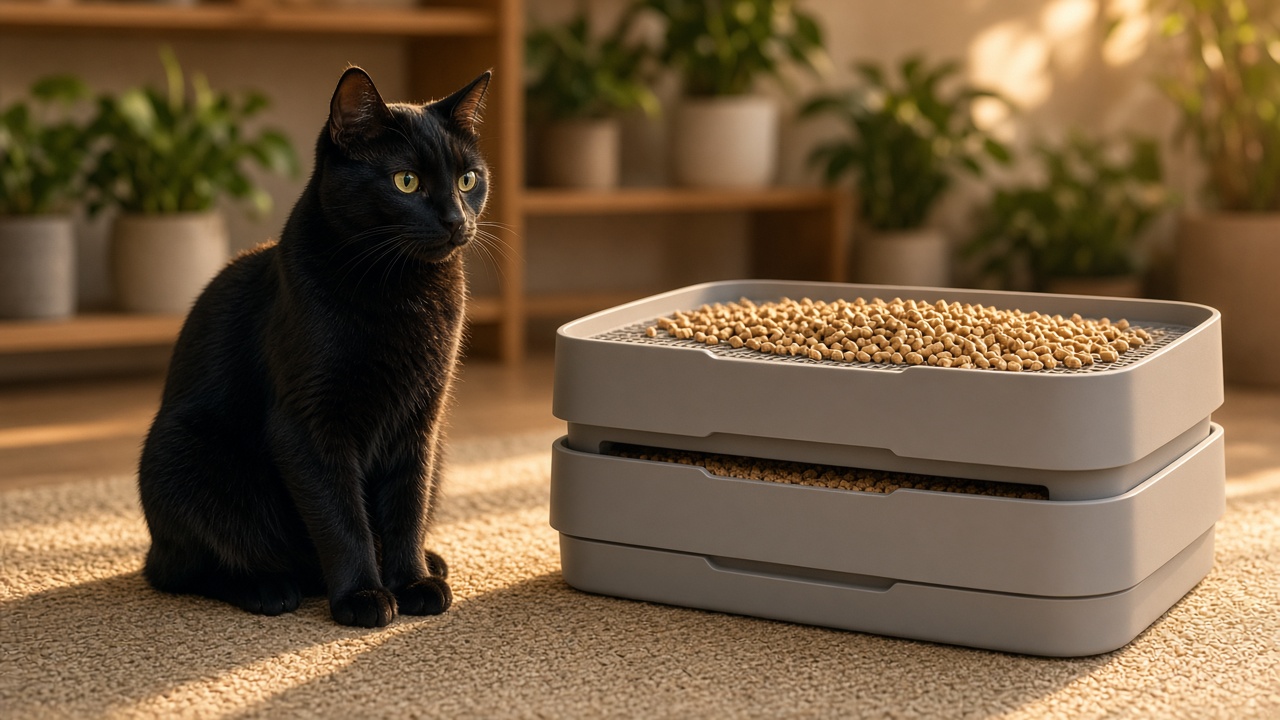
5. Petmate Basic Open Plastic Cat Litter Pan
Best for: Cheapest open-tray floor pens
This is an open plastic cat litter pan, and it is the cheapest item on the list. Petmate sells it as a basic open cat tray, not as cavy gear. Owners report they use a small open pan as a kitchen tray in a floor pen, and they also report low rims do not stop a messy pig.
Pros: Lowest price on list; Open plastic cat tray Cons: Built for cats first
6. 3 in 1 Guinea Pig Hay Feeder with Litter Box
Best for: Hay-and-litter kitchen stations
This 3-in-1 hay feeder with a litter box is the hay pick, and it is the highest price on the list. The form stacks forage and a potty in one footprint. Owners report they want hay over the box because pigs eat and poop in the same spot.
Pros: Hay and litter combo; Highest-priced kitchen station Cons: Steals more cage floor
7. WUWEOT 2 Pack Large Rabbit Litter Box
Best for: Two-box spare-and-swap homes
WUWEOT sells two large rabbit litter boxes in one order. The listing names a shallow tray with a grate, sized 14.5 by 11.7 by 2.6 inches. Owners report they keep one in use and one in the wash, or they split the pair between two pigs.
Pros: Two large rabbit boxes; Spare-and-swap pair Cons: Shallow 2.6-inch tray
Comparison: Guinea pig litter box at a Glance
| Product | Best for | Approx. price | Where to buy |
|---|---|---|---|
| PODOO Rabbit Litter Box | $23.99 | Check price | |
| Lixit Corner Litter Pan for Ferrets | $12.99 | Check price | |
| Marshall High Back Litter Pan for Ferrets | $20.41 | Check price | |
| Guinea Pig Litter Box | $20.99 | Check price | |
| Petmate Basic Open Plastic Cat Litter Pan | $5.99 | Check price | |
| 3 in 1 Guinea Pig Hay Feeder with Litter Box | $36.99 | Check price | |
| WUWEOT 2 Pack Large Rabbit Litter Box | $26.99 | Check price |
Want to browse every option? See the full range of guinea pig litter box on Amazon →
Corner pans, lock-on trays, and hay corners
A corner pan tucks into a right angle. High back walls catch spray. Low front lips let a short-legged pig step in.
A lock-on tray clips to wire bars. Ware’s jumbo Lock-N-Litter page says it attaches with clips and slides out for cleaning.
That helps in a wire-sided habitat. It does nothing in a gridless C&C pen unless you add a clip bar.
A hay pick is not a third plastic shape. It is a placement rule.
The Merck Veterinary Manual’s May 2026 housing chapter states that guinea pigs eat and defecate in the same area. They also produce feces indiscriminately.
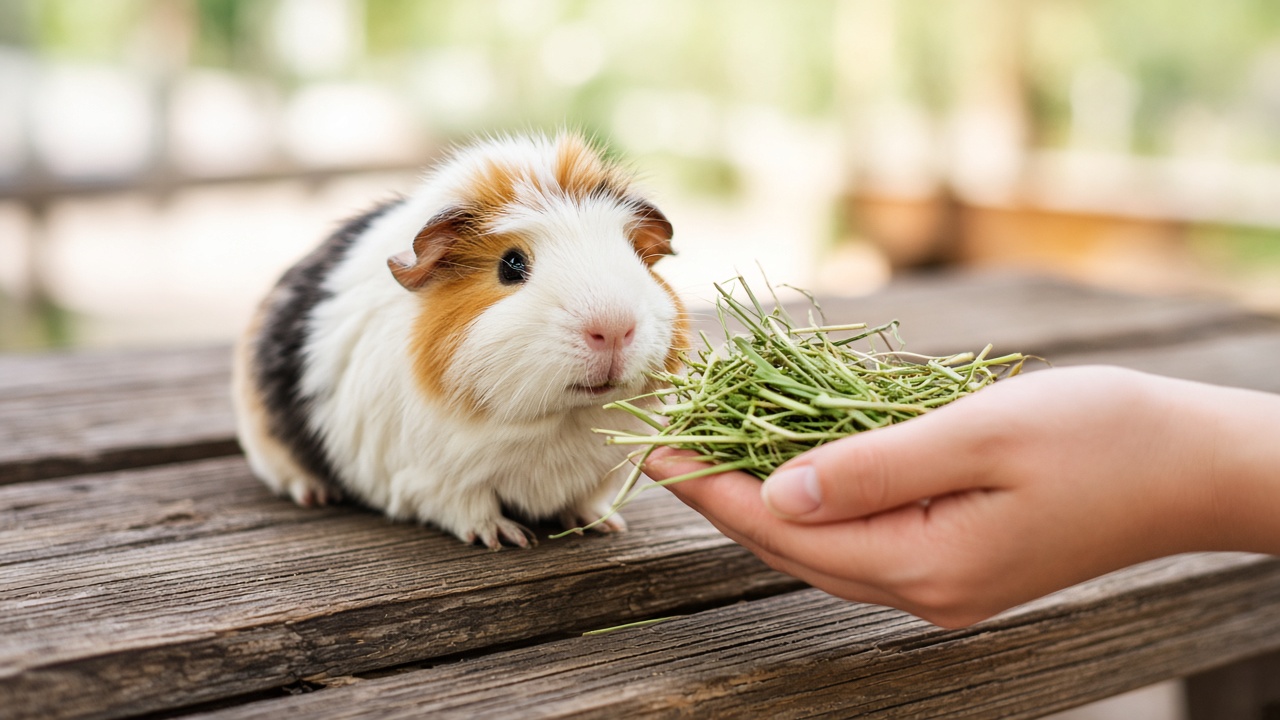
Put the hay where you want most of the pellets. Then put the pan under that hay.
The box will not catch every dropping. Merck says regular, frequent enclosure cleaning is still necessary.
Do not buy a “hay station” that is really a wooden hut with no published pan size. If the maker will not print a short wall, it is out of this article.
Five pans compared by published attributes
The table uses maker-listed numbers only. There is no rank column. There is no price column.
| Product | Shape | Maker-listed size | Short wall | Fasteners | Floor |
|---|---|---|---|---|---|
| Kaytee Hi-Corner Litter Pan | Corner | 13.25 in L × 10.25 in W × 7 in H | 10.25 in | Built-in hooks | Solid plastic |
| Kaytee Large Hi-Corner Litter Pan | Corner | 11 in L × 20 in W × 9 in H | 11 in | None listed | Solid plastic |
| Ware Lock-N-Litter Pan, Jumbo | Lock-on tray | 16.50 in W × 10.25 in D × 8.00 in H | 10.25 in | Wire clips | Solid plastic |
| Ware Scatterless Lock-N-Litter Pan, jumbo | Lock-on tray | 16.00 in W × 11.50 in D × 8.00 in H | 11.50 in | Lock and plastic guard | Wire floor panel |
| Living World Deluxe Corner Litter Pan, large | Corner | 41.5 × 29 × 20 cm | 29 cm (11.4 in) | Two cage locks | Removable grill |
Kaytee lists the Hi-Corner Litter Pan at 13.25 inches long, 10.25 inches wide, and 7 inches high. The same page lists a weight of 0.54 pounds and four assorted colors. Built-in hooks attach it to a wire cage.
Kaytee lists the Large Hi-Corner Litter Pan at 11 inches long, 20 inches wide, and 9 inches high. That page says no security locks are included. Kaytee also says the large pan can sit outside a cage for a liberty-trained pet.
Ware lists the Lock-N-Litter Pan, Jumbo, as item 03362. The published size is 16.50 inches wide, 10.25 inches deep, and 8.00 inches high. Ware calls it jumbo-sized for bigger pets and designed for multiple pets.
Ware lists the jumbo Scatterless Lock-N-Litter Pan as item 03363. The published size is 16.00 inches wide, 11.50 inches deep, and 8.00 inches high. That page includes a lock, a plastic guard, and a wire floor panel.
Hagen lists the large Living World Deluxe Corner Litter Pan at 41.5 cm long, 29 cm wide, and 20 cm high. That is about 16.3 by 11.4 by 7.9 inches.
Hagen’s page says the pan includes two locking latches and a removable raised grill. The large size is Hagen reference 61767.
Two of the five pans publish a wire or grill floor. Merck’s housing chapter says a solid floor is essential in the enclosure to avoid foot injury.
A grilled pan still sits inside a solid-bottom cage. The grill is a spec feature, not a cage floor.
If you want a solid stepping surface, the Kaytee pans and the Ware jumbo Lock-N-Litter stay solid plastic. If you want a clip-on tray with a published guard, Ware’s scatterless jumbo is the one that prints that combo.
Fitting a pan without shrinking the cage
A litter box is an insert. It must not steal the run.
Merck’s May 2026 housing chapter recommends a minimum of 7.5 square feet for one guinea pig. Add about 2 to 4 square feet for each extra animal. Pair the pan with a guinea pig cage that already meets that floor area.
Do the math on the insert. Kaytee’s standard Hi-Corner is 13.25 by 10.25 inches. That is about 0.94 square feet of footprint.
Ware’s jumbo Lock-N-Litter is 16.50 by 10.25 inches. That is about 1.17 square feet.
Kaytee’s large pan is 11 by 20 inches. That is about 1.53 square feet. Use it only in a habitat that still has a clear runway after the pan is in.
Merck also gives a temperature band of 65 to 79°F and a humidity band of 30 to 60 percent. A wet, sealed corner under a pan can drift out of that humidity band. Empty the box before the litter cakes.
Merck says glass aquariums are not recommended. A pan inside a tank makes airflow worse. Keep the box in an open-sided habitat.
Hideouts still come first. Merck says three guinea pigs need at least four hiding spots. Do not replace a hide with a litter pan.
Litter fill, fleece kitchens, and cleaning
Paper pellets, paper bedding, or a thin fleece square can sit in these pans. Merck lists recycled paper products and fleece as enclosure bedding options. Merck also says to avoid wood shavings or chips because aromatic oils can irritate airways.
Do not pour clay clumping cat litter into a cavy pan. This article does not cover cat formulas.
Fill depth is a separate setup question. Start with a shallow layer the pig can walk on. Then use our litter-fill guide for volume math by box size.
Kaytee does not publish a fill depth on either Hi-Corner page. Ware does not publish a fill depth on either jumbo page.
Hagen does not publish a fill depth on the Living World page. Comparing published specs, none of the five makers printed a cup count.
Spot-clean daily. Dump the pan when it is wet.
Wash the plastic with hot water and a plain detergent. Rinse until no film remains.
Merck says guinea pigs soil sleeping areas and eat where they defecate. A clean hay corner still needs a full cage clean on a short cycle. The pan is a helper, not a substitute.
If you use fleece in the rest of the habitat, keep loose pellets inside the pan. Pellets tracked onto fleece hold urine against the skin.
When a litter box is the wrong tool
Some pigs never aim. Merck states they produce feces indiscriminately.
A box can still cut the wet zone. It will not create a single toilet.
A pair may share one large pan. They may also fight over it.
Ware’s jumbo Lock-N-Litter page says the pan is designed for multiple pets. That is a size claim, not a behavior guarantee.
A kitchen tray cut from coroplast can beat a store pan in a C&C cage. We did not include those trays. They have no single manufacturer spec sheet that meets the 10-inch rule as a named product.
A lock-on pan needs wire to clip to. If your habitat is a storage-cube C&C with no low bar, the Ware clips have nothing to grab. Use a free-standing corner pan instead.
If the only box that fits is Hagen’s 22 cm small size, skip the box. Widen the cage first. A too-small pan becomes a perch, not a toilet.
FAQ
Can guinea pigs use a litter box at all?
Yes, some will use a corner pan for most urine. Merck’s housing chapter says guinea pigs soil sleeping areas and produce feces indiscriminately. Expect partial training, not a sealed cat-box result.
Where should the box go?
Place it in the hay corner. Merck says guinea pigs eat and defecate in the same area. Keep hides out of that wet corner, because Merck wants more hides than pigs.
How much litter goes in a guinea pig litter box?
None of the five maker pages publish a fill volume. Use a shallow layer, then follow our litter amount article. A 7-inch Kaytee Hi-Corner with a tall pile can become a wall.
Do I need two boxes for two pigs?
Merck adds 2 to 4 square feet of cage space per extra pig. It does not publish a box count. Add a second 10-inch-class pan only if two pigs shoulder each other out of one Ware jumbo tray.
Is a grilled floor safer because feet stay dry?
Hagen and Ware publish grill or wire floors on two of the five pans. Merck still calls for a solid enclosure floor to avoid foot injury. If a nail catches in the grid, switch to a solid Kaytee or Ware jumbo Lock-N-Litter pan.
Can I use a cat litter box instead?
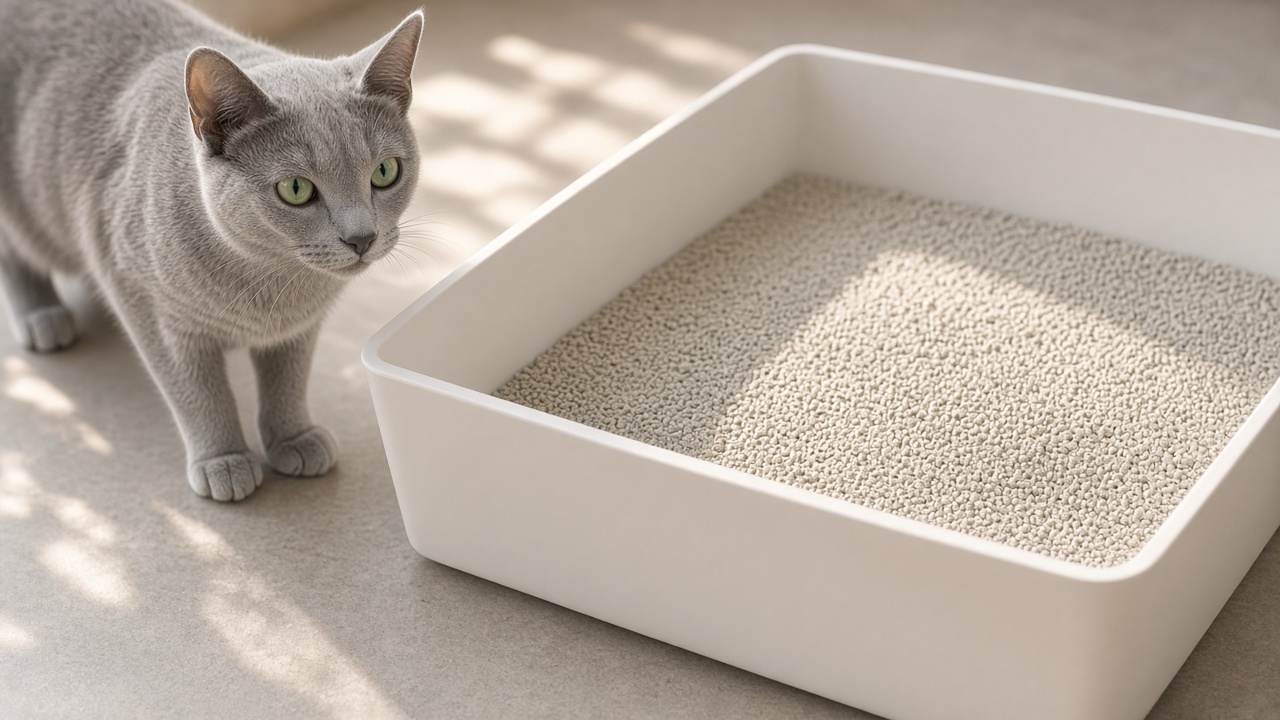
A cat box is the wrong scale and the wrong litter family. Our large-cat litter box guide is for cats. If a cat box is the only thing that fits, the cage is too small.
How often should I empty the pan?
Empty it when the litter is wet or the hay is soiled. Merck calls for regular, frequent cleaning of the whole enclosure. Do not wait for a weekly ritual if the corner smells of ammonia.