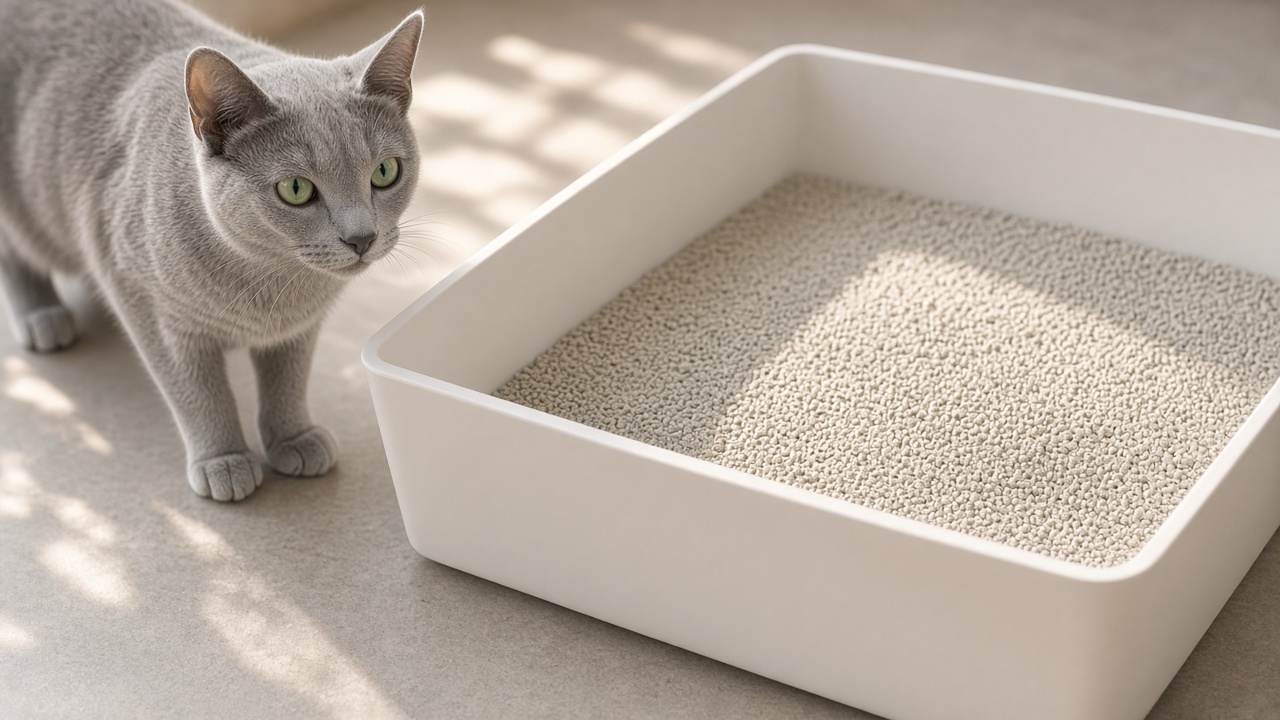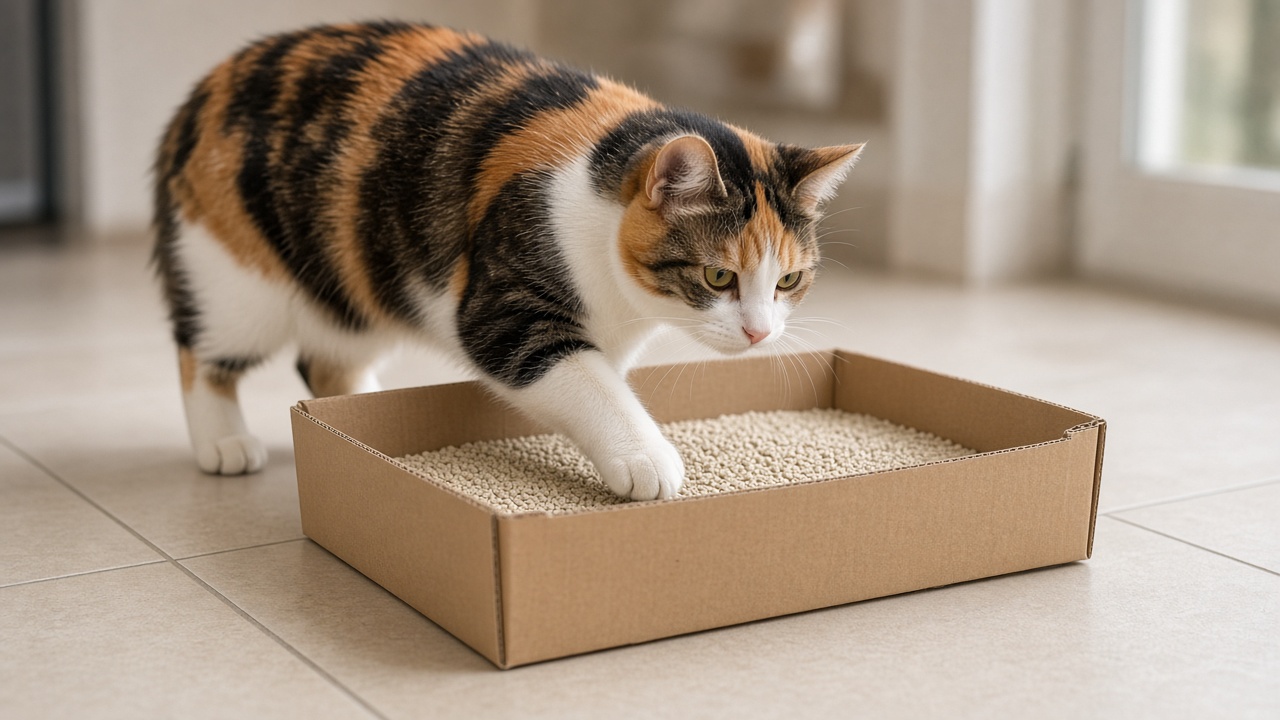
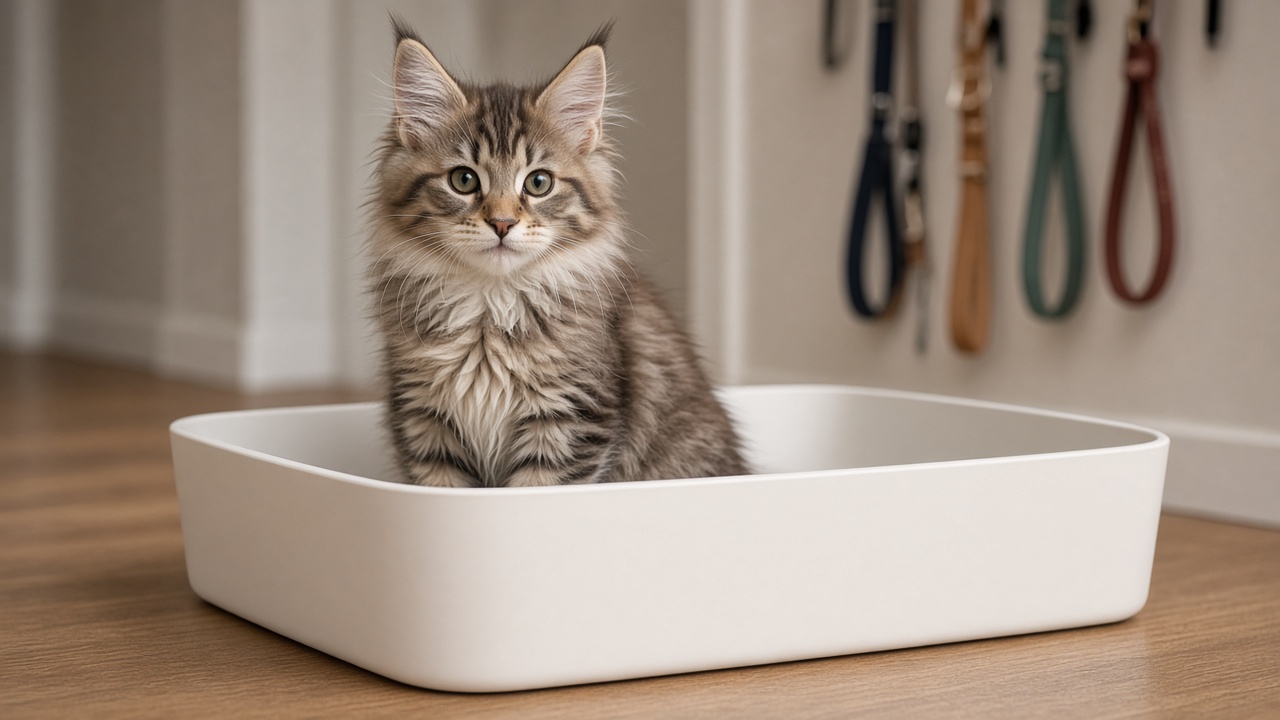
Quick answer: Start with an open, low-wall pan a kitten can step into. Use a 3.5- to 4-inch pan first, then a 5.5-inch open tray. Skip hoods and top-entry lids until the kitten can clear them.
Kittens need an open pan with sides of 3.5 to 5.7 inches, not a hooded or top-entry box. This page is a research-desk spec comparison of five open pans, not a home trial, ranking, or globe review.
The ASPCA reports that at least 10% of all cats develop elimination problems. A rim a kitten cannot clear is one preventable cause. Our research team compared published specs, not floor tests.
How we chose which pans to cover
Selection rule: We used the 5.7-inch wall rule. A pan had to be sold now, open on top, and 5.7 inches tall or less.
We excluded hooded boxes and top-entry lids. We also excluded furniture cabinets and self-cleaning units. Any pan whose maker lists a 6.5-inch wall was out.
That 5.7-inch ceiling is the tallest wall on the IRIS USA Cat Litter Box with Scoop. Petmate lists its Jumbo Basic Litter Box at 6.5000 inches. That size did not enter this set.
We also skipped storage-bin hacks. Those lack a maker page for a litter pan. We compared attributes, not prices.
Top 7 Litter box for kittens
The picks below are the 7 litter boxes for kittens on sale right now, listed with what each suits best and an honest drawback. Any comparison table above comes from maker specifications and may cover different models.
1. Petmate Basic Open Plastic Cat Litter Pan
Best for: Weanling kittens starting litter
Petmate’s Basic Open Plastic pan is a no-lid tray at grocery-bin money. Maker pages call the small size a kitten and small-cat pan, and the open rim lets a weanling step in from any side. Owners treat it as a first box they can replace once the kitten outgrows the walls.
Pros: Lowest-priced open plastic pan; Open rim from every side Cons: Plastic holds odor over time
2. Stainless Steel Cat Litter Box for Kittens
Best for: Growing kittens ready for metal
This stainless kitten box sits well above the disposable-plastic tier. Metal pans do not soak up urine the way cheap plastic does, which is why owners switch once a kitten is reliably using the box. The trade-off at this price is still an open tray, so kick-out stays a problem until higher sides or a lid come later.
Pros: Stainless instead of plastic; Priced as a lasting pan Cons: Open sides spill litter
3. chuyouan Collapsible Kitten Litter Box Low Entry Small Cat Litter Box
Best for: Traveling foster and hotel stays
chuyouan’s collapsible kitten box is a low-entry pan that folds for a bag or crate. Maker listings pitch the dropped wall for kittens that cannot climb a standard rim. Owners like it for travel and fostering; they also note a foldable wall will never contain litter like a rigid box.
Pros: Folds for travel storage; Low-entry fold-down wall Cons: Soft wall spills litter
4. Amibud Low Entry Stainless Steel Cat Litter Box for Kittens Small cat
Best for: Short-legged kittens needing shallow sides
Amibud’s low-entry stainless pan is the cheaper metal option on this list. The name flags a shallow tray for kittens and small cats, so a short-legged weanling can step in without a climb. Owners say stainless wipes cleaner than plastic, but the same low wall that helps a kitten also lets litter fly.
Pros: Shallow stainless kitten tray; Cheaper than most metal pans Cons: Very low walls scatter litter
5. PAWISE Cat Litter Box Set
Best for: New owners buying a starter kit
PAWISE sells a litter-box set, not a single pan. The listing bundles a small open box with a scoop and other new-kitten extras, which is useful the week a cat comes home. Owners outgrow the pan quickly; treat the kit as a first-month bundle, not a box that lasts into adulthood.
Pros: Includes scoop and extras; Small open training pan Cons: Pan outgrown within months
6. Cumrige Automatic Litter Box
Best for: Busy homes after litter training
Cumrige’s automatic box is a self-cleaning unit, not a low-entry training pan. Maker pages describe sensors and phone controls for a household that already has a litter habit. Owners report less daily scooping, though some young kittens stall the cycle or refuse a moving drum.
Pros: Self-cleaning after each use; App and sensor controls Cons: Expensive moving machine
7. FUTAM Stainless Steel Litter Box with Lid
Best for: Kittens who kick litter high
FUTAM’s stainless box adds a lid, so kick-out and spray have a wall to hit. Maker copy pairs a metal pan with a lower step so a small cat can still climb in. Owners like the cover for messy diggers; some kittens hesitate at a hooded opening until they are used to it.
Pros: Lid plus stainless pan; Lower step under the cover Cons: Hood can spook shy kittens
Comparison: Litter box for kittens at a Glance
Want to browse every option? See the full range of litter box for kittens on Amazon →
Why a tall rim blocks a kitten
The 2021 AAHA/AAFP Feline Life Stage Guidelines address rim height. They say edges should not be too high for a kitten to enter and exit. The same guidelines say most manufactured boxes are not large enough.
Those guidelines set a size rule. The box should be at least one and a half times the cat’s length from nose to tail tip. A kitten that measures 10 inches on that line needs 15 inches of box length.
Petmate lists the Small Basic Litter Box at 14.050 inches on its long side. That is 0.95 inches short of a 15-inch target. Van Ness lists the Small Litter Box (CP0) at 14.75 inches on one axis.
Cornell University College of Veterinary Medicine states that kittens may need sides low enough to enter easily. The ASPCA adds that very young cats can struggle with high sides. The same ASPCA page flags top-entry openings as a barrier.
A hood is a later problem, not a first-week tool. Cornell states that most cats prefer simple boxes without hoods. The ASPCA says a hood or liner can make a cat uncomfortable.
Low-entry pans by age
The 2021 AAHA/AAFP Feline Life Stage Guidelines define the kitten stage as birth up to 1 year. The pan still has to change inside that year.
Use wall height first. Then grow floor area.
Weeks 4 to 8
A newly weaned kitten has a short stride. Start with the lowest listed wall that still holds 1 to 2 inches of litter.
Petmate lists the Small Basic Litter Box at 3.5000 inches high and 0.5 lb. Van Ness lists the Small Litter Box (CP0) at 4.00 inches high. Both are open pans.
Place the pan in the same room as the rest area. Do not hide it behind a closed door.
Weeks 8 to 16
The 2021 AAHA/AAFP guidelines note a play peak. Intercat social play peaks at around 12 weeks.
Digging gets rougher in this window. A slightly larger floor helps.
Van Ness lists the Medium Litter Box (CP1) at 16.00 by 12.00 by 4.00 inches. IRIS USA lists the Cat Litter Box with Scoop at 19 inches by 15 inches by 5.7 inches.
The IRIS pan weighs 1.96 lb and includes a removable raised rim. Leave that rim off until the kitten steps over the 5.7-inch wall without a scramble.
Four months to one year
The kitten is still in the AAHA/AAFP kitten stage. Body length is not. Recheck the 1.5-times rule.
A kitten that now measures 14 inches from nose to tail tip needs 21 inches of box length. IRIS USA lists the Large Open Top Cat Litter Tray at 23.5 inches long. The same page lists 16.13 inches wide and 5.56 inches high.
If the adult will be a large breed, plan the next step. Use our guide to the best cat litter box for large cats. Keep the entry low until the cat clears a taller wall on its own.
Five open pans, compared by listed attributes
Our research team calculated floor area by multiplying each maker’s listed length and width. We rounded to the nearest square inch. We did not measure pans in a lab.
The IRIS Large Open Top tray has about 379 square inches of listed floor. The Petmate Small has about 148 square inches. That is a 2.56-times gap on paper.
| Model | Maker-listed L × W × H (in) | Wall height (in) | Calculated floor area (sq in) | Listed extras |
|---|---|---|---|---|
| Petmate Basic Litter Box, Small | 14.050 × 10.500 × 3.5000 | 3.5 | 148 | Rimmed sides; EcoTech resin; made in the USA |
| Van Ness Small Litter Box (CP0) | 10.75 × 14.75 × 4.00 | 4.00 | 159 | BPA-free plastic; open pan |
| Van Ness Medium Litter Box (CP1) | 16.00 × 12.00 × 4.00 | 4.00 | 192 | BPA-free plastic; open pan |
| IRIS USA Cat Litter Box with Scoop | 19 × 15 × 5.7 | 5.7 | 285 | Removable raised rim; scoop; 1.96 lb |
| IRIS USA Large Open Top Cat Litter Tray | 23.5 × 16.13 × 5.56 | 5.56 | 379 | Low-entry open tray |
Wall heights in this set span 2.2 inches. That spread is the whole kitten-year ladder. It is not a ranking.
Petmate also lists a Jumbo at 22.050 by 16.550 by 6.5000 inches. That 6.5-inch wall sits 0.8 inches above our cutoff. We left it out.
Van Ness tells owners to wash with mild soap and warm water. The brand also mentions litter-pan liners.
The ASPCA says most cats do not like liners. Treat a liner as optional, not required.
Litter depth, box count, and placement
The ASPCA states that cats usually prefer one to two inches of litter. The same page warns that three to four inches is too deep for most cats. Fill the kitten pan to that 1- to 2-inch band.
The ASPCA also says to keep one box per cat, plus one extra. Three cats need a minimum of four boxes. Cornell University College of Veterinary Medicine uses the same plus-one count.
For one kitten, that means two pans. Put them in separate quiet spots. Do not line them up as one station.
The 2021 AAHA/AAFP guidelines say to start with unscented clumping sand litter, or the litter the kitten already used. Offer more than one texture so the kitten can show a preference.
Cornell states that most, but not all, cats prefer unscented, fine-textured litter. Keep food and water far from the box.
Cornell also says a kitten diet should meet AAFCO standards. That rule is for food, not for the pan.
Scoop at least once a day. The ASPCA asks for a full rinse once a week with baking soda or unscented soap. Petmate recommends replacing the plastic box every 12 months because odor can sink into resin.
When to move up, and what to skip
Move up when the kitten turns with hips against both walls. Move up when the 1.5-times length rule fails. Do not wait for accidents to pile up.
Skip a hooded cabinet while the kitten is still learning. Cornell and the ASPCA both flag covers as a common dislike. If you want furniture later, read our guide to cat litter box enclosure furniture.
Skip a self-cleaning globe as the first box. High tunnels and moving parts are a later project. When the kitten can use a higher entry, see our automatic cat litter box guide.
A top-entry lid is the same kind of barrier. The ASPCA names top-entry boxes as a problem for very young cats. Keep the first year open.
This is a hardware map, not a diagnosis. If the kitten strains, cries, or stops using the pan, contact a clinic.
We compared specs. We did not examine any animal.
FAQ
What size litter box does an 8-week-old kitten need?
Use an open pan with a maker-listed wall of 3.5 to 4 inches. Petmate lists the Small Basic Litter Box at 14.050 by 10.500 by 3.5000 inches. Van Ness lists the Small Litter Box (CP0) at 10.75 by 14.75 by 4.00 inches.
Apply the AAHA/AAFP 1.5-times length rule once the kitten’s nose-to-tail line is easy to measure.
How high should the sides be for a kitten?
Our cutoff is a maker-listed height of 5.7 inches or less. Petmate’s Small pan lists 3.5000 inches; IRIS USA’s Cat Litter Box with Scoop lists 5.7 inches. The 2021 AAHA/AAFP guidelines publish no inch number.
How many litter boxes does one kitten need?
The ASPCA and Cornell both say one box per cat, plus one extra. One kitten therefore needs two pans. The ASPCA example for three cats is four boxes.
Place the two kitten pans in different rooms, not side by side.
Should a kitten use a covered litter box?
Not as the first box. Cornell states that most cats prefer simple boxes without hoods. The ASPCA says a hood or liner can make a cat uncomfortable.
Keep the first year open.
How deep should litter be for a kitten?
The ASPCA says cats usually prefer one to two inches of litter. That depth fits inside a 3.5-inch Petmate Small wall and still leaves a step. Three to four inches is the depth the ASPCA calls too deep for most cats.
When should I switch a kitten to a larger pan?
Switch when the kitten cannot turn without hitting both walls. Switch when nose-to-tail length times 1.5 exceeds the pan’s listed long side.
A 14-inch kitten needs about 21 inches of length under the 2021 AAHA/AAFP rule. The IRIS USA Large Open Top tray lists 23.5 inches.
Can a kitten use a self-cleaning litter box?
Not as the starter box under our selection rule. We excluded every self-cleaning unit. Use an open pan first, then review automatic models only after the kitten can clear a taller doorway.