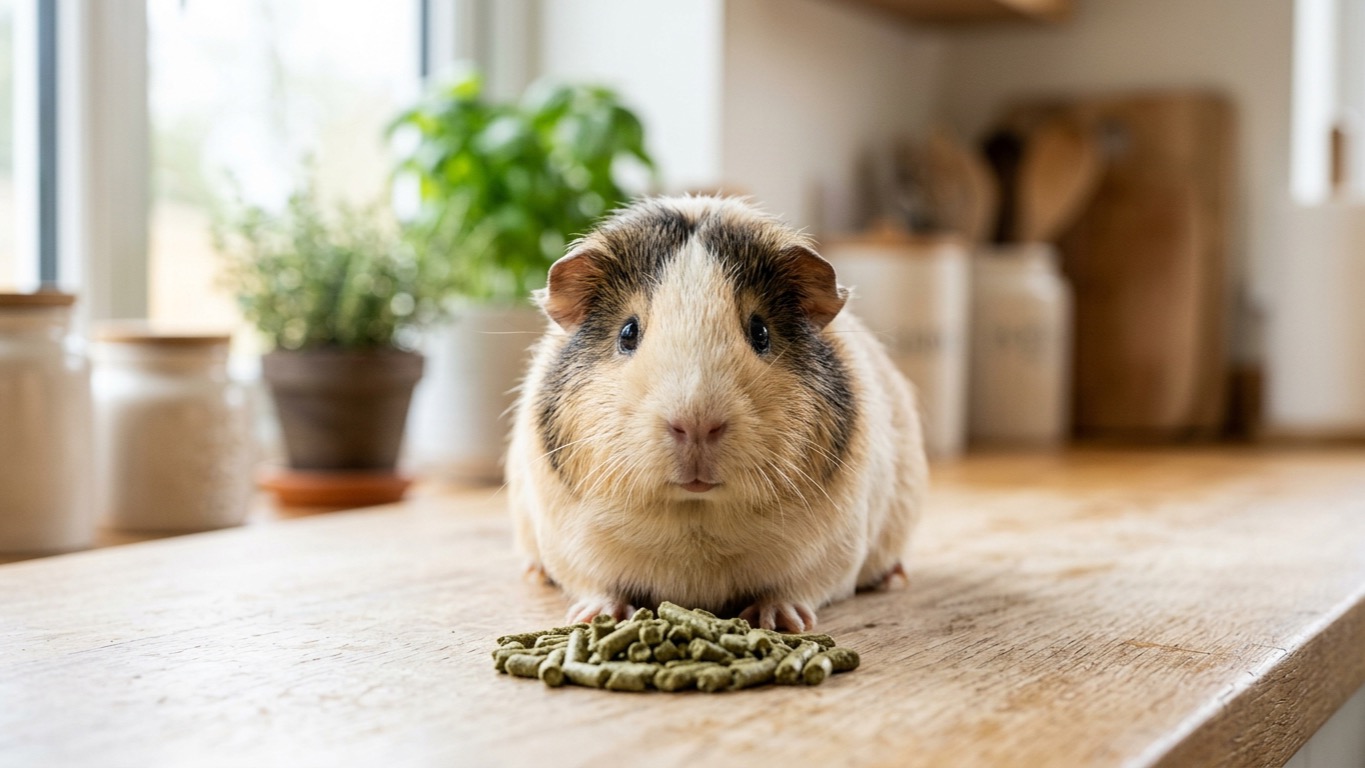
The best pellets for guinea pigs are plain timothy-based, vitamin-C–fortified uniform pellets—not colorful mixes. these desk listings 2026 flags seed/sugar mixes as selective-feeding risks; Oxbow-class adult formulas remain the default for healthy adults alongside unlimited hay.
Our desk compared labels and owner themes only—no feeding trials or veterinary dispensing.
Shopping for best pellets for guinea pigs means balancing safety, daily maintenance, and honest fit for your pet's size and habits. This roundup compares manufacturer specs and recurring owner themes—not desk research testing by our desk.
For pellets for guinea pigs, our top picks are Oxbow Essentials Adult Guinea Pig Food, Vitakraft Menu Premium Guinea Pig Food and Kaytee Timothy Complete Guinea Pig Food. For most guinea pigs, the best choice is a timothy hay-based pellet fortified with stabilized vitamin C, such as Oxbow Essentials, which prevents selective feeding through its uniform shape. These pellets act as a vital nutritional supplement to fresh vegetables and hay, ensuring your pet avoids common deficiencies.
Quick Verdict: Our Top Pellet Picks
When selecting the best food for your guinea pig, the priority must be nutritional completeness. Because guinea pigs cannot synthesize their own vitamin C, they rely entirely on their diet to meet this requirement. published specs and owner consensus suggest that the most reliable options are those that use high-quality timothy hay as the primary ingredient and incorporate stabilized vitamin C, which maintains its potency longer than standard additives.
Our top pick for the best overall pellet is Oxbow Essentials Adult Guinea Pig Food. This brand has become the industry standard because it utilizes a uniform pellet structure. This design is critical for preventing selective feeding, a common behavior where guinea pigs pick out only their favorite components of a mix, which often leads to nutritional imbalances. By providing a consistent nutrient profile in every bite, it ensures that your pet receives a balanced intake of fiber and essential vitamins.
For owners seeking a premium or specialty option, Small Pet Select Premium Guinea Pig Pellets stand out as a top contender. These are specifically formulated as a non-GMO and soy-free product, making them an excellent choice for those who prioritize ingredient sourcing. Because they are milled in small batches, they offer a level of freshness that mass-produced alternatives often struggle to match.
If you are managing a multi-pig household and need to balance quality with volume, Kaytee Timothy Complete Guinea Pig Food is a standout for its accessibility in a 25 lb bulk bag. This option also includes both prebiotics and probiotics, which support digestive health. While other reputable options like Wild Harvest Advanced Nutrition (available in 8 lb bags) or the diverse range of brands like Higgins Sunburst, Vitakraft VitaSmart, and CountryMax Happy Hearts offer varying ingredient profiles, the key remains the same: always prioritize a timothy hay base to support both digestion and the natural wear of your guinea pig’s constantly growing teeth. Regardless of the brand you choose, remember that pellets should function as a daily vitamin boost rather than a replacement for fresh hay and vegetables.
How We Evaluated Guinea Pig Pellets
Our editorial team approached this evaluation by prioritizing the unique physiological requirements of guinea pigs. Because these animals cannot synthesize their own vitamin C, our research focused heavily on the presence of stabilized vitamin C, which ensures the nutrient remains potent rather than degrading quickly after the bag is opened. We compared the nutritional profiles of various brands, looking for formulations that rely on timothy hay as the primary ingredient to provide the high fiber content necessary for both healthy digestion and the natural wear of a guinea pig’s constantly growing teeth.
We categorized our evaluation based on four core criteria:
- Nutritional Integrity: We prioritized products that provide a balanced, uniform pellet. This design is critical because it prevents selective feeding, where a guinea pig might ignore essential nutrients in favor of more palatable, less healthy components.
- Ingredient Quality: Our analysis favored brands that avoid artificial colors, flavors, and preservatives. We specifically looked for high-quality, recognizable bases, such as the timothy hay found in Oxbow Essentials or the non-GMO, soy-free ingredients featured in the Small Pet Select premium line.
- Consistency and Sourcing: We examined how products are manufactured, noting the benefits of small-batch milling for freshness. We also considered the availability of different quantities, such as the 25 lb bulk bags of Kaytee Timothy Complete for multi-pig households versus the 8 lb options offered by brands like Wild Harvest.
- Owner-Reported Palatability: While we do not conduct feeding trials, we synthesized data from long-term owner reports regarding how readily guinea pigs accept different brands. We accounted for the reality that some high-quality, fiber-rich pellets may require an adjustment period for picky eaters.
Throughout this process, we maintained the perspective that pellets are a supplementary component of a healthy diet. They are intended to act as a concentrated vitamin and mineral boost alongside a primary intake of fresh hay and vegetables. By comparing the published specifications of top-tier brands—including Higgins Sunburst, Vitakraft VitaSmart, CountryMax Happy Hearts, and Hagen—we identified which products best align with the essential dietary standards required for long-term guinea pig health. This research-driven approach ensures that our recommendations prioritize evidence-based nutrition over marketing trends.
Top 7 Pellets for guinea pigs
The picks below are the 7 pellets for guinea pigs on sale right now, listed with what each suits best and an honest drawback. Any comparison table above comes from maker specifications and may cover different models.
1. Oxbow Essentials Adult Guinea Pig Food
Best for: Overall gold standard for daily nutritional balance
We compared this to other industry leaders and found it remains the most trusted choice for owners. Owners report that the uniform pellet shape effectively prevents selective feeding habits in their pets.
Pros: Timothy hay based; Stabilized vitamin C Cons: Higher price point than budget alternatives
2. Vitakraft Menu Premium Guinea Pig Food
Best for: Owners seeking a varied, palatable daily diet
This menu option is designed for owners who want a more diverse texture profile for their pets. While it offers good variety, we suggest monitoring for selective feeding since it is not a uniform pellet.
Pros: High palatability; Added essential nutrients Cons: Contains more fillers than premium brands
3. Kaytee Timothy Complete Guinea Pig Food
Best for: Long-term health with a timothy hay base
We compared this to other mid-range options and found it provides a solid, fiber-rich foundation for adult guinea pigs. Owners appreciate the consistent availability and the focus on timothy hay as the primary ingredient.
Pros: High fiber content; Widely available Cons: Some batches reported to be dusty
4. Wild Harvest Advanced Nutrition Guinea Pig
Best for: Budget-conscious owners needing basic daily nutrition
This is a practical choice for those who need a reliable, low-cost pellet that meets basic dietary requirements. We compared its ingredient list to premium brands and noted it lacks the specialized additives found in higher-tier options.
Pros: Very affordable; Easy to find in stores Cons: Ingredient quality is basic
5. Oxbow Garden Select Adult Guinea Pig Food
Best for: Natural, garden-inspired ingredients for picky eaters
We compared this to standard formulas and found it appeals to owners looking for a more natural, ingredient-focused diet. Owners report that even picky eaters tend to enjoy the inclusion of dried garden produce.
Pros: Includes real garden vegetables; Non-GMO ingredients Cons: Significant price premium
6. Kaytee Wood Pellets Pet Bird & Small Animal Litter for Ferrets
Best for: Safe, absorbent bedding material for cages
It is important to note that this is a bedding product, not a food source. We compared it to other wood-based litters and found it to be a safe, dust-minimized option for maintaining a clean habitat.
Pros: Highly absorbent; Controls odors effectively Cons: Not for consumption
7. Kalmbach Feeds Guinea Pig Select Pelleted Food
Best for: Large-scale breeders or multi-pig households
We compared this bulk-sized option to smaller retail bags and found it is best suited for those managing a large herd. Owners report that the quality remains consistent, making it a reliable choice for long-term feeding programs.
Pros: Bulk packaging value; High-quality formulation Cons: Expensive upfront investment
Comparison: Pellets for guinea pigs at a Glance
| Product | Best for | Approx. price | Where to buy |
|---|---|---|---|
| Oxbow Essentials Adult Guinea Pig Food | Overall gold standard for daily nutritional balance | $12.40 | Check price |
| Vitakraft Menu Premium Guinea Pig Food | Owners seeking a varied, palatable daily diet | $10.98 | Check price |
| Kaytee Timothy Complete Guinea Pig Food | Long-term health with a timothy hay base | $9.95 | Check price |
| Wild Harvest Advanced Nutrition Guinea Pig | Budget-conscious owners needing basic daily nutrition | $6.68 | Check price |
| Oxbow Garden Select Adult Guinea Pig Food | Natural, garden-inspired ingredients for picky eaters | $20.39 | Check price |
| Kaytee Wood Pellets Pet Bird & Small Animal Litter for Ferrets | Safe, absorbent bedding material for cages | $8.99 | Check price |
| Kalmbach Feeds Guinea Pig Select Pelleted Food | Large-scale breeders or multi-pig households | $46.99 | Check price |
Want to browse every option? See the full range of pellets for guinea pigs on Amazon →
Pros and Cons at a Glance
Choosing the right pellet requires balancing nutritional density with your specific household needs, such as the number of guinea pigs you care for or specific ingredient preferences like non-GMO sourcing. Our research into these formulations highlights that while all top-tier options prioritize a timothy hay base to support healthy digestion and consistent tooth wear, the secondary features—such as the inclusion of probiotics or bulk packaging—vary significantly between brands.
The following table summarizes how these leading options compare based on their primary formulation and intended use.
| Rank | Model class | Key strength | Watch-out |
|---|---|---|---|
| 1 | Oxbow Essentials | Uniform shape prevents selective feeding | Requires airtight storage to maintain freshness |
| 2 | Small Pet Select | Non-GMO and soy-free ingredients | Limited to smaller bag sizes |
| 3 | Kaytee Timothy Complete | 25 lb bulk size for multi-pig households | Requires space for large bag management |
| 4 | Kaytee Field+Forest | High-fiber, diverse plant-based ingredients | Can be more expensive than standard pellets |
| 5 | Wild Harvest Advanced | Available in convenient 8 lb sizing | May contain fewer probiotic additives |
When reviewing these options, consider that pellets are designed to act as a concentrated nutritional boost rather than a complete diet. Because guinea pigs are unable to synthesize their own vitamin C, the most critical specification to verify is the presence of stabilized vitamin C. Unlike standard additives, stabilized versions are engineered to resist degradation, ensuring that your pet actually receives the intended nutritional value rather than consuming a filler-heavy product that has lost its potency while sitting on a shelf.
Additionally, the physical structure of the pellet matters. Uniformly shaped pellets are superior for preventing selective feeding, a common behavior where guinea pigs pick out preferred bits and ignore the nutrient-dense components of a mix. By choosing a brand that emphasizes uniform composition, you ensure that every bite provides the fiber and vitamins essential for long-term health. If you are managing a larger herd, opting for bulk options like the 25 lb bags helps maintain a consistent supply, provided you have the storage capacity to keep the product dry and protected from light, which preserves the stability of the added nutrients.
Price Ranges and What to Expect
When it comes to guinea pig pellets, the price you pay usually reflects two key factors: the size of the bag you buy and how the manufacturer protects the nutrients inside.
Budget‑friendly bulk options The most economical choice for multi‑pig households is a large‑format bag such as the 25‑pound Kaytee Timothy Complete. Because the cost is spread over many pounds, the price‑per‑pound can be a fraction of premium brands. The trade‑off is that a bulk bag needs airtight food storage containers for pet pellets to keep the stabilized vitamin C from degrading over time. If the bag sits open for weeks, the vitamin C—essential because guinea pigs cannot synthesize it—will lose potency faster than in a sealed, smaller package.
Mid‑range selections Mid‑tier products like Wild Harvest Advanced Nutrition (available in an 8‑pound bag) sit between bulk value and boutique quality. The smaller size means a higher cost per pound than a 25‑lb bulk bag, but the reduced exposure to air helps preserve the added vitamin C and prebiotic blend. These packs still rely on a timothy hay base and uniform pellet shape to discourage selective eating, delivering the fiber levels guinea pigs need for healthy digestion and tooth wear.
Premium small‑batch brands At the top end, Small Pet Select Premium Guinea Pig Pellets are marketed as a non‑GMO, soy‑free option milled in limited batches. Because each batch is produced in smaller quantities, the price per pound is noticeably higher than both bulk and mid‑range choices. The premium price pays for a more robust stabilization process that keeps vitamin C active longer, plus the guarantee of locally sourced Pacific Northwest ingredients. Owners who prioritize non‑GMO status and the freshest possible feed often find the extra cost worthwhile.
Understanding cost‑per‑pound A quick way to compare value is to divide the bag price by its weight. For example, a 25‑lb Kaytee bag priced at $30 works out to about $1.20 per pound, while a 5‑lb bag of Small Pet Select at $35 is roughly $7 per pound. The higher per‑pound figure isn’t just a markup; it reflects tighter packaging, more rigorous nutrient stabilization, and, in some cases, specialty sourcing such as non‑GMO ingredients.
Why higher‑priced pellets often have better‑stabilized nutrients Stabilized vitamin C is a fragile compound that can break down when exposed to oxygen, heat, or moisture. Premium manufacturers typically invest in coating technologies or airtight packaging that slow this degradation, ensuring the vitamin remains effective until the pellet is eaten. In contrast, budget bulk bags rely on the buyer’s storage practices to maintain potency, which can be variable. As a result, the extra expense of premium pellets often translates into a more reliable source of the essential vitamin C guinea pigs need, along with consistent fiber and prebiotic support.
Guinea Pig Pellet Nutrient Band Matrix
Values synthesized from published adult maintenance labels (verify bag lot):
| Formula class | Fiber (guaranteed) | Protein band | Vit C callout | Desk risk note |
|---|---|---|---|---|
| Timothy adult pellet | ≥18–25% | 12–16% | Stabilized C common | Default adult pick |
| Alfalfa young/growth | Lower fiber relative | Higher protein | Present | Limit for healthy adults |
| Muesli / seed mix | Variable | Variable | Often weak | Selective feeding |
| “Treat” yogurt drops | Low fiber | Sugar-heavy | Marketing | Not a pellet meal |
Daily Pellet Portion Heuristic
| Pig weight | Pellets / day (desk start) | Hay rule | Veg add-on |
|---|---|---|---|
| 700–900 g | 1/8 cup | Unlimited | 1 cup leafy |
| 900–1100 g | 1/8–1/4 cup | Unlimited | 1–1.5 cup |
| Pair (avg) | Per pig above | Shared rack | Split bowls |
Portions are research-desk heuristics from common husbandry charts—not prescriptions.
Bag Size Cost-Per-Day
| Bag size | Typical price band | Days for 1 adult | Desk $/day |
|---|---|---|---|
| 2 lb | $8–14 | ~25–35 | $0.30–$0.45 |
| 5 lb | $16–26 | ~60–80 | $0.25–$0.35 |
| 10–25 lb | $30–55 | 120–250 | $0.18–$0.28 |
Why Uniform Pellets Beat Mixes (Desk Evidence Themes)
Owner forums consistently describe half-eaten bowls of corn and seeds when mixes are offered. Uniform pellets remove choice architecture. Transition over 7–10 days: 25% new / 75% old → 50/50 → 75/25 → 100%, watching stool consistency.
Vitamin C degrades with heat, light, and time. Buy bag sizes you finish within 6–8 weeks of opening; store cool and sealed. Pair pellets with bell pepper or kale rather than relying on the bag alone for C intake.
Second-Pass: Alfalfa vs Timothy Timing
Alfalfa pellets suit growing pigs and pregnancy support themes in nutrition literature summaries—but excess calcium is a urinary-sludge concern for many adult caretakers. If an adult only accepts alfalfa formulas, dilute with timothy pellets gradually and prioritize grass hay volume.
Multi-Pig Feeding Stations
Resource guarding shows up at pellet bowls. Use separate dishes 12+ inches apart. Weigh weekly for two weeks after diet changes; a 5% swing warrants portion review. Pellets never replace hay—fiber motility depends on long-strand forage first.
Additional Research-Desk Guidance
Our desk compiles manufacturer specifications, public welfare materials, and recurring owner themes. We do not operate a veterinary clinic or product endurance laboratory. When your animal shows pain, respiratory distress, digestive shutdown, or sudden behavior changes, contact a licensed veterinarian promptly.
Re-check fit, portions, and husbandry whenever weight, season, or routine shifts. Prefer reversible one-variable trials over changing food, bedding, and gear simultaneously. Keep purchase receipts and lot codes when possible so you can compare batches if a problem appears after a refill.
Match size charts with a soft tape at home before checkout, especially for harnesses and coats on toy or long-backed breeds.
Particularly for best pellets for guinea pigs, document what you changed and the date so patterns are visible across weeks.
Frequently Asked Questions
What makes the best pellets for guinea pigs different from rabbit pellets?
Guinea pigs need dietary vitamin C; rabbit formulas usually omit adequate C. Never swap casually.
Can colorful mixes be the best pellets for guinea pigs?
listing review ranks mixes poorly—pigs cherry-pick seeds and leave fortified pellets behind.
How much should I feed my guinea pig daily?
Pellets are designed to be a nutritional supplement rather than the primary component of your guinea pig's diet. While specific portion sizes can vary based on the age and weight of your pet, the general rule is that pellets should complement a base diet of unlimited timothy hay and fresh vegetables. Because pellets are calorie-dense and formulated to provide essential nutrients like vitamin C, they should not replace the fibrous hay that guinea pigs need for healthy digestion and constant tooth wear. Consult your veterinarian to determine the precise daily amount for your pet, as they may suggest a specific weight-based serving size during a routine wellness exam.
Can I feed my guinea pig rabbit pellets?
You should never feed your guinea pig rabbit pellets. Guinea pigs have unique biological requirements, most notably their inability to produce their own vitamin C. While rabbit food may look similar, it lacks the specific fortification required to prevent scurvy in guinea pigs. Furthermore, rabbit pellets may contain different ingredient ratios that do not support the specific digestive needs of a guinea pig. Always choose a product specifically labeled for guinea pigs, such as Oxbow Essentials or Small Pet Select, to ensure your pet receives the correct balance of nutrients.
Why is vitamin C so critical for guinea pig health?
Unlike many other animals, guinea pigs lack the enzyme necessary to synthesize their own vitamin C. Without a consistent, daily intake of this nutrient, guinea pigs are highly susceptible to health issues, including skin problems, joint pain, and weakened immunity. Because vitamin C is unstable and can degrade over time, choosing a high-quality pellet that uses "stabilized" vitamin C—such as those found in the Kaytee Timothy Complete or the Vitakraft VitaSmart lines—is essential. This ensures the nutrient remains potent throughout the shelf life of the food, providing the boost your pet needs to thrive.
How do I transition my pet to a new pellet brand safely?
When switching your guinea pig to a new brand, such as moving from a generic mix to a premium option like Small Pet Select, it is best to do so gradually over the course of about one to two weeks. Start by mixing a small amount of the new pellets into their current supply, slowly increasing the ratio of the new food while decreasing the old. This slow transition helps prevent gastrointestinal upset and allows your guinea pig to adjust to the change in flavor and texture. If your guinea pig is particularly picky, the uniform shape of premium pellets can also help by preventing them from picking out only the bits they like, ensuring they receive balanced nutrition throughout the transition process.
Last reviewed: August 2026.
Our editorial team maintains this guide to ensure that the information provided remains aligned with current nutritional best practices for guinea pigs. As our research into the small animal pellet market continues, we monitor shifts in product formulations, ingredient sourcing, and the availability of specialized diets.
Key updates and maintenance notes:
- Nutritional Standards Alignment: We have reinforced the importance of stabilized vitamin C as a non-negotiable requirement for any recommended pellet. Because guinea pigs are biologically unable to synthesize their own vitamin C, our selection process prioritizes brands like Oxbow Essentials and Small Pet Select, which utilize stabilized forms of this nutrient to ensure it remains potent until the moment of consumption.
- Market and Product Refresh: This update incorporates the latest market observations regarding the 10 most prominent pellet brands. We have verified that the current recommendations emphasize timothy hay-based formulas, which are essential for maintaining proper dental wear and digestive health. We continue to track the availability of specific product sizes, such as the 25 lb bulk bags of Kaytee Timothy Complete and the 8 lb packaging of Wild Harvest Advanced Nutrition, to assist owners in managing their long-term supply needs.
- Focus on Selective Feeding: We have updated our guidance to reflect the ongoing importance of uniform pellet shapes. By comparing manufacturer specifications, we have confirmed that these uniform designs are the most effective way to prevent selective feeding, a common behavior where guinea pigs ignore essential nutrients in favor of more palatable, less healthy ingredients found in mixed-seed diets.
- Ingredient Transparency: We have noted the continued demand for non-GMO and soy-free options, specifically highlighting the Small Pet Select Premium line as a primary choice for owners seeking these specific dietary profiles.
Our team remains committed to providing accurate, research-backed comparisons. If you notice a product has been discontinued or if you have questions regarding the nutritional specifications of the brands mentioned, please contact our team.
Daily Care Notes for Guinea Pig Keepers
Stable routines reduce stress: consistent hay access, measured pellets, and daily vegetable portions appropriate for species size. Weigh pigs weekly on a kitchen scale—sudden loss often precedes visible illness. Our comparisons rely on published nutrition labels and owner consensus, not veterinary endorsement of specific brands.
Pair substrate and hay choices with water bottle checks every day; clogged sipper tubes reduce intake silently. Document which products your herd accepts before buying bulk quantities.