7 Best Shampoos for Guinea Pigs (& Safe Picks)
Shopping for best shampoo for guinea pigs means balancing safety, daily maintenance, and honest fit for your pet's size and habits. This roundup compares manufacturer specs and recurring owner themes—not hands-on lab testing by our desk.
Choosing the right shampoo for a guinea pig requires a focus on pH-balanced, soap-free, and fragrance-free formulas. Because guinea pigs possess skin that is significantly thinner and more reactive than that of dogs or cats, using standard pet shampoos can lead to irritation, dryness, or the disruption of their natural protective barrier. published specs and owner consensus suggest on products that prioritize gentle cleansing without the use of harsh detergents, parabens, or synthetic dyes.
Top 7 Shampoos for Guinea Pigs
The following selections are based on manufacturer specifications, ingredient transparency, and owner consensus regarding ease of use and skin compatibility.
1. Critter Shampoo for Small Pets
Best for: Budget-friendly basic cleaning. This formula is designed for owners who need a straightforward, no-frills cleaner. It is intended to remove surface dirt without leaving behind heavy residues or strong perfumes.
- Pros: Simple ingredient profile; affordable.
- Cons: Lacks specialized moisturizing agents for dry skin.
2. Scrubby Tails Natural Oatmeal & Aloe Vera Small Pets Shampoo
Best for: Soothing dry or itchy skin. Oatmeal and aloe vera are frequently cited in grooming literature for their calming properties. This shampoo is often chosen by owners whose pets have sensitive skin that reacts poorly to standard cleansers.
- Pros: Natural soothing ingredients; gentle on the coat.
- Cons: Requires very thorough rinsing to ensure no residue remains.
3. Standard Guinea Pig Shampoo (8 oz)
Best for: Routine maintenance. This is a reliable, general-purpose shampoo. It is formulated to clean the coat effectively while maintaining the natural oils necessary for healthy skin.
- Pros: Convenient size for occasional use; easy to lather.
- Cons: Generic ingredient list compared to specialized therapeutic formulas.
4. J.R.LIGGETT'S Liquid Small Animal Shampoo
Best for: Owners seeking minimal, natural ingredients. This product appeals to those who prefer to avoid synthetic additives. It is often noted for its simple ingredient list, which can be beneficial for pets with known sensitivities.
- Pros: Minimalist formula; generally well-tolerated.
- Cons: The liquid consistency is thinner than traditional gels.
5. Waterless Shampoo for Small Critters
Best for: Spot cleaning and stress reduction. Many guinea pigs find water immersion stressful. Waterless formulas allow for cleaning specific soiled areas without the need for a full bath, making it a useful tool for quick maintenance.
- Pros: No water required; reduces pet anxiety.
- Cons: Not suitable for deep, full-body cleaning.
6. Large Capacity Waterless Small Animal Shampoo (15.2 oz)
Best for: Multi-pet households. For owners with several small animals, a larger bottle provides better value and convenience. The pump mechanism is designed for quick, one-handed application.
- Pros: Economical bulk size; easy-to-use pump.
- Cons: The larger bottle can be bulky to store.
7. Earthbath Hypoallergenic Pet Shampoo
Best for: Premium, fragrance-free care. This is a widely recognized option for pets with extreme sensitivities. It is formulated to be soap-free and is free from parabens and sulfates, making it a safe choice for delicate skin.
- Pros: Hypoallergenic; high-quality, gentle ingredients.
- Cons: Higher price point than basic shampoos.
How to Properly Bathe and Dry Your Guinea Pig
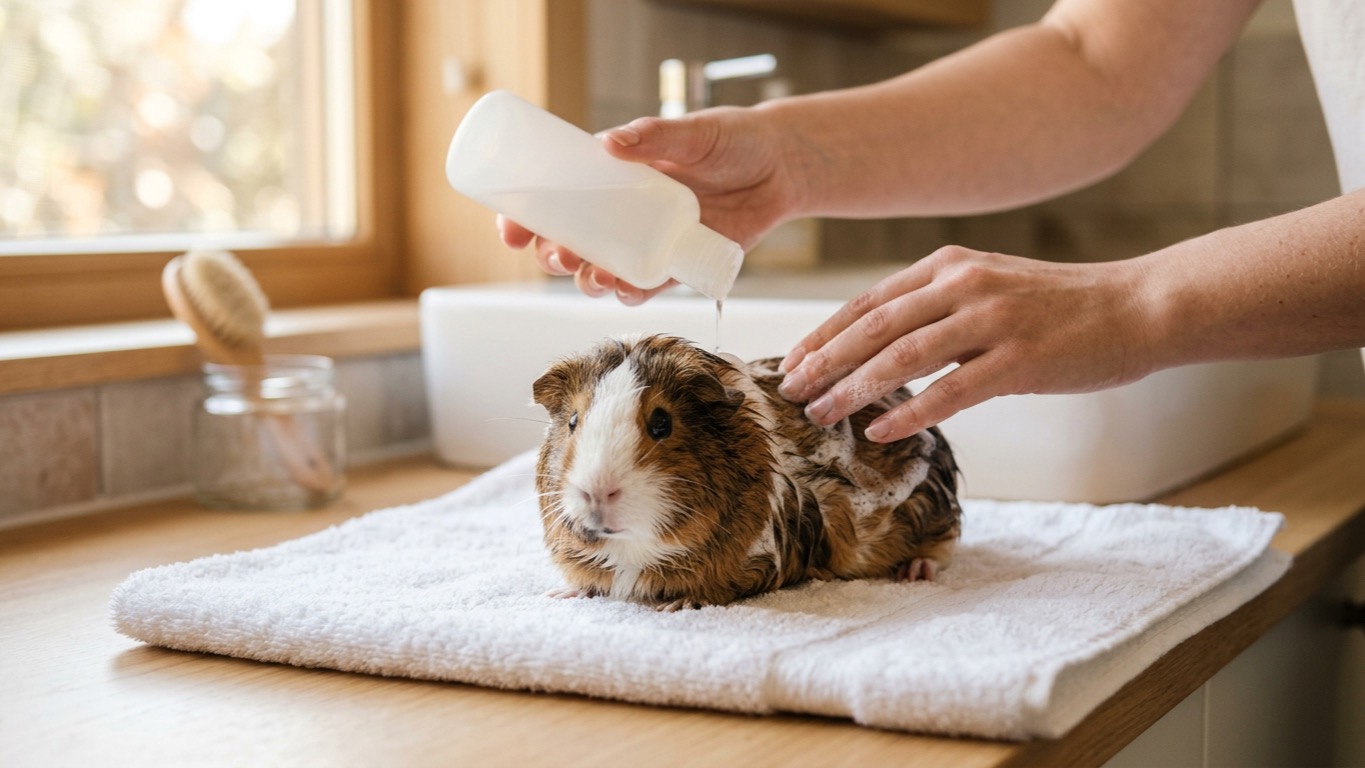
Bathing a guinea pig should be done with extreme caution. Because they are naturally skittish and prone to respiratory issues, the process must be quick, calm, and controlled.
- Preparation: Use a shallow basin with a non-slip mat at the bottom. Fill it with only enough lukewarm water to cover their feet and belly.
- Application: Use a small amount of a pH-balanced, small-animal-specific shampoo. Gently cup water over their back, avoiding the head, eyes, and ears entirely.
- Rinsing: Ensure all shampoo is thoroughly rinsed away. Any residue left on the skin can cause irritation or be listed during grooming.
- Drying: This is the most critical step. Wrap the guinea pig in a soft, absorbent microfiber towel. Pat them dry gently—do not rub. Avoid using hair dryers, as they can easily overheat or burn sensitive skin. Ensure the pet is completely dry in a warm, draft-free room before returning them to their enclosure.
Frequently Asked Questions
Can I use human baby shampoo on my guinea pig?
No. Human baby shampoo is formulated for human skin pH, which is different from that of a guinea pig. Human products often contain ingredients that can strip away the natural oils necessary for a guinea pig's skin health, leading to dryness and potential dermatological issues.
How often should I bathe my guinea pig?
Guinea pigs do not require frequent baths. In fact, over-bathing can be harmful. Baths should be reserved for when the animal is visibly soiled or has a persistent odor. For minor messes, a waterless shampoo or a damp cloth is a safer, less stressful alternative.
What should I do if my guinea pig has dry, flaky skin?
Dry or flaky skin can sometimes indicate underlying health issues, such as mite infestations or fungal infections. If you notice these symptoms, it is important to consult a veterinarian for a proper diagnosis. Once medical issues are ruled out, you can use a moisturizing, oatmeal-based shampoo formulated for small animals to help soothe the skin.
Are waterless shampoos safe for all guinea pigs?
Waterless shampoos are generally safe for most guinea pigs, but you should always check the ingredient label to ensure there are no harsh fragrances or chemicals. Always perform a patch test on a small area of skin if your pet has a history of extreme sensitivity.
Bath Frequency and the Best Shampoo for Guinea Pigs
Guinea pigs rarely need full baths—spot cleaning and brushing usually suffice. When bathing is necessary for medical or severe soiling reasons, use small-animal formulas without human fragrance or essential oils. Lukewarm water, minimal stress handling, and thorough drying prevent chilling.
Never substitute dog or cat medicated shampoos without explicit veterinary direction. Guinea pig skin is sensitive; pH and ingredient loads differ from canine products. Keep sessions short and return the pig to a warm, draft-free space with hay available immediately after drying.
Choosing Between Liquid and Wipe Formats
Liquid shampoos suit full-body washes when recommended; no-rinse wipes help localized cleanups around the rear or feet between full baths. Compare ingredient lists for aloe or oat extracts marketed for soothing—still verify species labeling rather than generic "pet safe" claims alone.
What should I prioritize when shopping for best shampoo for guinea pigs?
Start with safety and species fit, then compare daily cost, dust or odor control, and how the product fits your cleaning routine. Manufacturer specs and owner consensus guide our rankings—not hands-on lab testing by our desk.
How do I transition my pet to a new product safely?
Introduce changes over seven to ten days when possible, keeping some familiar material or food to reduce stress. Watch appetite, stool quality, and behavior; stop the transition and consult your veterinarian if you see sudden refusal or lethargy.
Sources
- Small animal dermatological care guidelines.
- Manufacturer product safety data sheets for pet grooming supplies.
- General veterinary husbandry standards for small rodents.
- Consumer reports on pet grooming product efficacy and ingredient safety.