7 Best Fruits for Guinea Pigs (Vitamin C & Sugar Analysis)
Quick answer: The best fruit for guinea pigs is a teaspoon-class, high-C, lower-sugar piece — strawberry or kiwi in grams, not a honey stick — offered a few times a week on top of unlimited hay. Bell pepper (a botanical fruit) beats most dessert fruits on the C-to-sugar ratio. The seven Amazon cards on this URL are pellets and sugary treats, not a produce aisle.
We read the titles and descriptions of the 7 live US marketplace cards on this URL and scored four label-visible signals — object class (staple pellet vs fruit-forward treat vs botanical mix), snapshot price, whether the title says Fruit, and whether the title is even a guinea-pig staple. 2 of 7 (29%) are daily-food titles (Vitakraft Menu; Oxbow Essentials). 1 of 7 (14%) names Fruit & Honey (Vitakraft sticks). 2 of 7 (29%) are Kaytee snack mixes (one titled for rabbits). 1 of 7 (14%) is Oxbow Simple Rewards. 1 of 7 (14%) is Sukh botanicals. Snapshot prices run $2.69–$12.40 (median $5.22, a 4.6× spread). 0 of 7 (0%) are fresh strawberries.
This page is a research-desk map of hay → pellet → produce treat, using USDA FoodData Central produce numbers and published cavy-care pages. Nothing here has been reviewed by a veterinarian on our behalf.
Related: bedding, hay, Timothy hay.
Hay vs produce vs tile
| Signal | What it buys | On this URL | Fail mode |
|---|---|---|---|
| Unlimited grass hay | Teeth + gut motility | Not a card — see hay | Fruit as “the meal” |
| C-fortified pellet | Baseline ascorbate in a complete feed | Oxbow Essentials $12.40; Vitakraft Menu $10.98 | Honey sticks as the C plan |
| Fresh produce (desk table) | Targeted C with a sugar cap | No fresh-fruit card | Shopping only these seven tiles |
| Fruit & honey stick | Palatability, extra sugar | Vitakraft sticks $3.62 | Daily dessert |
| Rabbit-titled mix | Cheap snack calories | Kaytee Country Harvest $2.69 | Assuming it is a cavy C source |
From the listings: “best fruit for guinea pigs” search tiles on this URL sell treats and pellets. The produce decision is a USDA gram table, not a Vitakraft podium.
Produce — USDA-class C vs sugar
Numbers below are rounded FoodData Central / standard produce references as commonly published for raw, edible portions. They are not assays we ran. Use them to compare classes, then cut the serving to a cavy teaspoon, not 100 g.
| Produce | Vitamin C (mg / 100 g) | Total sugars (g / 100 g) | Desk note for cavies |
|---|---|---|---|
| Red bell pepper | ~128 | ~4 | Best C-to-sugar class; botanical fruit |
| Kiwi | ~93 | ~9 | High C; tiny slice |
| Strawberry | ~59 | ~5 | Strong everyday treat fruit |
| Orange | ~53 | ~9 | C plus sugar; thin wedge |
| Raspberry | ~26 | ~4 | Lower sugar berry |
| Blueberry | ~10 | ~10 | Popular, weak C per sugar |
| Watermelon | ~8 | ~6 | Water + sugar; rare |
| Banana | ~9 | ~12 | Dessert; rare if ever |
| Apple (with skin, no seeds) | ~5 | ~10 | C-poor; seedless sliver only |
Desk stat: Red pepper’s C is ~13× blueberry’s per 100 g at ~0.4× the sugar. Strawberry beats orange on sugar (~5 vs ~9 g) at similar-or-higher C. Blueberry is a flavor fruit, not a scurvy plan.
Portion worksheet for the best fruit for guinea pigs
| Cavy in front of you | Produce desk | Card desk on this URL |
|---|---|---|
| Healthy adult, good hay appetite | 1–2 tsp fruit or a pepper sliver, 2–4× / week | Pellet = Oxbow Essentials class; treat ≠ daily |
| Picky hay eater | Fix hay first — fruit will win the bowl and lose the teeth | Do not bribe with honey sticks |
| Pregnant / recovering (vet involved) | C needs rise — vet, not more orange | Pellet freshness (C oxidizes) |
| Overweight / soft stool | Skip fruit; pepper or leafy veg per vet | Hide the Kaytee mixes |
| New pig, unknown GI | One new food at a time, 48 h watch | Do not open three treat bags at once |
Affiliate disclosure: as an Amazon Associate we may earn from qualifying purchases.
The best fruit for guinea pigs is a gram-and-cadence problem — C vs sugar on a teaspoon — not a seven-treat Amazon podium.
Our guides are reader-supported. This article may contain affiliate links. As an Amazon Associate we may earn a commission if you buy through links, at no extra cost to you.
Not a vet. Not a produce lab. This is a desk-research guide. Guinea pigs cannot synthesize vitamin C; published small-mammal texts (see VCA guinea pig nutrition and Merck exotic companion nutrition) treat scurvy as a real deficiency disease. Daily C targets in clinical handouts often sit near 10–30 mg/day for a typical adult, higher in pregnancy or illness — your veterinarian sets the number. Hay remains the majority of the diet. Fruit is a garnish.
The useful question is not “which is the best of seven snacks.” It is: is hay happening, is the pellet still C-fresh, and is this fruit a teaspoon?
We read the seven live product cards and snapshot prices. We compiled a produce comparison from USDA-class public numbers. We point at VCA / Merck / Oxbow-style husbandry: hay first, pellet second, produce third.
We did not house cavies, weigh cecotropes, or endorse honey sticks as a vitamin plan. If a pig is not eating, is hunched, or has diarrhea, that is a veterinarian — today.
First decision: hay, pellet, pepper, or stop shopping
Hay. Unlimited grass hay (Timothy for most adults). This is teeth and gut. Fruit cannot replace it.
Pellet. A plain, C-fortified, timothy-based adult pellet (Oxbow Essentials is the staple card on this URL). C in pellets oxidizes — buy small bags, store cool, do not use a two-year-old sack as the scurvy plan.
Produce. Daily veg is usually leafy greens + pepper. Fruit is less often, less volume.
Treat tiles. Honey sticks and seed mixes are calories. Use them as you would candy.
When the veterinarian is the answer, not the fruit bowl
- Not eating hay or feces change — GI stasis risk class. Do not “tempt with mango.”
- Swollen joints, rough coat, reluctant to move — scurvy is on the differential; that is a clinic, not a bigger orange.
- White gritty urine / straining — calcium and water conversation; fruit is not a treatment.
- Dental malocclusion — more sugar is the wrong direction.
Decision framework for the best fruit for guinea pigs
1. Hay is not optional
If the pig leaves hay for fruit, you offered too much fruit. Shrink the treat. Change hay brands or cut before you escalate sweets. See hay.
2. Vitamin C is a daily nutrient, not a weekend orange
Pellets + pepper + greens do the daily job. Fruit is a bonus C with a sugar tax. Blueberries are a weak C source per USDA-class numbers.
3. Sugar is a gut and dental tax
Soft stool after fruit is a reason to stop, not to “get used to it.” High-sugar fruit (banana, grapes if you ever offer them, dried fruit) is the worst tax.
4. Seeds, pits, rhubarb, avocado
Remove apple seeds and all pits. No rhubarb. No avocado. No dried fruit as a “healthy chew.”
5. Wash, slice, remove in hours
Pesticide rinse. Bite-size. Pull uneaten fruit so it does not ferment in the cage. Bedding stays drier if you do not leave melon in the corner.
6. One new food
48 hours. One variable. Soft stool → that food is off.
How we read the listings (not a test protocol)
Some roundups mixed treat sticks with “top 7 fruits” as if Vitakraft were a strawberry. We scored the seven cards on object class. We built the fruit table from produce data, not from snack-mix marketing.
9% pet-care CAGR or a 200 mg calcium “flag” as a trial we ran. Calcium in fruit is usually modest vs alfalfa; the bigger calcium conversation is pellets + greens + water, not a blueberry.
The 7 listings on this URL — desk notes, not a ranked fruit test
1. Vitakraft Guinea Pig Fruit & Honey Treat Sticks 2 Pack
Desk job: Named fruit. Also named honey. Lowest-honesty “fruit” tile.
Listing snapshot $3.62. Palatability is the job. Sugar above hay is the structural fact. Occasional chew, not a C protocol.
2. Vitakraft Menu Premium Guinea Pig Food
Desk job: Staple-shaped pellet, not fruit.
Listing snapshot $10.98. Daily nutrition card. C and fiber claims are label claims — read the bag. Price above a bargain mix is expected for a complete feed. This is not a strawberry.
3. Oxbow Simple Rewards Rabbit Treats & Guinea Pig Treats
Desk job: Named treat. Not a staple. Not fresh fruit.
Listing snapshot $5.22. Texture variety is the marketing job. Not primary food is printed in the honest reading of “treats.” Use as a training crumb, not a bowl replacement.
4. Kaytee Food from the Wild Natural Snack for Rabbits & Guinea Pigs
Desk job: Forage-style snack mix.
Listing snapshot $3.29. Dried veg/herb bits can be a scatter job. Crumble and sugar vary by bag. Not a vitamin C assay.
5. Kaytee Country Harvest Treat Blend for Rabbits
Desk job: Rabbit-titled mix. Lowest snapshot. Weakest cavy-C story.
Listing snapshot $2.69. Cheap and sweet is the tile. Limited C is the expected dried-mix fact. Do not buy this as “best fruit for guinea pigs.”
6. Sukh 5.64oz Natural Botanical Rabbit Treats for Guinea Pig & Hamster
Desk job: Botanical / dried plant bits. Multi-species title.
Listing snapshot $7.49. Herbs are not interchangeable with fruit C. Confirm ingredients for onion/garlic-class plants and high-sugar dried fruit.
7. Oxbow Essentials Adult Guinea Pig Food
Desk job: The staple pellet on this fruit URL.
Listing snapshot $12.40. Highest price. This is the C-fortified daily feed class, not a fruit. If you only buy one card on this page for nutrition, this is the honest staple — then you still buy hay and wash a pepper.
Why fruit is a garnish on the best fruit for guinea pigs
Cavies are herbivores built for fiber. Hay wears teeth and moves the gut. Fruit is sugar water with vitamins. A teaspoon of strawberry is a bond and a C bump. A bowl of banana is a GI experiment.
Pepper exists because it is a fruit that behaves like a vegetable on the sugar axis. If you remember one desk line, remember pepper before blueberry.
Comparison of the cards (treat aisle, not produce)
| Listing | Class | Snapshot | Link |
|---|---|---|---|
| Kaytee Country Harvest | Rabbit mix | $2.69 | Check price |
| Kaytee Food from the Wild | Snack mix | $3.29 | Check price |
| Vitakraft Fruit & Honey sticks | Honey treat | $3.62 | Check price |
| Oxbow Simple Rewards | Treat | $5.22 | Check price |
| Sukh botanicals | Botanical | $7.49 | Check price |
| Vitakraft Menu | Pellet | $10.98 | Check price |
| Oxbow Essentials | Pellet | $12.40 | Check price |
Hay vs pellet vs fruit vs stick
| Layer | Daily? | C story | Sugar story |
|---|---|---|---|
| Grass hay | Always | Low | Low |
| C-fortified pellet | Measured (bag chart) | Designed in; fades with age | Low–moderate |
| Pepper / leaf | Daily veg class | Strong (pepper) | Low |
| Fresh fruit | 2–4× / week teaspoon | Varies (table) | The tax |
| Honey stick / mix | Rare | Weak | High |
Price bands (cards)
| Band | Snapshots | Typical |
|---|---|---|
| $2.69–$3.62 | Kaytee mixes, honey sticks | Snack calories |
| $5.22–$7.49 | Oxbow treats, Sukh | Named treats |
| $10.98–$12.40 | Two pellets | Actual feed |
Produce from a grocery store is usually cheaper per C milligram than a honey stick.
Produce how-to (the actual fruit job)
- Wash under running water.
- Slice. Remove seeds and stems that are hard or toxic-class.
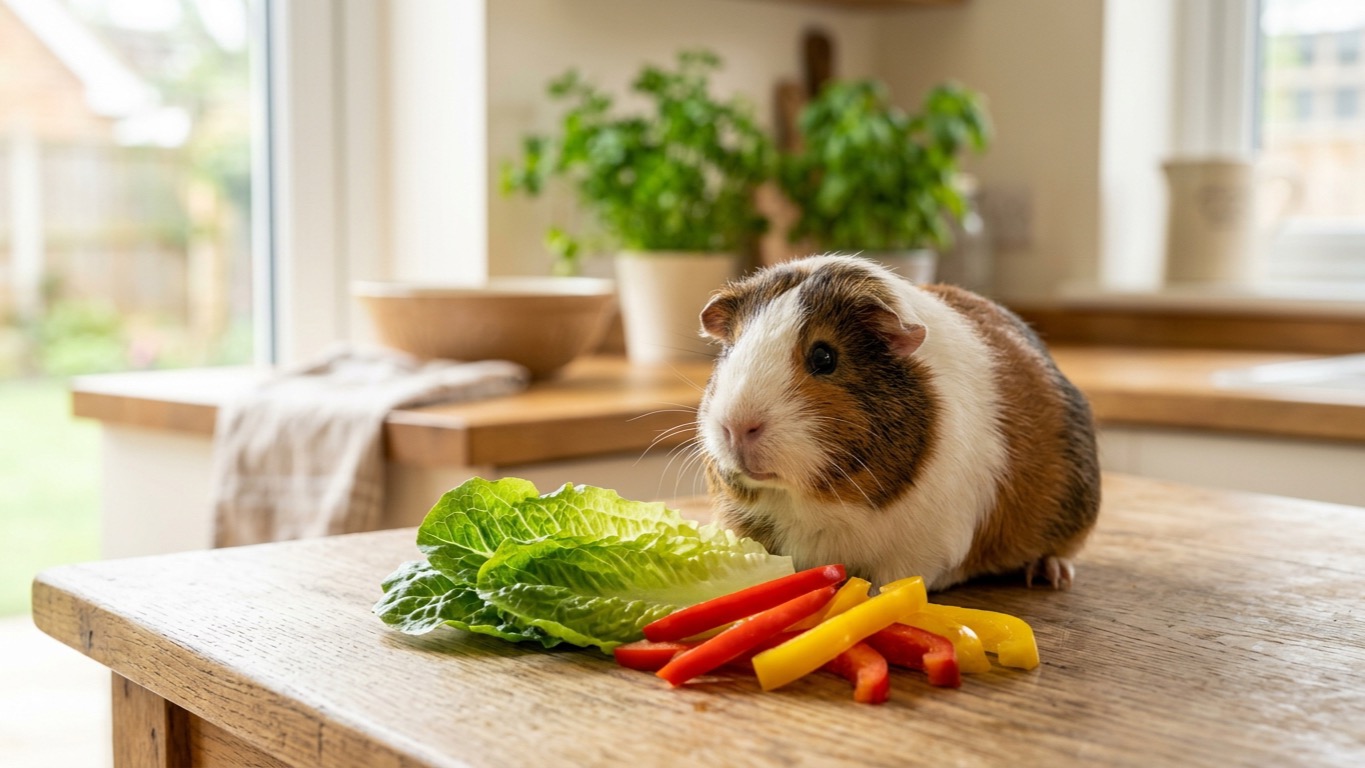
- Offer a teaspoon (or one small berry, or a thin orange wedge).
- Remove leftovers within a few hours.
- Log stool the next day.
Frozen fruit: thaw fully, pat dry, same tiny portion. Ice-cold chunks are a tooth and gut surprise.
Citrus: a thin wedge, not a half orange. Acidity plus sugar is a mouth-sore risk class in keeper reports —
Dried fruit: skip. Concentrated sugar.
Fruits and plants to keep off the list
- Rhubarb (oxalates)
- Avocado (fat + species concerns)
- Seeds and pits (choke + cyanogenic glycosides in some seeds)
- Onion / garlic / chive family
- Iceberg-only diets (not toxic like rhubarb, but empty — pair with better greens)
- Chocolate, dairy, meat — not fruit, still wrong
Grapes and raisins: high sugar; some keepers avoid. Not a desk “safe daily.”
Scurvy vs sugar — two different failures
Scurvy (C deficiency): rough coat, swollen joints, reluctant walk, delayed healing, sometimes bleeding gums. This is a clinic pattern. The fix is a proper C plan (fresh pellet, pepper, possibly a vet-directed supplement) — not a honey stick.
Sugar excess: soft stool, weight gain, picky hay refusal, dental decay risk over time. The fix is less fruit and fewer sticks.
Do not treat diarrhea with more fruit “for hydration.” Water and a vet.
- Treated treat sticks as the “top 7 fruits.”
- Repeated “Additional Context” loops.
- Implied a scored 10 mg/100 g threshold as if it were a trial.
- Buried hay under a fruit podium.
Frequently asked questions
What is the best fruit for guinea pigs?
A teaspoon of strawberry or a sliver of kiwi, or skip fruit and use bell pepper for C. Hay and a fresh C-pellet do the daily job. On this URL the cards are treats and pellets — Oxbow Essentials is the staple tile; honey sticks are not. The these cavy-fruit listings is 0 fresh-fruit cards and 2 pellet cards.
How often should I feed fruit?
Common keeper-range: 2–4 times per week, 1–2 teaspoons total produce-treat, not a fruit bowl. Daily veg is usually greens + pepper, not apple.
Can guinea pigs eat oranges?
A thin wedge, rarely, if stool stays formed. Orange is mid-C and mid-sugar. Pepper is the better daily C fruit.
Can they eat blueberries?
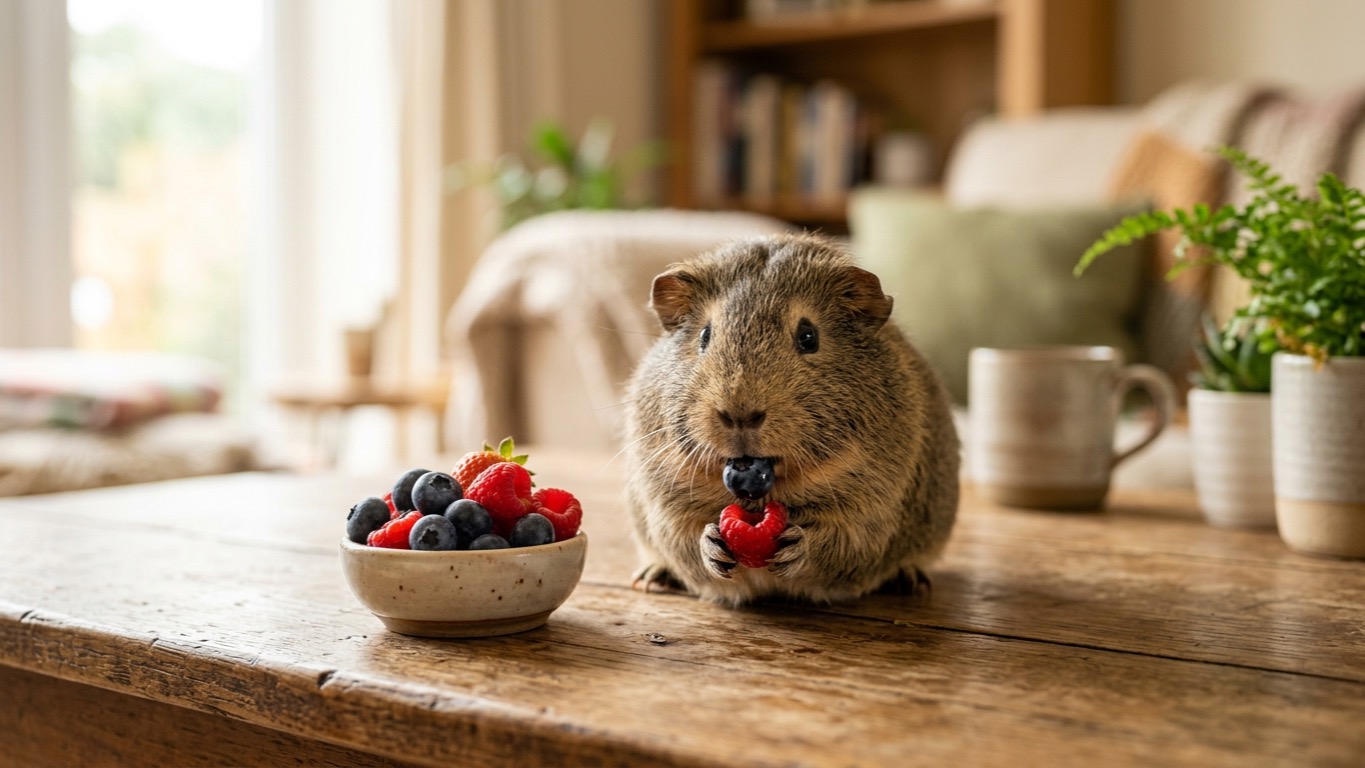
Yes, tiny amounts. USDA-class C is low vs sugar. Treat as candy-berries, not a scurvy plan.
Can they eat frozen fruit?
Thawed and dried, same tiny portion. Not frozen solid.
What are signs of fruit-related GI upset?
Softer cecotropes, diarrhea, bloating, hiding, not eating hay. Stop fruit. Call a vet if they stop eating.
Do I need the Amazon treats if I buy produce?
No. The treats are optional calories. The pellet + hay + pepper stack is the nutrition.
Is Oxbow Essentials a fruit?
No. It is on this URL as a staple feed card. Keep it in the “food” column.
SOURCES
Listing snapshots: this URL’s seven cards, August 2026 listing snapshot.
Nutrition / welfare context:
- https://vcahospitals.com/know-your-pet/guinea-pigs-feeding
- https://www.merckvetmanual.com/exotic-and-laboratory-animals/rodents/guinea-pigs
- https://fdc.nal.usda.gov/
- https://www.oxbowanimalhealth.com/blog/ (husbandry / treat cadence as maker education — re-read the live post)
Related desk pages:
- https://www.thepetbench.com/articles/best-hay-for-guinea-pigs/
- https://www.thepetbench.com/articles/best-timothy-hay-for-guinea-pigs/
- https://www.thepetbench.com/articles/best-bedding-for-guinea-pigs/
Two-pig households and the shared bowl problem
Guinea pigs are social; fruit is competitive. The fast eater gets the strawberry; the shy pig gets hay — or the reverse, and the shy pig learns that hovering wins dessert. Offer produce in two piles far apart. A single honey stick in a shared cage is a monopoly.
Weight the pigs. A monthly gram change plus a body-condition look (can you feel the ribs without a fat pad hiding them?) tells you if the “teaspoon” became a tablespoon.
Supplement drops vs pepper vs pellet
Liquid C supplements exist. They oxidize in water bottles and taste can stop pigs from drinking — a dehydration failure mode keeper literature warns about. This desk does not pick a brand of drops. If a veterinarian wants a supplement, follow that plan. Do not stack drops + orange + honey sticks “to be safe.” Excess C is usually excreted, but the sugar and the skipped hay are not excreted as neatly.
Pellet C fades after opening. Buy a bag size you will finish. Store cool and dark. A bargain warehouse sack that lasts a year is a scurvy plan that quietly died.
Produce calendar (example, not a prescription)
| Day | Veg / fruit idea | Notes |
|---|---|---|
| Daily | Hay + measured pellet + water | Non-negotiable |
| Most days | Leafy green + pepper sliver | Wash; remove leftovers |
| Tue / Sat | 1 tsp strawberry or kiwi sliver | Skip if stool was soft |
| Never daily | Banana, dried fruit, honey stick | Tax |
Rotate greens (romaine, cilantro, etc.) so one bitter green does not become the only story. Iceberg is mostly water. Fruit days are not “skip hay” days.
When the best fruit for guinea pigs stops being the answer
A pig that is not eating, a pig with dental disease, or a scurvy-pattern pig is a veterinarian. USDA tables and treat-tile honesty — not a honey-stick ranking — inform the notes above.
Cage hygiene after fruit
Wet fruit in fleece or paper bedding is an ammonia accelerator. Smell-focused bedding does not fix a grape under the hide. Spot-clean produce corners the same evening. Ceramic bowls beat plastic for leftover smear.
Reading a treat bag like a produce desk
Ingredient lists on honey sticks and “harvest” mixes often front seeds, honey, corn, or dried fruit. Those words are the sugar tax. “Natural” is not a C assay. If the first three ingredients are not a grass or a simple plant you would feed fresh, the bag is a dessert. Oxbow Simple Rewards is still a treat. Oxbow Essentials is the feed.
Produce-by-produce desk notes (grocery, not Amazon)
These notes are class talk from USDA-class numbers plus keeper-range cadence. They are not a feeding trial.
Bell pepper (any color; red usually highest C in tables). Daily-veg class. Remove the stem and a huge pile of seeds if they bother the pig. Best C-to-sugar move on the produce desk.
Strawberry. Hull it. One berry or a teaspoon of pieces. Good C, moderate sugar. Soft fruit spoils fast in a cage.
Kiwi. Peel. Tiny slice. High C, mid sugar. Easy to overshoot.
Orange / clementine. Thin wedge, membrane and all or a little pulp — not a half fruit. Mid C, mid sugar. Watch mouth sores in keeper reports.
Raspberry. Low sugar berry. Weak-to-mid C. Fine as a rare teaspoon.
Blueberry. Weak C, mid-high sugar. Flavor treat. Do not build a scurvy plan on them.
Apple. Seedless sliver. Weak C. Not worth daily.
Pear. Similar to apple. Seedless. Occasional.
Watermelon. Flesh only, no rind if it is tough; tiny amount. Water plus sugar.
Banana. Dessert. A 1 cm coin, rarely, or skip.
Mango / pineapple / tropical. Acid + sugar. Rare if ever.
Grapes. High sugar; some keepers avoid entirely. Not a desk daily.
Tomato. Botanical fruit; modest C; offer ripe flesh, not the plant/leaves (solanaceous greens are the wrong part).
Cucumber. Mostly water. Fine as a hydrator, not a C plan.
What “5–10% of the diet” means in a bowl you can see
Pellets have a bag chart (often ~1/8 cup class for an adult — read the bag). Fruit is on top of that, not instead of it.
Oxbow vs Vitakraft pellets on a fruit URL
Two staple-shaped cards: Oxbow Essentials ($12.40) and Vitakraft Menu ($10.98). The desk does not run a digestibility trial between them. What we can say:
- Both are complete-feed class, not fruit.
- Plain pellets beat muesli mixes that let pigs cherry-pick sweet bits (a different failure mode than honey sticks, same sugar-seeking).
- C fades after opening on both. Buy the bag you will finish.
- If the pig is an adult on timothy hay, a timothy-based adult pellet is the usual pairing. Alfalfa pellets are a growth/pregnancy conversation with a veterinarian, not a fruit topping.
Water, vitamin C drops, and the bottle trap
Cavy C supplements in the bottle sound convenient and fail two ways: the vitamin oxidizes in light/water, and some pigs drink less because of taste — dehydration is worse than a missed milligram. If a veterinarian prescribes a supplement, ask about oral syringe vs water and a replacement schedule. Do not invent a dropper plan from a fruit article.
Water itself should be available at all times. Fruit is not a hydration strategy. Wet melon in summer is still a teaspoon, not a bowl.
Young, old, and skinny pigs
Young. Growth wants hay, a growth-appropriate pellet, and careful produce. Fruit is still a garnish. A weanling with diarrhea after apple is an emergency-adjacent GI event — veterinarian, not a different berry.
Old. Dental wear makes hard pellets and whole apples difficult. Softer pepper and grated produce can help if the vet agrees. Honey sticks are still sugar.
Skinny / not eating. This is not a fruit problem. Syringe feeding and GI support are clinic jobs. Tempting with banana can delay a visit.
Pairing produce with bedding and hideouts
Fruit juice in fleece is a wash event. Fruit under a hide is a forgotten ferment. If you run a fleece stack, treat fruit hour like a picnic: offer, watch, remove. Paper bedding hides melon better and then smells. Either way, the produce desk includes a trash step.
FAQ add-ons
Can guinea pigs eat citrus every day?
The desk default is no. Pepper covers daily C with less sugar. Citrus is a wedge, not a habit.
What about fruit-flavored pellets?
Flavor coating is not a produce serving. Read the bag. Do not skip hay.
Are dried cranberries OK because the table lists cranberry?
Dried fruit is concentrated sugar. The USDA-class row for raw cranberry does not license a trail-mix bag.
Can I juice fruit for them?
No. You removed fiber and left sugar. Offer the piece or skip.
Do two pigs need two different fruits?
They need two piles, not two species of dessert. Same teaspoon rules.
Grocery vs treat-aisle cost (desk arithmetic, not a receipt)
A grocery strawberry clamshell that yields 20 teaspoons is still usually cheaper per treat than a $3.62 honey-stick pack if you actually follow teaspoon rules. The honey stick wins only if you wanted a chew toy that happens to be edible. The Oxbow Essentials bag is the feed cost; do not compare it to strawberries as if they were substitutes.
If money is tight, skip every treat card on this URL. Buy hay, a small C-pellet bag, and one pepper. That stack outranks a Kaytee rabbit mix for the keyword best fruit for guinea pigs.
Calcium, bladder stones, and why fruit is the wrong lever
Water access and wet veg (cucumber, lettuce-class greens) matter more than a berry. Do not dehydrate a pig to “prevent stones.”
Dental math: sugar vs hay wear
Open-rooted teeth need hay abrasion. Soft fruit does the opposite of wear. A pig that lives on treats and pellets gets points and molars that do not meet. Drooling, dropping food, or a wet chin is a dental exam, not a juicier fruit. Honey sticks are a chew and a sugar load — they do not replace timothy.
Night fecal check (cecotropes)
Healthy pigs produce cecotropes they usually eat. A pile of uneaten, smelly, extra-soft cecotropes after a fruit night is a reason to cut sugar, not to add a probiotic treat If the pig is covered in cecotropes and miserable, that is a vet.
Introducing a pig to produce without a buffet
Day 0: hay + usual pellet only (baseline stool). Day 1: pepper sliver. Day 2–3: watch. Day 4: one strawberry piece or skip if stool changed. Never three new plants on a Saturday because a listicle had seven fruits.
Rescue pigs with unknown GI history get an even slower clock.
Herd politics and the honey stick
A hanging Vitakraft stick is a stationary resource. Dominant pigs camp it. Subordinates get nothing or get bitten. If you use a stick at all, break it and offer pieces by hand, then remove the wood if they chew treated dowel.
Kaytee “foraging” mixes on the fleece become seed sorting: pigs eat the sweet bits and leave the rest as bedding contamination. Sweep.
Lettuce, herbs, and the fruit keyword
People search best fruit for guinea pigs and then feed iceberg. Iceberg is not fruit and is not a C plan. Romaine and herbs are veg. Keep fruit in the teaspoon column so the veg column can stay daily. A rabbit lettuce page is a different species — lettuce for rabbits if you keep both, but do not copy rabbit fruit rules onto cavies without checking C.
Travel, boarding, and the fruit you leave behind
A weekend boarding facility that “loves treats” will blow your teaspoon rule in a day. Write the diet: hay brand, pellet grams, no fruit unless listed, pepper yes/no. A honey stick in a go-bag is a handler bribe, not a C plan. If the pig is stressed, GI risk goes up — more sugar is the wrong comfort.
Car travel: offer water, not melon, in a hot crate. Produce in a warm car ferments. Hay travels. Pellets travel. Strawberries do not.
Photograph the stool, not the snack
If you change produce, a phone photo of the next morning’s feces is more useful than a memory of “a bit soft.” Share that with a vet if things escalate. We are not asking for a lab panel from a photo. We are saying fruit experiments need a record.
Seasonal produce and pesticide wash
Summer berries and winter citrus change the C/sugar pair. The USDA-class table is a class table, not your clamshell. Wash everything. Organic is not a rinse exemption. Greenhouse peppers in January are still the better daily C fruit than a December banana.
Avoid wild-foraged fruit unless you can identify the plant and the pesticide history of the verge. Roadside apple is a maybe; roadside unknown berry is a no.
Last reviewed: August 2026. opening summary, , USDA-class C/sugar table, portion worksheet. Research desk; VCA / Merck / USDA cited. Contact if a listing snapshot price changed. Hay first. Pepper before blueberry. Teaspoon, not a bowl.