Quick answer: Yes. Cats get cold-like upper respiratory infections from feline herpesvirus or calicivirus, not from your rhinovirus. Call the clinic if breathing looks hard, food is refused, or signs worsen.
Cats can get colds: Cornell Feline Health Center says up to 97% of cats meet feline herpesvirus in a lifetime.
This page is a research-desk briefing that compares published clinic guidance and maker specs.
Selection rule: we covered household supportive-care tools with maker-listed specs, plus one clinic-only recovery diet. We left out ranked cold-medicine lists, lysine pastes, and human decongestants.
What a cat cold is, and what it is not
People say “cat cold” when a cat sneezes, drips, and looks dull.
The illness is an upper respiratory infection. Cornell Feline Health Center places it in the nose, sinuses, mouth, pharynx, and larynx.
Lower-tract disease is a different zone. The same Cornell page says it can reach the trachea, bronchi, and lungs.
It is not a human rhinovirus hop. The usual feline viruses stay in cats.
Cornell Feline Health Center notes a rare exception. Some influenza viruses can move between species. That is not the everyday sniffle.
Merck Veterinary Manual groups the common pattern as feline respiratory disease complex. Feline viral rhinotracheitis, also called feline herpesvirus type 1, accounts for the majority of acute cases on that page.
Feline calicivirus is the other main viral actor.
A vaccine cut severe disease. Cornell Feline Health Center is clear that vaccines did not erase the pathogens. A vaccinated cat can still sniffle.
Signs you can see without a lab
Start with what Cornell Feline Health Center lists for upper-tract disease. Look for clear or colored discharge from the eyes or nose.
Add coughing, sneezing, and conjunctivitis. Mouth ulcers, lethargy, and anorexia belong on the same list.
Merck Veterinary Manual adds a fever number. The fever of feline viral rhinotracheitis may reach 105°F (40.5°C). It can fade, then return.
Watch the discharge change. Merck Veterinary Manual says it often starts clear. It then thickens with mucus and pus.
Appetite often drops at that point. A cat that stops eating is no longer a mild home case.
Calicivirus leans toward the mouth and lungs. Merck Veterinary Manual notes sores in the mouth and, with some strains, fluid in the lungs.
Two strains can cause a short “limping syndrome.” That pattern shows most often in kittens 8 to 12 weeks old.
Count resting breaths if the chest looks busy. Cornell Feline Health Center says breathing at rest should not exceed 35 breaths per minute.
Hard or open-mouth breathing is not a wait-and-see sign. Eye pain matters too.
Cornell Feline Health Center links herpes to corneal ulcers, also called keratitis. Squinting or a cloudy surface needs a same-day clinic call.
Mild cases can look like a short nuisance. Merck Veterinary Manual says signs may last 5 to 10 days when the case is milder. Severe cases can run up to 6 weeks.
What actually causes the sniffles
Two viruses do most of the work. Cornell Feline Health Center reports lifelong herpes infection in up to 80% of exposed cats.
Of those carriers, up to 45% shed again. Stress is the usual trigger on that page.
Calicivirus tracks density. Cornell Feline Health Center says about 10% of cats in small groups are infected. In crowded shelters and catteries, the figure can reach 90%.
Bacteria join the picture. Cornell Feline Health Center finds Chlamydia felis in about 20% of cats with upper respiratory signs. About 3% of healthy-looking cats carry it too.
Bordetella bronchiseptica is less common in the same dataset. Cornell Feline Health Center reports it in about 5% of cats with signs in dense housing.
About 1.5% of cats that look normal may still harbor it.
Bloody, chronic nasal discharge is not a simple cold. Cornell Feline Health Center says about 4% of cats carry Cryptococcus neoformans without signs.
Stress is a trigger, not a virus. Cornell Feline Health Center names crowding, surgery, new cats, and moving as herpes flare risks.
A quiet perch helps. A modern cat tree can cut hallway traffic during a flare.
When the clinic visit cannot wait
Use a short rule our research team named the Three-Flag Clinic Rule. Call the same day if any flag is up.
Flag one is open-mouth or labored breathing. Flag two is a full day without food. Flag three is discharge that worsens and turns thick and colored.
Cornell Feline Health Center calls trouble breathing rare in simple upper-tract disease. Rapid rest breathing above 35 breaths per minute belongs in a clinic.
A congested cat cannot smell dinner. A cat with mouth ulcers will not chew. Merck Veterinary Manual says weight loss can be severe when illness drags on.
Merck Veterinary Manual gives 5 to 10 days for milder herpes signs. If day four is worse than day two, do not wait for day ten.
Systemic calicivirus is uncommon and ugly. Cornell Feline Health Center says that form is fatal in about two-thirds of affected cats. Swollen head, crusted sores, or yellow gums are not home-care signs.
Do not open the human medicine cabinet. The US Food and Drug Administration states that acetaminophen is fatal to cats.
The same FDA page says cats break down NSAIDs poorly. Aspirin, ibuprofen, and naproxen are not a household workaround.
The FDA also says not to give anything from a people cabinet until you talk with the cat’s veterinarian. That includes leftover cold pills.
Supportive care you can set up at home
Cornell Feline Health Center puts nutrition and hydration first for herpes and calicivirus. That is nursing, not a cure.
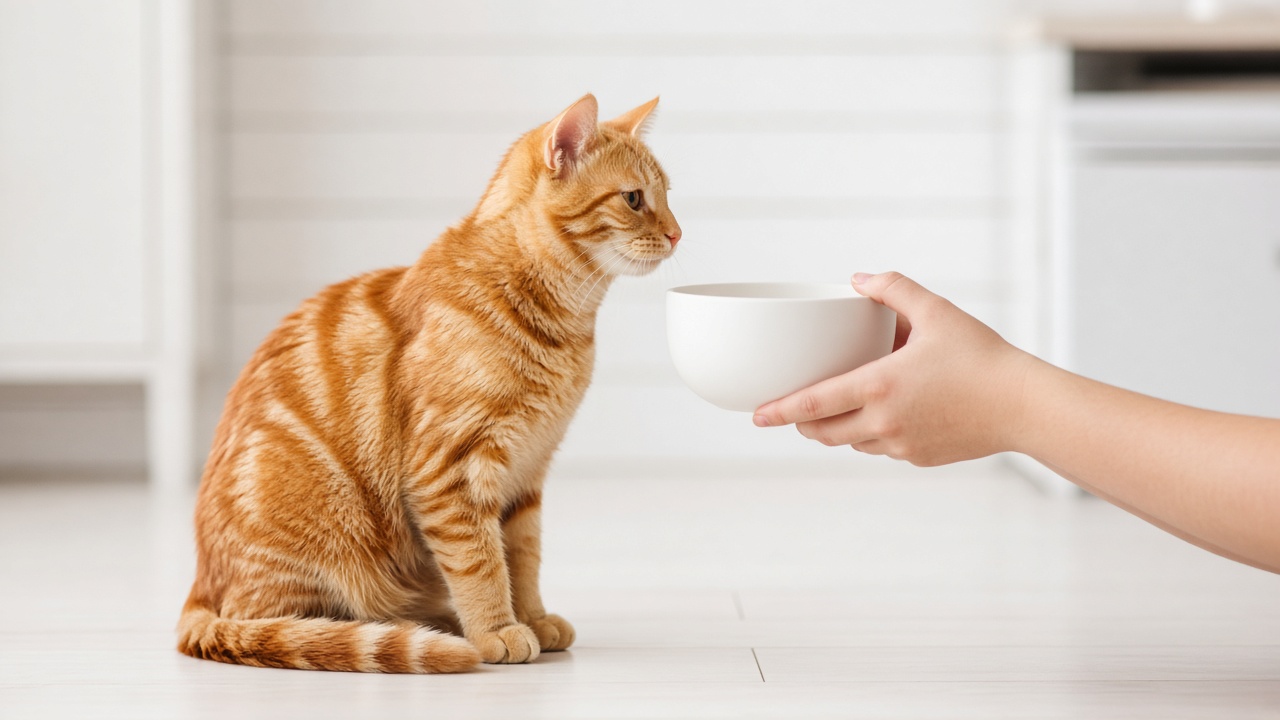
Warm a spoon of the cat’s usual wet food. Smell, not spice, is the point.
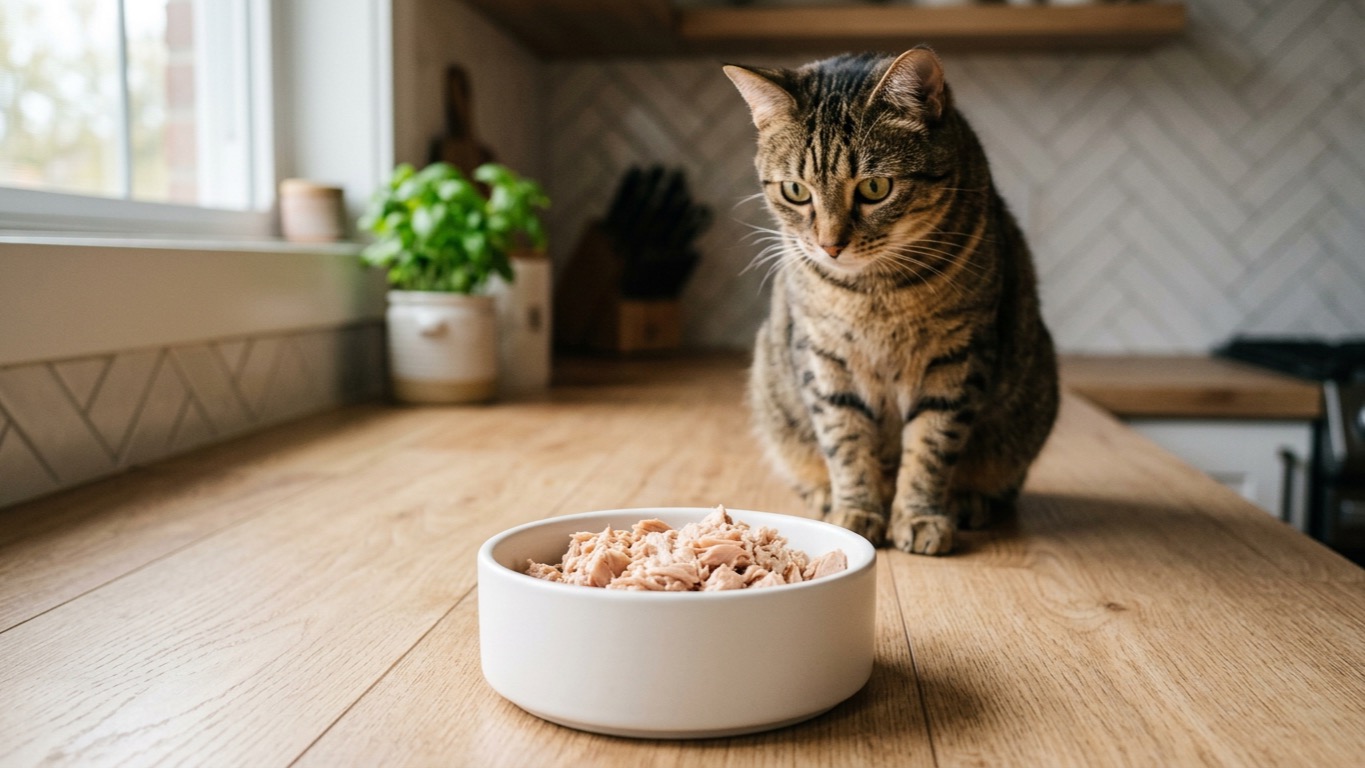
If you reach for fish to tempt a blocked nose, pause. Read our note on whether cats can eat tuna before you pour the can juice.
Wipe the face with a clean, saline-damp cloth. Merck Veterinary Manual says nose and eye discharges should be removed often.
Dried crust on long fur can wait until after the wipe. Lift it later with a grooming glove. Keep fabric out of the eyes.
Add moisture to the air. Sit with the cat in a steamy bathroom for a short, supervised stretch.
Or run a cool-mist humidifier in the room the cat already uses. Skip essential oils. This briefing treats a humidifier as a water-only tool.
Isolate a new or sick cat from housemates when you can. Shared bowls, toys, and bedding move virus.
Cornell Feline Health Center stresses fomite spread in crowded settings.
Do not start lysine on your own. Cornell Feline Health Center calls lysine controversial.
That page says several studies suggest it is not effective. Some work even links it to worse signs and more shedding. That is why lysine pastes missed our selection rule.
Supportive-care products we compared
Our research team analyzed maker pages for tools that match those jobs. We compared listed size, runtime or energy, and access. ”
The Levoit Classic 300S is a top-fill ultrasonic humidifier. Levoit lists a 6-liter tank, up to 60 hours of runtime, and four mist levels. Use it as cool mist and water only.
The Honeywell HEV620B is an evaporative tower. Honeywell’s store page listed it in stock when we read it.
Honeywell lists a 1.7-gallon tank and 24 hours on the low setting. Setup copy says to place the unit at least 12 inches from the wall.
The Catit Flower Fountain is a hydration tool, not a drug. Catit lists a 3-liter, or 100-fluid-ounce, reservoir and three flow settings.
Royal Canin Recovery Ultra Soft Mousse is the one clinic-only item. Royal Canin lists a 5.1-ounce can at 149 kcal per can, or 1,025 kcal ME/kg.
The label says the diet meets AAFCO Cat and Dog Food Nutrient Profiles for growth and maintenance.
| Product | Job in a cold week | Maker-listed size | Maker-listed runtime or energy | Access |
|---|---|---|---|---|
| Levoit Classic 300S | Adds cool moisture to a closed room | 6 L tank | Up to 60 hours; 4 mist levels | Over the counter |
| Honeywell HEV620B | Adds filtered invisible moisture in a large room | 1.7 gal tank | 24 hours on low; filter every 30–60 days | Over the counter |
| Catit Flower Fountain | Keeps moving water in reach | 3 L / 100 fl oz | 120V, 60Hz, 300 mA | Over the counter |
| Royal Canin Recovery Ultra Soft Mousse | Soft, calorie-dense food when smell is gone | 5.1 oz can | 149 kcal/can; 1,025 kcal ME/kg | Clinic-directed |
Comparing those published specs, the Levoit tank is larger in volume than the Honeywell tank. The Honeywell page trades that for a listed large-room role and a replaceable wick.
The Catit fountain is the only item built as a cat drinker. The Royal Canin mousse is the only item built as a complete diet.
A humidifier does not replace a clinic exam. A fountain does not fix mouth ulcers. A recovery can does not treat herpes.
How to lower the next flare
Vaccination still belongs on the calendar. Cornell Feline Health Center recommends herpes and calicivirus vaccines for cats.
Those shots do not block every infection. They cut severity and, for herpes, shedding.
The 2020 AAHA/AAFP Feline Vaccination Guidelines treat FHV-1, FCV, and FPV as core antigens. AAHA says the kitten series starts no sooner than 6 weeks.
Doses then repeat every 3 to 4 weeks until 16 to 20 weeks. AAHA also adopted a 6-month booster for those three antigens.
The task force cited work suggesting up to one-third of kittens may fail a final core dose at 16 weeks. The AAHA page says vaccine-induced protection is not absolute.
Keep the sick week boring. Limit new cats, boarding, and loud rearranging.
Offer a high, stable rest spot. A modern cat tree away from the litter path gives a carrier a place to hide.
Wash bowls and wipe shared toys. Cornell Feline Health Center describes calicivirus as highly contagious in groups.
If a second cat starts to sneeze, repeat the Three-Flag Clinic Rule. Do not share leftover clinic drugs between animals.
The FDA warns against giving one animal’s drug to another unless the veterinarian says it is acceptable.
FAQ
Can cats catch a cold from people?
Everyday human cold viruses are not the usual cause of a cat sniffle. Cornell Feline Health Center points to feline herpesvirus and feline calicivirus as the common pair.
That page also mentions some influenza viruses that can move from people or dogs to cats. Treat a shared flu-like household as a reason to call the clinic.
How long does a cat cold last?
Merck Veterinary Manual gives 5 to 10 days for milder herpes-type signs. Severe cases can last up to 6 weeks.
Cornell Feline Health Center says uncomplicated calicivirus may resolve in days or weeks. Carriers can flare again after stress.
Can my other cats catch it?
Yes. Both main viruses spread by droplets and by contaminated objects.
Cornell Feline Health Center notes high infection rates in crowded housing, up to 90% for calicivirus. Isolate the sick cat when you can.
Is a humidifier safe around a sick cat?
A clean cool-mist unit used with water only is the product type we compared. Levoit lists a 6-liter tank and up to 60 hours of runtime on the Classic 300S.
Honeywell lists 24 hours on low for the HEV620B and a 12-inch gap from the wall. Skip oils.
Should I give my cat lysine?
Not as a default home step. Cornell Feline Health Center says lysine is controversial.
Several studies on that page suggest it is not effective and may worsen signs. Ask the clinic before you buy a paste.
When is open-mouth breathing an emergency?
Now. Cornell Feline Health Center treats difficult or rapid breathing as a lower-tract warning.
Resting rates should stay at or below 35 breaths per minute. Open-mouth breathing or blue gums needs urgent clinic care.
Can I give leftover human cold medicine?
No. The FDA says acetaminophen is fatal to cats.
The same page says cats handle NSAIDs worse than dogs. Human decongestants are not a listed feline treatment in the sources we read.