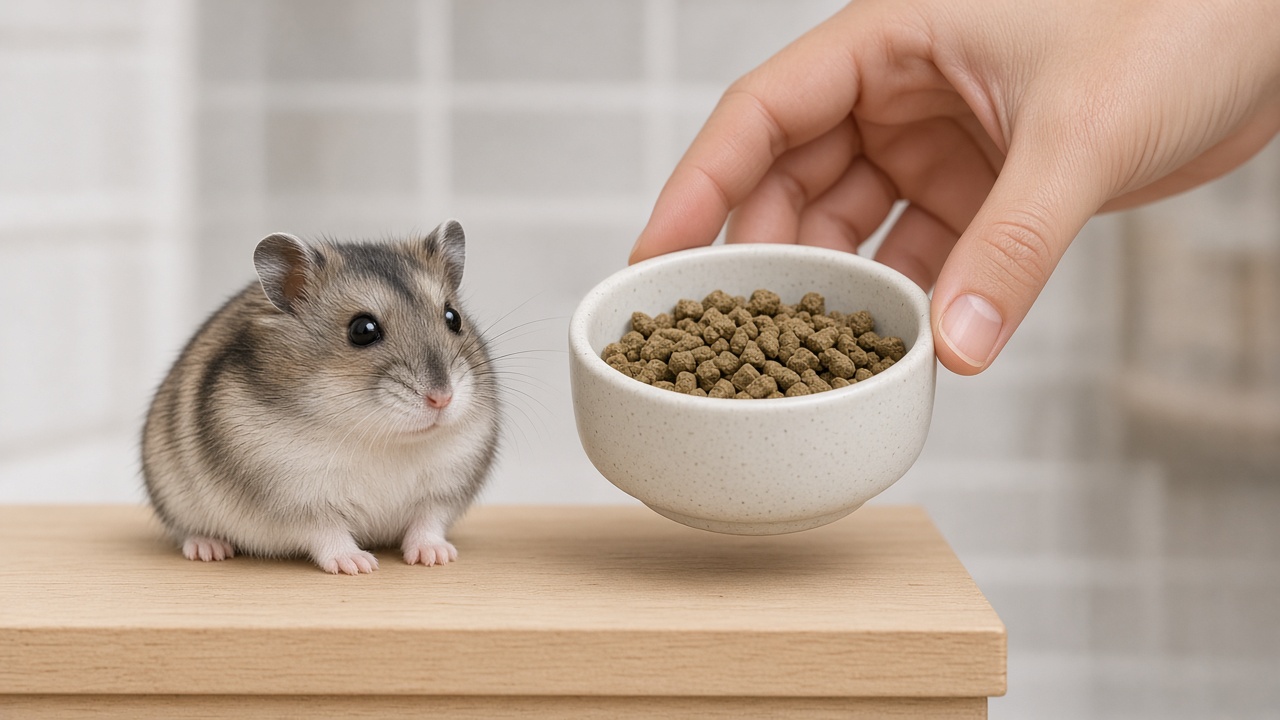
Quick answer: Keep one Djungarian hamster on a deep, unbroken floor. Feed a uniform hamster pellet at the maker’s listed daily amount. House it alone, and plan on nightly activity plus the AVMA’s 2–3 year hamster lifespan.
A Djungarian hamster is Phodopus sungorus, a solitary winter-white dwarf the AVMA lists at a 2–3 year lifespan.
This page is a research-desk brief from The Pet Bench. We did not keep a study colony, did not run feeding trials, and did not open clinic records.
Our Maker-Page Rule decided the rest. A product enters only if its current maker page lists hamster use and a numeric spec. We left out discontinued cages, treat-only bags, and SKUs we could not open.
What a Djungarian hamster is
The Integrated Taxonomic Information System lists Phodopus sungorus as a valid species. The Taxon Serial Number is 632741. The author line is Pallas, 1773.
ITIS records three English common names. They are Dzhungarian hamster, Striped Hairy-footed Hamster, and Striped Desert Hamster.
Pet shops usually say Winter White or Djungarian. Those shop labels are not extra species.
ITIS notes a 1992 chromosomal paper by Safronova and colleagues. That work is why Campbell’s dwarf, Phodopus campbelli, sits as a separate species.
Do not treat a store “Russian dwarf” tag as an ID. Ask the seller which Latin name they used.
ITIS places the species in Cricetidae, subfamily Cricetinae, genus Phodopus. The geographic division on that record is Europe and Northern Asia, excluding China.
The American Veterinary Medical Association’s July 2010 rodent leaflet sets hamster life at 2–3 years. That is a short household plan.
The same AVMA leaflet says hamsters housed in pairs or groups may fight. They are usually housed alone.
AVMA also flags hamsters, mice, and rats as nocturnal. A Djungarian that sleeps by day is following that pattern.
Waking it for a child’s after-school hold is a common clash.
The Maker-Page Rule for this brief
We compared published specs. We did not build a winner list. We did not sort products by price tier.
A habitat entered the table if the maker listed hamster use and an exterior size. A food entered if the maker listed a hamster feeding amount and a guaranteed analysis.
That is the whole rule.
We skipped one Prevue habitat whose maker page marks it discontinued. We also skipped tube kits and snack-only seed bags.
Four products met the rule. Two are habitats. Two are daily foods.
Live prices attach after publish. This table has no price column.
Housing we compared from current maker pages
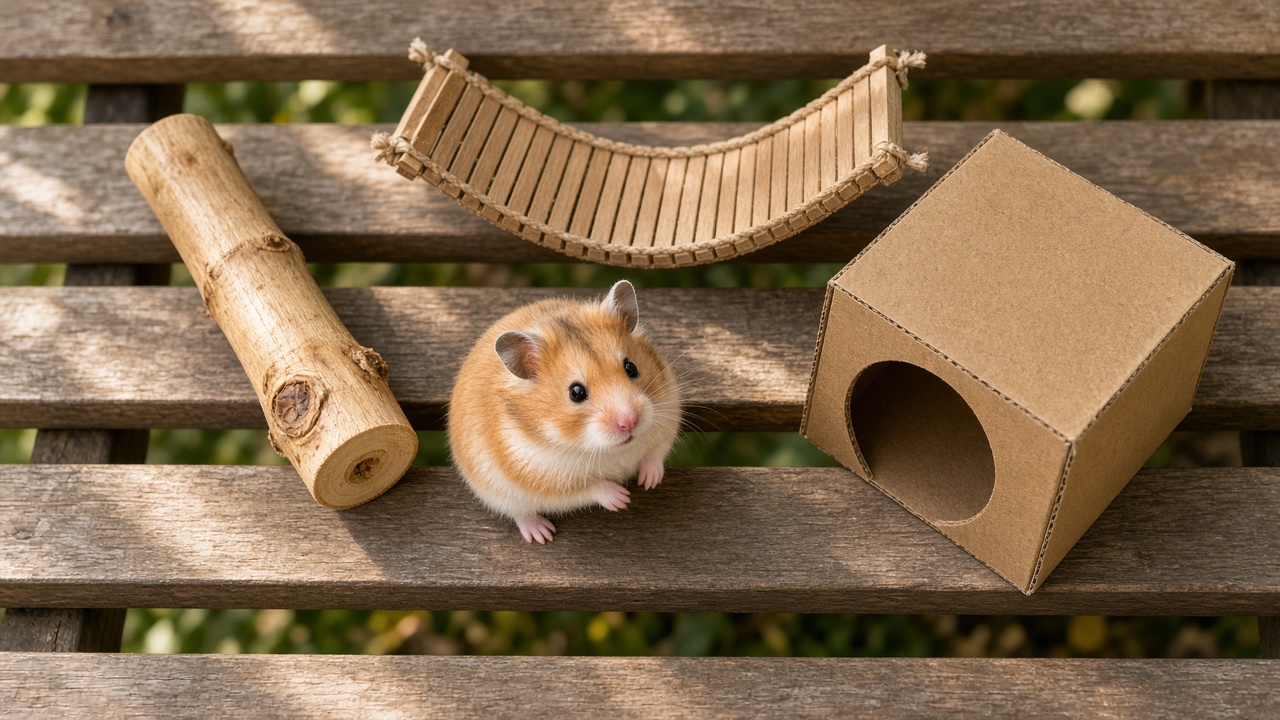
Djungarian hamsters need unbroken floor, deep bedding, and a solid wheel. Tube towns split that floor.
Tall add-ons do not replace length.
Footprints we calculated from listed lengths
Niteangel lists the Vista Hamster Cage with Oblique Opening in three exterior sizes. Size S is 32.9 by 17.2 by 21.1 inches.
Sizes M and L were marked sold out on the maker page our research team opened.
Multiplying Niteangel’s Size S length and width gives about 566 square inches of listed footprint. That math is ours.
It is not a welfare-group minimum copied from another site.
Prevue Pet Products lists the Hamster Haven (large) Gray, model SP2005GRAY. The size is 21 5/8 by 13 3/8 by 14 1/4 inches. Wire spacing is 1/2 inch.
Wire gauge is 14 and 17.
The same Prevue length and width multiply to about 289 square inches. That is roughly half the Vista S footprint.
Bar gaps of 1/2 inch are wide for a dwarf that can flatten its ribs.
Prevue lists one platform, one slide ladder, one hideaway dome, and one exercise wheel. The UPC on that page is 048081820056.
If a listed shop cage is the 289-inch class, build a larger solid base. A DIY hamster cage with a bin or tank floor is the usual next step.
Mesh the lid. Measure the true floor before you buy tubes.
| Product | Category | Listed size or daily amount | Other listed spec | Form |
|---|---|---|---|---|
| Niteangel Vista Hamster Cage W/ Oblique Opening, Size S | Habitat | 32.9 × 17.2 × 21.1 in | Current maker page lists S, M, and L exteriors | Wood-frame habitat |
| Prevue Pet Products Hamster Haven (large) Gray SP2005GRAY | Habitat | 21 5/8 × 13 3/8 × 14 1/4 in | 1/2 in wire spacing; 14 and 17 gauge | Powder-coated steel mesh, plastic tray |
| Oxbow Essentials Hamster & Gerbil Food | Daily food | 1/8 cup for an adult small hamster | 15.00% min crude protein; 4.50% min fat | Uniform pellet |
| Kaytee Forti-Diet Pro Health Nourish+Protect Hamster and Gerbil Food | Daily food | 2 Tbsp (about 20 g) | 12.0% min protein; 80,000 CFU/g Bacillus | Pellet blend |
AVMA says all rodents need room to move and exercise. The leaflet calls wheels a useful activity source for smaller rodents.
It also says cages need secure latches. Djungarians are thin enough to test those latches.
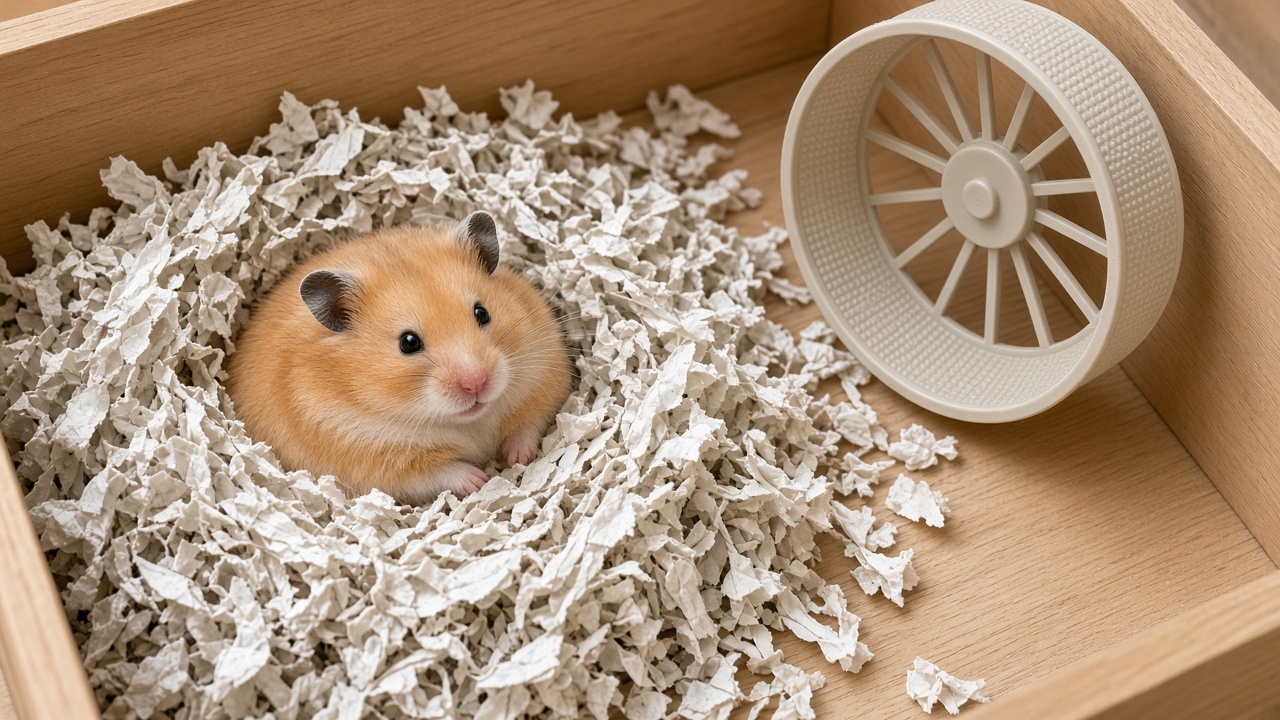
AVMA tells owners to use absorbent bedding and change it regularly. Some beddings can be toxic.
The leaflet says to ask a clinician before you pick a fiber. This desk does not name a “safe” wood from memory.
Deep paper or hay bedding supports burrows. Oxbow’s food page says hamsters do not need hay as a staple diet.
It still tells owners to offer free-choice hay to burrow and hide in. That is a nest use, not a calorie use.
Food labels we actually read
Hamster bags still print a guaranteed analysis. Read those percentages as maker claims.
This brief compares two current bags. It does not invent a government hamster nutrient profile.
What two bags print for protein and scoops
Oxbow Animal Health lists Essentials Hamster and Gerbil Food at 15.00% minimum crude protein. Minimum fat is 4.50%.
Fiber is 10.00% minimum and 15.00% maximum. Moisture is 10.00% maximum.
Oxbow also prints calcium at 0.60% minimum and 1.00% maximum. Phosphorus is 0.40% minimum.
Vitamin A is 10,000 IU/kg. Vitamin D3 is 900 IU/kg. Vitamin E is 190 IU/kg.
Oxbow’s adult small-hamster amount is 1/8 cup after six months. Young, pregnant, or nursing small hamsters get unlimited feed on that page.
Adult gerbils and large hamsters get 1/3 cup. A Djungarian is the small-hamster line.
Oxbow sells that recipe in 1-pound and 15-pound bags. The first three ingredients are timothy meal, pearled barley, and oat groats.
The page calls the kibble 100% uniform to stop selective eating.
Kaytee lists Forti-Diet Pro Health Nourish+Protect Hamster and Gerbil Food at 12.0% minimum crude protein. Minimum fat is 6.0%.
Maximum fiber is 12.0%. Maximum moisture is 12.0%.
Kaytee also lists 0.6% minimum omega-3 fatty acids. Total Bacillus species are 80,000 CFU/g.
The named species are Bacillus licheniformis and Bacillus subtilis. Bag sizes on that page are 3 pounds and 8 pounds.
Kaytee’s hamster or gerbil amount is 2 tablespoons, about 20 grams. The bag dimensions print as 3.5 by 7 by 8 inches.
The UPC is 071859999869. Use the food within 30 to 45 days after opening, per Kaytee.
Kaytee’s first three ingredients are corn, wheat, and milo. The blend includes pellets plus seeds.
That is a different eating pattern than Oxbow’s uniform kibble. Selective picking is the risk to watch.
Oxbow’s switch plan lasts four weeks. Week one is one-quarter new food.
Week two is half. Week three is three-quarters. Week four is the new food alone.
Kaytee’s switch plan is shorter. Mix old and new food for 7 to 10 days.
Those two clocks cannot both be “the” rule. Follow the bag you are opening.
Oxbow warns that hamsters hoard. Check caches and cut the next scoop if a pile is growing.
Kaytee says to discard uneaten food and wash the dish before the next fill. Both habits stop spoiled caches.
AVMA says rodents love to chew. Safe chew items belong in the cage.
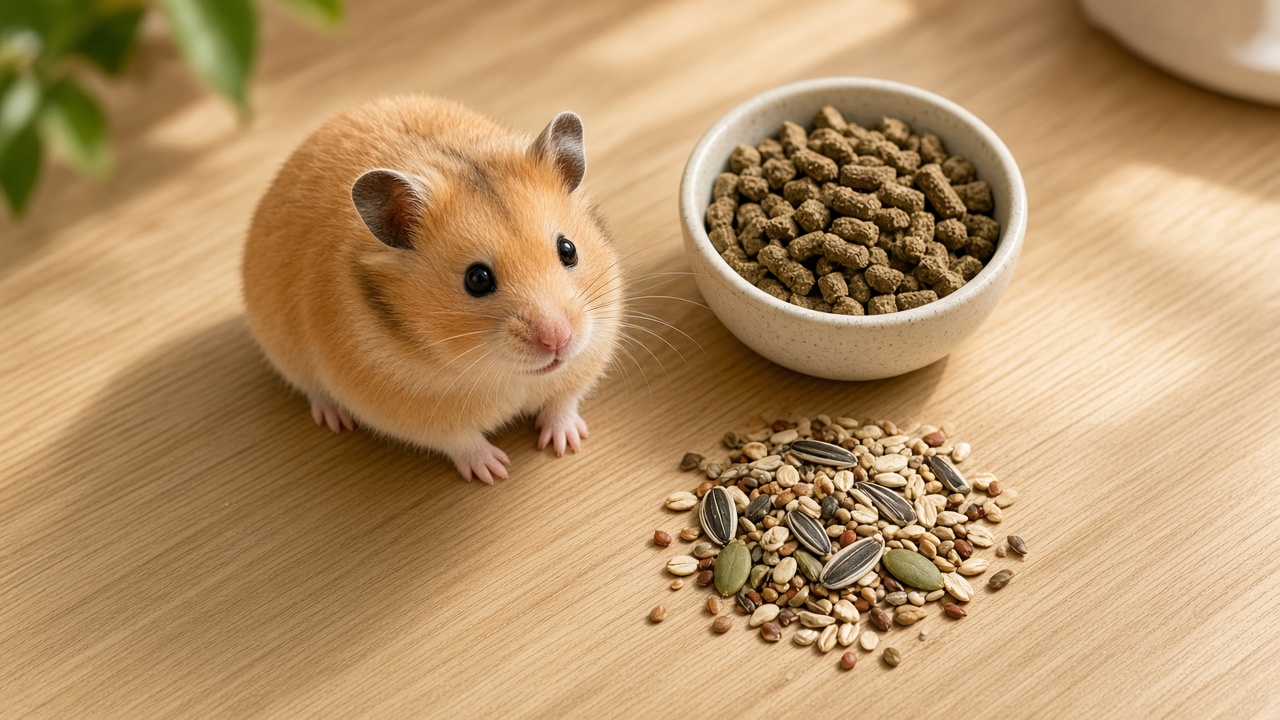
Do not use that as a license for unlimited sunflower seed. The daily pellet amount on the bag is the calorie anchor.
Cleaning, bedding, and a nightly schedule
AVMA’s rodent leaflet puts fresh bedding, food, and water in the setup list. Nesting material is required for all pet rodents.
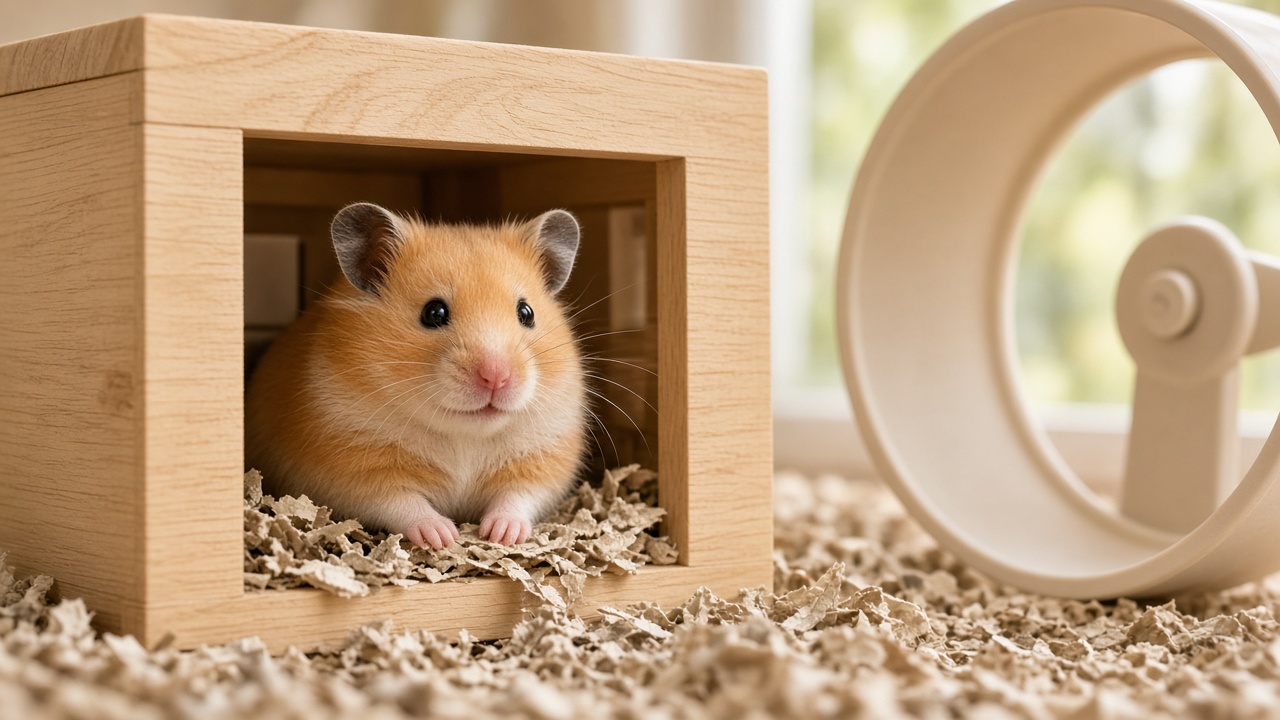
A hide is the retreat area that leaflet also asks for.
Spot-clean wet corners daily. Do a full change on a fixed cycle.
See how to clean a hamster cage and how often to clean a hamster cage for the wash steps.
Keep a small handful of old, dry nest silk when you strip the floor. Total scent wipes stress a nocturnal hoarder.
Wash with mild soap. Dry the tray out of hot sun.
Prevue warns that sun-dried plastic trays can warp.
Handle with slow hands. AVMA says rodents should never be picked up by the tail.
Set a cup in the cage and let the hamster step in. Daytime grabs raise bite risk.
Supervised floor time needs a smooth pen. AVMA allows a cleanable desk zone or a large container.
Other household pets stay out. The leaflet says secure housing matters when cats or dogs share the home.
Plan play after dusk. The animal’s peak hours match AVMA’s nocturnal note.
A quiet solid wheel beats a wire wheel that can catch a dwarf’s leg.
Health signals the AVMA puts on the owner
AVMA says a clinician should examine a new pet rodent within 48 hours of arrival. The same leaflet wants a rodent exam at least once a year after that.
Those are calendar facts from that page. They are not a care promise from this desk.
Look at the face before you pay. AVMA wants no discharge from eyes, nose, or mouth.
The animal should look frisky. It may resist handling. It should not panic.
Listen for cough, sneeze, or wheeze. Check the tail area.
AVMA wants that zone dry and free of diarrhea or caked stool. The leaflet names wet tail as a disease in baby hamsters that can be fatal.
Do not buy from a dirty or smelly enclosure. AVMA says nursing a sick rodent after purchase rarely works.
That is a selection rule, not a treatment plan.
An adult in the home owns the care. AVMA says it is unrealistic to leave a child as the only caregiver.
If a Djungarian sits still, feels cold, or stops eating, treat that as an urgent clinic question. This brief does not give a home torpor protocol.
FAQ
Is a Djungarian hamster the same as a Winter White?
Yes, in pet-shop English those names usually mean Phodopus sungorus. ITIS’s own English list says Dzhungarian hamster, not Winter White.
The winter-white label describes the seasonal coat people expect. It is not a second species.
Can two Djungarian hamsters share one cage?
AVMA says hamsters housed in pairs or groups may fight, so they are usually housed alone. Plan for one animal.
A second hamster is a second cage, not a roommate. Introductions are outside this brief.
How much should I feed a Djungarian hamster?
Oxbow lists 1/8 cup a day for an adult small hamster. Kaytee lists 2 tablespoons, about 20 grams, for a hamster or gerbil.
Those scoops are not the same volume. Follow the bag you opened and watch body condition.
Young or nursing animals get a different Oxbow line: unlimited feed. Cut back if caches pile up.
How large should the cage be?
Compare listed footprints, not words like “deluxe.” Our research team got about 566 square inches from Niteangel’s Size S.
Prevue’s listed large haven multiplies to about 289 square inches. If you start in the smaller class, move to a solid DIY base.
Are Djungarian hamsters good pets for children?
AVMA calls pocket pets less demanding than many other pets and notes they can suit young children. The same leaflet says an adult must still own the care.
Hamsters are nocturnal on that page. A child who wants a daytime cuddle pet will fight the clock.
Never pick a rodent up by the tail. AVMA states that rule in plain words.
When should a new Djungarian hamster see a clinician?
AVMA says any new pet rodent should be examined within 48 hours of acquisition. After that, the same leaflet wants at least one exam a year.
Go sooner for discharge, wet stool, or a cold, still animal. This desk does not diagnose those signs.
Do Djungarian hamsters hibernate in a house?
We did not pull a laboratory torpor paper for this brief. Keep the room steady and the food dish full.
If the hamster is cold, still, or not eating, treat it as a clinic question. Do not wait for a “winter nap” story.