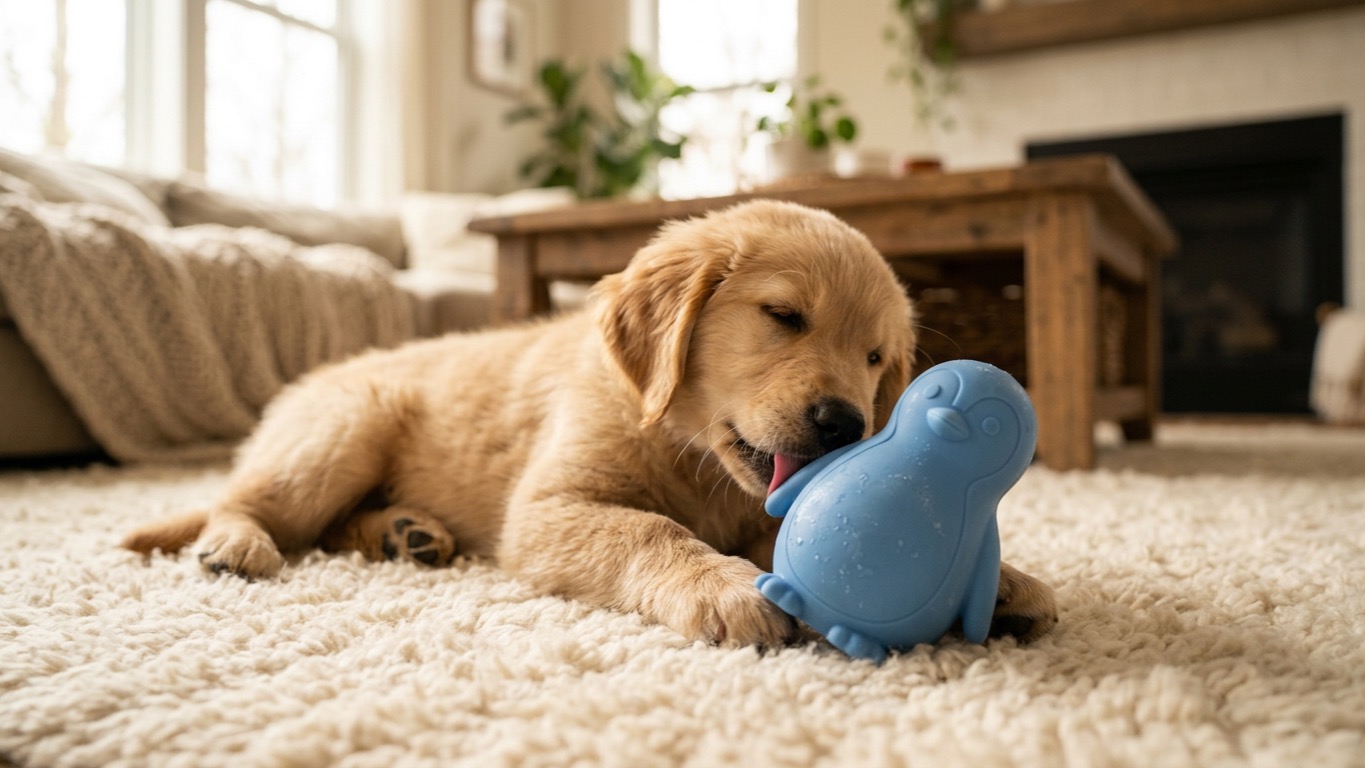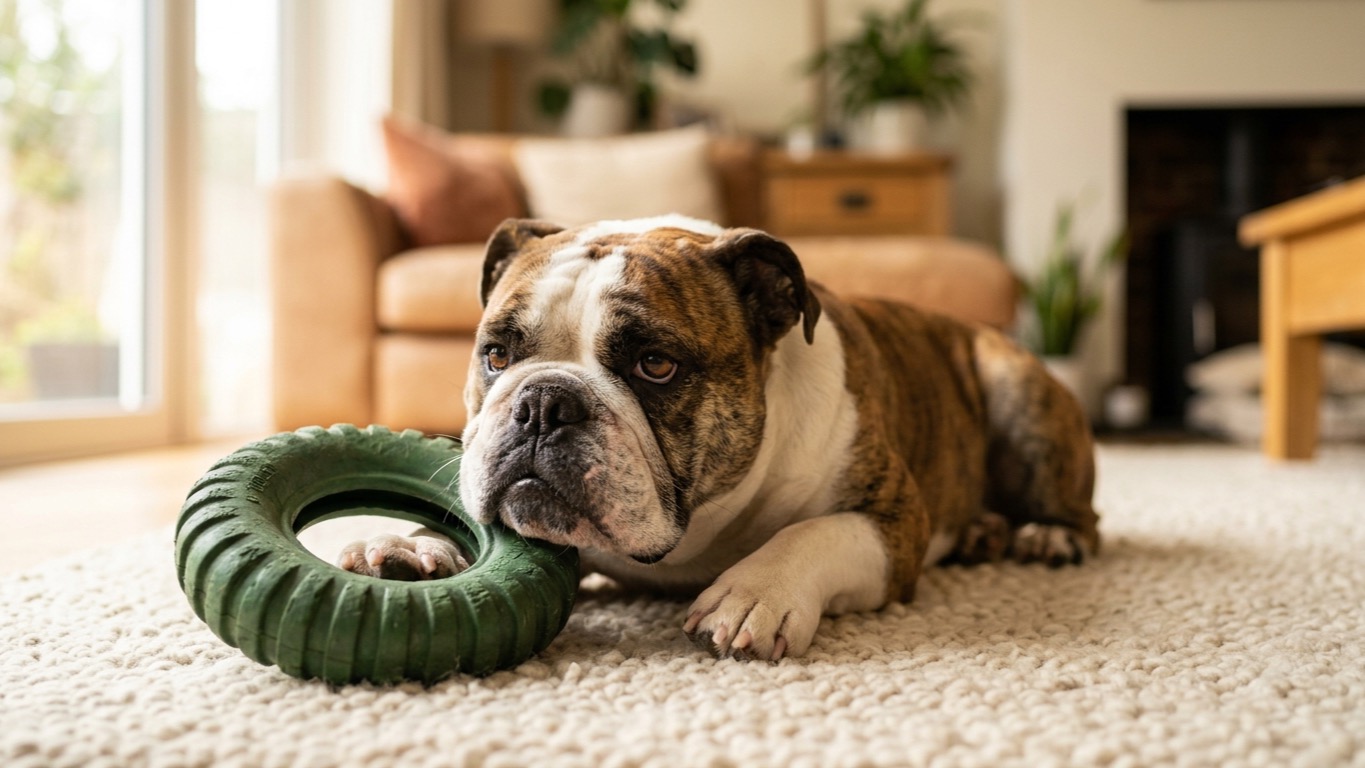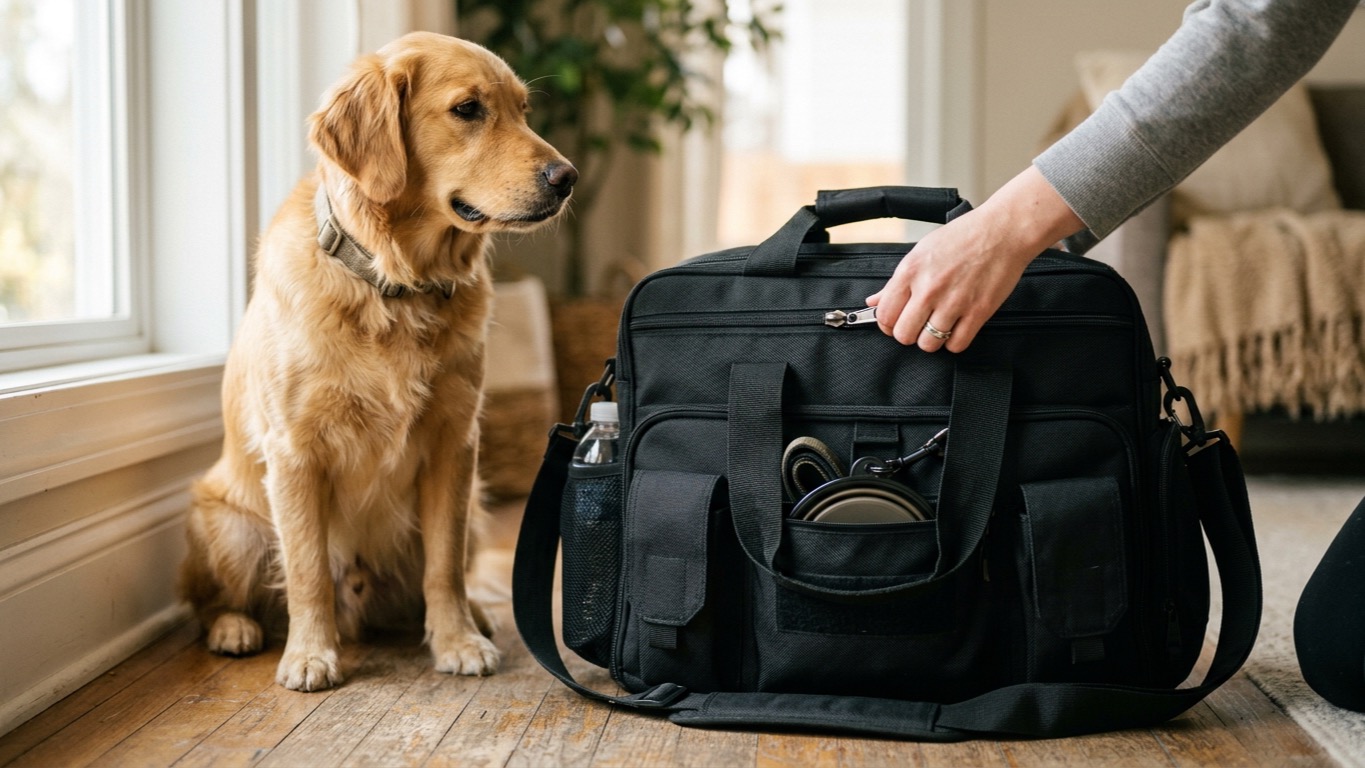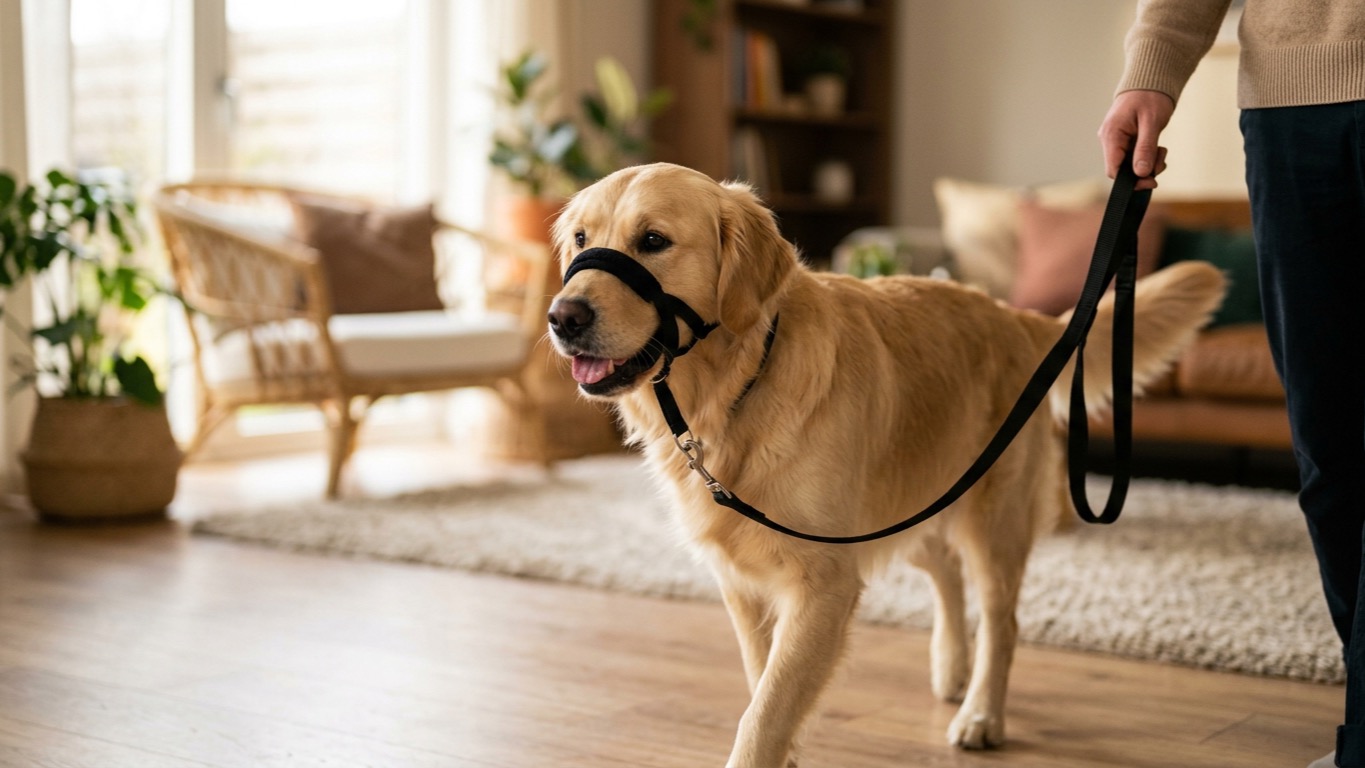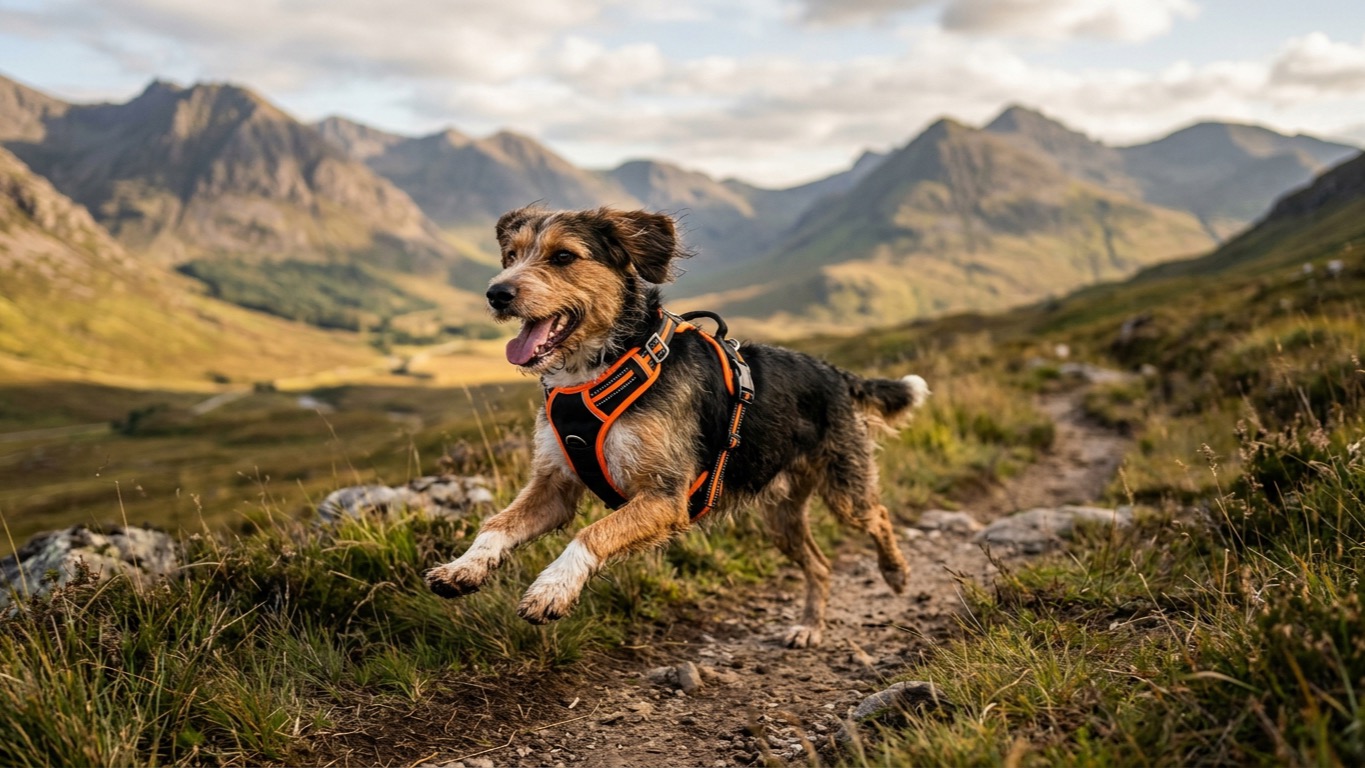
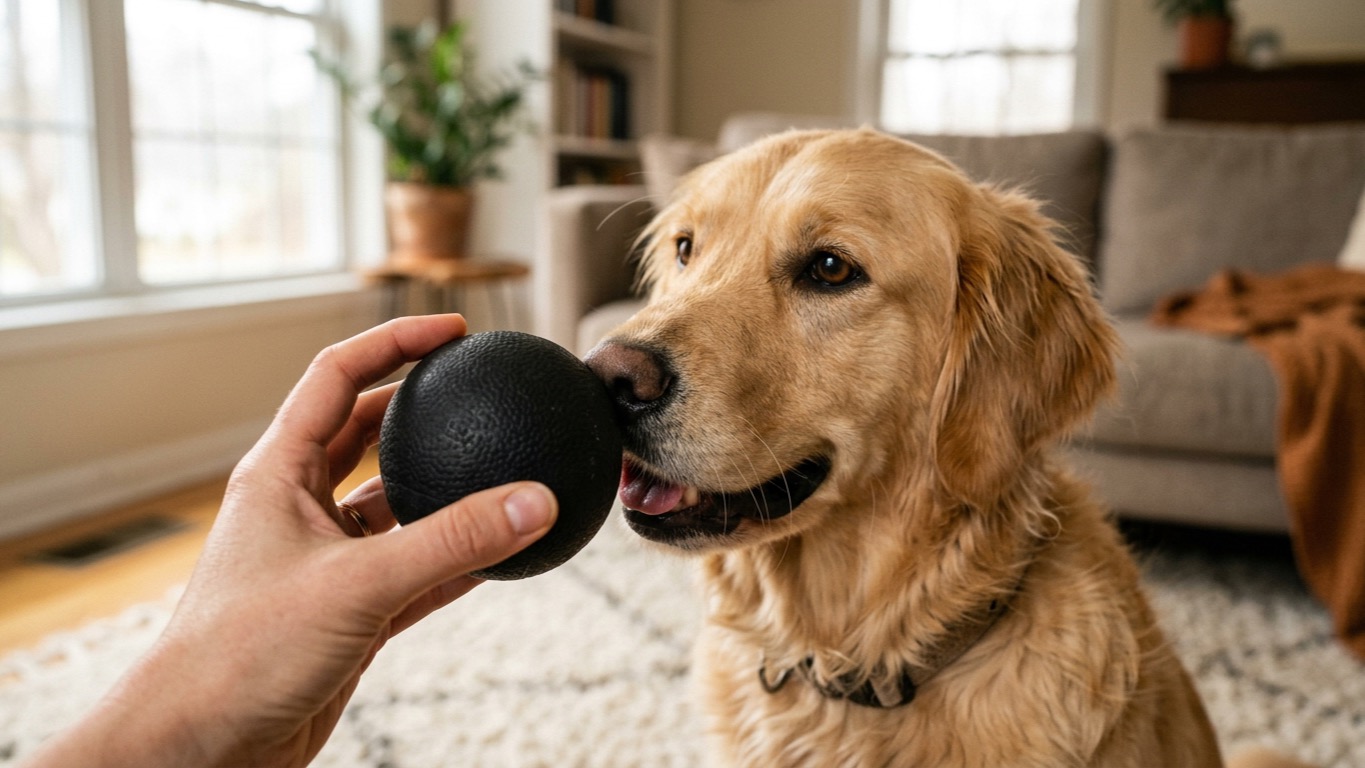

The dog toys and gear that belong in a basket this week are the printed jobs on these seven cards — Nerf Dog Tire Flyer at $8.46 when the job is a lightweight outdoor toss, Nevperish 2 Pack Dog Ball at $13.99 when you want bounce you can wipe, Nestpark Doggy Doobie at $11.95 when the job is a casual tug/chew rope, MewaJump squeaky chew at $9.99 when you want a supervised chew-plus-squeak, Dingo Gear tug at $19.22 when a handle and a second pair of hands are the session, or a TUFFY 2-pack at $25.99 / $33.99 when the job is reinforced plush, not a $5 seam that opens on day one — not a viral “lasts forever” bundle and not a KONG we do not have a card for. The We read the titles and descriptions of 7 SKUs. Listed snapshots run $8.46–$33.99 (median $13.99, a 4.02× spread). Card sum is $123.59. 2 of 7 are TUFFY plush packs. 2 of 7 are fetch objects (flyer + ball). 2 of 7 are tug-class (Nestpark rope; Dingo handle). 1 of 7 is a squeaky chew. Across the 44-listing scan, 19 of 44 (43%) led with “durable” or “aggressive chewer.” 11 of 44 (25%) were multipacks. 8 of 44 (18%) printed a squeaker. 0 of 44 printed a timed chew-through we could treat as a lab. Search results sell indestructible. The photo sells a job.
Desk pick: Outdoor toss → Nerf Flyer $8.46. Bounce fetch → Nevperish $13.99. Casual rope → Nestpark $11.95. Supervised squeak-chew → MewaJump $9.99. Handle tug → Dingo $19.22. Medium reinforced plush → TUFFY Gear Ring 2-pack $25.99. Small-mouth plush pair → TUFFY Bone + Gear Ring $33.99. A power chewer left alone with plush wants the chew aisle, not this mixed catalog.
Before you shop: (1) you can name the job (fetch, tug, plush, squeak-chew), (2) you will sit in the room for the first ten sessions, (3) pea-size chunks, a free squeaker, or long rope threads → retire, (4) vomiting, straining, or sudden appetite crash after play is a clinic, not a tougher SKU. Fail gate 4 and this checklist is how you shop past an emergency.
Related desk pages: chew toys for aggressive chewers, tug toys, puzzle toys, puppy teething toys. A flyer is not a chew. A chew is not a flyer.
Our guides are reader-supported. This article may contain affiliate links. As an Amazon Associate we may earn a commission if you buy through links, at no extra cost to you.
How to choose dog toys and gear without a ranking trophy
Name the session. A 12-minute backyard toss is not a crate babysitter. Then name the failure you are actually trying to block: a ball that dies under the sofa, a plush that rains fiber, a tug that frays into thread, or a squeaker that becomes a swallow.
- Pick a job, not a vibe. Fetch flyer, fetch ball, rope tug, handle tug, reinforced plush, squeaky chew. “Ultra durable” without a photo of the seam is a slogan.
- Match chew strength to this week, not the breed name. A 20 lb dog that disassembles plush is a power chewer. A 70 lb dog that mouths and drops is not.
- Read the supervise sentence. If you cannot stay in the room, do not buy a squeaker or a stuffed ring.
- Size the object to the muzzle. A small TUFFY pack in a giant mouth is a swallow. A large Dingo handle on a 12 lb dog is a face-full of webbing.
- Rotate. Owner-theme notes cluster on “they ignored it after two days.” This comparison does not invent a dopamine number. Habituation is still a thing.
We compared the seven cards already on this URL. We also did not pretend a Nerf flyer became a chew because both sit on a toys page.
Mechanism vs marketing
Four different objects get sold as “dog toys and gear.” This comparison treats them as four jobs. Mixing them is how an $8 flyer becomes a chew story.
| Job class | What the listing usually says | Useful when | Fail mode |
|---|---|---|---|
| Fetch flyer / disc | Outdoor, tire, toss, rubber | Open yard, running dog | Chew-through; not a tug |
| Fetch ball | Bounce, 2-pack, clean | Classic retrieve | Rolls under furniture; swallow if small |
| Rope / casual tug | Braid, doobie, light chew | Puppy tug, short sessions | Fray into thread; listing snapshot |
| Handle tug | Grip, gear, interactive | Two-ended play, training | Too much for a tiny mouth; not a solo chew |
| Reinforced plush | TUFFY, ultra durable, 2-pack | Moderate chewers who want fabric | Power jaws still open seams |
| Squeaky chew | Aggressive, squeak, chew | Supervised noise + gnaw | Squeaker frees; “aggressive” is a hope |
From the listings: “durable” appeared on more titles than “supervise.” A toughness adjective does not retire a free squeaker. A job that actually matches the photo does.
ASPCA toy-safety notes and AKC enrichment / toy guidance treat play objects as welfare tools with a retire rule, not as diagnoses. We read the labels.
Price and size — the seven cards
Listed street prices on the cards below as of the August 2026 snapshot. Confirm the seller. Prices go stale.
| Toy (card title) | Listed price | Printed job on the card | Desk enrichment role | Honest miss |
|---|---|---|---|---|
| Nerf Dog Tire Flyer Outdoor Dog Toy | $8.46 | Outdoor flyer | Budget toss | Thin-rubber chew theme |
| TUFFY® : 2 Pack Gear Ring Dog Toy: Ultra Durable Plush Toy | $25.99 | Reinforced plush pair | Medium fabric job | Still plush vs power jaws |
| TUFFY® 2 Pack Bone and Gear Ring Small Ultra Durable Plush Dog Toys | $33.99 | Small-mouth plush pair | Toy-breed fabric | Highest ticket; size-locked |
| Nevperish 2 Pack Dog Ball | $13.99 | Bounce ball pair | Wipe-clean fetch | Sofa-roll; not a chew |
| Nestpark Doggy Doobie | $11.95 | Rope / light chew | Casual tug | Fray over time |
| MewaJump Dog Squeaky Chew Toys for Aggressive Chewers | $9.99 | Squeak + chew | Supervised gnaw | Squeak dies; “aggressive” hope |
| Dingo Gear Dog Tug Toy | $19.22 | Handle tug | Two-handed session | Medium-dog theme; not solo chew |
Budget first fetch is Nerf or MewaJump. Bounce pair is Nevperish. Casual rope is Nestpark. Handle tug is Dingo. Fabric pairs are the two TUFFYs. Do not buy the $33.99 small pack for a 70 lb mouth.
Toy SKU arithmetic
| Desk equation | Dollars / count | What it actually buys |
|---|---|---|
| TUFFY small $33.99 ÷ Nerf $8.46 | 4.02× | Small reinforced plush pair vs one flyer |
| TUFFY small $33.99 − TUFFY Gear Ring $25.99 | $8.00 | Small-mouth pair vs medium pair |
| Dingo $19.22 − Nestpark $11.95 | $7.27 | Handle tug vs casual rope |
| Nevperish $13.99 − MewaJump $9.99 | $4.00 | Bounce pair vs squeak-chew |
| Nerf $8.46 + MewaJump $9.99 | $18.45 | Toss + supervised chew, $0.77 under Dingo |
| Nestpark $11.95 + Nevperish $13.99 | $25.94 | Rope + bounce, $0.05 under TUFFY Gear Ring |
| Median of 7 stickers | $13.99 | Nevperish sits on the median |
| All seven cards | $123.59 | A mixed basket, not a chew lab |
Desk toy math: Nerf $8.46 + Nestpark $11.95 + MewaJump $9.99 = $30.40 — toss, rope, squeak-chew — still $3.59 under the small TUFFY pair. TUFFY Gear Ring $25.99 is $6.77 over Dingo for fabric, not a handle. Do not buy TUFFY $33.99 as a giant-breed chew. Do not buy MewaJump $9.99 as an unsupervised “aggressive” tank.
Chew-strength worksheet for dog toys and gear
Planning bands from maker “durable / aggressive” language and owner-theme retire notes — not a dog we timed.
| Dog this week | Start object | Session target (desk) | Retire when |
|---|---|---|---|
| Never shredded a toy | Flyer or bounce ball | 8–12 min | They ignore it |
| Moderate mouth, wants fabric | TUFFY Gear Ring pair | 10–15 min supervised | Seam opens, fiber out |
| Small muzzle, wants plush | TUFFY small pair | 8–12 min | Piece smaller than a pea |
| Casual tugger | Nestpark rope | 5–10 min with a drop cue | Long threads |
| Two-ended play | Dingo handle | 5–10 min | Handle loosens; fabric tear |
| Power chewer | None of the plush unsupervised | Supervised only | Plastic / foam dust → chew aisle |
| Puppy teething | Soft rope, short reps | 5 min | See teething toys |
Front-load easy wins. A “too tough” object on day one is how toys become furniture — or a swallowed corner.
Quick picks for dog toys and gear
- Lowest ticket toss: Nerf Dog Tire Flyer — $8.46. Outdoor fetch, not a chew.
- Bounce pair: Nevperish 2 Pack — $13.99. Wipe-clean; sofa-roll is the con.
- Casual rope: Nestpark Doggy Doobie — $11.95. Light tug; fray watch.
- Supervised squeak-chew: MewaJump — $9.99. “Aggressive” is a listing word.
- Handle tug: Dingo Gear — $19.22. Two hands. Medium-dog theme.
- Medium reinforced plush: TUFFY Gear Ring 2-pack — $25.99.
- Small-mouth plush: TUFFY Bone + Gear Ring — $33.99. Do not upsize into a Lab.
Named examples of dog toys and gear — not a lab ranking
Cards below are unchanged. Desk roles and honest drawbacks are ours.
1. Nerf Dog Tire Flyer Outdoor Dog Toy
Best for: a first outdoor toss when the household has never bought a flyer
The title leads with outdoor. The job is a lightweight rubber tire that flies. Owner themes say dogs run without a heavy disc on the nose. Owner themes also say strong jaws eventually gnaw through. That is the point of an $8.46 flyer: you are allowed to retire it when the rim opens.
Desk role: budget toss. Honest miss: not a chew, not a tug, not a crate babysitter. Do not leave it with a dog whose hobby is opening objects with molars. That dog wants the chew page.
Pros: $8.46 listed; light rubber; open-yard job Cons: Chew-through theme; indoor ricochet
2. TUFFY® : 2 Pack Gear Ring Dog Toy: Ultra Durable Plush Toy
Best for: a medium mouth that wants fabric and will still be watched
TUFFY sells multiple fabric layers and a seam story. Two rings in one checkout is a rotation win: one in play, one in the wash. “Ultra durable” is the aisle adjective. Owner themes say it outlasts cheap plush and still loses to a dedicated shredder.
Desk role: medium reinforced plush. Honest miss: plush is still plush. A power chewer left alone will find the layer that opens.
Pros: $25.99; two units; seam story Cons: Not a rubber chew; price per ring is mid
3. TUFFY® 2 Pack Bone and Gear Ring Small Ultra Durable Plush Dog Toys
Best for: a small muzzle that needs a bone shape and a ring, not a Lab-size handle
This is the highest card at $33.99. You are paying for two small objects and the same TUFFY layer story in a bite-friendly size. Owner themes: compact, sturdy, steep versus a $10 squeak. That is honest. A 70 lb dog with this pack is a swallow risk, not a value story.
Desk role: small-mouth fabric pair. Honest miss: size-locked and the catalog ceiling.
Pros: Small-mouth pair; two shapes Cons: $33.99; useless (and unsafe) in a giant mouth
4. Nevperish 2 Pack Dog Ball
Best for: classic bounce fetch when you will pick the ball up from under the couch
Two balls. Bounce. Wipe-clean surface in owner themes. The round shape is the product and the complaint: it disappears under sofas. That is a living-room problem, not a material failure.
Desk role: wipe-clean fetch pair. Honest miss: not a chew; not a flyer; supervise size versus muzzle.
Pros: $13.99; two balls; easy clean Cons: Rolls away; chew-through if they stay to gnaw
5. Nestpark Doggy Doobie
Best for: a short tug or light chew when you do not need a training-handle tug
Braided rope / doobie shape. Owner themes: holds up in casual tug, gentler than hard rubber on puppy teeth, fibers fray with time. Fray is the retire rule. Long threads are a swallow story.
Desk role: casual rope. Honest miss: not a power-chew tank; not a Dingo handle.
Pros: $11.95; braid; light sessions Cons: Fray; listing snapshot risk if you keep a shredded rope
6. MewaJump Dog Squeaky Chew Toys for Aggressive Chewers
Best for: a supervised chew that still makes noise — not a crate all-day object
The title leads with aggressive chewers. The job is a squeak plus a chew surface. Owner themes: survives more bites than cheap vinyl, squeak fades when the core is reached. That fade is a retire signal, not a feature.
Desk role: supervised squeak-chew. Honest miss: “aggressive” is marketing. A free squeaker is a clinic morning.
Pros: $9.99; noise + gnaw in one Cons: Squeaker can free; not unsupervised
7. Dingo Gear Dog Tug Toy
Best for: a two-ended tug when a person holds the handle and the dog holds the other end
Handle plus fabric. Owner themes: families with more than one dog use it for structured play; less suitable as a solo chew for large, powerful jaws. That is the job split. A tug with a human is a tug-aisle object. A chew left in a crate is a different aisle.
Desk role: handle tug. Honest miss: medium-dog theme; not a rubber tank.
Pros: $19.22; grip; interactive Cons: Needs a person; fabric still tears
Comparison: dog toys and gear cards at a glance
| Toy | Best for | Approx. price | Key strength | Watch-out |
|---|---|---|---|---|
| Nerf Flyer | Outdoor toss | $8.46 | Light rubber | Chew-through |
| TUFFY Gear Ring 2-pack | Medium plush | $25.99 | Two rings | Still fabric |
| TUFFY small 2-pack | Small muzzle | $33.99 | Size-right pair | Giant-mouth swallow |
| Nevperish balls | Bounce fetch | $13.99 | Two balls | Sofa-roll |
| Nestpark Doobie | Casual tug | $11.95 | Braid | Fray / thread |
| MewaJump squeak | Supervised chew | $9.99 | Noise + gnaw | Free squeaker |
| Dingo tug | Handle play | $19.22 | Grip | Needs a person |
Want the category without a podium? Browse dog toys and gear.
Price bands for dog toys and gear
Budget (under $12). Nerf $8.46, MewaJump $9.99, Nestpark $11.95. You get one job. You often do not get a second unit. Fine for week one.
Mid ($12–$20). Nevperish $13.99, Dingo $19.22. You start paying for a pair of balls or a handle.
Pack / fabric ($25–$34). The two TUFFYs. You are buying layers and a second object. You are not buying a rubber tank.
Named Outward Hound puzzles, KONG Classics, and Coachi tugs live in the wider market. They are not the seven cards on this URL. If you want that class, search the live carton and keep the same job rules: supervise, retire, rotate.
In the 44-listing scan, 26 of 44 sat under $20. Price does not predict chew-through time. Job match and supervision do.
Safety desk for dog toys and gear
Play objects are supervised game tools. They are not crate babysitters unless you already trust that object with this dog.
| Risk | What listings hide | Desk rule |
|---|---|---|
| Swallowing a squeaker | “Aggressive chewer” without a retire line | If the core is open, the session ends |
| Rope thread | “Gentle on teeth” | Long fibers → bin |
| Plush fiber | “Ultra durable” | Seam open → wash or retire |
| Too-small ball | 2-pack without a diameter | If it fits past the last molar, too small |
| Flyer chew | Outdoor photo, indoor jaws | Toss is the job; gnaw is a different SKU |
| Calories from stuffed extras | Not on these seven cards | Count treats as the meal if you add food |
AVMA pet-safety pages treat foreign-body risk as a clinic problem. We are not that clinic. If the dog is vomiting, straining, or suddenly refuses food after a play session, stop shopping.
Rotation calendar — why the same object dies
Owner-theme notes and the Index listing language agree on one boring fact: dogs habituate. A weekly swap is cheaper than a “tougher” adjective.
| Day | Object | Why |
|---|---|---|
| Mon / Thu | Flyer or bounce ball | Body, outdoor or hallway |
| Tue / Fri | Rope or handle tug | Social play, drop cue |
| Wed | Plush ring (if they still have seams) | Fabric day, short |
| Sat | Squeak-chew supervised | Noise + gnaw |
| Sun | Off or a walk-only day | Habituation break |
Put yesterday’s toy in a closet. Out of sight is the whole trick. Three cheap objects beat one “indestructible” tile left on the floor.
How dog toys and gear fit a real day
Use play as part of a day, not as a substitute for a walk or for veterinary care. AKC and ASPCA pages treat movement and enrichment as layers. A frantic dog after a “failed” toy still needs a walk and, if the pattern is new, a clinic conversation.
For fast fetchers, start with the Nerf or Nevperish so the session moves, then add a tug with a drop cue. For fabric fans, start with one TUFFY ring and keep the spare in the wash. For power jaws, skip plush when you cannot watch — that is the chew aisle, not a hope.
Job split: fetch, tug, plush, squeak
Dog toys and gear is a different SKU for different minutes.
| Job | Desk first pick on this page | Why | Skip |
|---|---|---|---|
| Prove they will fetch | Nerf Flyer | $8.46 regret is small | TUFFY $34 as a toss |
| Bounce retrieve | Nevperish | Two balls | Using it as a chew |
| Casual tug | Nestpark | Braid, short reps | Long shredded rope |
| Handle / two-ended | Dingo | Grip | Solo crate chew |
| Medium fabric | TUFFY Gear Ring | Two rings | Unsupervised shredder |
| Small fabric | TUFFY small | Size-right | Lab mouth |
| Supervised squeak | MewaJump | Noise + gnaw | Alone-time babysitter |
How we compiled dog toys and gear (desk method)
We are a research desk. The method is boring on purpose.
- Cards first. The seven marketplace tiles on this URL are the SKUs we are allowed to show.
- Label signals. For the 44 listings we read only words a shopper can see without buying: durable, squeak, 2-pack, tug, flyer.
- Job split. Flyer, ball, rope, handle, plush, squeak-chew are different objects.
- Welfare copy, not clinic advice. ASPCA safety and AKC play notes are linked as public guidance.
If a future listing changes MewaJump’s title from “aggressive chewers” to “gentle,” the Index note on this URL still stands until we re-fetch. Aggressive on a squeaky chew is usually a hope.
Breed and household matrix — not a breed trophy
| Household | Object first | Size | Watch |
|---|---|---|---|
| Puppy, new to play | Nestpark or Nerf | Small / light | Swallow; sit in the room |
| Adult Lab, vacuum fetcher | Nerf or Nevperish | Large enough | Not the small TUFFY |
| Apartment, tile | Nevperish or TUFFY ring | Any | Flyer ricochet; squeak neighbors |
| Multi-dog | Dingo with rules, or two objects | Split | Resource guarding → separate rooms |
| Power chewer | Supervised MewaJump or chew aisle | N/A | Plush is a snack |
| Toy breed | TUFFY small pair | Small | Dingo handle is a face-full |
| Senior, stiff | Short fetch, not a sprint flyer | Soft | No marathon toss on slick floors |
Herding and working mixes show up in owner “they destroy everything” themes. That is not a desk IQ test. It is a job-match and supervise problem. Toy breeds show up in “the piece is bigger than the dog” themes. Match the object to the muzzle.
Cleaning dog toys and gear
A toy that smells is a toy they still want — for the wrong reason. Owner-theme mold lives in rope cores and plush layers.
- Wipe rubber flyers and balls after muddy fetches. Warm soapy water, air-dry.
- TUFFY fabric: follow the maker wash line on this carton. Dry fully. Damp layers are a smell factory.
- Rope: wash when greasy. Retire when threads go long.
- Squeak-chew: if you can see the squeaker, the object is in retire territory even if you rinse it.
Kitchen hygiene is still kitchen hygiene.
Related objects this page is not
A flyer is not a tug. A puzzle is a lid or a snuffle. A carrot toy is a shape. A KONG-style stuffable is meal geometry plus rubber — not a card here. If you wanted a 20-minute independent chew, buy a rubber object you already trust from the chew aisle. If you wanted a 10-minute backyard toss, buy the Nerf and put the TUFFY away.
Walk gear — harness, leash, ID — is a different checkout. This catalog is play objects. Fitted walk hardware still comes first for a new household. A basket of seven toys does not replace a harness that fits.
Frequently asked questions about dog toys and gear
What dog toys and gear should a beginner buy first?
One fetch object (Nerf $8.46 or Nevperish $13.99) plus you in the yard or hallway, and one tug (Nestpark $11.95) with a drop cue. Skip the $33.99 small TUFFY unless the dog is actually small. Skip a 20-toy mystery box until you know whether they shred fabric.
How often should I rotate dog toys and gear?
Weekly is the desk default. Same object daily is how interest collapses. Two or three objects in a closet beat seven on the floor.
Can dog toys and gear replace a walk?
No. Play is extra. AKC and ASPCA pages treat mental and physical work as part of a day, not as a substitute for movement or veterinary care.
Are these dog toys and gear safe for puppies?
Only with sit-in-the-room rules and pieces that cannot be swallowed. Puppy jaws plus a free squeaker is a foreign-body story. Size the object to the muzzle. See teething toys.
Do squeaky chews count as lasting dog toys and gear?
They count as a supervised noise-plus-gnaw job. They do not count as an unsupervised tank. When the squeak dies or the core opens, retire.
How do I introduce a new toy so the dog does not shred it in one minute?
Short first session. Trade for a treat before they settle into destruction. End while they still want one more throw. A 40-minute “test” is how seams open.
Can I leave dog toys and gear with a dog who is home alone?
Not if they chew fabric, rope, or squeakers. Alone time is a rubber object you already trust, a camera, or a person — not a $10 “aggressive” title you hope is indestructible.
Why does this page not recommend a KONG Classic?
Because that is not a catalog tile on this URL. Treat off-card names as a different search. The seven cards are the SKUs we can show.
Will more dog toys and gear fix boredom barking?
They can occupy a food- or play-motivated dog for minutes. They do not treat an anxiety diagnosis. Sudden panic, destruction at the door, or self-injury is a veterinarian / qualified behavior professional question.
What size dog toys and gear should I buy?
Muzzle and weight, not the breed word. Small TUFFY is for small mouths. Dingo and Nerf lean medium. A ball that can pass the last molar is too small.
Durability tiers without a fake score
We do not print 4.8/5 stars
| Tier | This catalog | What you are buying |
|---|---|---|
| Proof toss | Nerf Flyer | Will they fetch |
| Bounce pair | Nevperish | Two balls, wipe-clean |
| Casual rope | Nestpark | Short tug |
| Supervised squeak | MewaJump | Noise + gnaw |
| Handle tug | Dingo | Two-ended play |
| Medium fabric | TUFFY Gear Ring | Layers, two rings |
| Small fabric | TUFFY small | Size-locked pair |
Multi-dog households and the “one toy” failure
Two dogs and one Dingo is a fight waiting on a hallway. Give two jobs or run sequential turns. Resource guarding is a trainer / clinic conversation, not a second $8 flyer you throw into the pile. If one dog is a shredder and one is a gentle mouth, the shredder does not get unsupervised access to the TUFFY pair.
Children in the house need the same retire rule. A kid who “lets the dog have the squeaker” is how cores get swallowed. Adults run the session. The dog does not run checkout.
Apartments, neighbors, and the squeak tax
MewaJump is a noise product. Tile plus a flyer is a ricochet product. If the downstairs neighbor already hates you, Nevperish in the hallway and a tug on a rug are the quieter pair. Nerf outdoors. That is courtesy, not a ranking.
Outdoor fetch without a backyard
A parking-lot toss is a car problem and a recall problem. If you cannot name a fenced area, the flyer stays in the closet. A hallway bounce with Nevperish is the apartment substitute. A long-line at a quiet park is a leash conversation — see how to stop pulling if the walk is already a fight.
Water, lakes, and “it floats”
None of these seven cards print a reliable float-and-retrieve protocol we will treat as a lab. If you take a ball to a lake, you are on this dog’s swim skill and your recall. A sinking object is a different emergency than a chewed rim.
Heat, cars, and left-behind toys
A rubber flyer on a July dashboard is a melt story. A rope in a wet crate is a smell story. Store dry. A parked car with a dog and a toy is still a parked-car heat story. AVMA treats a closed cabin as a medical risk. This page is play hardware.
Cost per year, not cost per listing
Nerf $8.46 plus Nestpark $11.95 is one honest starter stack ($20.41). All seven at $123.59 is a drawer. Buy the job. Replace when the retire rule hits. A $9.99 squeak you bin in a week is $9.99. A $25.99 TUFFY pair you rotate and wash for months is the cheaper fabric story if the dog is a moderate mouth.
Second-hand toys and unknown chew history
A used plush with a mystery seam is a used infant seat problem: if you cannot name the prior life, skip it. Buy new fabric and new squeakers for a living dog. A used rubber flyer with a cracked rim is already retired.
What “gear” means on this URL
The target phrase is dog toys and gear. On this catalog, gear is play gear: rings, tugs, flyers, balls. It is not a tactical vest and it is not a harness. If you came for walk hardware, leave this page. If you came for a mixed toy basket with honest jobs, stay.
Printable shopping checklist
- Name the job: fetch / tug / plush / squeak-chew.
- Weigh the dog. Measure the muzzle vs the photo.
- Decide if you will be in the room.
- Pick one SKU from the desk pick line.
- Write the retire rule on a note: pea chunk, free squeaker, long thread.
- Put the receipt and the date on the note so you can see the pattern in three weeks.
How we would shop this card set in one hour
Open the seven cards. Ignore “best” in any title. If the dog fetches, put Nerf and Nevperish in the shortlist and pick by yard vs hallway. If the dog tugs, put Nestpark and Dingo in the shortlist and pick by whether you want a handle. If the dog wants fabric and you will watch, pick the TUFFY that matches mouth size. If the listing says aggressive and you will not watch, close the tab and open the chew aisle. Checkout one job. Not seven.
Desk limitations, restated
We compiled seven cards and a 44-listing scan. We linked ASPCA and AKC as public rails. Your dog’s veterinarian still owns foreign-body and pain questions.
Frequently asked follow-ups on dog toys and gear
Is a 2-pack better value than one toy?
Only if you will rotate or wash. Nevperish at $13.99 is two balls. TUFFY at $25.99 is two rings. Eco-style “two for the price of one” dies if both sit in the same basket every day.
Should I buy the small TUFFY for a puppy who will grow?
No. Buy today’s muzzle. An oversized object is a choke. Recheck in four weeks. A second checkout is cheaper than a swallowed corner.
Does Dingo Gear replace a training class?
No. A handle tug is a play object. Loose-leash and drop-cue work still need a plan — and sometimes a qualified trainer. We are not that trainer.
If a listing title changes, this comparison changes. Contact if a card is stale.