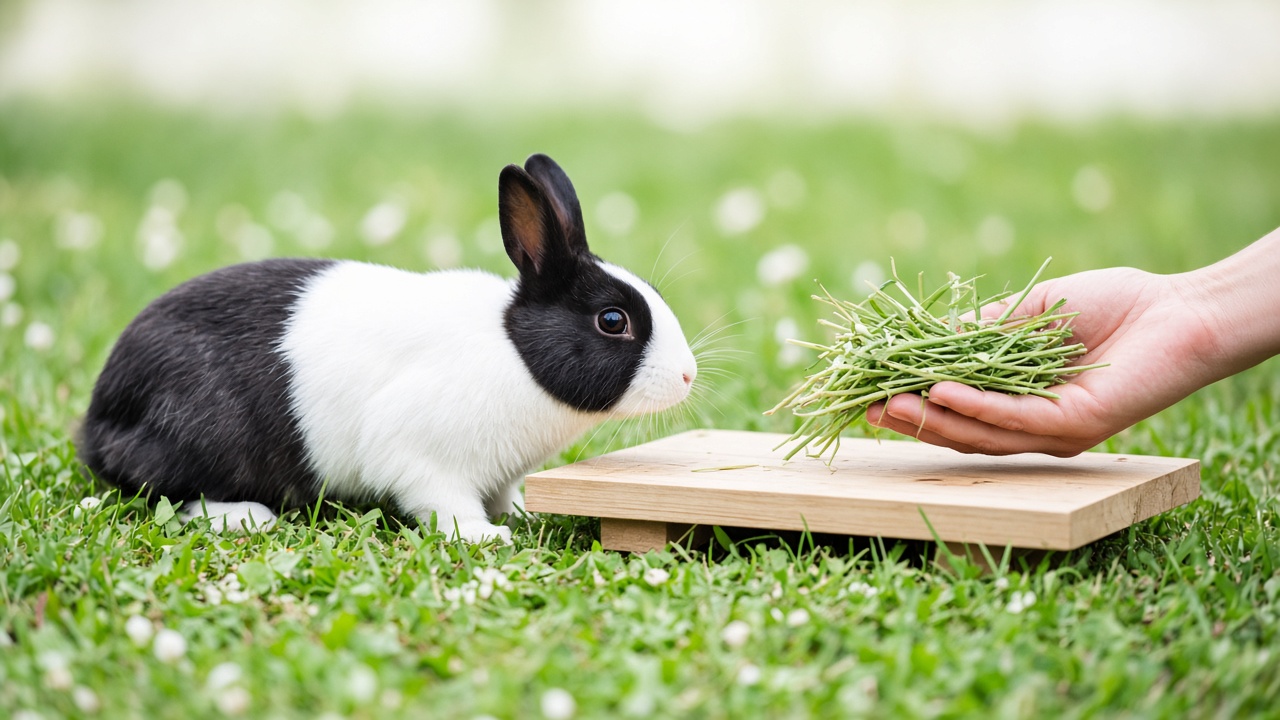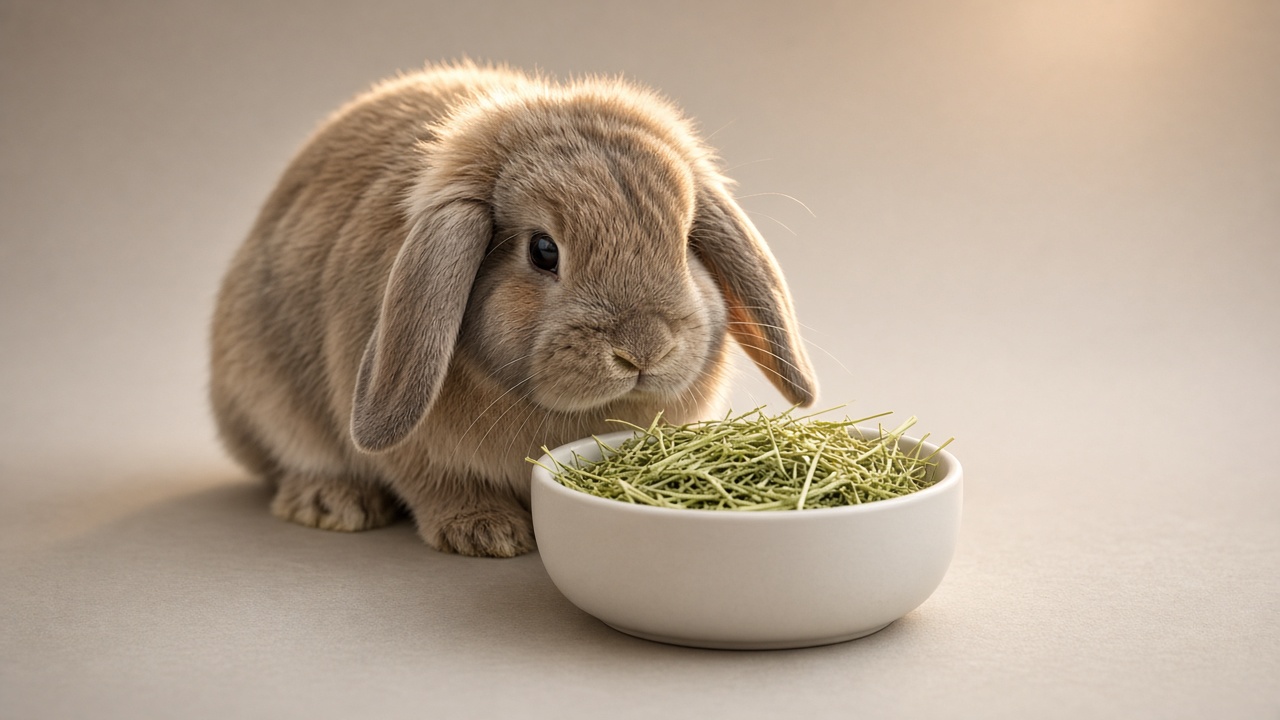
Quick answer: A lop-eared bunny is a domestic rabbit whose pinnae hang down. Plan care around ear checks, a solid floor, and unlimited grass hay. Size the pen and pellet cup to the breed’s ARBA weight class.
Lop-eared rabbits showed more ear-canal abnormalities than upright-eared rabbits in a 435-rabbit Royal Veterinary College field study. This page is a research-desk brief on ARBA lop breeds, published housing rules, and pellet labels.
Selection rule: We covered only the five ARBA-recognized lop breeds. Products had to list a guaranteed analysis or interior dimensions on a current maker page. Mixed-breed “pet-store lops,” seed-and-fruit muesli, and unsized hutches stayed out.
Our research team compared those labels with ARBA cage tables and House Rabbit Society diet numbers. That comparison is the Pinna-Floor-Fiber Rule used below.
Check the ears. Give a solid floor larger than a rest cage. Keep grass hay in front of the rabbit all day.
What a lop-eared bunny is
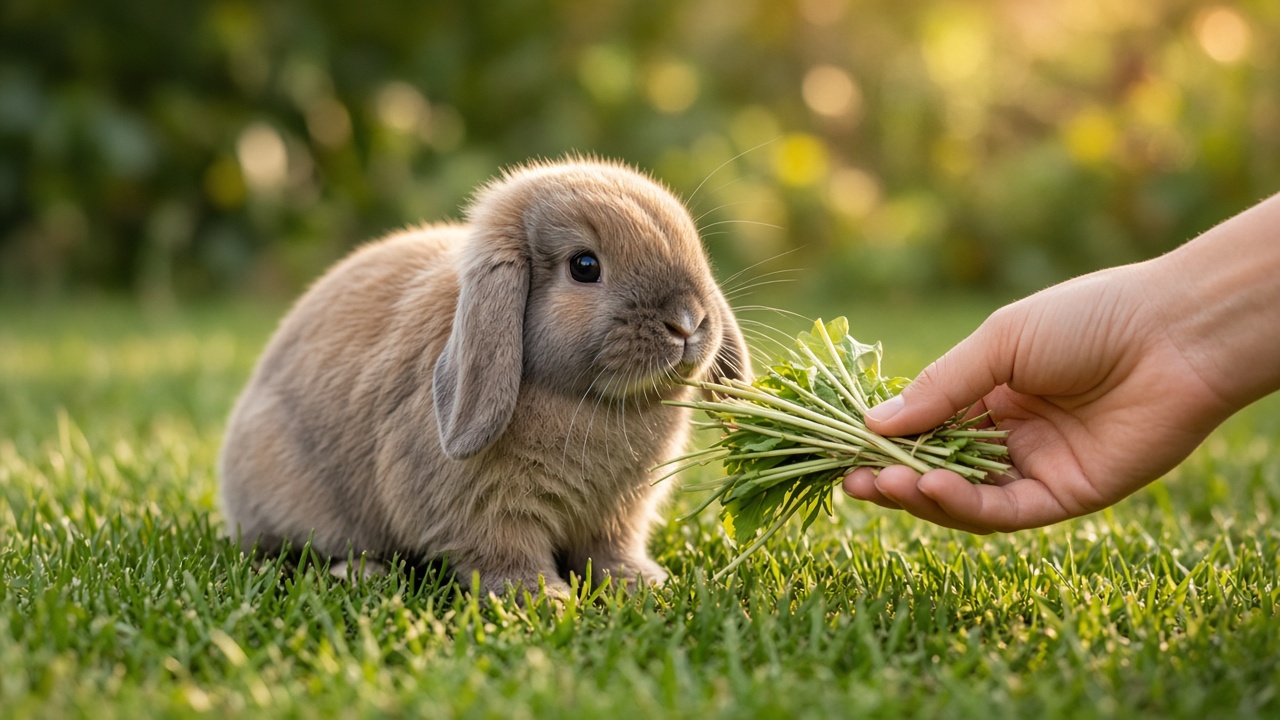
A lop-eared bunny is not one breed. It is a pinna shape. The ear folds at the base and hangs beside the head.
The American Rabbit Breeders Association lists five recognized lop breeds. Holland Lop and American Fuzzy Lop each carry a 4-pound maximum. Mini Lop carries a 6.5-pound maximum.
English Lop and French Lop carry no senior maximum. ARBA calls English Lops the longest-eared rabbit breed.
ARBA recognized the Holland Lop in 1979. It still calls the breed one of its five most popular. ARBA recognized the Mini Lop in 1980.
ARBA recognized the American Fuzzy Lop in 1989. French Lops reached the United States in 1971, per ARBA.
A 4-pound Holland and a French Lop above 11.9 pounds do not share one ARBA floor-space row. Weight class drives cage math.
Ear health from two published studies
Floppy pinnae change airflow. Wax and discharge leave the canal less easily than they do on an erect ear.
The Royal Veterinary College reported a field study of 435 pedigree rabbits. Assistants Maria Jackson and Michaela Betts examined them at British Rabbit Council shows and studs. The work ran from October 2023 through February 2024.
The team compared 49 breeds with an otoscope. Lop-eared rabbits had higher scores or odds on 9 of 11 ear abnormalities. Those included canal stenosis and abnormal canal color.
Heavier rabbits also showed more redness, narrowing, and flaky discharge. Short-skulled rabbits had narrower canals.
Maria Jackson led the Royal Veterinary College study. She named extra scratching, head shaking, lethargy, and withdrawal as watch signs.
A separate PLOS One owner survey used 551 valid UK responses. Owners reported a vet-indicated ear problem in 21.2% of rabbits. At least one ear problem appeared in 28.5% of rabbits with complete data.
About 24.7% of lop-eared rabbits had a vet-indicated ear problem. The erect-eared share was 9.8%. Age raised those reports only in the lop group.
That survey also found lop-eared rabbits about 19 times more likely to be reported as hearing impaired. They were 5.5 times more likely to have an ear problem that reduced quality of life. This desk did not repeat those exams.
What an owner can look at without tools
Look at the inner pinna in good light once a week. Note odor, wetness, crust, redness, or a new tilt. Do not push cotton swabs down the canal.
Head tilt, circling, or a sudden drop in appetite is not a home-care problem. Those signs need a rabbit-experienced clinician. We are a research desk, not a clinic.
Housing that fits ears and feet
ARBA’s 2019 care recommendations adapt Animal Welfare Act tables. Interior height is 14 inches for every weaned weight class. Floor space scales with body weight.
Rabbits under 4.4 pounds need 1.5 square feet. That row includes Holland Lop and American Fuzzy Lop at their 4-pound caps. Rabbits from 4.4 to 8.8 pounds need 3.0 square feet.
Mini Lops at 6.5 pounds sit in that middle row. Rabbits above 11.9 pounds need 5.0 square feet. English Lops and French Lops land there when they exceed that weight.
ARBA counts only open floor. Dishes that sit on the floor get subtracted. Side-mounted bottles do not.
Those figures are regulatory minimums for one weaned rabbit. They are not a house-rabbit living plan. House Rabbit Society treats a cage as a bedroom, not a home.
It names a 4-by-4-foot exercise pen as an ideal base for most rabbits. That is 16 square feet. It also asks for 4 or more hours of cardiovascular play each day.
Our research team divided those published areas. The 16-square-foot pen is about 10.7 times the ARBA 1.5-square-foot Holland row. It is about 5.3 times the 3.0-square-foot Mini Lop row.
It is 3.2 times the 5.0-square-foot giant-lop row. A legal minimum is not a daily living space.
Prevue Pet Products lists the Universal Small Animal Home 528 at 32-1/2 inches long by 19 inches wide. Height is 17-1/2 inches. Wire spacing is 3/8 inch.
The plastic base is 6-1/4 inches deep. Multiplying the maker’s length and width gives about 4.29 square feet of footprint. That cage clears ARBA’s 14-inch height.
It still falls far short of a 16-square-foot pen. Use it as a rest box only if the rabbit has a much larger daily run.
ARBA warns that some animals need a solid floor or a resting board. It names sore hocks as the reason. Give compact lops a padded solid surface for most of the day.
ARBA’s ideal temperature band is 55 to 70°F. The same document says rabbits do not do well above 85°F. Shelter from rain, snow, draft, and direct sun is required outdoors.
House Rabbit Society wants the base in a shared room. It lists a hide, a litter box, a water bowl, and a hay feeder as essentials.
Diet numbers you can check on a bag
House Rabbit Society sets an adult plan for rabbits 1 to 5 years old. Hay is unlimited. Vegetables start at 2 cups chopped greens per 6 pounds of body weight.
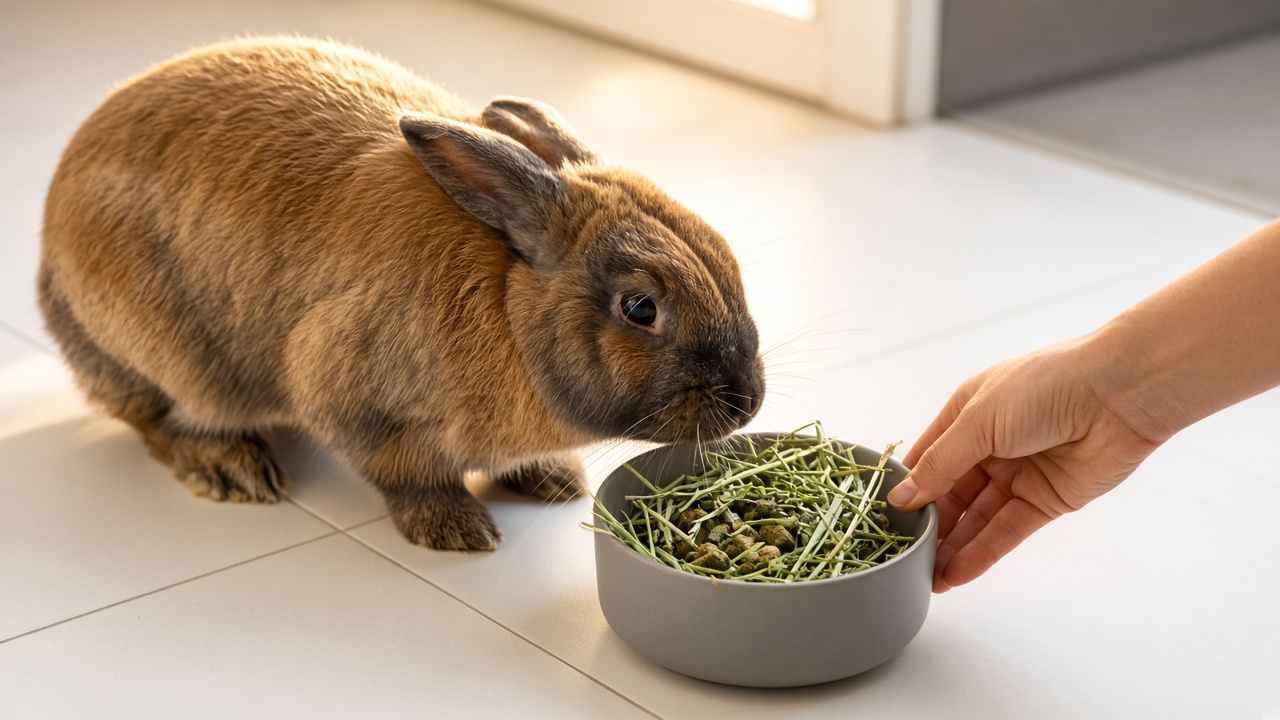
Pellets are 1/4 cup per 6 pounds. Fruit stays sparse. The same page wants pellet fiber at 18% minimum.
It rejects mixes with fruit, seeds, nuts, corn, or yogurt drops. Alfalfa hay is for young rabbits and nursing does. Typical adults stay on grass hay.
The Merck Veterinary Manual’s pet-owner diet page uses different cup math. It puts grass hay at about 85 to 90% of the diet. It lists timothy pellets at about 1/4 cup per 5 pounds.
Fresh vegetables are about 1 cup per 2 pounds. Fruit is an occasional treat. Merck also tells owners to skip alfalfa-based pellets for adults that are not pregnant or nursing.
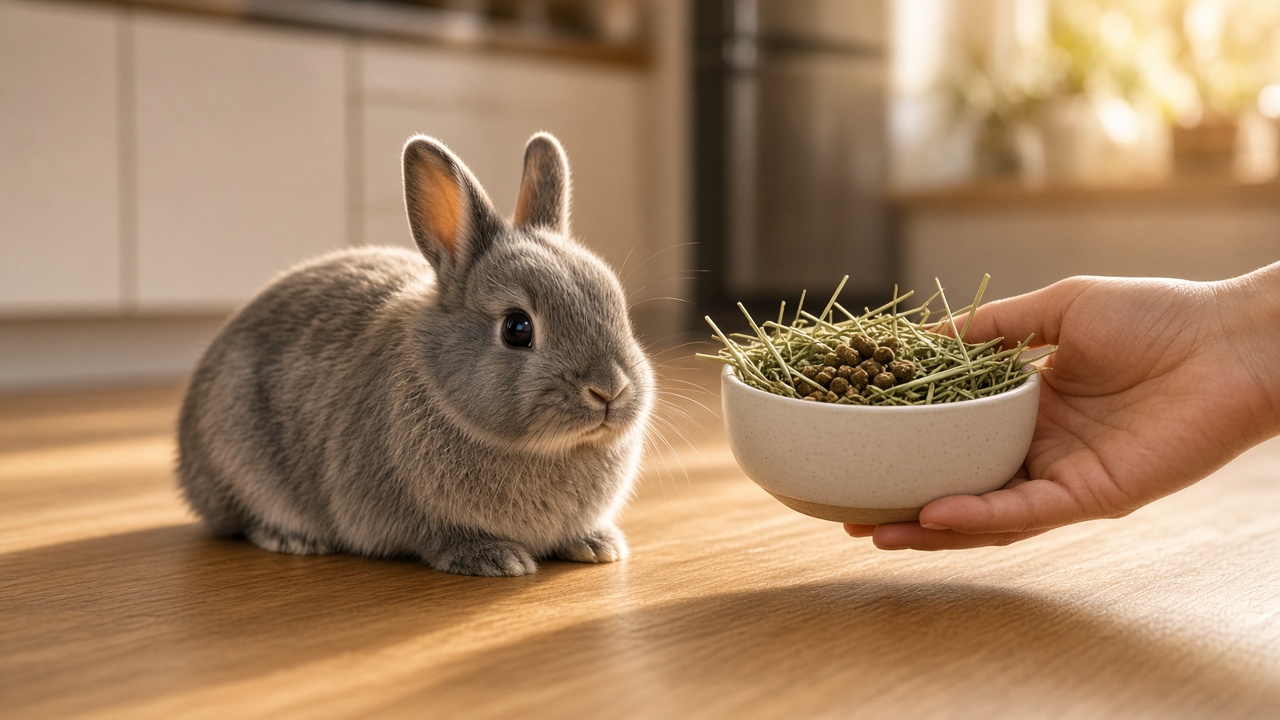
Scale those cups to ARBA weight caps. A 4-pound Holland Lop is two-thirds of House Rabbit Society’s 6-pound pellet unit. That is about 2.7 tablespoons on that page’s ratio.
The same rabbit is four-fifths of Merck’s 5-pound unit. That is about 3.2 tablespoons. A 6.5-pound Mini Lop is just over one House Rabbit Society pellet unit.
Oxbow Animal Health prints a different cup table on Essentials Adult Rabbit Food. Rabbits 1 to 4 pounds get 1/8 cup daily. Rabbits 4 to 8 pounds get 1/4 to 1/3 cup.
Those portions sit on top of unlimited grass hay. A Holland at the 4-pound cap sits on the line between those two rows. Watch body condition, not only the cup.
Oxbow lists crude protein at 14.00% minimum. Crude fiber is 25.00 to 29.00%. Moisture is 10.00% maximum.
Calcium is 0.35 to 0.75%. Vitamin A is 10,000 IU/kg minimum. The first ingredient is timothy grass meal.
Supreme Petfoods lists Science Selective Adult Rabbit Food for rabbits from 20 weeks. Crude protein is 12.5% minimum on the U.S. guaranteed analysis.
Crude fiber is 21.5% minimum and 28.5% maximum. Moisture is 11.0% maximum.
Calcium is 0.3 to 1.2%. A typical 5.5-pound adult gets about 2 to 2.5 ounces per day, per that page.
Comparing those two labels, Oxbow’s calcium ceiling is 0.75%. Science Selective’s calcium ceiling is 1.2%. That is a 0.45-point gap on the maximum.
Science Selective’s first listed ingredient is alfalfa meal pellets. Merck’s adult alfalfa warning is why that line matters for a mature lop.
Oxbow Western Timothy Hay lists crude protein at 7.00% minimum. Crude fiber is 32.00% maximum. Moisture is 15.00% maximum.
The only ingredient is timothy grass hay. Merck’s 85 to 90% hay range treats this form as the main food. It is not a garnish.
Products we compared on published attributes
The table is not a ranking. It holds four items sourced from current maker pages.
| Product | Type | Protein (min) | Fiber on label | Other listed spec |
|---|---|---|---|---|
| Oxbow Essentials Adult Rabbit Food | Pellet | 14.00% | 25.00–29.00% | Calcium 0.35–0.75%; 1–4 lb rabbits, 1/8 cup daily |
| Science Selective Adult Rabbit Food | Extruded nugget | 12.5% | 21.5–28.5% | Calcium 0.3–1.2%; 5.5 lb rabbit, 2–2.5 oz daily |
| Oxbow Western Timothy Hay | Loose grass hay | 7.00% | 32.00% max | Moisture 15.00% max; ingredient is timothy grass hay |
| Prevue Universal Small Animal Home 528 | Indoor cage | — | — | 32-1/2" L × 19" W × 17-1/2" H; 3/8" wire; 6-1/4" base |
Both pellet lines clear House Rabbit Society’s 18% fiber floor on their minimums. Oxbow’s 25.00% minimum sits 7 points above that floor. Science Selective’s 21.5% minimum sits 3.5 points above it.
The cage row exists to stop a common shopping error. A 4.29-square-foot footprint is not a 16-square-foot life. Pair any rest cage with a pen or a rabbit-proofed room.
A daily routine that matches the studies
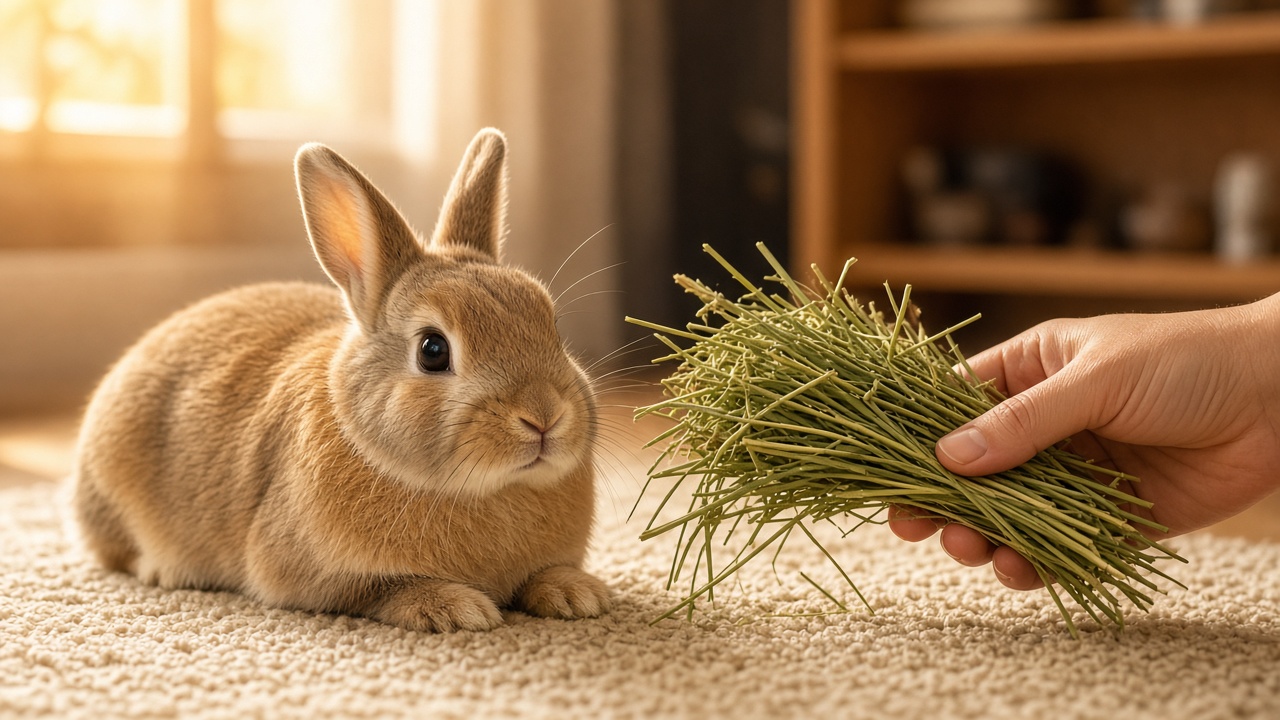
Keep hay in the litter box or a feeder so the pile never hits empty. Replace soiled hay daily. ARBA says contact bedding should change at least weekly.
Open feed should stay in closed containers. Bags older than six months should not be used, per that ARBA document. Measure pellets once a day so a skipped meal is obvious.
A lop that stops eating is an urgent patient. Wash leafy greens. House Rabbit Society asks for at least two minutes in a bowl.
Change that wash water several times. The stated reason is rabbit hemorrhagic disease virus type 2.
Check both ears when you scoop the box. Write down odor or tilt if anything looks new. Start new greens slowly.
Do not house intact adults together unless you accept surprise litters. ARBA says rabbits reach sexual maturity between 4 and 6 months.
Two compatible rabbits still each need the floor space in ARBA’s table. Group housing is allowed only when that per-animal minimum is met. ARBA also says group housing is not ideal.
FAQ
How many lop breeds does ARBA actually recognize?
Five. Holland Lop, Mini Lop, American Fuzzy Lop, English Lop, and French Lop appear on ARBA breed pages. Holland Lop and American Fuzzy Lop stop at 4 pounds.
Mini Lop stops at 6.5 pounds. English Lop and French Lop have no senior maximum.
How often should I look in a lop’s ears?
Once a week is a practical home interval. The Royal Veterinary College study found hidden canal changes even in rabbits that looked well at a show. Daily watching for head shaking or scratching still helps.
Do not put drops in a dirty canal unless a clinician directed that product.
Is a pet-store cage enough for a Holland Lop?
ARBA’s weaned minimum for a rabbit under 4.4 pounds is 1.5 square feet and 14 inches of height. The Prevue 528 footprint is about 4.29 square feet, so it clears that floor number. House Rabbit Society still wants a 4-by-4-foot pen plus 4 hours of real play.
Treat that cage as a rest space.
How many pellets does a 4-pound Holland Lop get?
Oxbow’s table says 1/8 cup for rabbits 1 to 4 pounds, plus unlimited hay. House Rabbit Society’s 1/4 cup per 6 pounds scales to about 2.7 tablespoons at 4 pounds.
Merck’s 1/4 cup per 5 pounds scales to about 3.2 tablespoons. Use one system and watch body condition.
Do floppy ears mean a lop cannot hear?
Not automatically. The PLOS One survey found lop-eared rabbits about 19 times more likely to be reported as hearing impaired. That is a risk finding, not a diagnosis for every pet.
Sudden non-response to sound is a reason to book an exam.
Can two lop-eared rabbits share one pen?
Only if each rabbit still has the ARBA floor area for its weight. A pair of 4-pound Hollands would need at least 3.0 square feet on the ARBA table. A 16-square-foot pen is the more realistic indoor base.
Unneutered pairs add pregnancy risk.