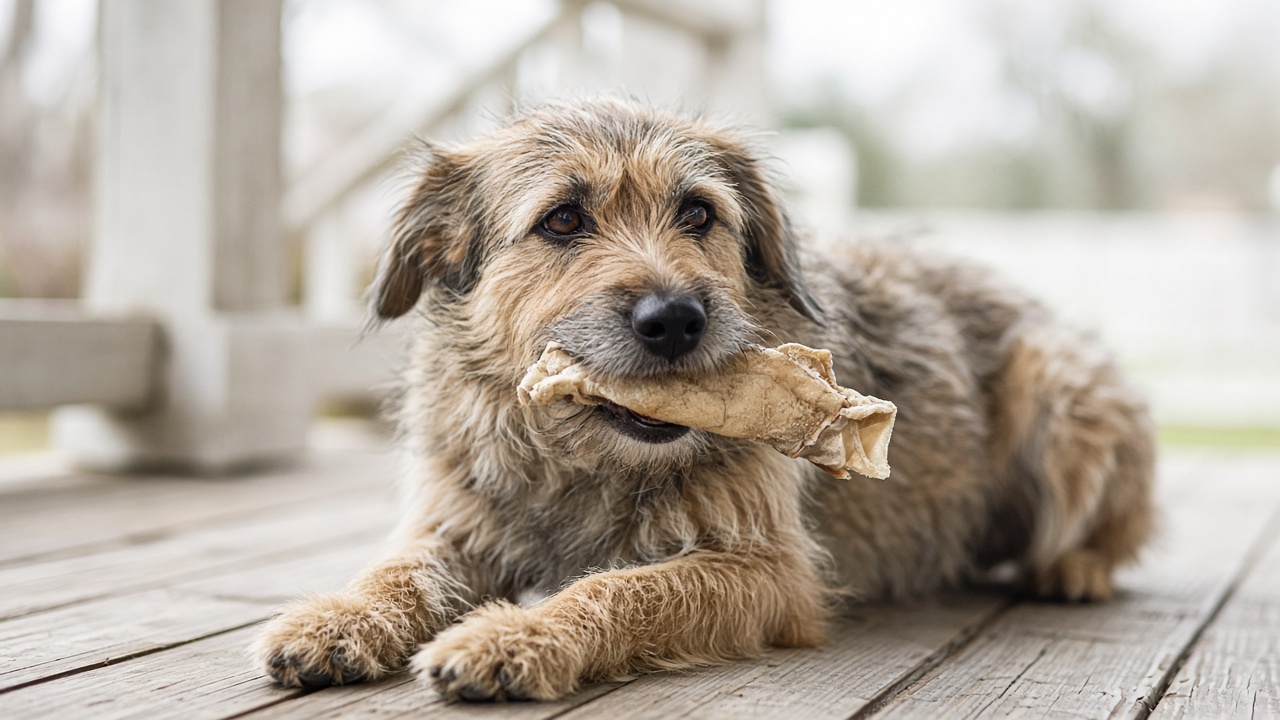
Quick answer: Yes, rabbit ears can be a useful chew for many dogs. Give one ear a few times a week, not every day. Keep all treats under 10% of daily calories and stay in the room while your dog chews.
One rabbit ear two or three times weekly is a fair cap when all treats stay under 10% of calories.
This page is a research-desk comparison of maker labels and published feeding rules. We did not run chew trials, did not time dogs with a stopwatch, and did not invent calories for bags that omit them.
Rabbit ears are a single-ingredient chew, not a meal. They can help some dogs gnaw, switch proteins, and stay busy. They can also add fat, fur, and a choking scrap if you treat them like free snacks.
How we chose which ears to cover
We used one selection rule, the Ear Spec Rule. A chew entered this article only if it was a currently listed, single-ingredient whole rabbit ear on the maker’s own page.
That page also had to publish at least one number we could quote. Protein, fat, moisture, pack count, or kilocalories per kilogram all counted.
Pig ears, cow ears, rabbit meat bites, and flavored mixes stayed out. Our research team analyzed five maker pages under that rule.
Comparing published specs, listed crude protein ran from 46.8% to 71% minimum. Listed fat ran from 8.0% to 25.0%.
“Rabbit ear” is not one food. It is a family of dried ears with very different labels.
What a rabbit ear chew actually is
A commercial rabbit ear is the dried pinna, often with hair still on. Jack’s Premium says its Rabbit Ears are 100% rabbit ear, fed with the hair on, and sourced from Blue Ridge Rabbit Meat Co.
JR Pet Products lists Rabbit Ears with Hair as 100% rabbit ears, air-dried, with no additives. Just Raw Pet Food lists Dehydrated Rabbit Ear as 100% rabbit ear sourced in Ontario.
The Association of American Feed Control Officials treats snacks as a subset of pet food. AAFCO skips the complete-and-balanced profile if the pack says “snack” or “treat.”
AAFCO also exempts some chews that do not claim nutrition. That exemption drops if the maker claims nutritional value.
Words such as “digestible” or “high-protein” can trigger full labeling rules. AAFCO then wants four guarantees: minimum crude protein, minimum crude fat, maximum crude fiber, and maximum moisture.
Several ear makers publish those numbers. Many still skip a calorie line. The World Small Animal Veterinary Association tells owners to ask the maker for calories when the label is silent.
Benefits that hold up, and claims that do not
Protein is the clearest benefit on the packs we compared. JR Pet Products lists 46.8% crude protein. Jack’s Premium lists 48.0%.
Happy Dog Place lists 59.7% for HDP Natural Rabbit Ears. Just Raw Pet Food lists 64% minimum. Bulk Dog Treats lists 71% minimum.
Fat is not a single story. Jack’s Premium and Bulk Dog Treats both list 8.0% fat, or 8% minimum. Just Raw lists 10% minimum.
JR Pet Products lists 21.5% fat. Happy Dog Place lists 25.0%. Happy Dog Place also lists 5,753 kilocalories per kilogram.
AAFCO’s reading-labels page says a “lite” dry dog food cannot contain more than 3,100 kilocalories per kilogram. This chew is not a lite kibble. It is an energy-dense dried ear.
Rabbit is a less common treat protein than chicken or beef. That can help a dog on an elimination plan. It does not make rabbit risk-free.
A dog can still react to rabbit. Fur is sold as fiber. Jack’s Premium says rabbit hair is indigestible fiber and may scrape the gut as it passes.
The same Jack’s page says hair has not been proven as effective as a clinical dewormer. It also warns that too much hair can cause a blockage.
Treat the deworming claim as folklore. Fur can bulk stool. It is not a parasite drug.
Chewing can scrape plaque. The Veterinary Oral Health Council still calls daily brushing the gold standard. VOHC also says daily chewing can help.
VOHC awards a seal only after a maker submits plaque or tartar data. None of the five ear pages we compared listed that seal.
If teeth are the goal, pair a chew with real mouth care. An ultrasonic tooth cleaner for dogs is one extra tool, not a stand-in for a clinic exam.
How many rabbit ears to give
Use the 10-and-Watch Rule. Keep every treat, chew, and table scrap under 10% of daily calories. Watch the chew until the last scrap is gone.
The World Small Animal Veterinary Association states that rule in plain language. Treats should always make up less than 10% of a dog’s daily calorie intake. WSAVA also says treats should never replace a meal.
WSAVA’s 2025 dog-treat guide lists a 14-kilocalorie treat budget for a 2-kilogram dog. It lists 24 kilocalories for a 4-kilogram dog and 32 kilocalories for a 6-kilogram dog.
A 45-kilogram dog gets 146 kilocalories from treats in that same table. WSAVA lists a dried pig’s ear at 242 kilocalories for 2 ounces, or 56 grams.
HDP Natural Rabbit Ears, at 5,753 kilocalories per kilogram, equal about 5.75 kilocalories per gram. Eight grams of that chew would already use about 46 kilocalories.
That is more than WSAVA’s entire daily treat budget for a 4-kilogram dog. Most makers do not print an ear weight.
Do not guess. Weigh the first ear on a kitchen scale. Then match it to your dog’s treat budget.
For a healthy adult that can chew, start with one ear. Offer it two or three times a week, not daily. Skip the next ear if stool turns loose or if fur shows up as a long mat.
JR Pet Products says its Rabbit Ears with Hair are suitable from 12 weeks. That printed age is the floor we quote. Tear or cut the first ear for a small dog.
A toy dog can finish a whole ear faster than you expect. Gulpers should not get a whole ear.
If your dog inhales treats and later throws up undigested food, switch to a food-dispensing toy. Save ears for dogs that gnaw.
Safety checks before you open the bag
Stay in the room. VOHC says two steps cut chew-obstruction risk. Match the product to the dog’s body weight, and give it only when you can watch.
Take the last piece away when it is small enough to swallow whole. That rule applies to rabbit ears as much as to any other chew.
Fur is the special risk here. Jack’s Premium is blunt: because the hair is indigestible, overfeeding can block the gut. Start with half an ear if your dog has never eaten fur.
The U.S. Food and Drug Administration treats pet treats and chews as pet food. FDA Compliance Policy Guide 690.800 names dog biscuits, rawhide, and pig ears as examples.
FDA considers a pet food adulterated when Salmonella is present and no later commercial kill step will remove it. Dried ears are not automatically sterile.
Wash your hands after handling. Keep bags sealed and dry. Do not feed a damp, sour, or moldy ear.
WSAVA flags unprocessed raw animal treats, including contaminated pig ears, as a pathogen risk. Buy from a maker that names the process, and skip unmarked bins.
Do not harvest a treat from a pet rabbit.
Shed fur and trimmed hair are not a processed chew. A rabbit grooming kit is for coat care, not for making dog snacks.
Skip ears after dental work, if your dog has a history of pancreatitis, or if rabbit is already a known trigger. Hard, frantic chewing is a reason to stop.
How five current ears compare on the label
This table is an attribute sheet, not a ranking. Our research team compared published specs. We did not score “best.”
| Product | Process | Fur on pack | Listed protein | Listed fat | Other listed spec |
|---|---|---|---|---|---|
| Jack’s Premium Rabbit Ears | Dehydrated | Yes | 48.0% | 8.0% | Moisture 5.0%; packs of 4 or 36 |
| Bulk Dog Treats Rabbit Ears | Dehydrated | Yes | 71% min | 8% min | Moisture 8% max; fiber 1% max; 1.5 lb bag |
| HDP Natural Rabbit Ears | Dried | Yes | 59.7% | 25.0% | 5,753 kcal/kg; moisture 10.5%; ash 3.11% |
| JR Pet Products Rabbit Ears with Hair | Air-dried | Yes | 46.8% | 21.5% | Moisture 7%; 100 g, 500 g, or 1 kg packs |
| Just Raw Pet Food Dehydrated Rabbit Ear | Dehydrated | Not stated | 64% min | 10% min | Moisture 12% max; fiber 3% max; Ontario sourced |
Moisture tells you how dry the ear is. Jack’s Premium lists 5.0%, JR Pet Products lists 7%, and Bulk Dog Treats lists 8% maximum.
Happy Dog Place lists 10.5%. Just Raw lists 12% maximum.
A drier ear often snaps more. A fatter ear often lasts longer and spends more calories. HDP’s 25.0% fat and 5,753 kilocalories per kilogram sit at the rich end of this set.
Jack’s Premium sells 4-ear and 36-ear packs. Bulk Dog Treats sells a 1.5-pound bag. Just Raw sells singles and packs of 5, 10, or 25.
None of those pack sizes is a serving size. Count ears, then weigh them.
Who should skip rabbit ears
Puppies under the age printed on the bag should wait. JR Pet Products sets that line at 12 weeks for Rabbit Ears with Hair.
Dogs that swallow chews whole should skip ears. So should dogs with a known rabbit allergy, a recent gut blockage, or a fat-restricted plan.
If your dog already gets other chews that day, do the math first. WSAVA counts snacks, chews, supplements, and people food in the same 10% bucket.
Rabbit ears can be “good” in a narrow sense. They are meant to be eaten, and some labels show less fat than WSAVA’s 242-kilocalorie dried pig ear.
They are not a complete diet, not a proven wormer, and not a VOHC dental product on the pages we read. Give one ear, watch the chew, and weigh the next piece.
FAQ
Are rabbit ears good for dogs every day?
Daily feeding is a poor default. WSAVA keeps all treats under 10% of calories, and fur adds bulk that needs time to pass. One ear two or three times a week is a safer starting cap for a healthy adult.
Can dogs eat rabbit ears with the fur on?
Yes, if the maker sold the ear that way and your dog can pass fiber. Jack’s Premium feeds ears with hair on and still warns that too much hair can block the gut. Introduce half an ear first.
Stop if you see straining, vomiting, or a long mat of hair in the stool.
Do rabbit ears clean dogs’ teeth?
Chewing can scrape some plaque. VOHC still names brushing as the gold standard and awards a seal only when a maker submits data. The five ear pages we compared did not list that seal.
How many rabbit ears can a small dog have?
Start with a weighed half ear, not a whole one. WSAVA lists only 24 treat kilocalories a day for a 4-kilogram dog. HDP Natural Rabbit Ears list 5,753 kilocalories per kilogram, so a few grams can spend that whole budget.
Are rabbit ears safer than rawhide?
They are a different product, not a magic swap. WSAVA lists a rawhide bone at 700 kilocalories for 6.7 ounces.
Rabbit ears are meant to be eaten and usually break down faster. They can still choke a gulper or block a gut if fur is overfed.
Can rabbit ears make a dog throw up?
Yes. Gulping, too much fat, or too much fur can upset the stomach. Pause the chew if chunks come back up.
Read our note on why a dog throws up undigested food. Offer water, skip the next ear, and call your dog’s regular clinic if vomiting repeats.
Do rabbit ears replace a meal?
No. AAFCO treats snacks as incomplete foods unless the pack carries a complete-and-balanced statement. WSAVA says treats should never replace a meal.
Feed the usual diet first. Then add one ear inside the 10% calorie cap.