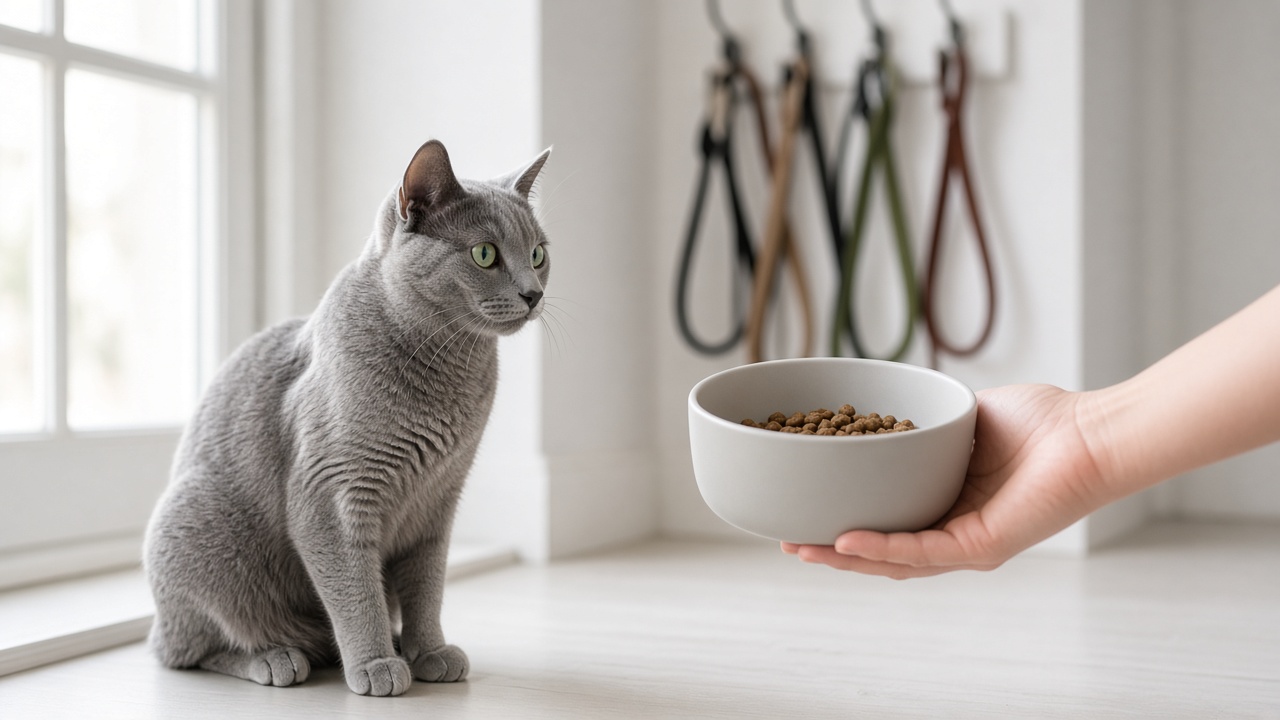
Quick answer: Track how often it happens. A true hairball every week or two can be ordinary, per Cornell. Vomiting more than once a week, or any blood, lethargy, or skipped meals, needs a clinic visit.
Cats keep throwing up because hair, food, toxins, or disease trigger the stomach; Cornell flags more than weekly vomiting as abnormal.
This page is a research-desk briefing on published causes and timing rules;
Our research team analyzed Cornell’s 2021 vomiting topic and compared four current U.S. labels.
The Cornell Weekly Line
The Cornell Feline Health Center’s vomiting topic, updated in 2021, draws a hard line. Cats that vomit more often than once per week should be evaluated promptly.
That line is our rule for “keeps throwing up.” One isolated event after stolen food is a different problem.
Cornell lists extra flags that speed the same visit. Those flags are lethargy, weakness, a drop in appetite, and blood in the vomitus.
More thirst, a change in urination, or diarrhea at the same time also count. Write the date, the time, and what came up. A clinic can use that log.
Hairballs Versus Other Vomit
Cornell describes a hairball as a damp, cylindrical wad of undigested hair. Bile and other digestive fluids wet that wad.
The same page says a hairball every week or two is not uncommon. Cornell treats that cadence as a pattern that can exist without lasting trouble.
Cornell also warns the other way. A clump that leaves the stomach and lodges in the intestine can block the tract.
That blockage is a life-threatening emergency.
A 2022 Journal of the American Veterinary Medical Association review listed hairball vomiting and abdominal pain. Extreme cases can obstruct intestine.
The review called more dietary fiber a primary nutritional step. The idea is that fiber may move more hair out in the feces.
One cited study used psyllium at 11% or 15% total dietary fiber. That level raised fecal hair excretion in longhair cats, not in shorthair cats.
Another trial found 14.2% total dietary fiber beat 11% and 6.9% diets on fecal hair. The JAVMA authors also wrote that none of those studies used hairball vomiting as the outcome.
Fiber data can change what leaves in the stool. They do not prove fewer retching events on your floor.
If the pile is a tube of barely chewed kibble, the event may be regurgitation. Cats can do that after a fast gulp.
We map the same undigested-food pattern in dogs that throw up kibble. Count those events too.
Food Speed, New Diets, and Household Toxins
Cornell lists spoiled cat food as a frequent cause. A rapid diet swap can also upset a stomach that just learned one recipe.
A sudden full swap is a common owner error. Mix the new food over several days unless a clinician gives a different plan.
Cornell lists poisonous plant leaves, human medicines, string, yarn, and antifreeze. Chocolate, onions, paper clips, and rubber bands are on that list too.
String and yarn are linear foreign bodies. They can bunch intestine around a thread.
That is a surgical emergency.
Chocolate and onions are human foods Cornell names on the vomiting page. Do not wait to “see if it passes” after a known bite of either.
Antifreeze is on Cornell’s list for a reason. That exposure is a same-hour clinic problem.
Indoor boredom can raise grooming time. A tall cat tree for a large body gives a heavy cat somewhere to climb.
A secure cat harness does not treat vomiting. It does change what a walking cat can swallow, from grass to dropped food.
Disease Causes Behind Repeat Vomiting
Cornell’s list of other causes is long. It includes internal parasites, constipation, inflammatory bowel disease, and a swallowed object.
The same page names benign or cancerous growths in the gut. It also names metabolic disease, including diabetes, kidney disease, and hyperthyroidism.
Those metabolic names matter in older cats. Weight loss with a strong appetite is a classic thyroid pattern clinicians check.
Extra thirst with a dull appetite is a kidney pattern they check. Do not guess the disease at home.
Cornell’s workup starts with history, a physical exam, bloodwork, and a fecal test. Those steps look for toxins, parasites, and metabolic disease.
If those tests look normal, Cornell says x-rays and ultrasound may come next. A later biopsy can look for cancer or inflammatory bowel disease.
Cornell calls IBD a common disorder in cats. The same page says it is usually treated with diet, antibiotics, and/or steroids.
That plan belongs to a clinician, not a gel tube. Parasites, Cornell says, are addressed with deworming medication.
The point of Cornell’s list is plain. “Another hairball” is only one line on a longer page.
Same-Day Warning Signs
Use Cornell’s weekly line for the chronic pattern. Use the extra flags for speed.
Blood in the vomitus is a same-day visit. So is a cat that will not eat and looks weak.
Repeated unproductive retching is not “a hairball on the way.” Cornell and the JAVMA obstruction note treat that strain as a now problem.
A known string, needle, or plant bite is not a wait-and-see event. Bring a photo of the plant or the remaining object if you can.
Protracted vomiting, Cornell says, often needs supportive care. That can include intravenous or subcutaneous fluids.
An anti-emetic may be prescribed after a diagnosis. It is not a home experiment.
Do not withhold water as a home protocol. Cornell does not publish a starve-the-cat plan on that page.
Yellow foam on an empty stomach can be bile. Repeat bile vomiting still sits above Cornell’s weekly line.
Kittens and seniors have less reserve. The clock is shorter if the cat is tiny or already thin.
Hairball Gels and Fiber Foods, Compared
Hairball products do not diagnose disease. They are label tools for a hair problem you have already seen.
Our research team compared published specs on four items sold now in the United States. We included two petrolatum gels, one plant-oil paw gel, and one complete dry food with a hairball fiber claim.
We left out prescription diets. We left out injectable anti-nausea drugs. We left out surgical cases.
Vetoquinol’s Laxatone Tuna label on DailyMed lists 1,285 mg of white petrolatum per 6-gram teaspoon. That teaspoon also lists 237 mg soybean oil and 203 mg light mineral oil.
It lists 22 mg omega-6, 6 mg omega-9, and 3 mg omega-3 fatty acids. DailyMed records 2.5 oz (70.9 g) and 4.25 oz (120.5 g) tubes.
Start with 1/2 to 1 teaspoon for 2 to 3 days. Then use 1/4 to 1/2 teaspoon 2 to 3 times a week. The marketing start date is December 29, 1999.
Dechra’s Cat Lax label lists 0.474 g of white petrolatum in each gram of paste. It also lists 0.474 g of barley malt syrup and 0.02 g of cod liver oil per gram.
The tube is 2 oz (56.70 g). Removal for an average-weight adult cat is about one inch of paste once daily. Prevention is two or three times per week.
DailyMed shows a Cat Lax marketing start date of May 14, 2007, and a March 2026 label revision.
Nutri-Vet’s Hairball Paw-Gel Chicken page lists 360 mg hydrogenated vegetable oil, 318 mg soybean oil, and 329 mcg corn oil.
Directions are 1/4 teaspoon on a paw, once or twice daily, for cats 6 weeks and older.
Royal Canin’s U.S. Hairball Care dry food lists crude protein at a 32.0% minimum. Crude fat is a 13.0% minimum.
Crude fiber is an 8.5% maximum. Moisture is a 7.5% maximum.
Royal Canin lists 3,564 kcal per kilogram, or 342 kcal per cup. Bags on that page are 3 lb, 6 lb, and 14 lb.
The page is written for cats 1 year and older. An 11 lb cat at normal activity is listed at 5/8 cup, or 65 g, a day.
Royal Canin states the recipe is formulated to meet the AAFCO Cat Food Nutrient Profiles for maintenance. The fiber blend on that page includes psyllium.
| Product | Form | Key listed lubricant or fiber | Label amount | Age or size note |
|---|---|---|---|---|
| Vetoquinol Laxatone Tuna | Oral gel | 1,285 mg white petrolatum per 6 g teaspoon | 1/2–1 tsp for 2–3 days, then 1/4–1/2 tsp 2–3 times weekly | Cats only; 2.5 oz or 4.25 oz tubes |
| Dechra Cat Lax | Oral paste | 0.474 g white petrolatum per gram | About 1 inch of paste once daily for removal | Average-weight adult cats; 2 oz tube |
| Nutri-Vet Hairball Paw-Gel Chicken | Paw gel | 360 mg hydrogenated vegetable oil on the maker page | 1/4 tsp on a paw once or twice daily | Cats 6 weeks and older |
| Royal Canin Hairball Care | Dry kibble | Crude fiber max 8.5%; 3,564 kcal/kg | 5/8 cup (65 g) for an 11 lb cat at normal activity | Cats 1 year and older |
Comparing those labels is not a ranking. Laxatone and Cat Lax are petrolatum lubricants. Nutri-Vet is a plant-oil gel.
Royal Canin is a complete adult food with a fiber maximum, not a teaspoon dose. A gel cannot replace bloodwork.
How We Chose What to Cover
The selection rule is simple. We covered household vomiting patterns that Cornell describes in public language.
We covered over-the-counter hairball gels and one complete dry food with a current U.S. label we could read in full.
We also did not build a ranked product list. Price is not a column here.
If your cat is already on a clinic diet, stay on that plan.
FAQ
Is it normal for my cat to throw up every week?
Cornell’s 2021 vomiting topic says cats that vomit more often than once per week should be evaluated. A hairball every week or two can occur without lasting trouble, on that same page.
Weekly food or bile vomiting is not the hairball cadence Cornell described. Book the visit and bring a written log.
How can I tell a hairball from other vomit?
Cornell describes a hairball as a damp, cylindrical wad of hair wet with bile and digestive fluid. Food vomit is often partly digested and not a hair tube.
Foam or yellow fluid can appear on an empty stomach. If you are unsure, treat the event as vomiting and count it toward the weekly line.
Can eating too fast make a cat throw up undigested food?
Yes. A fast meal can come back as a tube of kibble with little digestive change.
That event is often regurgitation, not a metabolic crisis. Repeats still need a count.
The same pattern shows up in dogs that throw up undigested food. Slow the meal and still watch the weekly line.
Should I withhold food after one episode?
Cornell’s vomiting topic does not publish a home fasting protocol. It does say protracted cases often need fluids and a bland, easily digested diet once vomiting has stopped.
One isolated event in a bright cat is not a day of repeats. Ask the clinic before you skip meals.
Do hairball gels treat kidney disease or hyperthyroidism?
No. Cornell lists kidney disease and hyperthyroidism as metabolic causes of vomiting.
Laxatone, Cat Lax, and Nutri-Vet are labeled as hairball lubricants or oils. They are not thyroid or kidney therapy.
Royal Canin Hairball Care is labeled as adult maintenance nutrition with a fiber blend. None of those labels replace a T4 test or a kidney panel.
When is yellow foam a reason to go in today?
Yellow foam can be bile from an empty stomach. One event after a long gap between meals is common.
Repeat foam, foam plus lethargy, or foam plus a skipped meal meets Cornell’s prompt-evaluation flags. Count the episodes.
Can more play or a harness walk stop the vomiting?
Activity can cut idle grooming, which is one hairball input. A large-cat tree and a secure harness change how a cat spends the day.
They do not treat IBD, kidney disease, or a swallowed string. Keep the Cornell weekly count.