5 Best Cat Food Deals & How to Save on Premium Brands (2026)
The best cat food deals are not the loudest coupon. They are a formula your cat already finishes, bought at a honest unit price, in a quantity you will clear before the date on the can or bag. A warehouse case you throw away is a negative deal. U.S. Bureau of Labor Statistics Consumer Price Index series for pet food is the public inflation tape — BLS published a 4.5% year-over-year increase in the pet-food CPI in 2024 commentary widely cited by retailers. Manufacturer PPI notes in the same window showed canned/wet cat food rising faster than many dry lines (BLS PPI tables; a commonly quoted 6.4% May-2024-to-May-2025/26 wet-line move in trade write-ups). Those are index moves. They are not a reason to switch a cat off a food they tolerate.
PetBench Cat Food Deal Desk (card-set tally, August 2026): we ran unit-price math on the five SKUs already on this URL, using the listed snapshot prices on the cards. Listed cash: Whiskas Dry $15, Fancy Feast wet case-class $18, Sheba Perfect Portions $20, ONE Tender Selects Blend $22, Pro Plan Adult Dry $35. That is a $20 spread on the card set — not a quality ranking. Dry holds more kcal per shipping pound. Wet holds more water per dollar. Subscribe-and-save (typically 5–15% off recurring grocery SKUs on major marketplaces) beats a one-off “lightning deal” if the formula stays the same. Palatability that flips between batches erases the discount.
Stockpile the bag they already eat. Do not “upgrade” on sale into a GI reset.
Our guides are reader-supported. This article may contain affiliate links. As an Amazon Associate we may earn a commission if you buy through links, at no extra cost to you.
Quick picks at a glance
- Lowest listed dry card: Whiskas Dry Cat Food — $15 snapshot. Complete-and-balanced grocery dry. Simpler protein story on typical labels. Fine if they already eat it.
- Mid grocery dry: ONE Tender Selects Blend — $22 snapshot. Named meat near the top on typical ONE bags. Grain in the line. Wide aisle availability.
- Highest listed dry card: Pro Plan Adult Dry Cat Food — $35 snapshot. Probiotic / higher-protein retail pitch. Only a deal if the unit price undercuts your current bag.
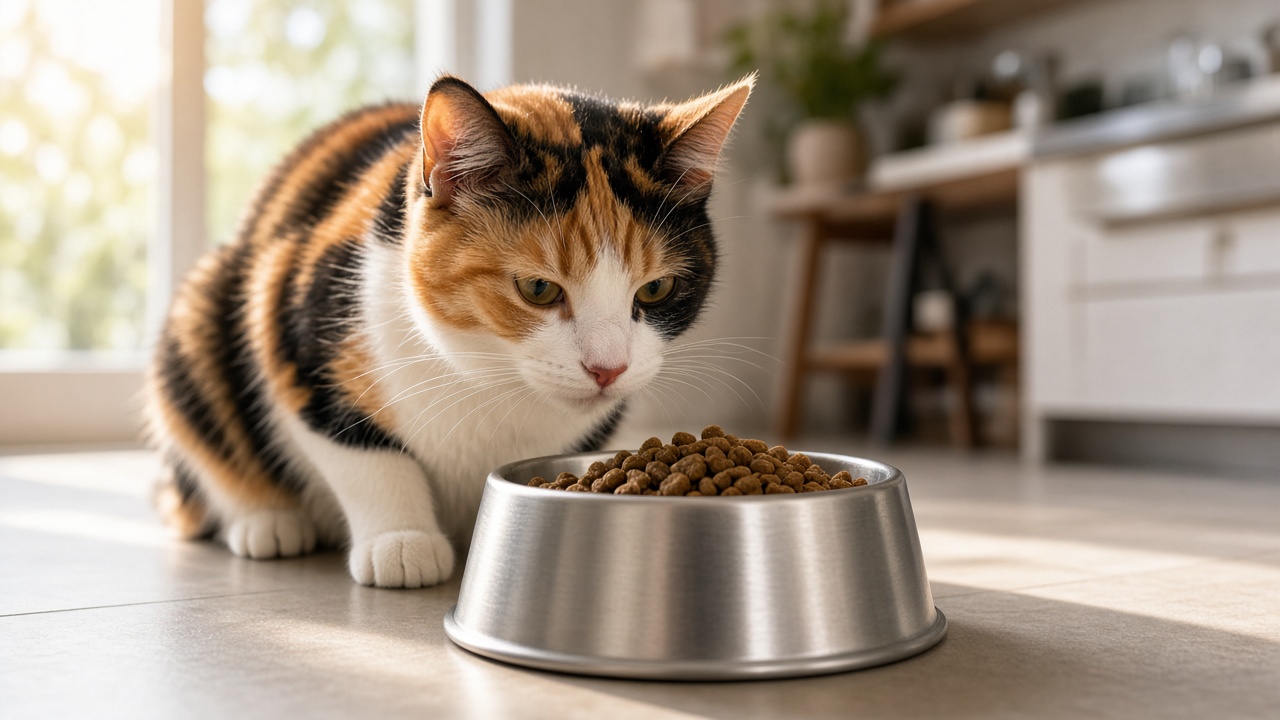
- Wet case-class: Fancy Feast Gourmet Wet Cat Food — $18 snapshot. High moisture, small cans, more units per day. Hydration is the product. Unit ounces are the math.
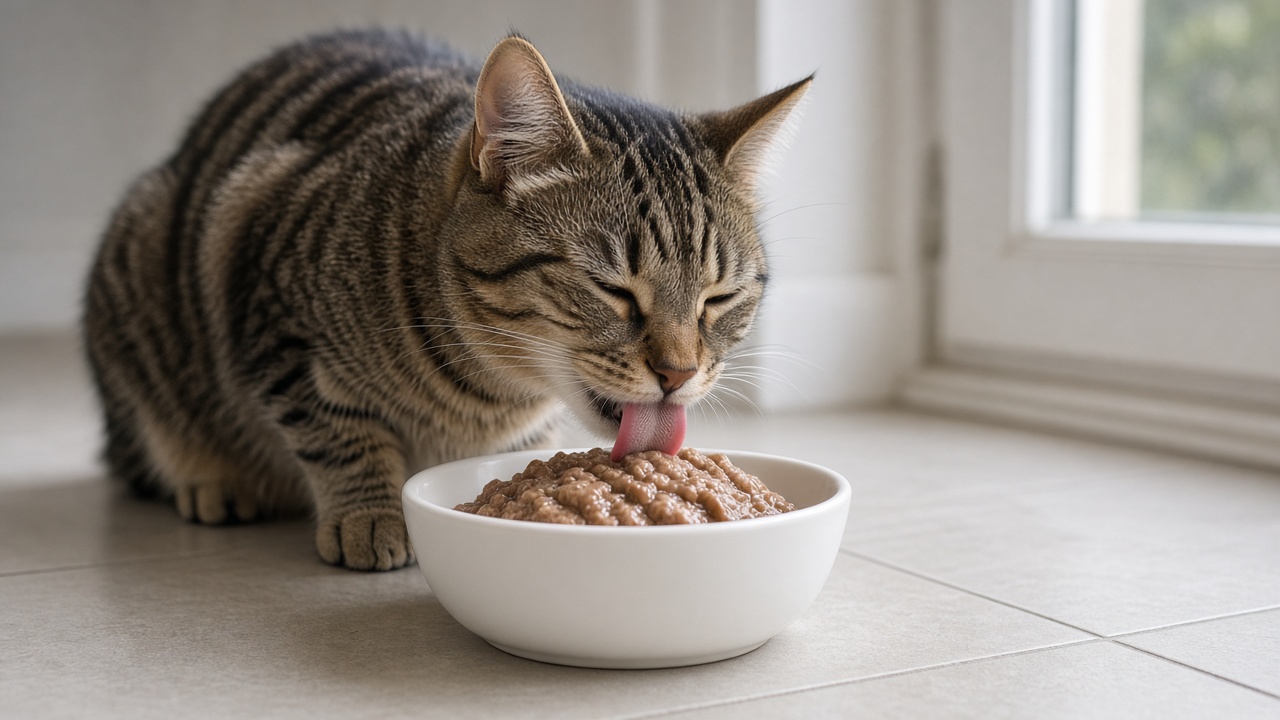
- Tray convenience: Sheba Perfect Portions Wet Cat Food — $20 snapshot. Split trays cut leftover waste. Packaging is the tax.
Kitten growth formulas are a different AAFCO statement: best cat food for kittens. Hairball fiber lines: best cat food for hairballs. Treat calories sit on cat food and treats. Outdoor calorie density: cat food for outdoor cats.
What best cat food deals actually means
A deal is dollars per 1,000 kcal (or per ounce of wet), not dollars per bag. A 16 lb “sale” bag of calorie-light kibble can cost more per meal than a 7 lb dense bag. AAFCO’s nutritional adequacy statement tells you the food is complete for a named life stage. It does not tell you it is cheap.
WSAVA’s Global Nutrition Committee tools still win: diet history, body-condition score, then a daily kcal number, then a food whose label lets you hit that number. A sale that blows the kcal target is a weight problem. APOP’s 2022 U.S. survey put about 61% of U.S. cats in the overweight or obese band. Free-feeding a cheap hopper of sale kibble is how that number stays sticky. Gravity towers that erase portions live on cat food and water dispensers.
What
Cat Food Deal — August 2026
Listed prices are card snapshots. Bag and case weights change by seller. Recalculate ounces when you check out.
Table 1 — Five cards, listed cash, desk job
| Product (card price) | Format | Desk job | Honest watch-out |
|---|---|---|---|
| Whiskas Dry Cat Food ($15) | Dry | Lowest cash dry on this URL | Protein story is grocery-simple; only a deal if they eat it |
| Fancy Feast Gourmet Wet ($18) | Wet cans | Palatability + moisture | Small cans → more units/day; compare ¢/oz, not ¢/can |
| Sheba Perfect Portions ($20) | Split trays | Leftover control | You pay for plastic convenience |
| ONE Tender Selects Blend ($22) | Dry | Named-meat grocery dry | Grain line; not “premium” because the bag is pretty |
| Pro Plan Adult Dry ($35) | Dry | Higher listed dry; functional extras on typical panels | Premium sticker is not automatically better unit kcal |
Desk stat: On this five-card set the dry listed range is $15–$35 (2.3×). That spread is a brand ladder, not proof the $35 bag feeds 2.3× better. Run kcal on the panel.
Table 2 — Unit-price worksheet (do this at checkout)
| If you are buying… | Divide listed price by | Then compare | Fail the deal if… |
|---|---|---|---|
| Dry bag | Pounds, then kcal/lb from the panel | $/1,000 kcal vs last bag | You cannot find kcal on the bag |
| Wet cans / trays | Total ounces in the case | ¢/oz and ¢/kcal | Variety pack they will refuse half of |
| Subscribe-and-save | Discounted unit after the % | Same SKU, same formula | The subscribe SKU is a different recipe |
| Warehouse club case | Date code + ounces | ¢/oz vs grocery 12-pack | You cannot finish before the date |
| “Lightning” 2-hour drop | Same math, timer ignored | Everyday subscribe price | You do not have a scale or a plan |
AAFCO feeding guides on the bag are starting points. They are not your cat. A “deal” that requires a heaped cup to “look full” is a calorie leak.
Table 3 — Subscribe vs bulk vs coupon (desk rules)
| Tactic | Typical public offer class | When it wins | When it loses |
|---|---|---|---|
| Subscribe-and-save | ~5–15% off repeating grocery SKUs | Same formula, predictable pace | Cat refuses the next lot; you own a closet of it |
| Case / club pack | Lower ¢/oz | One flavor, fast eater, date is far | Palate fatigue; dented cans; you rotate too late |
| Manufacturer rebate / auto-ship from the brand | Locks a price for a named SKU | Prescription-adjacent retail lines you already use | Switching “to use the rebate” |
| Coupon stacking | One-time | Trial bag of a food they already liked at a friend’s | New protein → GI week → wasted bag |
| Warehouse “must-buy” | Volume theater | You have airtight bins and a date plan | Fat goes rancid; they walk away |
Desk rule: the first failed transition wipes a year of 10% subscribe savings. Transition 7–10 days. Rollback if vomiting repeats or they refuse 24 hours. Overweight cats that stop eating are an AVMA / AAFP hepatic-lipidosis teaching theme. We are not veterinarians. We will not tell you to “push through.”
Table 4 — Inflation tape vs your pantry
| Public tape | What it is | What it is not |
|---|---|---|
| BLS CPI pet food (2024 ~4.5% y/y in widely cited releases) | Retail inflation for the category | A reason your cat must change brands |
| BLS PPI canned/wet lines (trade quotes ~6.4% over a May–May window) | Factory-gate pressure on wet | Proof Fancy Feast is “overpriced” vs Whiskas |
| Dry still a large global volume share in industry decks (~46% is a commonly repeated share figure) | Why club bags look cheap | Proof dry is healthier |
| Wet category growth in industry decks (high-single-digit CAGR quotes) | Why wet cases go on display | Proof you should switch |
We cite BLS as the primary public price measure. Industry “CAGR” and “46% share” figures are trade-deck numbers that move. We will not treat a blog’s “Cat Food Industry Statistics 2026” as a primary source. If a number is not on BLS or on a bag in your hand, treat it as color.
Named examples on this URL (not a ranking)
Search links are Amazon queries with the site tag. Snapshot prices move.
Whiskas Dry Cat Food — lowest listed dry cash
$15 card. Grocery complete dry. Easy to find. The deal is the sticker if — and only if — this is already the bag. A simpler ingredient list is not a moral failing. It is a panel. Compare kcal and the adequacy line, not the mascot.
Check Whiskas Dry Cat Food on Amazon
ONE Tender Selects Blend — named-meat grocery dry
$22 card. Typical ONE bags lead with real meat and a dual-texture pitch. Grain in the line. Widely stocked — that availability is part of the deal (you can refill without a boutique wait). Not a grain-free trophy. Grain-free is not automatically cheaper or better; FDA DCM conversation lives on the dog side of the aisle and is not a cat-food coupon strategy.
Check ONE dry cat food on Amazon
Pro Plan Adult Dry Cat Food — highest listed dry on this set
$35 card. Typical Pro Plan adult bags print probiotic and protein-ratio marketing. Larger kibble on some SKUs is a senior/dental watch-out, not a value metric. This is a deal when $/1,000 kcal undercuts the bag you already buy — including subscribe. It is not a deal because the word “performance” is on the box. We will not print “veterinarian recommended” as our credential. Clinic shelves stock many brands.
Check Pro Plan cat food on Amazon
Fancy Feast Gourmet Wet Cat Food — moisture you can count
$18 card. High palatability, high moisture, small cans. Daily cost is cans × days, not the case sticker. A 3 oz can at ~70–90 kcal (typical pâté class; read your can) means a 10 lb cat may need more than one. That is why wet “sales” surprise people. Hydration is the product. If the cat already lives on this line, a case subscribe is the usual win. If they do not, a variety pack is a trial, not a stockpile.
Check Fancy Feast wet cat food on Amazon
Sheba Perfect Portions Wet Cat Food — pay for the split
$20 card. Grain-free tray language on many Sheba SKUs. The deal is no half-can in the fridge if they eat one side. The tax is packaging and a higher ¢/oz than a 3 oz can of the same calorie class. Fish aroma is an owner-report split. Count trays toward the day’s kcal the same way you count cans.
Check Sheba Perfect Portions on Amazon
Want the wider grocery shelf? Browse cat food deals on Amazon
Stretching best cat food deals without overbuying
Stockpile sales work when your cat eats one consistent SKU. Rotation deals fail when palatability differs between flavors in the same line. Check the date on multi-packs before a club run. Manufacturer auto-ship beats coupon chasing if it locks a formula they already tolerate.
Store opened dry food in an airtight bin. Stale fat is a common refusal trigger after a “great deal.” Do not pour a new bag on top of last month’s dust. Wet: refrigerate opened cans and discard on the label’s leftover rule — usually the same day to 48 hours, not a week.
Treats are not a side quest. AAFCO / AAHA snack conversations cap extras near 10% of daily kcal. A deal on treats that blows dinner is not a deal. Pairing math lives on cat food and treats.
Automatic feeders (industry decks sometimes quote high ownership shares) do not make bulk smarter. They make a cheap bag disappear faster if the hopper is a buffet. Portion first. Hardware second: two-cat feeder if one cat steals the sale bag.
How to choose among best cat food deals
- Are they already eating this exact formula? If no, buy a trial size. If yes, price the subscribe.
- Can you find kcal on the panel? If no, you cannot compare unit value. Skip.
- Wet or dry? Wet: ¢/oz and cans per day. Dry: $/1,000 kcal and a scale.
- Will you finish before the date? If no, the club case is a donation to the trash.
- Is this a life-stage mismatch? Kitten, hairball, weight-management, and outdoor lines are different pages. An adult grocery sale is not a kitten food.
- Grain-free as a “deal”? Only if you already needed that constraint. It is usually more expensive, not automatically healthier.
- Therapeutic diet? Clinic bag. This page does not outrank a written order.
Listing literacy
Read adequacy statement, kcal, package ounces, and date before the lightning-deal badge. PetBench discards “#1 value” badges.
Frequently asked questions
Are best cat food deals worth warehouse bulk buys?
Only if they eat one consistent formula before the date. Waste erases ¢/oz. Palatability that flips between lots is a failed deal.
Is wet cheaper in cases or as singles?
Cases usually win on ¢/oz. Singles win on flexibility. Wet PPI pressure (BLS canned lines) is why case subscribe matters more than a one-can coupon. Still count cans per day.
How do I switch to a sale food without a GI week?
7–10 days, 25% steps. Rollback if vomiting repeats or they refuse 24 hours. Persistent signs are a clinic question. We are not veterinarians.
Is grain-free a better deal for health?
No universal yes. Some owners pay more for a constraint they do not need. Discuss a true elimination diet with the clinic. Do not use a coupon as a diagnosis.
Do subscribe discounts beat store loyalty?
Often, on the same SKU. Loyalty points are a rebate with homework. Subscribe is a percent off a locked formula. Lock the formula first.
The deal that belongs in the pantry is the formula they already finish, priced per 1,000 kcal or per wet ounce, in a quantity the date can survive. A trophy bag they refuse is not a bargain.
Worked unit-price examples on this card set
These are desk worksheets using the listed snapshot prices on the cards. They are not checkout receipts. Bag pounds and case ounces change. Recalculate.
Dry ladder (Whiskas $15 → ONE $22 → Pro Plan $35)
Assume, for planning only, grocery dry in the 350–450 kcal/cup band and a 10 lb indoor cat at ~200 kcal/day (~0.5 cup/day at 400 kcal/cup). A 6–7 lb bag then lasts roughly 3–4 weeks.
| Listed card | If the bag in the cart is… | Rough weeks for one 10 lb cat | Desk read |
|---|---|---|---|
| Whiskas $15 | a small grocery bag | 3–4 | Lowest cash; run the adequacy line |
| ONE $22 | similar grocery pounds | 3–4 | You are paying ~$7 more for a named-meat story on typical ONE bags |
| Pro Plan $35 | often a larger or denser bag — check pounds | 4–6 if pounds are higher | Only cheaper per week if pounds or kcal/lb actually jump |
If the Pro Plan bag is twice the pounds of the Whiskas bag, $35 can be the cheaper week. If it is the same pounds, you are buying extras (probiotic pitch, brand). We will not invent pound counts that are not on the card. Flip the bag.
Wet ladder (Fancy Feast $18 vs Sheba $20)
Typical Fancy Feast cans are 3 oz class. Typical Sheba Perfect Portions are split trays (~1.3–2.6 oz depending on SKU). A 10 lb cat on wet-forward calories may need 2–3 small cans/day or several trays.
| Listed card | What the sticker usually buys | Desk math to run | Watch-out |
|---|---|---|---|
| Fancy Feast $18 | a multi-can pack / case-class listing | $18 ÷ total oz = ¢/oz; then cans/day × 30 | Variety they refuse half of |
| Sheba $20 | a tray multipack | $20 ÷ total oz; trays/day × 30 | Convenience tax vs a 3 oz can |
If Sheba ¢/oz is 30–50% higher than Fancy Feast for the same kcal class, you are paying to skip the fridge half-can. That can still be rational. It is not a “premium nutrition” upgrade by itself.
Subscribe-and-save on the same five SKUs
A 5% subscribe on Whiskas $15 is $0.75. A 15% subscribe on Pro Plan $35 is $5.25. The percent looks bigger on the expensive bag. The failed transition still costs more than either discount. Lock the formula, then turn subscribe on.
| If you subscribe… | Typical public % class | Monthly save vs list (if you buy one unit) | Break-even vs one refused bag |
|---|---|---|---|
| Whiskas $15 | 5–10% | $0.75–$1.50 | One refused bag wipes ~10–20 months of 5% |
| ONE $22 | 5–10% | $1.10–$2.20 | Same shape |
| Fancy Feast $18 | 5–15% (wet often promoted) | $0.90–$2.70 | Plus you must finish the case |
| Sheba $20 | 5–15% | $1.00–$3.00 | Trays stale if you over-order |
| Pro Plan $35 | 5–10% | $1.75–$3.50 | Highest cash save; highest cash at risk |
Storage, dates, and the “great deal” that went rancid
Dry fat oxidizes. Opened bags in a humid kitchen go stale faster than the printed date. Owner-report theme: they refuse the last third of a club bag. Desk rules:
- Airtight bin. Not the bag rolled with a clip if the bin exists.
- Do not dump a new bag on last month’s fines.
- Buy the pounds you will finish in 6–8 weeks once opened, not the trophy 30 lb sack unless you have two cats and a date plan.
- Wet: date the case on the tape. Rotate. Dented cans are not a discount; they are a discard.
AAFCO does not set your pantry humidity. The date on the can does.
Life-stage traps that fake a deal
An adult Whiskas club bag is not kitten food. A hairball line is not a weight-loss line. A “light” bag on sale is not a calorie prescription unless you weigh it. Cross-page traps:
- Kitten growth gate: best cat food for kittens
- Hairball fiber: best cat food for hairballs
- Written cut: cat food for weight loss
- Outdoor calorie density: cat food for outdoor cats
Therapeutic diets are clinic bags. A rebate on a grocery SKU does not outrank a written order.
Coupon calendar vs the bag they will still eat
Retail pet aisles run a predictable promo rhythm: holiday cases, back-to-school club stacks, and subscribe kickers on the first order. None of that changes the adequacy line. A 20% off adult bag is still an adult bag. A “BOGO wet” variety pack is a trial if they have never licked those pâtés.
Desk calendar rules:
- First order subscribe bonus — use it on the SKU they already finish, not a new protein.
- Lightning 2-hour tile — only if the ¢/oz beats your everyday subscribe. The timer is a mood, not a price.
- Manufacturer mail-in — homework. If you will not photograph the receipt, it is not a discount.
- Store loyalty tiers — useful on Fancy Feast / Sheba / ONE if you already shop there. Not a reason to drive for $1.50.
- Expired digital coupon — the register will tell you. Do not buy a second formula “to make the coupon work.”
BLS CPI is a year tape. It does not tell you that Tuesday is cheaper than Thursday. It tells you wet lines have been the hotter inflation stick in the window trade desks quoted. That is why case subscribe on Fancy Feast / Sheba class matters more than clipping a single can.
Treats, toppers, and the 10% leak
AAFCO / AAHA snack conversations keep extras near 10% of daily kcal. A “deal” on a case of lickable tubes can blow dinner in a week. Count toppers as food, not decoration. Pairing math: cat food and treats. Freeze-dried hearts on sale are still calories. Dental crunchies on sale are still calories. The Whiskas $15 bag does not become a better deal because you also bought a treat vault.
Label paperwork that must be on the sale SKU
Before the cart:
- AAFCO statement for the life stage you actually have.
- kcal/kg or kcal/cup (dry) / kcal/can (wet).
- First ingredient you are willing to feed.
- Date you can beat.
- Same formula code if this is a repurchase — “Tender Selects” vs a different ONE sub-line is not automatically the same kibble.
If any line is missing, you cannot run Table 2. Skip. Another tile will appear tomorrow.
Counterfeit and third-party marketplace risk clusters on popular bags. Buy from the brand shop or a seller you can return to. A $15 Whiskas listing from an unknown storefront that will not take returns is not a deal. Keep the receipt. If the kibble smell is paint-adjacent or the lot code is missing, stop feeding and contact the seller — that is a safety step, not a coupon tactic.
Do not paste a second marketplace tag into the body. A “local warehouse” listing that is actually a third-party forwarder can erase the ¢/oz win with shipping and a no-return policy. Check the seller line, not just the tile price.
Returned food is not a deal you re-gift to the cat. If a bag comes back from a return loop, skip it. Heat in a truck wrecks fat. That is why a slightly higher grocery subscribe can beat a mystery “warehouse deal” with no cold-chain story — wet cases especially. Fancy Feast and Sheba are food-contact cans and trays, not durable goods. Inspect dents and swollen lids. One bad can is a clinic visit that costs more than a year of 10% off.
Automatic-ship cadence should match the weeks in Table 2, not the default “every 30 days” the marketplace suggests. A 7 lb dry bag that lasts four weeks does not need a 14-day ship. You will stack inventory and then “try something new” when the closet fills. That is how subscribe becomes waste.
Two-cat and hopper effects on “deals”
Two cats on one sale bag can be a real ¢/kcal win if they share the formula. If one is on a prescription pouch, the sale bag is a theft risk. Dual-bowl clocks do not lock diets: best cat feeder for two cats. Gravity combo towers turn a cheap bag into an all-day buffet: cat food and water dispenser. APOP 2022 overweight prevalence is why “the hopper is always full so they don’t fight” is not a savings plan.
- August 2026 — . No ranked winners. No invented national price panel.