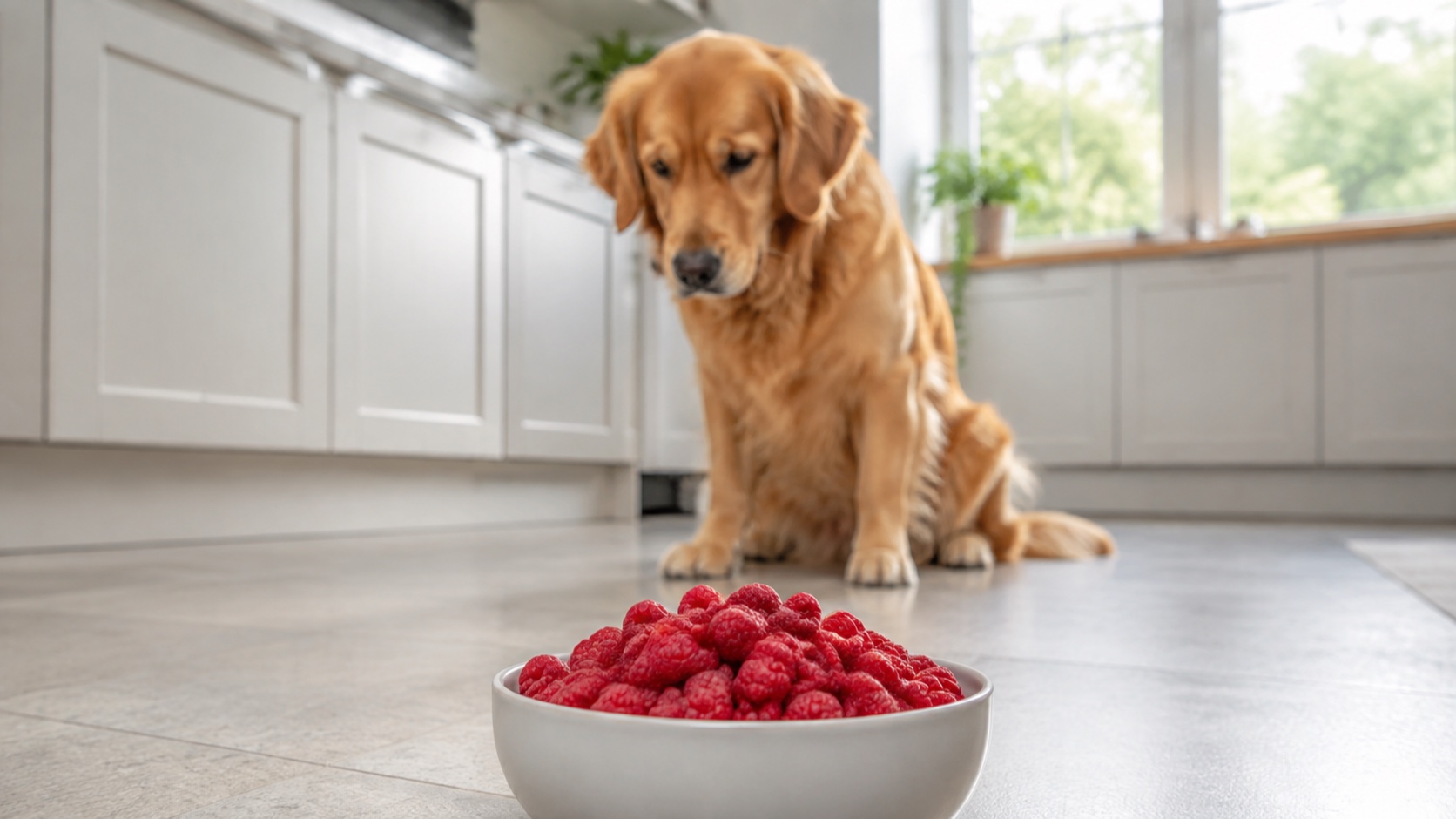
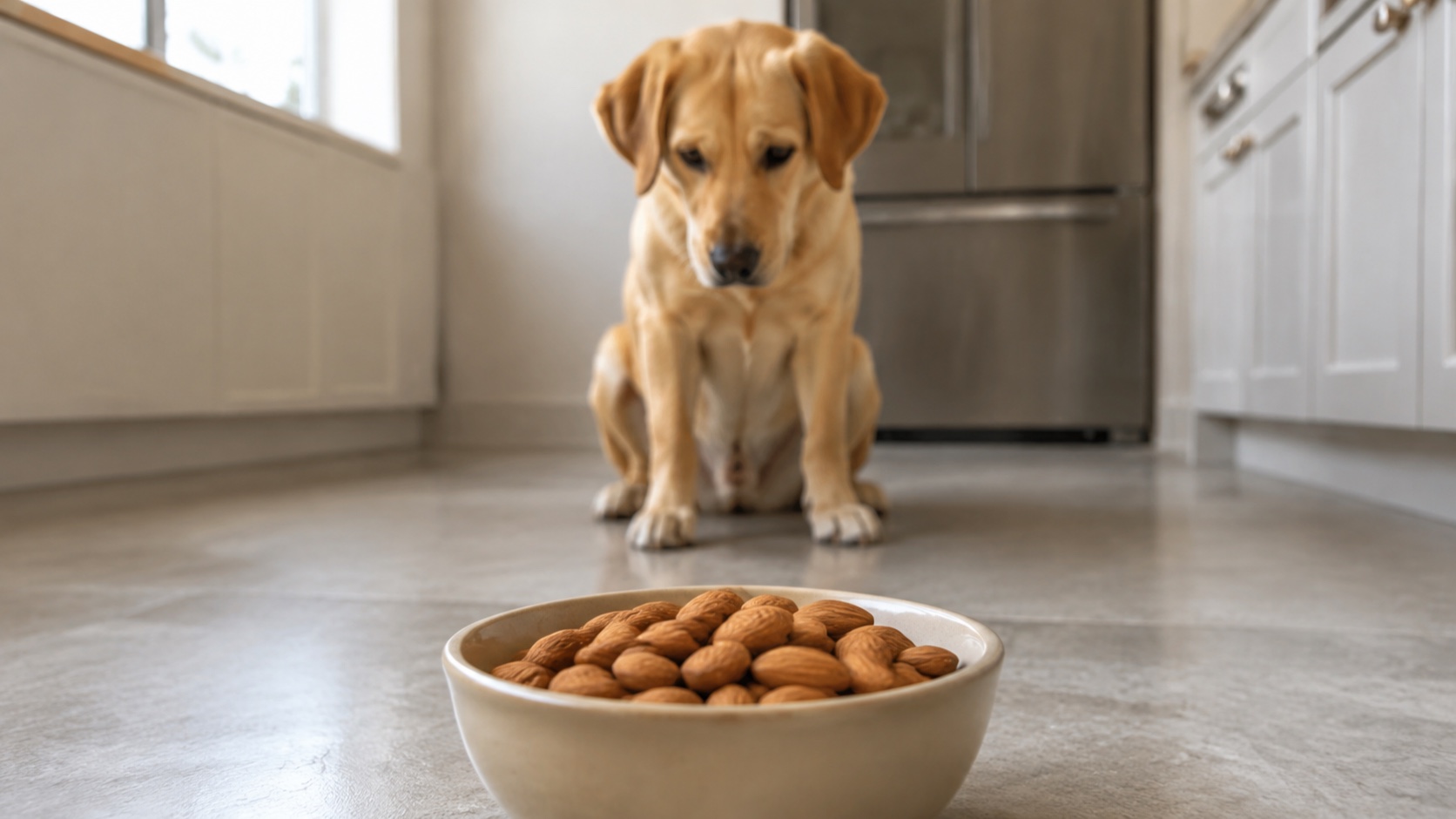
Quick answer: Do not offer almonds as treats. One plain sweet almond is unlikely to poison a healthy dog, but the nut can choke, block the gut, or load the pancreas with fat. Call your clinic or a poison line if a small dog ate several, or if the almonds were seasoned.
Dogs should not eat almonds as treats; one plain sweet almond is not toxic, yet the nut is still unsafe.
This page is a research-desk brief. We compared published toxicology notes and maker-listed treat labels.
Our selection rule is narrow. We cover accidental almond exposures, plus almond-free dog treats whose makers publish a per-treat calorie figure or a kcal meal-offset on their own pages. We left out grocery almond butters, trail mixes, and any treat whose maker page omitted calories.
Why “not toxic” still means do not feed them
The ASPCA Animal Poison Control Center treats the “almonds are toxic” claim as a myth for sweet almonds sold in the United States. That sentence is easy to misread as permission. It is not.
The same ASPCA note says sweet almonds can still cause stomach upset, vomiting, diarrhea, and possibly pancreatitis. Those are clinical problems. They are not a clean bill of health.
The American Kennel Club’s almonds page says dogs should not eat them.
The AKC lists gastric distress, pancreatitis risk, and obstruction of the esophagus, intestines, or windpipe, especially in small breeds.
So the useful split is this. Sweet almonds are not in the same poison class as grapes. They are still a bad treat.
Bitter almonds are a different food. The ASPCA says they contain a cyanide compound and are considered toxic.
They are not the usual grocery snack. The ASPCA says they are typically not sold in the United States, though a shop may stock them marked as bitter.
If the bag says bitter, treat the event as a poison call.
The World Small Animal Veterinary Association lists macadamia nuts on its toxic-food list for dogs. It does not list sweet almonds there. That match with the ASPCA note still does not make almonds a training reward.
Fat, calories, and the treat budget
Our research team compared the USDA FoodData Central record for whole raw almonds with the WSAVA treat-calorie table. The contrast is why this nut fails as a snack.
USDA FoodData Central lists “Nuts, almonds, whole, raw” as Foundation food 2346393, published October 28, 2022. Per 100 grams, that record reports 51.09 grams of total fat.
The same USDA row lists 625.75 kcal using Atwater general factors. Sodium is 0.0 mg. The fat is in the nut, not in added salt.
The USDA record sets a 30-gram reference amount. Thirty grams of that almond entry carry about 188 kcal and about 15.3 grams of fat.
That is one short handful for a person and a large fat bolus for a dog.
WSAVA says treats should always make up less than 10 percent of a dog’s daily calories. Its 2024 feeding-treats brief then prints a weight table.
A 10 kg dog in ideal condition gets 47 treat calories a day. A 20 kg dog gets 79.
One 30-gram USDA almond serving at about 188 kcal is four times the 47-calorie row. It is more than twice the 79-calorie row.
That math is why “just a few” still blows the budget. The American Kennel Club flags the same fat load as a pancreatitis risk that can start as vomiting and a painful belly.
Raw almonds in that USDA record are not a sodium problem. Salted snack almonds are a different product. The American Kennel Club says salt can drive water retention and, in large amounts, salt toxicity, especially in dogs with heart disease.
Keep water available and watch the belly. Do not skip dinner on a guess.
Seasoned almonds, almond butter, milk, and flour
Most pantry almonds are not plain. Smokehouse dust, barbecue rubs, and honey glaze all add salt and spices. Garlic powder and onion powder are the dangerous pair.
WSAVA lists onions, leeks, shallots, garlic, and chives among toxic food ingredients.
Powdered forms are easy to miss on a flavored-almond line. If the dog ate a seasoned mix, do not wait.
Almond butter looks softer and safer. The mechanical choke risk drops. The fat risk does not.
USDA fat density still sits near half the nut by weight. A licked spoon can still be a rich load for a small dog.
The U.S. Food and Drug Administration lists sugar-free nut butters among products that may contain xylitol, also called wood sugar, birch sugar, or birch bark extract.
Xylitol poisoning, the FDA says, can start within 20 minutes. Signs include vomiting, weakness, collapse, seizures, and liver failure. If the jar is sugar-free, or if xylitol appears under any name, this is a poison call.
Almond milk is mostly water plus a small almond fraction. Unsweetened, unflavored cartons are usually a richness issue, not a toxin event. Sweetened, chocolate, or sugar-free cartons change the problem, so skip them.
Almond flour and almond meal are ground nuts. They remove the whole-nut choke shape and keep the fat.
Baked goods that use them often add chocolate, raisins, or xylitol. Judge the whole recipe, not the word “almond.”
Cheese is another people food that fails the same fat-budget test. WSAVA lists 1 ounce of cheddar at 120 calories. That single cube already exceeds the 47-calorie row for a 10 kg dog.
What to do if your dog already ate almonds
Match the response to what was eaten, how much, and the dog’s size. The American Kennel Club says one or two almonds is a watch-and-wait case for many healthy dogs. More than a few is a clinic call.
Use this three-door check.
Toxin door. Bitter almonds, xylitol, chocolate coating, raisins, garlic, or onion move the case to urgent. Call your veterinarian or the ASPCA Animal Poison Control Center at 888-426-4435.
The FDA also tells owners to call a clinic or a poison center if xylitol is involved.
Mechanical door. Choking, pawing at the mouth, gagging, or a sudden inability to swallow is an emergency. Whole almonds can lodge, and small dogs have less room to spare.
Fat-budget door. A stolen handful is a same-day call if the dog has a pancreatitis history, is very small, or just ate a rich meal.
Do not force vomit at home unless a clinician tells you to do it. Do not give oil, milk, or hydrogen peroxide on a guess.
Bring the bag. The flavor line matters.
Watch for vomiting, diarrhea, gas, loss of appetite, lethargy, a tight belly, and straining. The American Kennel Club lists those signs on its almonds page. Belly pain and repeated vomiting are not “settle overnight” signs.
If the dog is bright and ate one plain sweet almond, many owners can watch at home. That is the AKC’s one-or-two guidance.
Safer swaps we included, and the ones we left out
People reach for almonds because they want a crunchy, high-value reward. That job belongs to a treat built for a dog’s mouth and calorie budget.
Our research team compared published specs on maker pages.
We kept a product only if the maker listed energy per piece, or a kcal meal-offset, on its own page. We excluded peanut-butter grocery jars and any “natural nut” treat that did not publish calories.
WSAVA also names lean cooked chicken breast at 47 calories per ounce. A few small cubes beat any nut.
Plain banana slices are another low-drama produce option. See our bananas brief before you share a whole fruit. Keep any extras inside that same 10 percent treat cap.
The four commercial treats below are currently sold. Attributes come from each maker’s product page.
| Product | Form | Maker-listed energy | Crude fat (min) | Maker feeding note |
|---|---|---|---|---|
| Zuke’s Mini Naturals Chicken Recipe | Soft training piece | 2 kcal/piece; 2,710 kcal/kg | 3.0% | Limit to 3 treats per 1 lb of body weight per day |
| Charlee Bear Original Crunch with Liver | Baked crunchy piece | 2.9 kcal/treat; 3,160 kcal/kg | 3.0% | Listed for training or everyday rewards; no numeric daily cap on the maker page |
| Cloud Star Tricky Trainers Soft & Chewy with Cheddar | Soft training piece | 3 kcal/treat; 2,485 kcal/kg | 8.0% | Intermittent or supplemental feeding only |
| GREENIES Adult Dental Treats Teenie Size Original | Dental chew | Reduce the main meal by 25 kcal per chew | Not listed on the maker page | 1 chew per day for dogs 5–15 lb; not for dogs under 5 lb or under 6 months |
Zuke’s Mini Naturals Chicken Recipe sits at the low-energy end. The Zuke’s page lists 2 kcal per piece, 2,710 kcal/kg, 9.0% minimum protein, and 3.0% minimum fat.
That Zuke’s cap is still not a free pass against WSAVA. A 10 lb dog at 3 treats per pound could be offered 30 pieces. That is 60 kcal, above WSAVA’s 24-calorie row at 4 kg.
Charlee Bear Original Crunch with Liver lists 2.9 kcal per treat, 3,160 kcal/kg, and 3.0% minimum fat. Cloud Star Tricky Trainers Soft & Chewy with Cheddar lists 3 kcal per treat, 2,485 kcal ME/kg, and 8.0% minimum fat. Cloud Star says trainers have used the line since 1999.
GREENIES Adult Dental Treats Teenie Size Original is a once-a-day chew. The Greenies page tells owners to reduce the main meal by 25 kcal for each Teenie fed. That offset is more than half of WSAVA’s 47-calorie row for a 10 kg dog.
The Teenie size band is 5 to 15 pounds. Greenies says the chew is not for dogs under 5 pounds or under 6 months, and reports 47% less tartar and 40% less plaque accumulation in 28 days, as data on file.
None of these products treats an almond ingestion. They replace the nut bowl.
FAQ
Are almonds poisonous to dogs?
Sweet almonds sold for people in the United States are not classified as a toxin by the ASPCA Animal Poison Control Center. Bitter almonds are, because the ASPCA says they contain a cyanide compound. The everyday risk with sweet almonds is choking, gut blockage, and pancreatitis from fat.
What if my dog ate one almond?
The American Kennel Club says one or two almonds is usually a monitor-at-home case in a healthy dog. Watch for vomiting, diarrhea, gagging, and belly pain. Call your clinic if the dog is tiny, if the almond was seasoned, or if any of those signs appear.
Can dogs have almond butter?
Do not offer it as a snack. Soft butter removes some choke risk and keeps most of the fat. The FDA says xylitol can appear in sugar-free nut butters and that signs can start within 20 minutes.
Can dogs drink almond milk?
Plain unsweetened almond milk is mostly water. A few laps are usually a mess, not a poisoning. Sweetened, chocolate, or sugar-free cartons can add sugar, cocoa, or xylitol, so skip the carton and offer water.
Are roasted or salted almonds worse than raw ones?
Roasting does not make a sweet almond a toxin. Salt and spice mixes add new risks. The American Kennel Club warns that salted almonds can increase water retention, and flavored coatings may include garlic or onion, which WSAVA lists as toxic ingredients.
When should I call a poison line instead of waiting?
Call right away for bitter almonds, a large stolen bag, several whole nuts in a small dog, seasoned mixes, chocolate coatings, or any xylitol label. The ASPCA Animal Poison Control Center number on its myth note is 888-426-4435. Have the bag in your hand when you call.
Are peanuts a safer nut for dogs?
Peanuts are legumes, not tree nuts, and they still fail a fat-budget test if you pour them freely. Use a maker-listed training piece from the table, or a plain produce slice, if you need a reward.