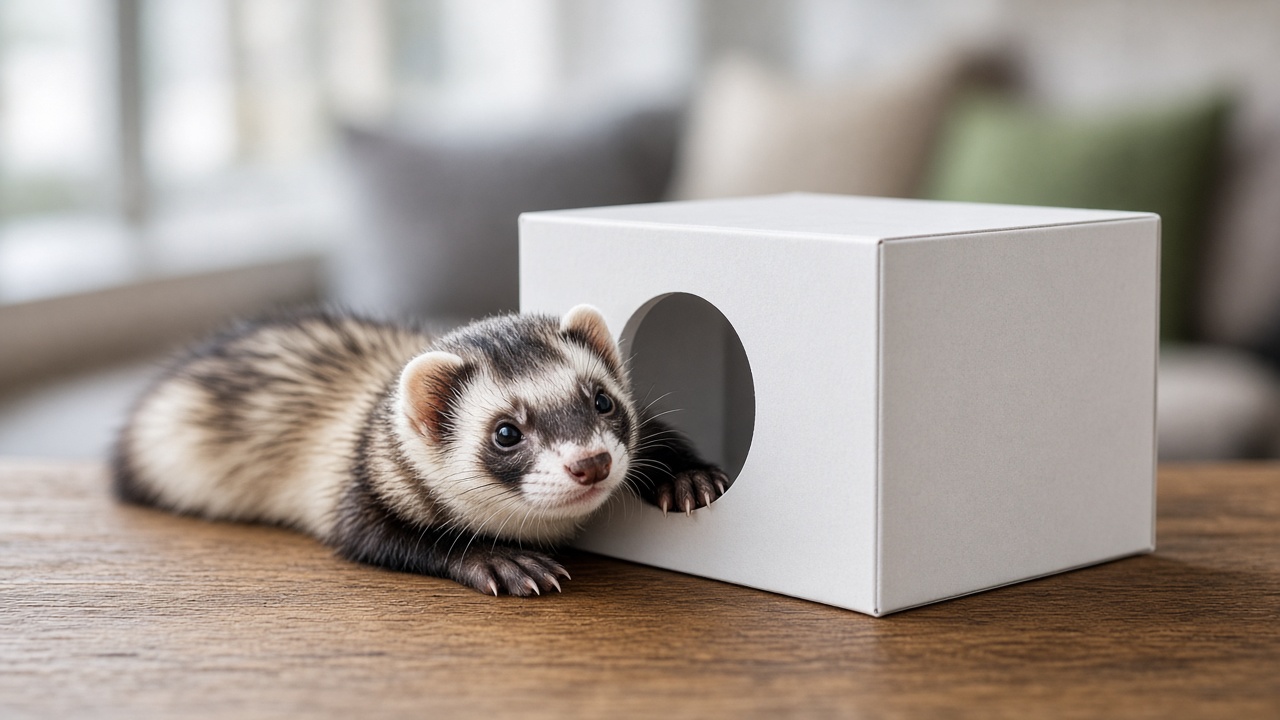
Quick answer: Pet ferrets are one domestic species, not a set of dog-style breeds. Use the American Ferret Association’s eight colors and pattern names. Coat shade does not change diet, housing, or expected lifespan.
The American Ferret Association lists eight colors and no separate breed classes for pet ferrets. This page is a research-desk readout of that championship chart and of daily diets still listed by their makers. We did not run feeding trials, score live show animals, or visit commercial breeding barns.
Our research team counted 35 named pigmented color-pattern pairs on the Association’s combination grid. That count is the number we use when a seller invents a “new breed.”
The Color-First Rule We Used
We used one selection rule for the whole page. We call it the Color-First Rule.
A color or pattern enters this article only if it appears on the American Ferret Association championship chart. A daily diet enters the comparison table only if the maker still publishes a ferret-specific guaranteed analysis.
We left out wild mustelids sold as novelty “breeds.” We left out United Kingdom working-polecat labels we did not read on a club’s own page. We left out social-media nicknames that do not match a chart cell.
Angora is mentioned later as coat length, not as an Association color. Length is a hair type. It is not a breed registry class on that chart.
Pet Ferrets Are One Species, Not Dog-Style Breeds
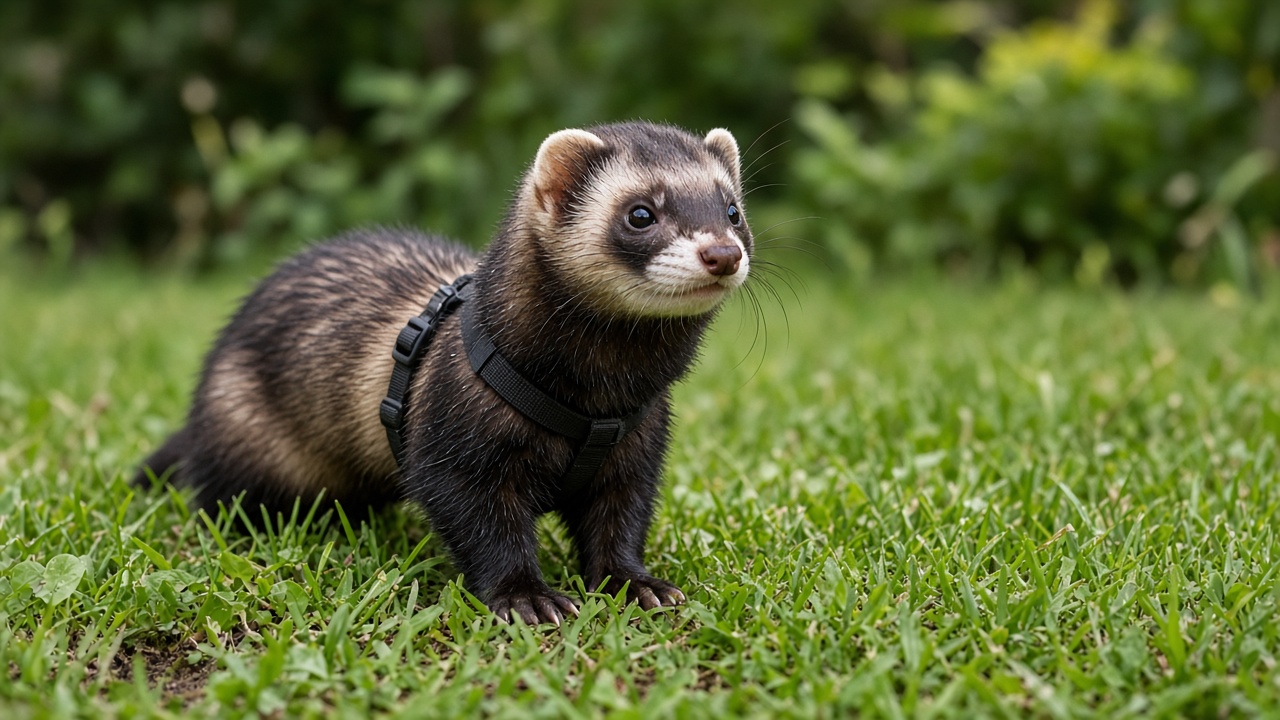
Domestic pet ferrets are Mustela putorius furo. Dog registries split types by bone, skull, and work. Ferret shows do not.
The American Ferret Association defines appearance with two words. Color is guard hair, undercoat, eyes, and nose. Pattern is how that color sits on the body, mask, and feet.
The American Veterinary Medical Association says ferrets normally live between 5 and 9 years. That range is for the pet species. It is not split by coat name.
The U.S. Fish and Wildlife Service treats the black-footed ferret as a different species, Mustela nigripes. The Service listed it as endangered on March 11, 1967. It is the only ferret species native to the Americas, per that Service page.
A pet-store sable is not a prairie species. Do not shop “breeds” by mixing those two names.
The Eight Colors on the AFA Chart
The American Ferret Association lists these eight colors: albino, black, black sable, champagne, chocolate, cinnamon, dark-eyed white, and sable. Each color is a package of hair, eye, and nose targets.
Albino is the absence of pigment and of pattern. Guard hairs and undercoat are white to cream. Eyes are ruby red only, and the nose is pink only.
Dark-eyed white is also a solid white-to-cream coat. Eyes are burgundy, not red, and the nose is pink only. The Association treats this as its own color class.
Black needs true-black guard hairs. The preferred undercoat is white, though a slight golden hue is acceptable. Eyes are black or near black, and the nose is black, near black, or speckled black.
Black sable is darker than sable and colder than brown. Guard hairs are dark ash blackish brown with a glossy black shine. Eyes are dark brown or near black, and the nose is ash blackish brown and may be mottled.
Sable is warm deep brown guard hair. The undercoat is white, cream, or light golden, but not yellow. Eyes are brown or near black, and the nose is light brown, speckled, or a brown “T” outline.
Chocolate is warm milk-chocolate brown. Brown eyes are preferred, and dark burgundy eyes are acceptable. The nose may be pink, beige, brick, or a light-brown “T.”
Champagne is tan, or a diluted chocolate. Eyes are light to dark burgundy. The nose is beige, pink, or pink with a beige or light-brown “T.”
Cinnamon needs a strong reddish cast. The Association says cinnamons are not as common as champagnes. Guard hairs are rich light reddish brown, and eyes are light to dark burgundy.
Sellers often relabel a warm sable as cinnamon. Check the reddish cast before you pay a “rare color” premium.
Patterns, White Marks, and 35 Named Combos
Pattern is concentration, not a second species. The Association publishes percentage bands for the main body patterns.
Standard pattern aims for about 90% to 100% colored guard hairs. Color still looks lighter than solid, and points stay easy to see. Masks are full or “T” bar.
Solid pattern aims for 100% colored guard hairs. White guard hairs should be 0% on body and points. The ferret should read as one density from head to tail.
Roan pattern is 50% to 60% colored guard hairs against 40% to 50% white. Mask and nose follow the underlying color. A black roan is the chart’s “aka Silver” label.
Point, also called Siamese, needs a clear body-to-point contrast. Black, sable, cinnamon, and chocolate points need a thin “V” mask. Champagne may have a “V” or no mask.
White-mark patterns sit on top of color. Blaze needs a long white stripe from the forehead down the neck, preferably to the shoulders. All four feet should show white tips or mitts.
Panda prefers an almost fully white head, neck, and throat. Mitts should be on all four feet. Eyes should be varying shades of burgundy.
Mitt requires white mitts on all four feet. Bib and knee patches may be present. A white tail tip is acceptable.
The Association’s combination chart names six pigmented colors across blaze, panda, point, roan, solid, and standard. That grid has 36 cells, and Black Sable Point is marked N/A. Our research team counted 35 named pigmented pairs.
Albino, dark-eyed white, and dark-eyed white pattern sit outside that grid. Dark-eyed white pattern is any ferret at least 90% white, with non-red eyes, plus any stripe, spot, or sprinkle of color.
Black solid and black standard always carry mitts on that chart. Read those two as mitt classes, not as unmarked blacks.
Coat Length Is Not a Breed Class
Some sellers advertise Angora ferrets as a breed. The Association chart we read does not list Angora as a color.
Treat long hair as a coat-length label. Ask the seller for the color and pattern names from the chart, then ask about grooming time. Long guard hairs mat, and short coats still shed in seasonal waves.
Color can shift with age and molt. A winter sable may look darker than the same animal in late summer. Do not rename the ferret every season.
White-heavy patterns can be harder to photograph. That is a lighting problem. It is not proof of a new type.
Color Does Not Change Daily Diet
Coat class does not change protein need. A champagne kit and a black sable adult still need a meat-heavy daily diet.
Marshall Pet Products says ferrets are obligate carnivores. Food passes through the gut about every 2+ hours. The same maker contrasts a cat’s digestion at about 5 hours with a ferret’s closer to 2 hours.
Marshall Pet Products lists a good ferret diet as 30% to 40% animal-based protein and 15% to 20% fat. The flagship Marshall Premium Ferret Diet is listed at 38% protein.
Marshall Premium Ferret Diet Senior Formula is made for ages 4 years and up. The maker says it has 10% less fat and protein than the flagship. Use that row when an adult is less active, not because the ferret is sable.
Wysong lists Ferret Epigen 90 at 62% crude protein, 18% crude fat, 3% crude fiber, and 0.2% taurine. The switch plan runs 15 days and starts at about 10% new food.
Wysong Ferret Epigen 90 Digestive Support stays at 62% protein. Fat drops to 16%, and fiber rises to 5%. The maker calls it less concentrated than standard Epigen 90.
Oxbow Animal Health lists Essentials Ferret Food at 42.00% protein and 20.00% fat. Taurine is 0.50%, and calcium is 1.20%. Phosphorus is 0.90%, and vitamin A is 20,000 IU/kg.
Our research team compared those published guarantees. Listed protein ran from 38% to 62%, a 24-point spread. Listed taurine, where given, ran from 0.2% to 0.50%.
None of those numbers is a color rule. They are label rules.
Housing follows body, not pigment. A ferret still needs a tight, escape-proof cage and supervised floor time. A silent hamster wheel built for large hamsters is the wrong diameter and the wrong gait.
Sleep gear is also a size problem, not a color problem. A large-breed orthopedic dog bed swamps a ferret’s small frame. Ferrets pile in hammocks and closed tubes.
Seasonal chill is real. An insulated dog coat cut for small breeds is still a dog pattern and will gap on a tubular chest. Use ferret-cut garments if you use a coat at all.
| Product | Crude protein (min) | Crude fat (min) | Crude fiber (max) | Taurine (min) | Other listed spec |
|---|---|---|---|---|---|
| Marshall Premium Ferret Diet | 38% | Not listed on the diet overview page | Not listed on the diet overview page | Not listed on the diet overview page | Flagship formula; Marshall kits start on it |
| Marshall Premium Ferret Diet Senior Formula | 10% below the flagship | 10% below the flagship | Not listed on the diet overview page | Not listed on the diet overview page | Made for ages 4 years and up |
| Wysong Ferret Epigen 90 | 62% | 18% | 3% | 0.2% | 15-day switch; start at about 10% new food |
| Wysong Ferret Epigen 90 Digestive Support | 62% | 16% | 5% | 0.2% | Maker calls it less concentrated than standard Epigen 90 |
| Oxbow Essentials Ferret Food | 42.00% | 20.00% | 3.00% | 0.50% | Calcium 1.20%; 4 lb bag listed |
FAQ
How many ferret breeds are there?
There are not dog-style breeds in the American Ferret Association system. The Association lists eight colors and a set of patterns. Our count of named pigmented pairs on the combination grid is 35, plus the white classes.
Are albino and dark-eyed white the same type?
No. The Association says any solid white ferret with red or pink eyes is albino. Dark-eyed white is a solid white ferret with non-red eyes and a pink nose.
What does “silver” mean on a seller listing?
On the Association chart, black roan is labeled “aka Silver.” That is a 50% to 60% colored-hair pattern on a black base. It is not a ninth color.
Do different colors need different food?
No. Color is cosmetic, so compare published protein, fat, fiber, and taurine on the maker page. Marshall Pet Products still lists 38% protein on the flagship diet for all kits it raises.
Is an Angora ferret a separate breed?
Not on the Association color chart we analyzed. Ask for an Association color and pattern name first. Then treat Angora as a coat-length label and plan extra grooming.
Why do some ferrets look lighter in summer?
Guard-hair density and undercoat tone shift with molt. The Association’s percentages are show-day targets. They are not a promise that the coat stays fixed all year.
Is a pet ferret the same animal as a black-footed ferret?
No. Pet ferrets are Mustela putorius furo. The U.S. Fish and Wildlife Service describes Mustela nigripes as the only ferret native to the Americas and lists it as endangered.