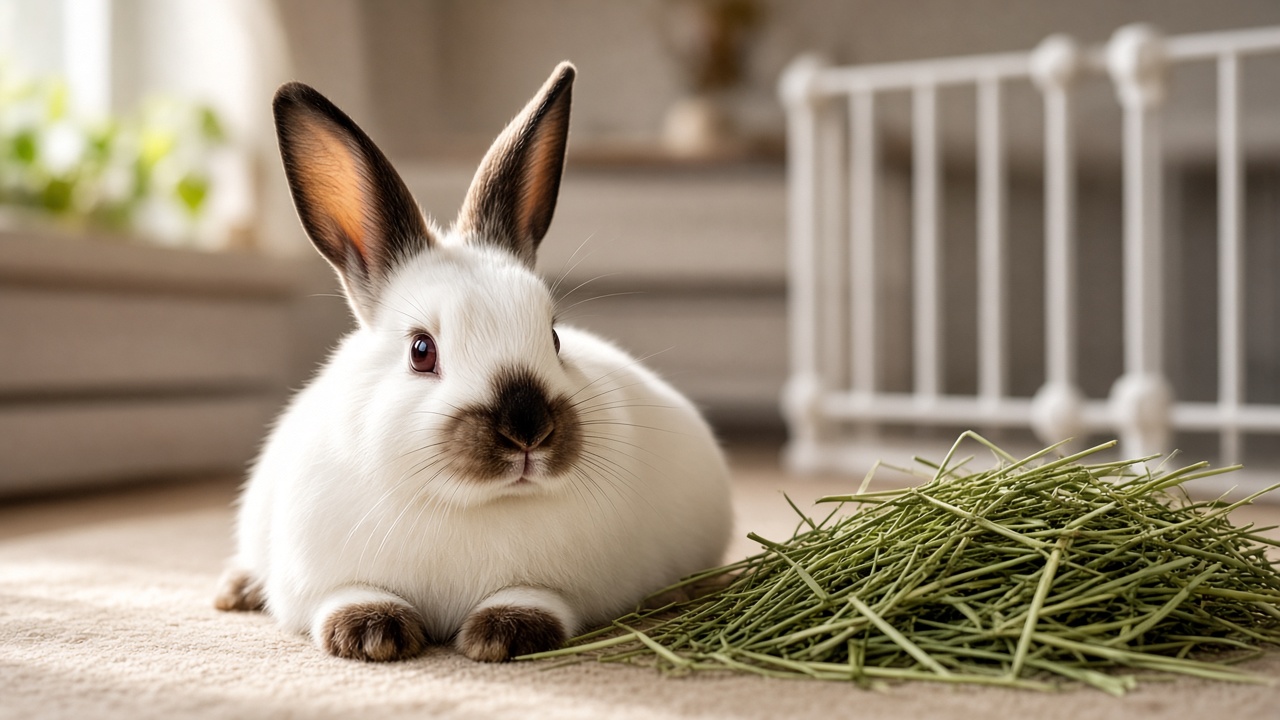
Quick answer: Keep a Himalayan indoors on unlimited grass hay and a 4-by-4 pen. Give at least four hours of daily run time. This is a calm 2.5-to-4.5-pound pointed breed, not a dwarf for a starter cage.
ARBA lists the Himalayan as its only cylindrical rabbit, with a 4.5-pound maximum senior weight. This page is a research-desk housing brief that did not keep Himalayans, score show stock, or run feeding trials.
Selection rule: we compared only indoor rest-space products. Each maker page had to publish length, width, and either pan depth or bar spacing. We left out outdoor hutches, wire-floor breeding cages, and SKUs that omit a numeric footprint.
Size, type, and the four point colors
The Himalayan is a small show-and-pet breed, not a dwarf novelty. The American Rabbit Breeders Association sets the senior maximum at 4.5 pounds. ARBA also calls it the only cylindrical typed breed it recognizes.
A Himalayan description first appeared in an 1857 European publication, according to ARBA. By the late 1800s, breeders in Great Britain were showing the same pointed white rabbit. ARBA’s site now lists 53 recognized rabbit breeds, and the Himalayan is one of them.
The American Himalayan Rabbit Association sets senior weight at 2.5 to 4.5 pounds. Jacinta Taulbee recorded that range, and a 3.5-pound ideal, in a club history. That is the animal most pet homes will actually feed and house.
AHRA splits a 100-point standard between type and markings at 41 points each. The body alone takes 31 of the type points. Fur takes 10 points.
The body should read long, narrow, and snaky, with no arch. Pin bones show. That stretched outline is why a short pet-store cage fails this breed even at 3.5 pounds.
Four point colors are shown: black, blue, chocolate, and lilac. AHRA dates chocolate acceptance to 1995 and lilac to 1997. The body stays white, with color on the nose, ears, feet, and tail.
Temperament and daily handling
ARBA describes a laid-back rabbit that is easy to handle. The club calls the breed useful for youth showmanship. That matches what most pet searches mean by “calm.”
AHRA’s club essay calls the Himalayan a strong choice for young handlers and a classic showmanship rabbit. The same essay notes a head weave. That motion is the rabbit trying to focus, not a sign of panic.
A Himalayan still needs daily company. House Rabbit Society places rabbits in shared rooms, not isolated spare closets. Loneliness is a housing failure, not a personality trait.
Handle from underneath and support the hindquarters. A long, light body twists if you lift by the scruff. Short, quiet sessions beat one long wrestle.
This is not a low-effort pet. It is a low-drama pet. The work is space, hay, and time on the floor.
Housing that matches a 3.5-pound stretch
A Himalayan is small, but the living space should not be. House Rabbit Society says a sleep-and-leisure area should be four times the rabbit’s size. It also wants four or more hours of cardiovascular play each day.
HRS names a 4 ft by 4 ft exercise pen as an ideal base for most rabbits. That is 16 square feet before free-roam time. Any cage is a bedroom, not the home, and should be three to four times the rabbit’s stretched length.
Federal dealer and research rules sit far below that. USDA 9 CFR 3.53 sets 1.5 square feet for a weaned rabbit under 4.4 pounds. Interior height is 14 inches, and that floor is a licensed-facility rule, not a pet plan.
Our research team analyzed published footprints from four current indoor SKUs. We multiplied maker length by maker width, then compared the result with the HRS 16-square-foot pen. We call that pass the PetBench Footprint Check.
None of the three starter cages reached 16 square feet. The largest cage, Prevue Pet Products 5524 Ranch, is 6.0 square feet. That is 37.5 percent of the HRS pen.
| Product | Maker-listed size (L × W × H) | Calculated floor area | Pan or bar spec | Maker-stated animals |
|---|---|---|---|---|
| Prevue Pet Products 528 Universal Small Animal Home | 32-1/2" × 19" × 17-1/2" | 4.3 sq ft | 6-1/4" base; 3/8" wire | Small rabbits, among other small animals |
| Prevue Pet Products 5524 Universal Small Animal Home / Ranch | 39-1/4" × 22" × 18-5/8" | 6.0 sq ft | 6" base; 3/8" wire | Standard rabbit, among other small animals |
| Kaytee Large My First Home Cage | 30" × 18" × 16.5" | 3.8 sq ft | 1" bar spacing | Guinea pigs or dwarf rabbits |
| MidWest Homes for Pets Critterville Small Animal Exercise Pen | 8 extra-tall panels | More than 10 sq ft | 1" bar spacing | Rabbits, guinea pigs, ferrets, and rats |
The Kaytee Large My First Home Cage lists 30 by 18 by 16.5 inches. Kaytee markets it for guinea pigs or dwarf rabbits. A 3.5-pound Himalayan is small, but it is not a dwarf in a 3.8-square-foot box.
Prevue’s 528 Cottage lists 32-1/2 by 19 by 17-1/2 inches. The 6-1/4-inch base and 3/8-inch wire still yield only 4.3 square feet. Prevue includes small rabbits on that page.
The Prevue 5524 Ranch is the longest cage in the set. Prevue lists a standard rabbit among its animals. The 6-inch tubby base helps contain litter, but it still cannot replace a 4-by-4 pen.
MidWest Homes for Pets states that the Critterville Small Animal Exercise Pen uses eight extra-tall panels. The maker claims more than 10 square feet, with 1-inch bar spacing. That is the only SKU here that approaches HRS guidance, and it still needs free-roam time.
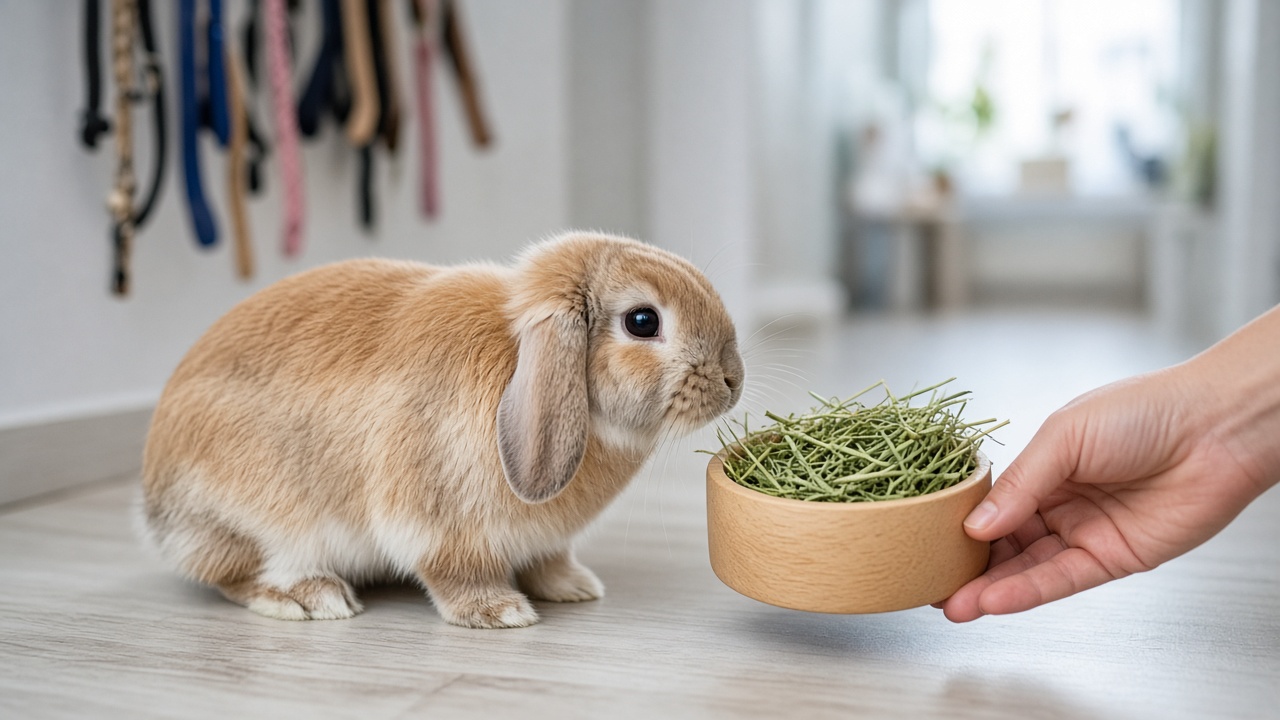
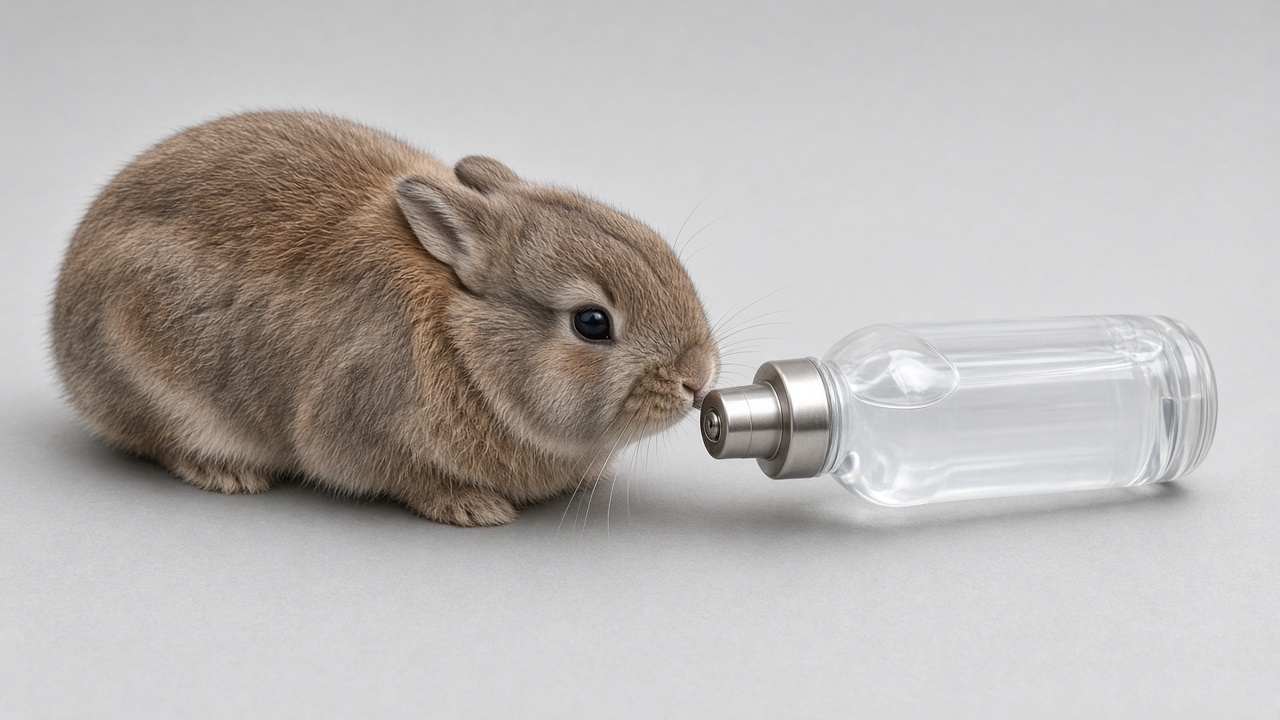
Use a solid, cushioned floor. House Rabbit Society lists a blanket or other padding, a hide, a litter box, and a water bowl. Bowls beat bottles for volume, according to House Rabbit Society.
Rabbit-proof cords, plants, and baseboards before the first free-roam hour. A calm breed still chews. Curiosity is not a temperament flaw.
Indoor climate and point-color smut
Himalayan points are temperature-sensitive. AHRA defines smut as pelt stain on a pointed rabbit. The club says moisture and temperature must act together.
AHRA warns that smut can form once the temperature falls below 65°F. It can appear in a couple of hours. A cold carrier left in a car overnight is a classic trigger on the show table.
Pet homes see the same physics. A drafty garage in winter can darken the white coat, while a hot room can fade points. Keep the rest space inside a room you already heat and cool.
AHRA also notes that markings change with season and climate. Legs can bar, frost, or retract. That is genetics plus weather, not a sudden new breed.
Do not chase perfect points with a space heater. Stable indoor air is enough. AHRA says smut leaves only after the old coat sheds.
Hay-first feeding for a small adult
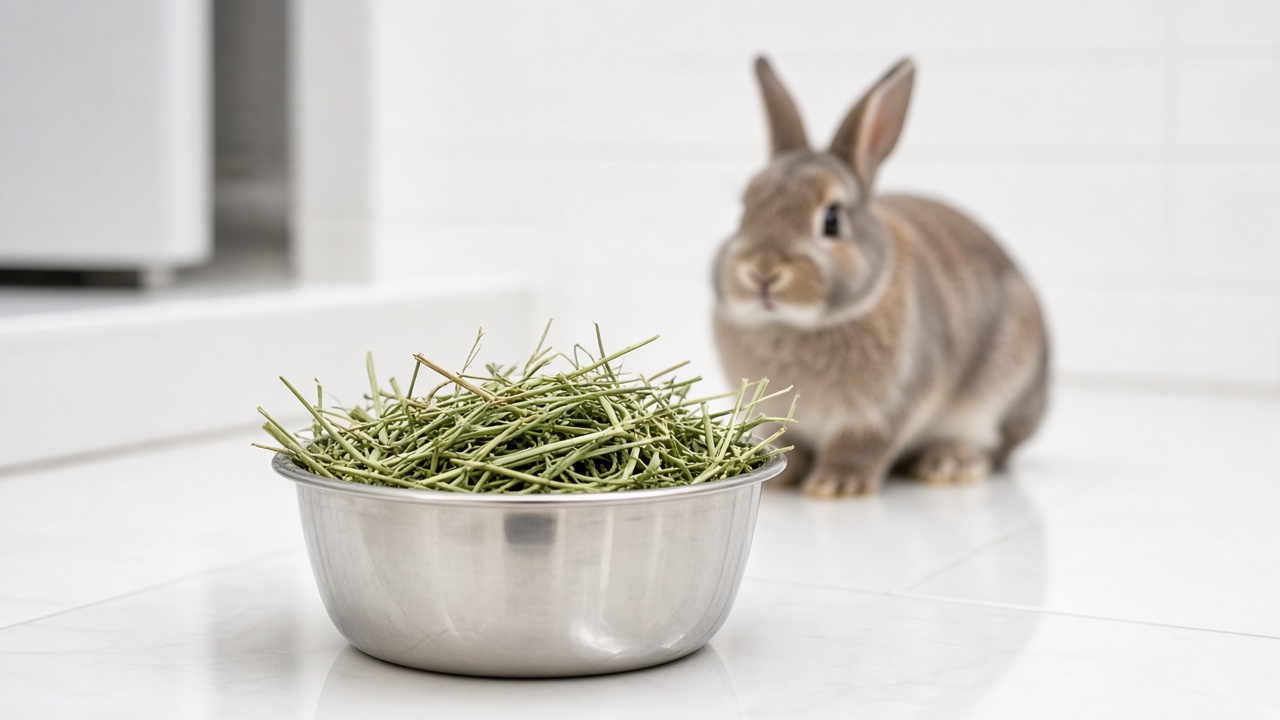
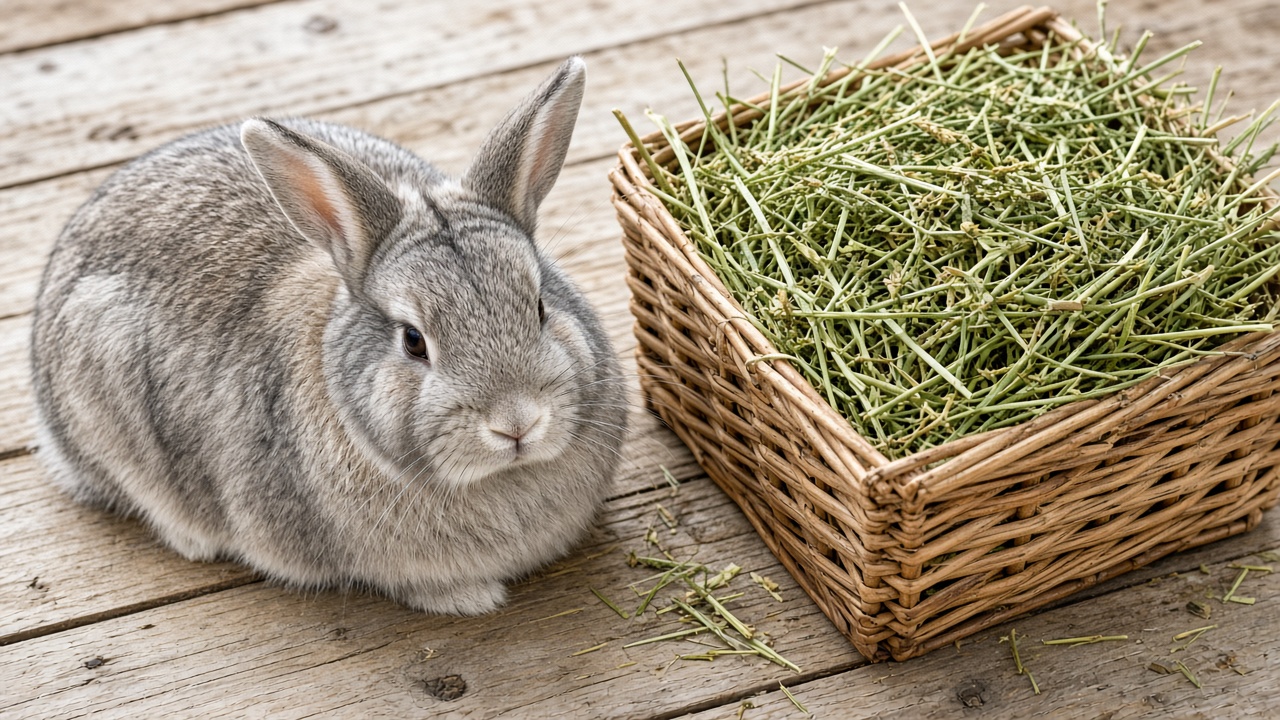
House Rabbit Society puts unlimited grass hay at the center of an adult diet. Timothy, orchard, and oat hays are the usual adult list. Alfalfa is for young rabbits and nursing does, not a healthy 3.5-pound adult.
HRS sets pellets at 1/4 cup per 6 pounds of body weight per day. Scaled to the AHRA 3.5-pound ideal, that is about 0.15 cup.
HRS also wants a minimum of 2 cups of chopped vegetables per 6 pounds. That scales to about 1.2 cups for the same rabbit.
Leafy greens should make up about 75 percent of the fresh portion, according to House Rabbit Society. Non-leafy vegetables stay near 1 tablespoon per 2 pounds per day. Fruit, if used, is about 1 teaspoon per 2 pounds per day.
HRS wants pellet fiber at 18 percent minimum. Skip mixes with seeds, nuts, corn, or yogurt drops. Those extras invite sorting and sugar.
The Association of American Feed Control Officials does not approve or certify rabbit food. AAFCO model labeling still requires a guaranteed analysis. That block must show minimum crude protein, minimum crude fat, and maximum crude fiber and moisture.
Read the fiber line on the bag. Then compare brands in our best rabbit pellets guide. Hay still does most of the work.
House Rabbit Society tells keepers to wash vegetables for at least two minutes and change the water several times. The club ties that step to Rabbit Hemorrhagic Disease Virus Type-2. It is kitchen hygiene, not a diagnosis.
Fresh water stays out all day. HRS prefers bowls because rabbits drink more from them.
Coat care without a heavy grooming load
AHRA calls for a short, fine, silky flyback coat. Fur is only 10 points on the standard. A Himalayan is not an Angora.
Weekly brushing still matters. House Rabbit Society lists daily brushing as one way to cut hay dust and loose hair. A short coat still sheds, just with less drama.
Use a soft slicker or a rubber grooming tool. Work with the flyback, not against it. Our rabbit grooming kit review walks through tools that fit a short coat.
Check feet after every litter-box clean. Fine bone and a long body put weight on small hocks. Solid floors and dry litter protect them better than wire.
Nails grow on a 3.5-pound rabbit the same way they grow on a 10-pound rabbit. Trim before they click on hard floors. If you want a sequence, follow our step-by-step rabbit grooming guide.
Do not bathe the whole rabbit. Spot-clean urine with a damp cloth. A soaked Himalayan chills fast, and chill is how smut starts.
FAQ
How big do Himalayan rabbits get?
ARBA caps seniors at 4.5 pounds. The American Himalayan Rabbit Association lists a 2.5-to-4.5-pound senior range and a 3.5-pound ideal. Plan housing and pellets for that 3.5-pound adult, not for a 2-pound kit.
Are Himalayan rabbits good pets for first-time keepers?
ARBA calls the breed laid back and easy to handle. AHRA highlights youth showmanship. Daily hay, a large pen, and floor time still apply, because calm does not mean cage-and-forget.
How much space does a Himalayan rabbit need?
House Rabbit Society treats a 4-by-4 pen plus four play hours as the usual plan. Our PetBench Footprint Check found starter cages at 3.8 to 6.0 square feet. Use those cages only as a rest box inside a larger pen.
Why do Himalayan points change color?
Points darken in cooler, damp conditions and fade in heat. AHRA says smut forms when moisture and temperatures below 65°F act together. A stained coat is a climate problem, not a new variety.
What should a Himalayan rabbit eat each day?
Give unlimited grass hay plus about 0.15 cup of pellets. Add about 1.2 cups of greens for a 3.5-pound adult. House Rabbit Society also limits fruit to 1 teaspoon per 2 pounds and wants a two-minute wash.
Do Himalayan rabbits need a lot of grooming?
No. The standard calls for short flyback fur, so weekly brushing and nail trims cover most homes. Heavy mats belong to long-coated breeds.
Can two Himalayans share one pen?
A pair needs more than a single 4-by-4. House Rabbit Society already treats that pen as a base for one typical rabbit, with extra roam time. Double the floor before you double the rabbits, and introduce them slowly on neutral ground.