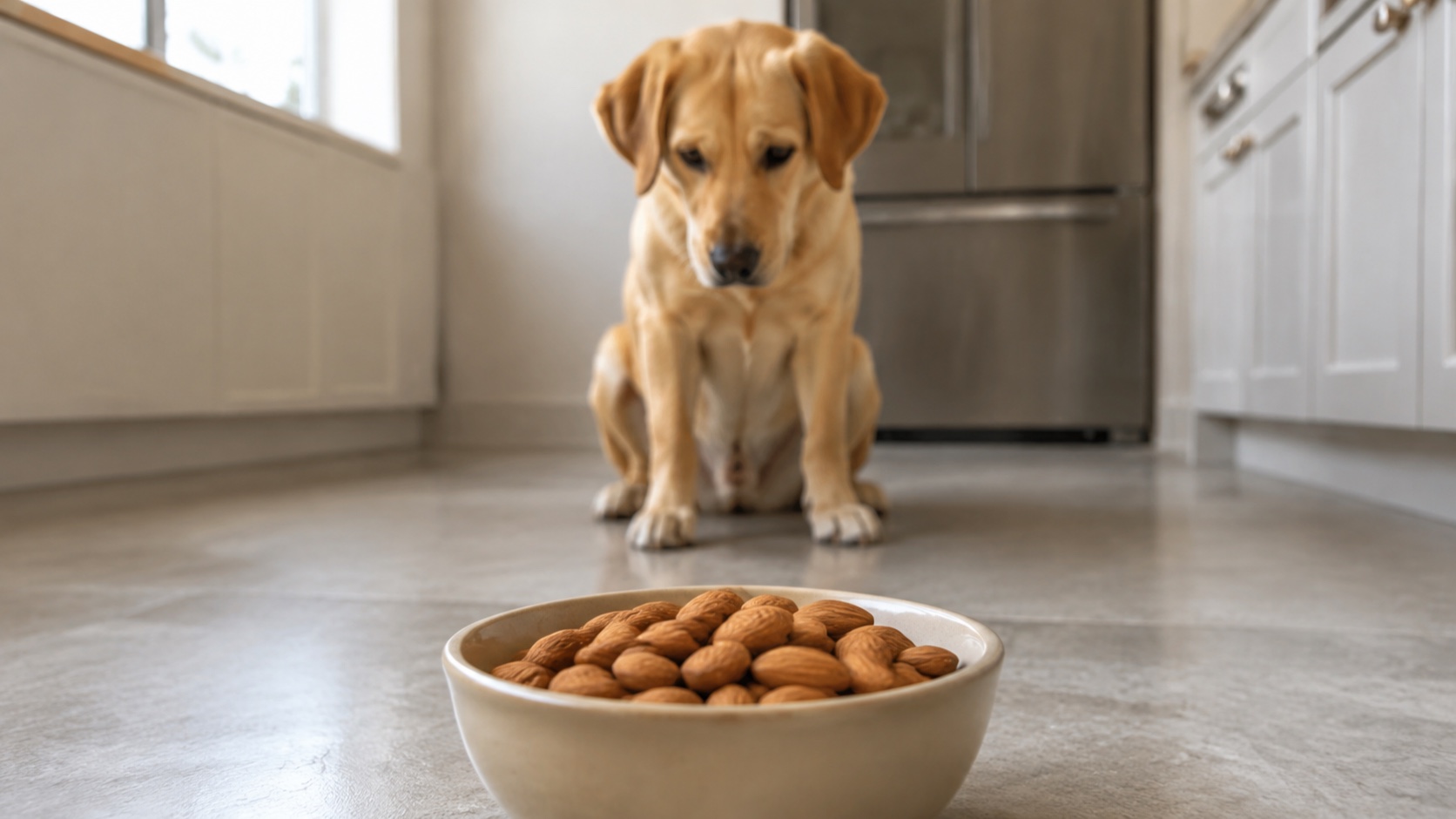
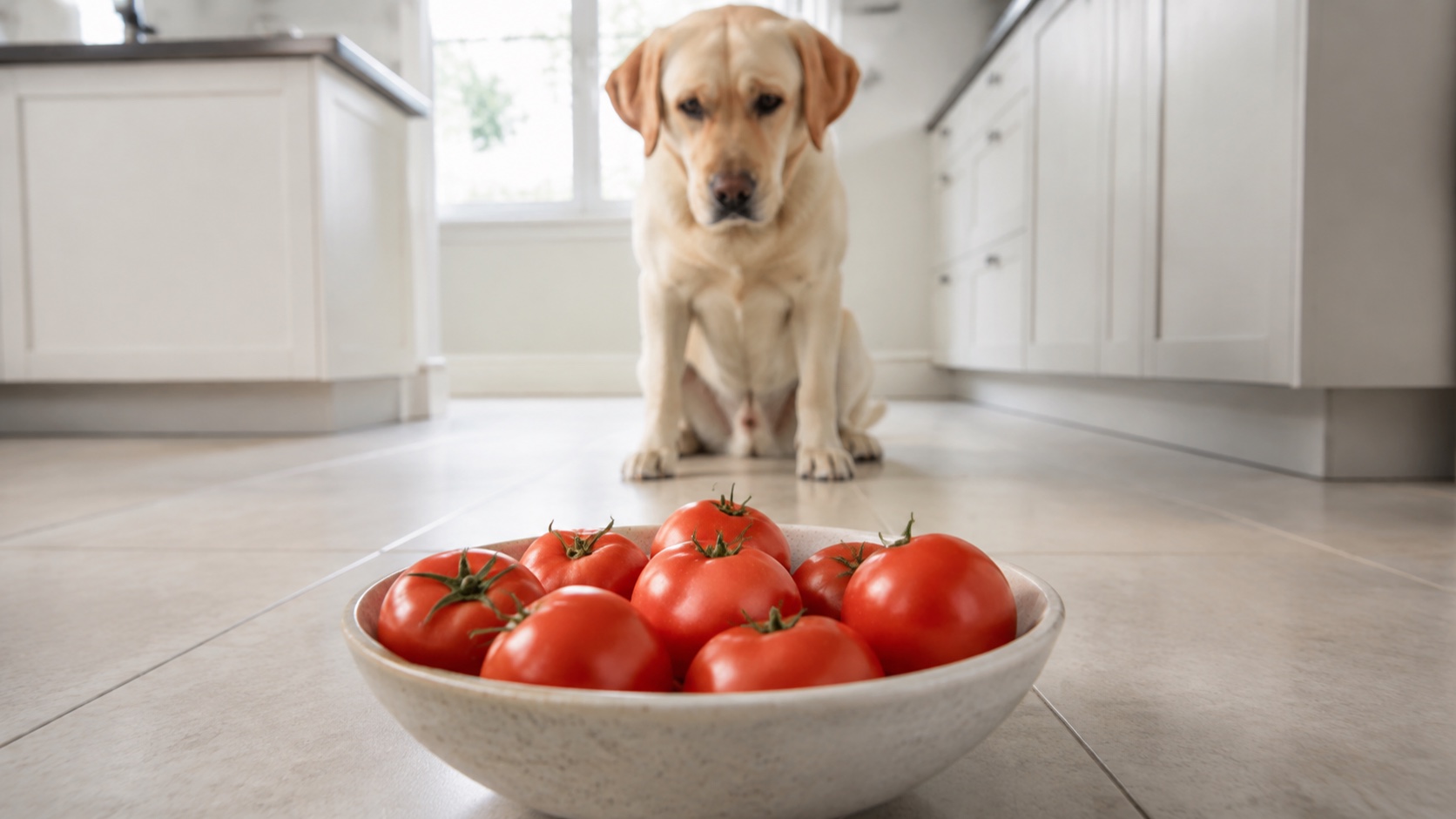
Quick answer: A dog can eat a small piece of fully ripe, red tomato flesh. Skip green tomatoes, leaves, stems, and sauces that hide onion or garlic. Keep any tomato snack inside the daily treat budget.
Ripe red tomato flesh is listed as non-toxic to dogs; green fruit and the plant are not. This page is a research-desk reading of published poison-control listings and current maker labels.
The query is a yes-or-no on a nightshade fruit that changes as it ripens.
Selection rule: We covered fully ripe red flesh as a plain snack. We also covered currently sold complete dog foods. Those maker pages list tomato or dried tomato pomace and publish protein, fat, fiber, and calorie figures.
We left out ketchup, pasta sauce, green garden fruit, and tomato plants. We also left out treats without a guaranteed analysis. We left out any food that does not name tomato on the current product page.
The Ripe-Flesh Rule, in one line
Call this the Ripe-Flesh Rule. Color and plant part decide the answer, not the word tomato.
The ASPCA plant listing for the tomato plant names solanine as the toxic principle. It lists the plant as toxic to dogs, cats, and horses. The same listing states that ripe fruit is non-toxic.
Pet Poison Helpline uses the scientific name Solanum lycopersicum. It says toxic plant alkaloids sit in all parts of the plant. Ripe tomatoes hold the least of those compounds and are considered non-toxic.
A 2023 Molecules paper by Kozukue, Kim, Choi, Mizuno, and Friedman puts numbers on that drop. Immature green tomatoes contain up to 500 milligrams of tomatine per kilogram of fresh fruit. Fresh red tomatoes hold about 5 milligrams per kilogram.
That is a 100-fold decline from green fruit to red fruit. It is the chemical reason the Ripe-Flesh Rule exists.
An earlier HPLC study by Friedman and Levin measured plant parts. It ran in the Journal of Agricultural and Food Chemistry. Medium-small red fruit held 0.19 milligrams of α-tomatine per 100 grams of fresh weight.
Flowers held 130 milligrams per 100 grams. That is about a 700-fold spread inside one plant.
The same paper tracked fruit as it grew. Small green fruit measured 0.8 to 2.5 centimeters. Medium-small green fruit measured 2.5 to 4.0 centimeters.
α-Tomatine fell 65 percent between those two green sizes. When that fruit then ripened to red, the glycoalkaloid fell another 98.5 percent.
Leaves, stems, vines, and flowers stay on the high side of that range. Ripe flesh sits on the low side.
How much ripe tomato is a reasonable amount
A ripe slice is still a treat. It is not a meal.
The World Small Animal Veterinary Association treat guide keeps treats under 10 percent of daily calories. For an average healthy adult dog at ideal weight, that guide lists 47 treat calories at 10 kilograms. It lists 79 treat calories at 20 kilograms.
AAFCO’s consumer page on treats and chews covers the snack label. A product marked snack or treat on the front panel is not required to be complete and balanced. Extra treats can unbalance the main diet and add unneeded calories.
Our research team did not invent a milligram dose of tomato for dogs. No maker page we read publishes a tomato serving size for household fruit.
Use the WSAVA calorie cap instead. Cut a fully red tomato. Remove the stem scar and any green shoulder.
Offer a few small pieces. Do not offer a whole fruit.
Cherry tomatoes and grape tomatoes follow the same color test. They must be fully red. Slice them.
Whole small fruit can slip down as a choke risk.
Skip the snack if the fruit is still green, yellow-green, or streaked with green. Skip it if the dog already ate other extras that day.
Acidity can bother some dogs even when the fruit is ripe. Stop if you see drooling, vomiting, or loose stool.
What to skip: plants, sauces, and mixed plates
Garden plants are the usual problem. A red slice from a salad is not.
The ASPCA listing flags hypersalivation, inappetence, and severe gastrointestinal upset. It also flags depression, weakness, dilated pupils, and a slow heart rate after plant exposure.
Pet Poison Helpline adds vomiting, diarrhea, lethargy, stumbling, and disorientation. Those signs follow large amounts of green tomatoes, leaves, or stems.
Keep dogs out of tomato beds. Fallen green fruit is still green fruit.
Cooked sauces are a different trap. WSAVA’s unsafe-treat list includes onions, leeks, shallots, garlic, and chives. Many pasta sauces and ketchups use those alliums.
They also add salt and sugar a dog does not need.
Do not offer pizza crust with sauce. Do not offer leftover chili. Do not offer salsa.
Tomato plants sit next to other nightshades in home gardens. Potatoes, peppers, and eggplant have their own green-part risks. Treat the whole bed as off-limits.
Grapes are a separate fruit problem. WSAVA lists grapes, raisins, currants, and sultanas as toxic. A ripe tomato is not a grape.
If the bowl held both, read our page on whether dogs can eat grapes. Then call a poison line.
What tomato looks like on current dog-food labels
Commercial tomato ingredients are not garden vines. They are processed ripe-tomato fractions used as fiber.
Our research team compared four currently sold complete foods. Each maker page names tomato or dried tomato pomace and publishes a calorie figure.
Taste of the Wild describes dried tomato pomace as a fiber source from tomatoes. The High Prairie Canine Recipe with Roasted Bison and Roasted Venison also lists whole tomatoes later in the panel.
Fromm Four-Star Game Bird Recipe lists dried tomato pomace. Fromm Four-Star Pork and Peas Recipe lists it too. Hill’s Science Diet Adult Perfect Weight Chicken and Brown Rice Recipe lists dried tomato pomace after chicken meal.
| Product | Tomato form on maker page | Crude protein | Crude fat | Crude fiber | Maker calorie figure | Life-stage note on maker page |
|---|---|---|---|---|---|---|
| Taste of the Wild High Prairie Canine Recipe with Roasted Bison and Roasted Venison | Dried tomato pomace; tomatoes | 32.0% min | 18.0% min | 4.0% max | 3,719 kcal/kg; 422 kcal/cup | Formulated to AAFCO maintenance levels |
| Fromm Four-Star Game Bird Recipe Dry Dog Food | Dried tomato pomace | 29% min | 17% min | 6.5% max | 3,709 kcal/kg; 393 kcal/cup | AAFCO all life stages, including large-breed growth (70 lb or more) |
| Fromm Four-Star Pork and Peas Recipe Dry Dog Food | Dried tomato pomace | 29% min | 17% min | 6.5% max | 3,695 kcal/kg; 392 kcal/cup | AAFCO all life stages, including large-breed growth (70 lb or more) |
| Hill’s Science Diet Adult Perfect Weight Chicken and Brown Rice Recipe | Dried tomato pomace | 28.8% protein, dry matter | 11.2% fat, dry matter | 10.3% crude fiber, dry matter | 3,189 kcal/kg; 298 kcal/cup | For adult dogs; not for puppies or pregnant or nursing dogs |
Those calorie cups are not interchangeable. Hill’s Pet Nutrition lists 298 kilocalories per cup. Taste of the Wild lists 422 kilocalories per cup.
That is a 124-kilocalorie gap on the same household cup.
Hill’s also reports a typical dry-matter fiber of 10.3 percent. Taste of the Wild guarantees fiber at 4.0 percent maximum, as fed. Those two fiber figures do not sit on the same basis.
Taste of the Wild guarantees 80,000,000 CFU of named microorganisms per pound. It guarantees zinc at 150 milligrams per kilogram. It guarantees vitamin E at 150 IU per kilogram.
Hill’s Pet Nutrition states that over 70 percent of dogs lost weight within 10 weeks. That claim is from a USA study the company cites on the Perfect Weight page. The bag sizes on that page are 4 pounds, 12 pounds, and 25 pounds.
None of these labels describe green fruit or tomato leaves. A kibble that names pomace is not permission to let a dog chew a vine.
If your dog ate a green tomato or chewed a plant
Note what was eaten. Note how much. Note the time.
A nibble of one green fruit in a large dog often stays in watch-and-wait territory. A mouthful of leaves or several unripe fruits is a different event.
The ASPCA Animal Poison Control Center number printed on the tomato-plant page is 888-426-4435. A consultation fee may apply.
Pet Poison Helpline prints 855-764-7661. It also prints an 89-dollar incident fee on its tomato page.
Call one of those lines, or a local clinic, if the dog ate plant parts or many green fruits. Call sooner for a small dog, a puppy, or any dog that already looks unwell.
Watch for drooling, vomiting, diarrhea, weakness, dilated pupils, or a slow heart rate. Those signs match the ASPCA clinical list.
Do not invent a home antidote. Do not wait for a second bowl of water to “flush” alkaloids.
If the only item was a red cherry tomato from a plate, the listing still calls ripe fruit non-toxic. Watch for ordinary stomach upset from acid or volume.
How tomatoes compare with other people foods
Ripe tomato flesh is a low-density snack. Many fridge items are not.
WSAVA’s treat table lists cheddar cheese at 120 kilocalories per ounce (28 grams). That single ounce can spend the whole 47-calorie treat budget for a 10-kilogram dog.
If you already share cheese, read our page on whether dogs can eat cheese. Do that before you add tomato.
Bananas are another ripe fruit people hand over. They carry sugar and calories without the nightshade alkaloids. For portion context, see whether dogs can eat bananas.
USDA FoodData Central SR Legacy tables list 2,573 micrograms of lycopene in 100 grams of raw red tomato. A 2022 Nutrients review reproduces that table. The same table lists none in raw green tomato.
Vitamin C runs 13.7 milligrams per 100 grams in raw red fruit. It runs 23.4 milligrams in raw green fruit.
Green fruit can look stronger on vitamin C alone. It still holds the high tomatine load. Lycopene shows up after the fruit turns red.
That nutrient split is why color is the gate. A generic “tomatoes are healthy” line is not.
FAQ
Can dogs eat cherry tomatoes?
Yes, if they are fully red and sliced. The Ripe-Flesh Rule does not change with fruit size. Remove any green stem and offer one or two pieces.
What happens if a dog eats a green tomato?
Green fruit holds far more tomatine than red fruit. The Molecules paper puts that gap at about 500 versus 5 milligrams per kilogram. Call a poison line if the dog ate several fruits or also chewed leaves.
Can dogs eat tomato sauce or ketchup?
Do not offer them as a snack. WSAVA lists onion and garlic family plants as toxic food ingredients. Many sauces use those ingredients plus extra salt, so plain ripe flesh is the only tomato form this page covers.
Are tomato leaves more dangerous than the fruit?
Leaves and flowers sit at the high end of published α-tomatine values. Friedman and Levin recorded 130 milligrams per 100 grams in flowers, against 0.19 in medium-small red fruit. Keep dogs away from the whole plant.
Can puppies eat ripe tomatoes?
Puppies have smaller bodies and less treat room. WSAVA still caps treats under 10 percent of daily calories. A tiny red piece is the most this page will support, and green fruit and plants stay off the list.
Is tomato pomace in dog food the same as a garden tomato?
No. Pomace is skins, pulp, and seeds left after ripe-tomato processing. Maker pages for Taste of the Wild, Fromm, and Hill’s list it as a fiber ingredient, not a garden pass.
How do I prepare a ripe tomato for a dog?
Wash it and confirm it is fully red. Cut away the stem and any green shoulder, then dice a few pieces. Serve them plain, with no oil, salt, or cheese on top.