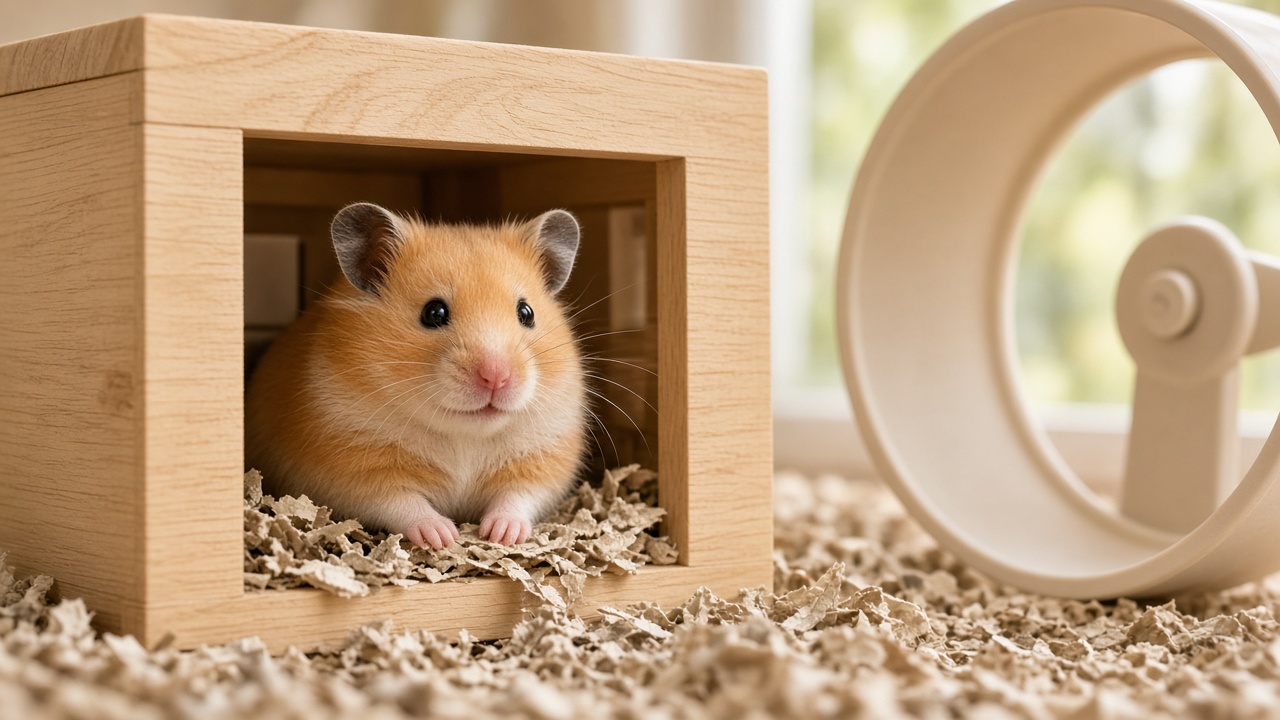
Quick answer: Choose a gerbil pair if your household is home at dawn, dusk, and daytime. Choose one Syrian hamster if you want a single pet that wakes after dark. The American Veterinary Medical Association lists a two-to-three-year life for both.
A Syrian hamster must live alone and is nocturnal; gerbils need a pair and peak at dawn and dusk. This page is a species-choice brief from our research desk. We did not keep a colony, film overnight activity, or review clinic charts.
If that claim is wrong, a Syrian hamster would share a cage without fights. Or a gerbil pair would sleep through a school-day afternoon. The American Veterinary Medical Association states that hamsters housed together may fight and are usually housed alone.
The same AVMA page says gerbils are happier as a pair or small group. It also says hamsters are nocturnal. Gerbils, it notes, are more active during the day.
The National Centre for the Replacement, Refinement and Reduction of Animals in Research adds a finer clock. NC3Rs writes that gerbils are active by night and day. Their peak comes at dawn and dusk.
What we included, and the rule we used
We used one selection rule. We covered only Mongolian gerbils, Meriones unguiculatus, and the hamster groups treated as common U.S. pets. Those groups are Syrian hamsters, Mesocricetus auratus, and dwarf hamsters in the genus Phodopus.
We included a habitat only if the maker published length, width, and height. Our research team analyzed those listed numbers.
We left out guinea pigs, mice, rats, and travel carriers. We also left out any cage whose manufacturer does not list those three dimensions.
The social-and-schedule split
Roster size is the first fork. The AVMA says hamsters housed in pairs or groups may fight. They are usually housed alone.
Gerbils are more active and social. The AVMA says they are happier as a pair or a small group.
NC3Rs is stricter for gerbils. Wild groups run from two to 17 animals. Single housing is not recommended.
Same-sex gerbil groups should be set up as juveniles. NC3Rs says that means before seven to eight weeks. Unrelated adults that meet later can fight.
Syrian hamsters sit on the other pole. The Merck Veterinary Manual says both sexes can be aggressive toward their own kind. For a typical home, that still points to one Syrian hamster.
Dwarf hamsters are not a shortcut to a safe pair. The Merck Veterinary Manual puts them under 100 grams.
The AVMA says hamsters are more active at night. That can frustrate children who want a daytime playmate. Night noise from a wheel can also wake a light sleeper.
Gerbils fit a daytime household better on the AVMA’s own wording. NC3Rs still warns that dawn and dusk are the busy hours. A household gone from breakfast to dinner will miss a lot of gerbil motion.
Size, lifespan, and handling limits
The American Veterinary Medical Association lists average life spans of two to three years for hamsters and gerbils. Children should hear that before the animal comes home. A short life is not a surprise if you name it early.
The Merck Veterinary Manual gives Syrian hamster measures you can check on a scale. Head-and-body length is 170 to 180 millimeters. The tail is 12 millimeters.
Weight is 110 to 140 grams. Females are larger than males.
Gerbils are lighter and longer-tailed. On the Merck Veterinary Manual’s gerbil page, adults weigh 50 to 90 grams, or two to three ounces. The body is about four inches, or 10 centimeters.
The fur-covered tail can add about three inches, or eight centimeters. That tail is a handling limit, not a handle. NC3Rs says gerbils should never be picked up by the tail.
Degloving, or tail slip, can follow. The AVMA gives the same rule for rodents in general.
Hamsters come with a different body feature. The Merck Veterinary Manual describes enormous cheek pouches. When filled, they can more than double the width of the head and shoulders.
Syrian hamsters also have a cold-weather quirk. The Merck Veterinary Manual says they often hibernate below 5 °C, or 41 °F. They do not fatten first and will starve if they do not wake to eat.
Young hamsters wean at about 20 days. The Merck Veterinary Manual says they can reproduce at seven to eight weeks. Accidental litters happen fast if sexes share a cage.
Housing: floor area we calculated from maker specs
The AVMA says many pet-store cages are too small for a good life. Our research team analyzed published specs on five habitats still listed for sale. We multiplied each maker’s length by width.
The Kaytee Crittertrail 2-Level Habitat lists 11.5 by 20 by 16 inches. Bar spacing is 0.29 inches. Kaytee lists the unit weight at seven pounds.
That floor is 230 square inches. It is the smallest footprint in this set.
The Prevue Pet Products Small Animal Home Universal / Cottage 528 lists 32.5 by 19 by 17.5 inches. Wire spacing is 3/8 inch. The tubby base is 6.25 inches deep.
Floor area from those numbers is 618 square inches. That is about 2.7 times the Crittertrail floor.
The Prevue Pet Products Universal Small Animal Home / Ranch 5524 lists 39.25 by 22 by 18.625 inches. Wire spacing is again 3/8 inch. The base is six inches deep.
Floor area is 864 square inches.
The Niteangel Bigger World Small lists 31.5 by 16.5 by 19.3 inches. Floor area is 520 square inches. The Niteangel Bigger World Large lists 47.2 by 19.7 by 23.6 inches.
Floor area on the Large is 930 square inches. Niteangel states that height over 17.7 inches can hold a thick bedding layer for digging. The Large box is 23.6 inches tall.
Depth is the hidden fail. NC3Rs wants 20 to 30 centimeters of gerbil substrate. That is about eight to 12 inches.
Both Prevue bases stop at 6 to 6.25 inches.
The Merck Veterinary Manual goes further for Syrian hamsters. It recommends cages with at least 40 to 80 centimeters of bedding. That is about 15 to 30 inches.
None of the wire-and-tub models lists a base that deep.
The Large Niteangel box is 60 centimeters tall. It can hold the lower Merck figure of 40 centimeters. It cannot hold 80 centimeters.
NC3Rs also lists a laboratory floor minimum of 1,200 square centimeters for adult gerbils. That is about 186 square inches. Every habitat in our table clears that lab floor number.
Bedding depth is where the store tubs fall short.
A DIY hamster cage can add floor and deeper soil.
| Habitat | Maker-listed size (L × W × H) | Floor area we calculated | Listed base or box height | Listed bar or wall type |
|---|---|---|---|---|
| Kaytee Crittertrail 2-Level Habitat | 11.5 × 20 × 16 in | 230 sq in | Height 16 in; no deep-base figure listed | 0.29 in bar spacing |
| Prevue Small Animal Home Universal / Cottage 528 | 32.5 × 19 × 17.5 in | 618 sq in | 6.25 in tubby base | 3/8 in wire |
| Prevue Universal Small Animal Home / Ranch 5524 | 39.25 × 22 × 18.625 in | 864 sq in | 6 in base | 3/8 in wire |
| Niteangel Bigger World Small | 31.5 × 16.5 × 19.3 in | 520 sq in | 19.3 in box height | Solid wood enclosure |
| Niteangel Bigger World Large | 47.2 × 19.7 × 23.6 in | 930 sq in | 23.6 in box height | Solid wood enclosure |
Gerbils also need dry air. NC3Rs recommends relative humidity of 35 to 50 percent. Rooms should sit between 20 and 24 °C.
High humidity can cause dermatitis and a greasy coat. Pick the box that keeps humidity in that band.
NC3Rs wants a minimum cage height of 20 centimeters for gerbils in U.K. lab guidance. All five listed habitats clear that height.
Diet, waste, and cage work
The Merck Veterinary Manual says captive hamsters should eat a complete, balanced, pelleted diet made for hamsters. Some makers sell a hamster-and-gerbil pellet.
Generic seed mixes should be avoided. Hamsters pick the seeds and leave the pellets.
Place pellets on the floor for Syrian hamsters. The Merck Veterinary Manual says their broad muzzles often cannot work a hopper.
NC3Rs makes a related point for gerbils. Hopper bars built for mice can be too tight.
Gerbils make less wet mess than many rodents. NC3Rs notes dry feces and highly concentrated urine. Spot cleaning beats a full tear-down.
Keep some old, clean nest material when you do a full change. Hamsters hoard, so check corners for cached food.
Read how to clean a hamster cage. Then read how often to clean a hamster cage. Gerbils can often go longer between full changes.
Gerbils still need chew objects. NC3Rs says teeth and claws overgrow without gnaw blocks and rough surfaces. Cotton-wool nesting that shreds into thin strands is unsuitable.
Wheels should have a solid running surface. Mesh wheels catch toes. Gerbil tails can deglove on wire rims.
Water must stay in a metal sipper. The Merck Veterinary Manual warns that Syrian hamsters bite through glass tubes. Stainless steel near the floor is the listed fix.
When neither species fits
The AVMA warns that buying and keeping gerbils may be illegal in some states. Check your state before you shop.
California is one hard stop. The California Department of Fish and Wildlife names gerbils among exotic animals that are not allowed as pets. Domesticated golden hamsters are not restricted.
Dwarf hamsters of the genus Phodopus are not restricted either. California Code of Regulations Title 14, section 671, sets that exception. The gerbil side of this comparison is closed in that state.
A household that wants one animal and a quiet night should not pick gerbils. A household that wants a cuddly lap pet should pick neither.
Both species are prey animals. They startle and may bite when grabbed from sleep.
Young children need an adult on duty. The AVMA says it is unrealistic to expect a child to be solely responsible.
A home that cannot hold a deep, escape-proof box should wait. The AVMA calls rodents expert escape artists.
If you want a pet that lives closer to a decade, look past both species. The AVMA lists guinea pigs at five to seven years.
FAQ
Can I keep one gerbil so I only buy one cage?
No. The AVMA says gerbils are happier as a pair or small group. NC3Rs says single housing is not recommended. Isolation can elicit anxiety-and-depression-like behavior.
Can two Syrian hamsters share a cage if they grew up together?
Do not count on it. The AVMA says hamsters housed in pairs or groups may fight and are usually housed alone. The Merck Veterinary Manual says both sexes can be aggressive. A second hamster is a second cage, not a roommate.
Which pet is awake when kids get home from school?
Gerbils are the better match on the AVMA’s daytime note. NC3Rs adds that gerbil activity peaks at dawn and dusk. A hamster is more likely to be asleep in the afternoon.
How much space do I actually need?
Our research team analyzed five maker spec sheets. Listed floors ran from 230 to 930 square inches. Depth matters more than the lab floor minimum of 1,200 square centimeters that NC3Rs cites for adult gerbils.
Gerbils need about eight to 12 inches of substrate. Syrian hamsters, per the Merck Veterinary Manual, benefit from 15 to 30 inches of bedding.
Do gerbils and hamsters live the same number of years?
The American Veterinary Medical Association lists two to three years for both. The Merck Veterinary Manual repeats two to three years for Syrian hamsters and for gerbils. That is a short household chapter.
Is a store starter kit enough?
The Kaytee Crittertrail 2-Level Habitat lists a 230-square-inch floor. That is the smallest sheet we calculated. It does not match the bedding depths NC3Rs and the Merck Veterinary Manual describe.
Can I pick a gerbil up by the tail like a mouse in a cartoon?
Never. NC3Rs says gerbils should never be handled by the tail. Degloving can strip the skin. Cup the body.