Quick answer: Rule out a potty trip or panic first. Then wait for a brief quiet pause before you open the crate. Keep daytime crate blocks short, and rebuild the setup if the dog drools, soils, or tries to break out.
Crate whining stops when you meet potty and panic needs first, then open the door only after a quiet pause. This page is a research-desk guide to home crate vocalizing in puppies and adult dogs. We did not run overnight crate-stay trials, we did not rank crates, and we did not review calming chews, CBD, or wraps.
We used one selection rule. We covered home crate-whining for dogs who will still take food near or inside the crate. We included crates that publish interior dimensions plus a divider, solid walls, or a fitted cover.
Those attributes change soiling and visual load. We left out dogs already in a diagnosed separation-anxiety plan. We also left out “cry it out” as a blanket night script.
Humane World for Animals says some dogs cannot use a crate at all. Our research team compared published maker specs as of September 7, 2026. We did not handle the crates.
Why a dog whines in a crate
A crate is a small room with a door. The sound is a request, a protest, or a panic signal.
Humane World for Animals says crate training can take days or weeks. Age, temperament, and past housing all change the timeline.
Cornell University College of Veterinary Medicine says a crate can help with house training and unsupervised chewing.
The ASPCA notes that chewing and vocalizing can travel together when a dog is left alone. Its destructive-chewing page allows a confinement area for up to six hours. It also says not to leave a dog in a crate more than six hours to stop chewing.
A full bladder is still the first check. The American Kennel Club says puppies up to 10 weeks old typically cannot hold urine more than one hour. Dogs at 10 to 12 weeks usually manage about two hours.
The Three-Cause Sort: potty, protest, or panic
Use the Three-Cause Sort before you pick a response. Watch the body, not only the volume.
Potty. The sound rises after a nap, a meal, or a long gap. The dog may circle, sniff, or scratch.
Humane World for Animals says puppies under 6 months should not stay in a crate more than three or four hours. They cannot hold bladder and bowel that long.
Protest. The sound starts when the door closes. It has peaks and gaps. The dog can still take a treat.
Humane World for Animals says a dog who is only testing you will often stop if you ignore the noise. It also says never to punish the whine.
Panic. Cornell University College of Veterinary Medicine lists hard barking, pacing, panting, eliminating, and drooling as stop signs. Those dogs should not be forced to stay crated alone.
The ASPCA adds heavy panting, extra saliva, frantic escape tries, and persistent howling. If you see panic, stop the session. Switch to a pen, a gated room, or a sitter.
Humane World for Animals says a crate will not treat separation anxiety. It can only block some damage while the dog still suffers.
When you cannot tell potty from protest, take a silent potty trip. Keep lights low. Skip play, then return the dog to the crate.
The Pause-Then-Open rule
The Pause-Then-Open rule is simple. You open the door on quiet, not on noise.
Humane World for Animals says to wait until the dog stops whining before you open the door. Open mid-cry and the dog learns that noise works. Ignore a real potty need and you get an accident.
Start small while you are home. Humane World for Animals says to feed meals in the crate. Close the door while the dog eats, then open it when the meal ends.
Add a few minutes after each meal until the dog stays about 10 minutes after eating. If the dog starts to whine, you moved too fast. Shorten the next session.
Humane World for Animals then has you sit near the crate for five to 10 minutes. Leave the room briefly, return, and then open the door.
Do not make exits dramatic. Humane World for Animals says to crate the dog five to 20 minutes before you leave. Keep the goodbye short and the hello quiet.
At night, put the crate in the bedroom or a nearby hall first. Humane World for Animals says you need to hear a puppy who must go out. Older dogs also settle better when they are not isolated.
Time limits that keep crate time from causing the noise
Long, idle crate blocks create the next whine. Use published time caps as ceilings, not goals.
Humane World for Animals says adult dogs should not stay in a crate more than 4 to 5 hours during the day. It also says puppies should not stay longer than their age in months plus one hour.
The American Kennel Club publishes a matching alone-time ladder. Under 10 weeks: 1 hour. Ten to 12 weeks: 2 hours.
Three months: 3 hours. Four months: 4 hours. Five months: 5 hours.
Six months: 6 hours. Over 6 months: a maximum of 6 to 8 hours.
Those AKC hours are about being alone, not about a locked crate as a lifestyle. The same page says adult dogs should not stay home alone much longer than six to eight hours without a bathroom break.
If your workday is longer, you need a walker, a midday visit, or a different plan. Humane World for Animals says you can start crate training as early as 8 weeks.
Do not use the crate as punishment. Humane World for Animals is blunt on that point. A punished crate becomes a fear cue.
Size, cover, and where you put the crate
A crate that is too big invites a toilet corner. A crate that is too small invites pain and panic.
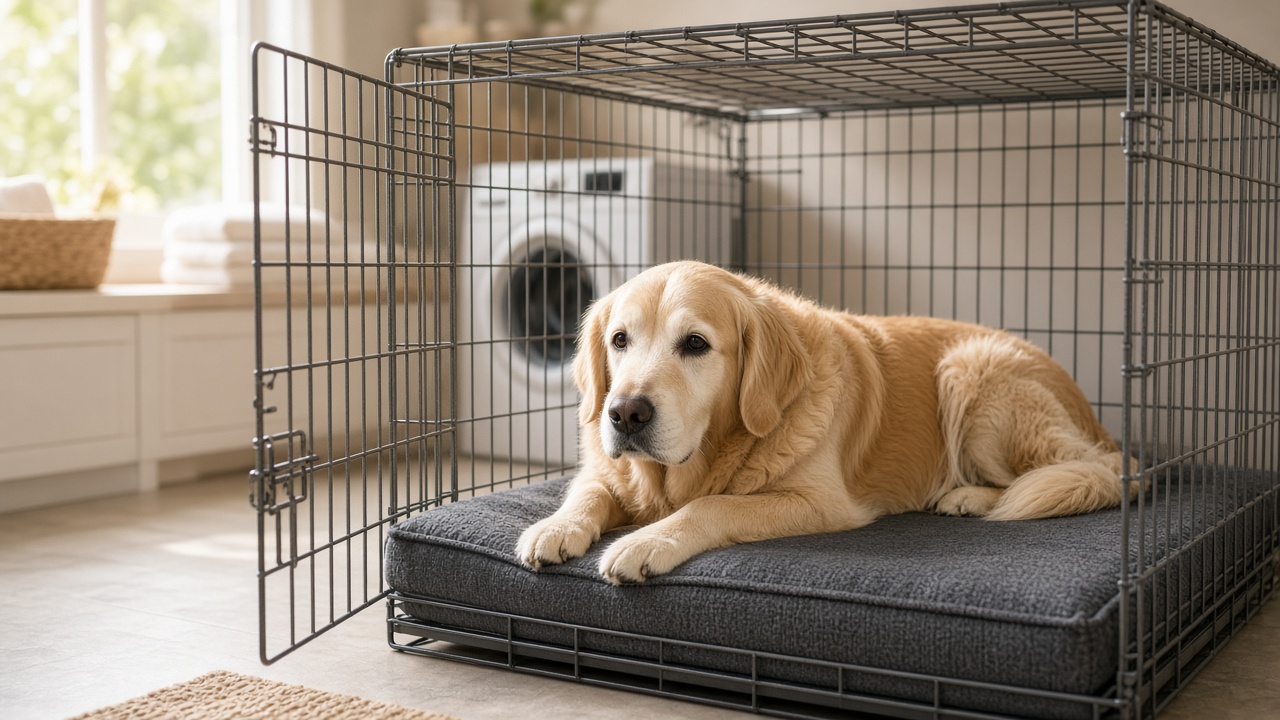
Cornell University College of Veterinary Medicine says the dog should stand without ducking, turn around, and lie down. Buy the adult size for a puppy crate and use a divider while the puppy grows.
Cornell says a divider stops the “bed on one side, toilet on the other” pattern.
Petmate’s Sky Kennel page tells owners to measure nose-to-tail and head-to-floor. It then says the kennel should be 3 to 4 inches taller and longer than the dog.
The International Air Transport Association uses a tighter formula for air crates. Length equals nose-to-tail plus half the elbow height. Snub-nosed breeds need a container 10 percent larger.
Diggs tells buyers to add 2 inches to standing height for minimum interior height. It tells them to add 2 to 4 inches to nose-to-tail length.
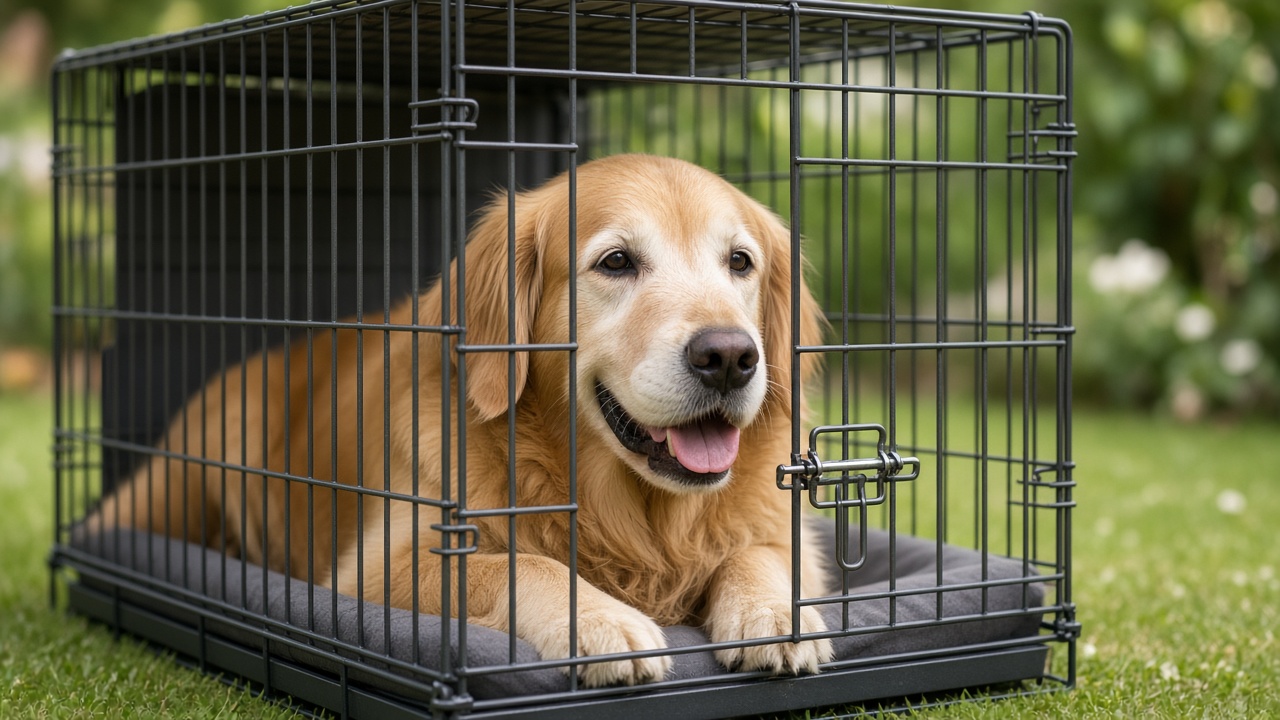
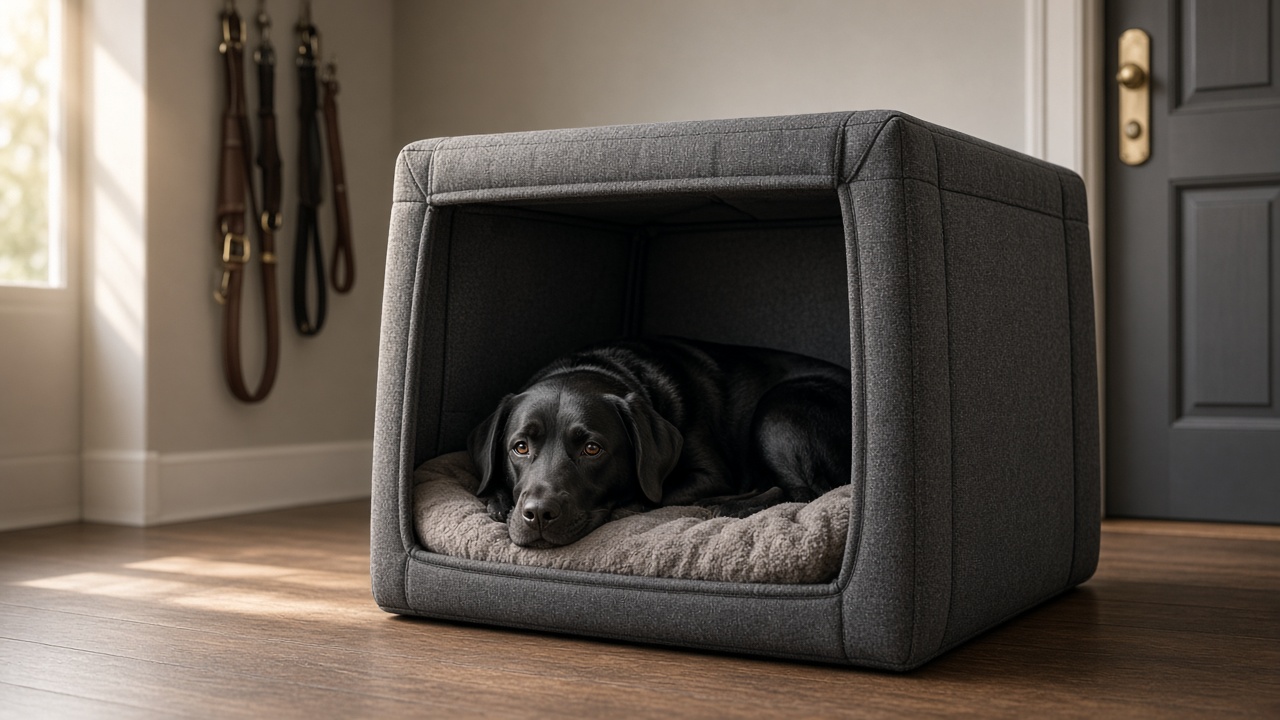
Cornell University College of Veterinary Medicine says many dogs settle better in a den. For a wire crate, it recommends a sheet or fitted cover that still leaves one or two sides open.
MidWest Homes for Pets sells the QuietTime crate cover in seven sizes from 22-inch to 54-inch. The cover is polyester, uses hook-and-loop tabs, and lifts on each side if the dog wants light.
Place the crate in a lived-in room, not a forgotten basement. Humane World for Animals starts training in a family room and, at night, near your bed.
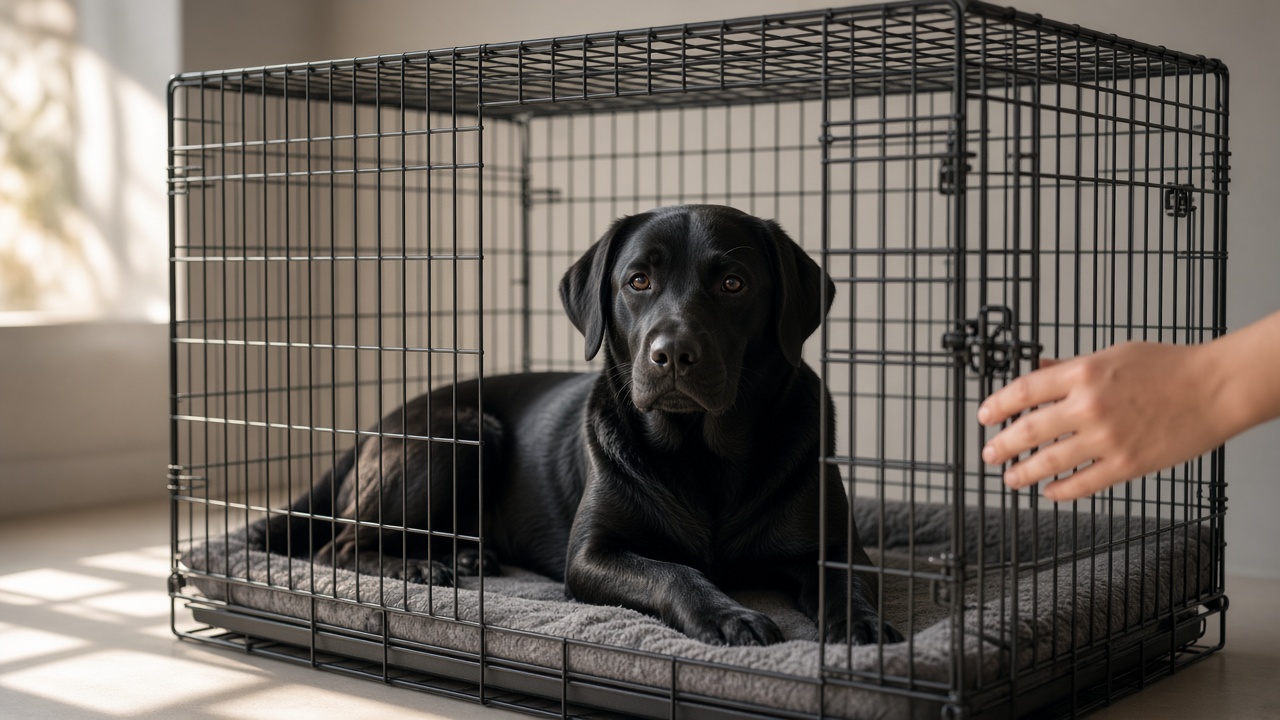
Large, long-backed dogs need the extra length. If you are sizing up for an adult Labrador or similar, use a crate built for large dogs.
Crate attributes that change the setup
The table below is not a ranking. It is an attribute sheet from maker pages.
The mid-size interiors are not interchangeable. Petmate lists 32.5 inches of interior length on the Sky Kennel 36-inch.
Diggs lists 31.4 inches on the Revol Medium. GUNNER Kennels lists 30 inches of floor length on the G1 Intermediate. That is a 2.5-inch spread in usable length.
| Product | Body | Listed interior or size | Divider | Access | Empty weight |
|---|---|---|---|---|---|
| MidWest Homes for Pets iCrate, 36-inch | Folding wire, leak-proof pan | Seven iCrate sizes from 18-inch to 48-inch | Yes | Single- or double-door wire | Not listed |
| Diggs Revol, Medium | Steel frame, aluminum diamond mesh | 31.4 L x 20.6 W x 21.5 H; dogs about 17–20 in. or 30–50 lb | Yes | Front door, side door, top hatch | 32 lb |
| Petmate Sky Kennel, 36-inch | EcoTEC plastic, ≥90% pre-consumer recycled | 32.5 L x 22 W x 26 H; exterior 36 x 25 x 27; 50–70 lb | No | Four-way vents; IATA LAR 51st ed. (2025) | 20.75 lb |
| GUNNER G1 Intermediate | Double-wall plastic travel kennel | Floor 30 L x 18 W x 25 H | No | GUNNER states Center for Pet Safety 5 Star on S/M/Intermediate | 48 lb |
| MidWest Homes for Pets QuietTime cover, 36-inch | Polyester slip-on | Seven sizes, 22-inch to 54-inch | Cover only | Fits 1-, 2-, or 3-door MidWest crates; sides lift | Not listed |
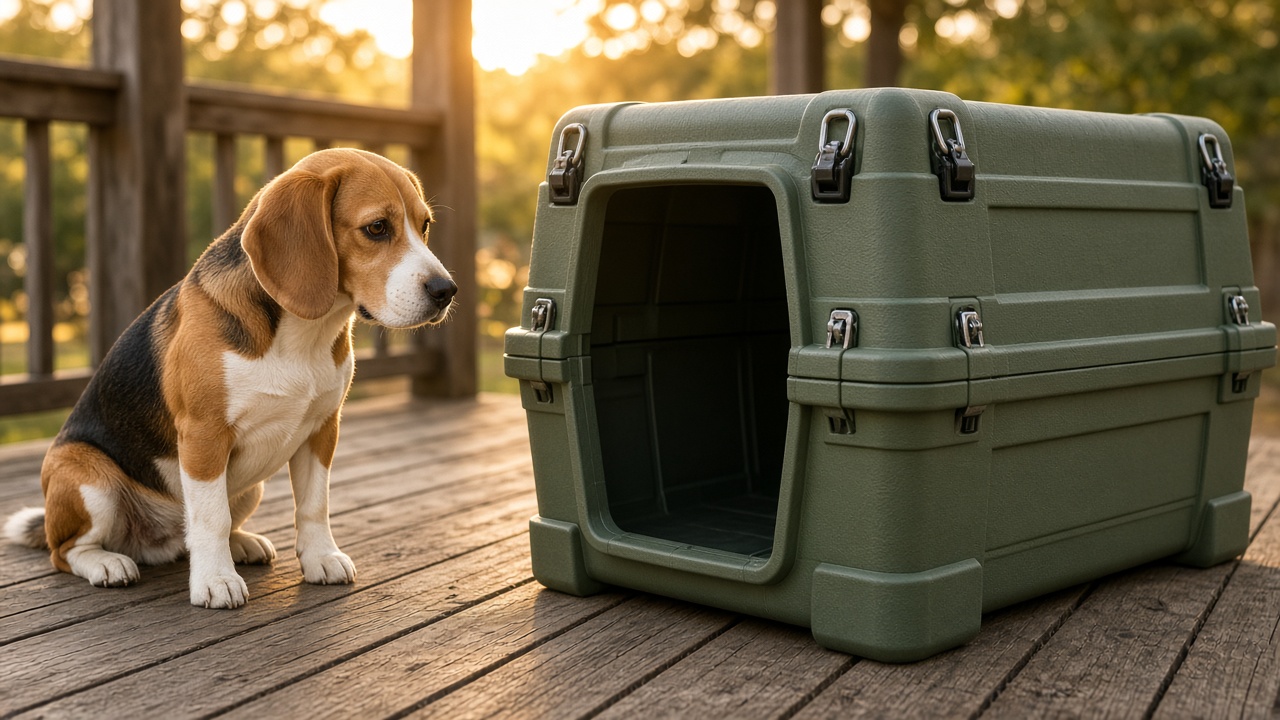
A wire crate with a divider is the usual house-training tool. A plastic kennel cuts visual load without a cover.
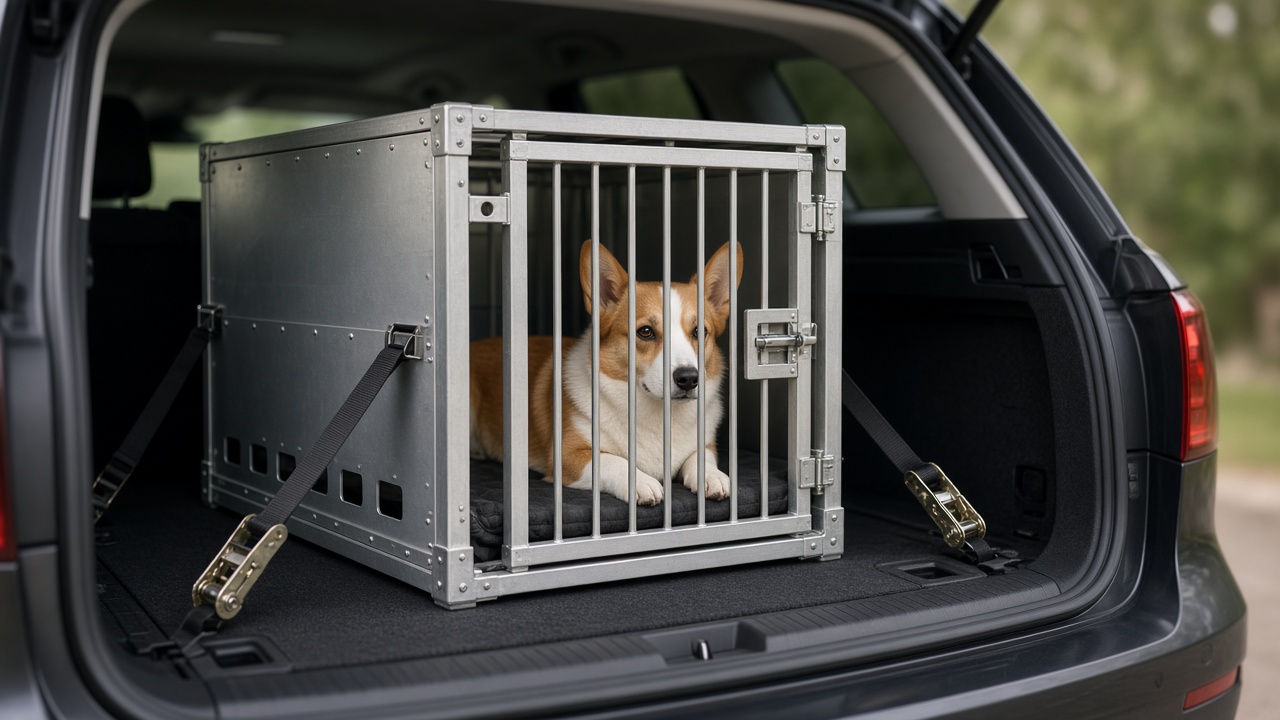
GUNNER Kennels says an unrestrained 60 lb dog in a 35 mph crash can become 2,700 lb of projectile. Home crate-whining is a different job than car crash restraint. If the crate also has to ride in a car, read our crash-tested travel crate guide.
The International Air Transport Association says it discourages sedating pets for travel. We did not put drugs, collars, or “calming” chews in this article.
When to stop the crate plan
Stop a session if the dog is injuring teeth, nails, or gums on the bars. Stop if the crate is soaked with drool. Stop if the dog soils after you already offered a potty trip.
Cornell University College of Veterinary Medicine says those dogs may do better in a pen or with a sitter. Humane World for Animals says you may need a new schedule, a pet sitter, or daycare to cut total crate hours.
Rebuild from an open door. Toss food just inside, then feed meals farther back. Close the door only while the dog is already eating.
Humane World for Animals says this step can take minutes or days. If the dog never takes food in the crate, the crate is still a fear cue. Do not add hours.
Change the room, the crate type, or the whole confinement plan. A crate is one tool. Sleep, potty success, and an uninjured dog are the goals.
FAQ
Should I ignore a dog whining in the crate at night?
Not as a blanket rule. First decide whether the sound is potty, protest, or panic. Humane World for Animals says to ignore testing whines if you have not rewarded them before.
If the sound keeps going, use the dog’s potty cue. If the dog gets excited, take a boring trip outside, then return to the crate.
How long can a puppy stay in a crate before whining is a potty request?
Use age, not hope. Humane World for Animals says puppies under 6 months should not stay more than three or four hours. It also uses age in months plus one hour.
The American Kennel Club says a puppy under 10 weeks often cannot hold urine more than one hour.
Why does my dog whine only when I leave the room?
The crate may now predict isolation. Humane World for Animals tells you to crate the dog for short periods while you are home. Keep departures dull, and keep returns dull too.
Can a cover stop crate whining?
A cover can cut visual noise. Cornell University College of Veterinary Medicine says to leave one or two sides open on a covered wire crate. MidWest Homes for Pets says each QuietTime panel can lift and hook if the dog wants light.
What if the dog screams, drools, or tries to break out?
Treat that as panic, not protest. Cornell University College of Veterinary Medicine says not to force those dogs to stay crated alone. The ASPCA says crate confinement is the wrong option when escape attempts and heavy panting show up.
Open the door, switch to a pen or gated room, and get qualified behavior help.