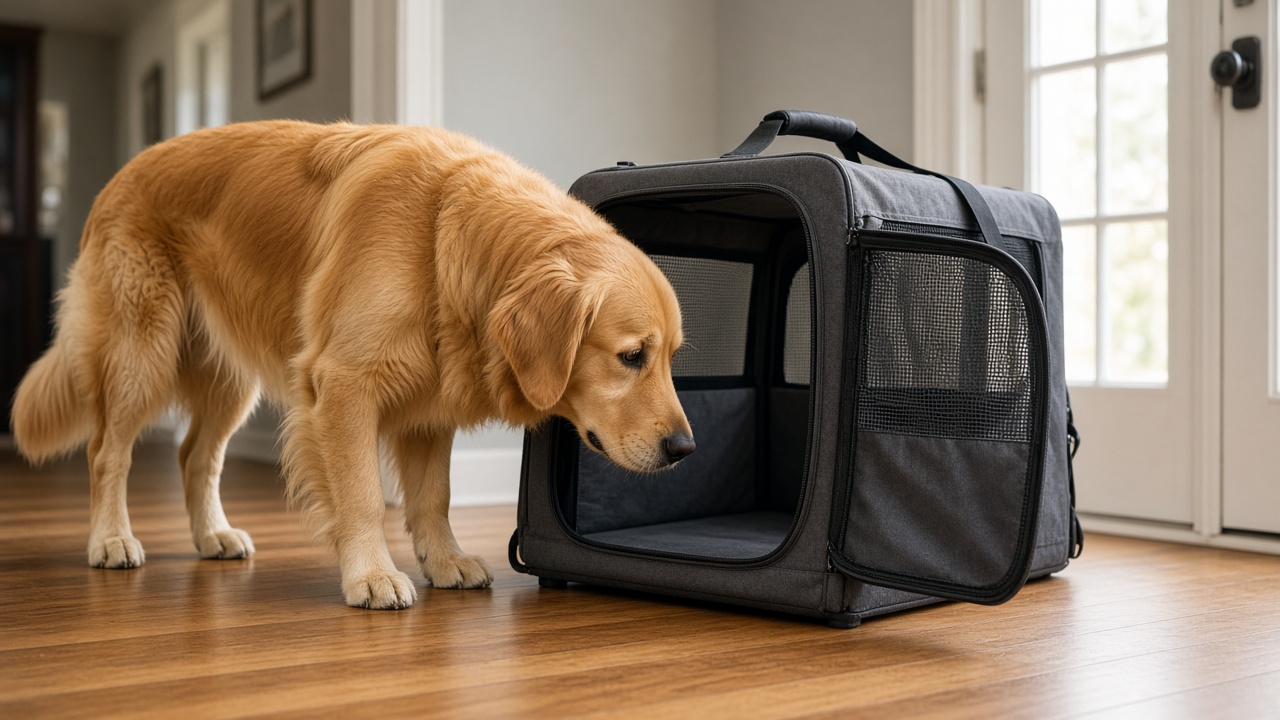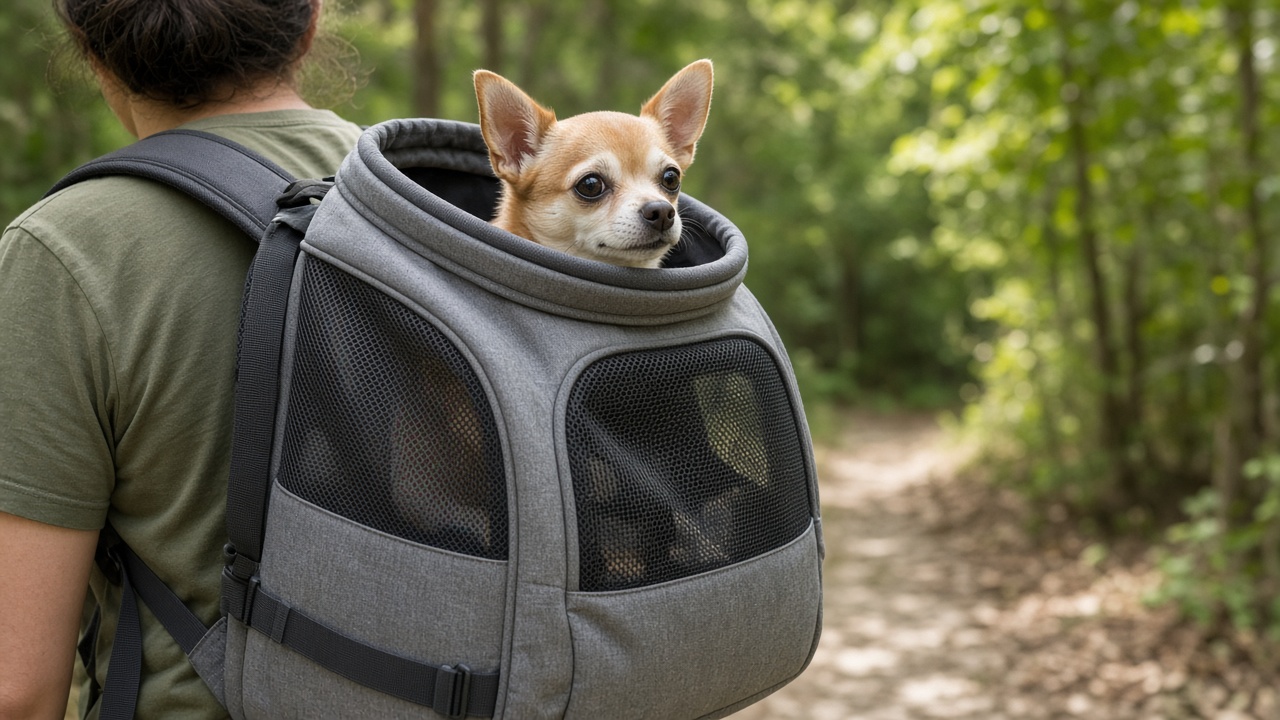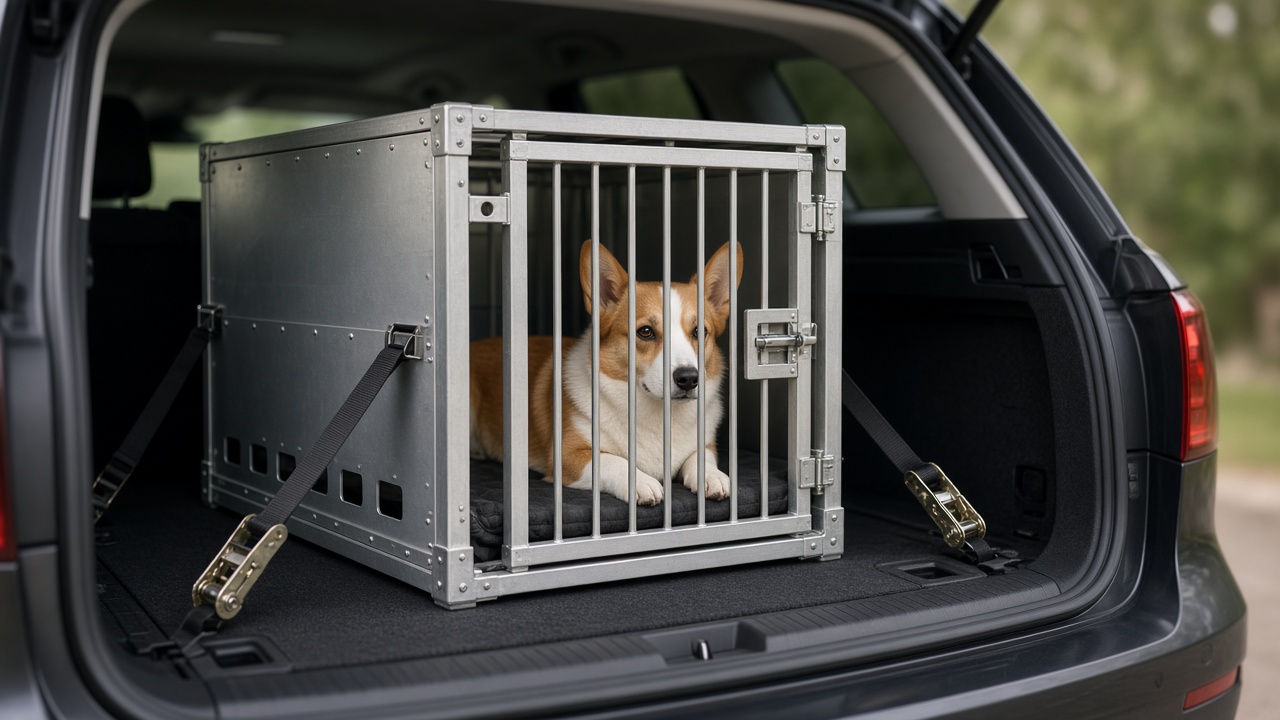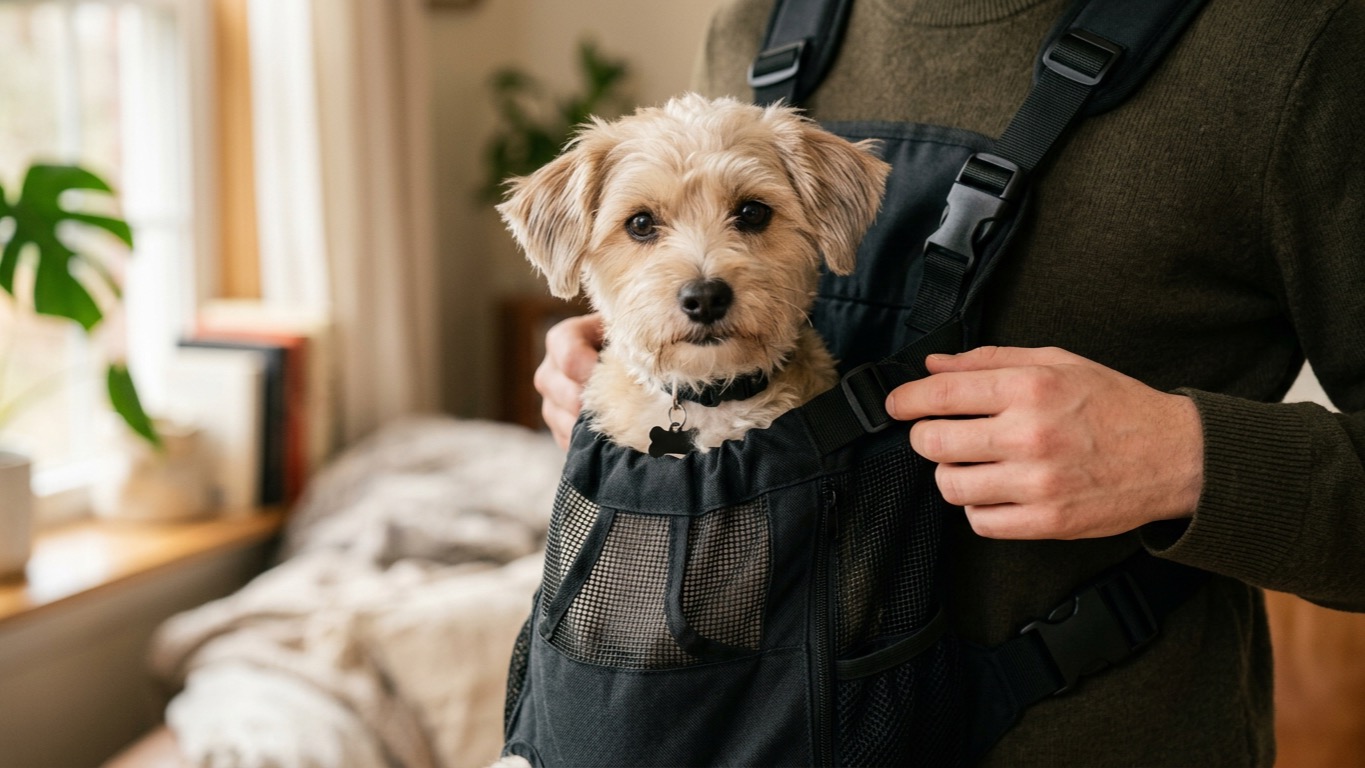
A dog chest carrier is a front-wear bag or sling that keeps a small dog on your torso so you can see the face and keep a hand free — not a backpack you cannot monitor, and not an under-seat airline kennel. The We read the titles and descriptions of the seven catalog SKUs on this page on four buyer-visible signals: carry class (sling vs front pack vs convertible backpack), listed weight theme, strap/padding cue, and card price. Card snapshots sum to $162.37. 4 of 7 cards sit under $18. 3 of 7 sit $31–$39. 0 of 7 are IATA under-seat airline kennels on the titles we compiled.
Buy the weight cap and the body length. A 15-lb long dog is not a 15-lb compact dog. Stop at the first change in gum color or panting. Heat in a mesh bag is still heat.
Our guides are reader-supported. This article may contain affiliate links. As an Amazon Associate we may earn a commission if you buy through links, at no extra cost to you.
Related desk pages: how to choose a pet carrier, hiking travel backpacks, small-dog strollers, road-trip carriers.
Quick picks at a glance
- Lowest ticket convertible: Inspack Dog Backpack Carrier/Cat Carrier — $9.99.
- Bare sling: Dog Carrier Sling — $11.99.
- Budget backpack theme: Mosago Dog Backpack Carrier — $16.89.
- Tiny-dog sling, ~10 lb theme: Tomkas Small Dog Sling Carrier — $17.98.
- Front-pack, mid ticket: PetBonus Pet Front Dog Carrier Backpacks — $31.99.
- Padded trail backpack theme: WOYYHO Pet Dog Carrier Backpack — $34.99.
- Named brand front pack: Outward Hound PupPak — $38.54.
What a dog chest carrier actually is
The aisle sells “hands-free bonding.” The desk sells three jobs:
- Front carry so you can see the dog. If the dog is behind you, you bought a backpack. Different monitoring job. Hiking backpacks live on the travel backpack page.
- A weight cap you will obey. Sling listings on this page cluster around tiny dogs. A 22-lb terrier in a 10-lb sling is a dropped-dog story.
- Mesh or breathable fabric that still needs shade. Mesh is not air conditioning. AVMA heat and travel notes treat overheating as a welfare issue.
Four facts belong on the first screen of any dog chest carrier decision:
- Airline under-seat is a different object. Most airlines want a structured soft-sided kennel that fits under the seat, not a body sling. Confirm the airline page the week you fly. These seven cards are sidewalk and errand objects unless a listing explicitly matches that airline’s current box.
- Chest vs backpack is load geometry. Front carry puts mass on your torso. A single-strap sling puts mass on one shoulder. A padded dual-strap pack spreads it. Your back is part of the spec sheet.
- Leg-out slings are not spine therapy. Some dogs like the egg cradle. Dogs with back, neck, or breathing disease need a clinic opinion before any sling. We will not pretend otherwise.
- Time in the bag is short. Desk default: errand blocks, not a three-hour hike stuffed in nylon. Stop, water, shade, out.
What
How chest carry fit listings compare on labels
These tables are desk compilations from listed prices, title cues, and August 2026 card snapshots. Prices move. Heuristics, not lab output.
Table 1 — Card price, carry class, and desk job
| Product | Card price | Carry class | Desk job |
|---|---|---|---|
| Inspack Backpack/Cat | $9.99 | Convertible budget pack | First cheap bag; inspect zippers |
| Dog Carrier Sling | $11.99 | Single-strap sling | 10-minute vet lobby, tiny dog |
| Mosago Backpack | $16.89 | Light backpack | Short hike theme; thin padding |
| Tomkas Small Sling | $17.98 | Egg-cradle sling | Toy dogs; ~10 lb theme |
| PetBonus Front Pack | $31.99 | Front backpack | Hands-free front panel |
| WOYYHO Backpack | $34.99 | Padded pack + pockets | Longer walk, more wearer comfort |
| Outward Hound PupPak | $38.54 | Named-brand front pack | Ripstop / front-entry theme |
Desk stat: 57% of this catalog (4 of 7) is under $18. If your search is dog chest carrier and you only sort by stars, you will buy a sling with no back support and call it a hiking system.
Table 2 — Weight heuristic vs carry class (desk, not a brand chart)
| Dog class | Typical weight | Carry class that can even be discussed | Skip |
|---|---|---|---|
| Teacup / tiny toy | 3–7 lb | Sling or small front pack | Giant backpack caves |
| Toy (Yorkie, Chi, Pom) | 6–12 lb | Sling if the listing cap holds; else front pack | Single strap on a squirmer |
| Compact small (Min Pin, small terrier) | 10–16 lb | Front pack with a printed cap ≥ dog + margin | 10-lb slings |
| Long small (Mini Dachshund) | 8–15 lb | Need length, not just pounds | Square bags that fold the back |
| Over ~20 lb | — | Usually not this aisle | These seven cards as a “large dog” plan |
Always open that listing’s current cap. A title is not a scale.
Table 3 — Wearer strap map (your shoulders are the product)
| Strap map | Load theme | Heat on the dog | Fail mode |
|---|---|---|---|
| Single sling strap | One shoulder, fast on/off | Dog against torso; can cook | No back support; swing |
| Dual strap, no hip belt | Two shoulders | Better if mesh faces out | Digs on long walks |
| Dual strap + chest/hip buckle | Most stable theme | Still needs shade | Cheap buckles fail |
| Convertible back/front | Flexibility | Dog may end up behind you | You lose face monitoring |
If the wearer cannot stand upright with the loaded bag for five minutes in the living room, the trail will not fix it.
Table 4 — Job vs object (do not mix aisles)
| Job | This aisle | Other aisle |
|---|---|---|
| See the face on a sidewalk | Front pack or sling | Back-carry hiking pack |
| Two-hour trail, dog walks most of it | Front pack plus rest stops | Hiking backpack if the dog rides in back |
| Cabin flight under the seat | Only if the airline accepts that SKU | Structured carrier guide |
| City mile, dog cannot walk heat/pavement | Short sling blocks | Stroller |
| Dog over 20 lb | Usually leave | Wheels or a real backpack frame |
Table 5 — Card math (August 2026 snapshots)
| Stack | Example SKUs | Snapshot total | Who it is for |
|---|---|---|---|
| Bare sling | Dog Carrier Sling | $11.99 | Tiny dog, short lobby |
| Named tiny sling | Tomkas | $17.98 | 3–10 lb theme |
| Cheap pack | Inspack or Mosago | $9.99–$16.89 | First bag, inspect hardware |
| Front-pack pair | PetBonus + PupPak | $31.99–$38.54 | Hands-free front carry |
| Padded pack | WOYYHO | $34.99 | Wearer comfort, pockets |
| All seven | Collection | $162.37 | A closet, not a plan |
How the desk scores a dog chest carrier
We do not score “bonding energy.” Four checks:
1. Does the listing print a weight and a length or girth? Weight-only is how long dogs get folded.
2. Can the dog sit and turn without a face mashed into zipper teeth? If not, the bag is a sack.
3. Can you see gum color without unpacking? Front carry wins. Back carry loses this check.
4. Will you stop? A carrier is not a license to walk a brachycephalic dog in 95°F sun. Panting, brick-red gums, collapse — clinic. Now.
Top picks — seven catalog carriers
Cards below are the catalog lines for this URL. Specs are the maker’s. They change.
1. Mosago Dog Backpack Carrier
Best for: a light, cheap pack when the walk is short and you will accept thin padding.
Card price $16.89. Lightweight fabric is the pitch. Owner themes: fine for short outings; padding is “budget.” If you hike, your shoulders will file the bug report.
This is a dog chest carrier only if you wear it front-facing and the listing supports that carry. Many “backpack” tiles are back-carry. Read the photos. If the dog faces your spine, you bought a blind spot.
Pros: Price; light Cons: Padding; confirm front vs back
2. Tomkas Small Dog Sling Carrier
Best for: toy dogs in the ~3–10 lb band when you want an egg-cradle sling.
Card price $17.98. Snug cradle is the pitch. Adjustable strap is the other pitch. Owner themes: tiny dogs settle; the cap is the whole product. A 12-lb dog is a different aisle.
Pros: Cradle shape; tiny-dog theme Cons: Low cap; not a trail frame
3. Dog Carrier Sling
Best for: a generic single-strap sling for a short carry.
Card price $11.99. Mesh is the pitch. Simplicity is the other pitch. Owner themes: convenient; no back support for the wearer. That is the honest con in one line.
Use it for a lobby. Do not use it as a hiking system. Do not use it as a spinal treatment.
Pros: Cheap; mesh theme Cons: One strap; wearer fatigue
4. Inspack Dog Backpack Carrier/Cat Carrier
Best for: the lowest card when you will inspect zippers before you trust them over pavement.
Card price $9.99. Convertible backpack / carrier is the pitch. Dual-species listing is the other pitch. Owner themes: price; cheap-feel zippers. A failed zipper is an escape on a sidewalk.
Pros: Lowest ticket; convertible theme Cons: Hardware quality; confirm fit for this dog
5. WOYYHO Pet Dog Carrier Backpack
Best for: a mid-ticket pack when the wearer wants padding and pockets more than a $12 sling.
Card price $34.99. Padded straps and storage are the pitch. Owner themes: more comfortable than the budget bin; heavier empty weight. Ultra-light hikers will hate the mass. Errand walkers may not.
Confirm whether the dog rides front or back. Front is the dog chest carrier job.
Pros: Padding; pockets Cons: Heavier; still not an airline box
6. PetBonus Pet Front Dog Carrier Backpacks
Best for: a front-panel pack when the listing’s weight cap matches the dog.
Card price $31.99. Reinforced front panel and mesh are the pitch. Owner themes: dog stays put; straps can dig on long routes. Widen the straps. Add rest stops. Do not “push through” a brachycephalic pant.
Pros: Front-carry theme; mesh Cons: Strap pressure on the wearer
7. Outward Hound PupPak Dog Front Carrier
Best for: the named-brand front pack on this URL when the size range includes this dog.
Card price $38.54. Ripstop and front entry are the pitch. Owner themes: tougher fabric than the $10 bin; size range is still small-to-medium, not “any dog.” Outward Hound is a real toy-and-gear brand. It is not a crash kennel and not an airline certificate.
Pros: Brand + ripstop theme; front opening Cons: Highest card; limited size band
How to measure a dog for a chest carrier
Length: base of neck to base of tail. The interior should beat that number with room to sit, not stretch the spine into a U.
Girth: tape behind the front legs. Compare to the listing. A wide Frenchie is not a 10-lb Chihuahua.
Height: sitting ear top vs bag height. Ears jammed in a zipper is not “snug.”
Weight: scale, not Instagram. Add a margin. A wet dog after rain is heavier. A winter coat on you changes how the straps sit.
Signs the bag is too small: constant shifting, panting without a walk, paws dragging, tail crushed, inability to turn. Too big: the dog slams side to side on every step.
Price bands — what $12 vs $38 actually buys
Budget (under $20). Inspack $9.99, sling $11.99, Mosago $16.89, Tomkas $17.98. You buy fabric and a strap. You inspect zippers and seams before the second date.
Mid ($30–$40). PetBonus $31.99, WOYYHO $34.99, PupPak $38.54. You are paying for padding, a front panel, or a brand name. You are still not paying for an airline box.
Hidden cost: one escape on a shoulder and a lost dog. Clip a harness inside the bag if the listing allows a tether point. A collar-only clip is a neck.
A 10-day introduction that does not strand a scared dog
Days 1–2: Bag on the floor. Treats in the door. No zip.
Days 3–4: Dog in, door open, 30 seconds, food, out.
Days 5–6: Zip, hold the bag on your lap, not walking yet.
Days 7–8: Walk to the mailbox. Watch gums.
Days 9–10: One real errand with a shade plan and water.
If any day is a panic, stop the calendar. A stroller is a valid different object.
Seven buying mistakes the Chest-Carry we keep seeing
Buying Texsens from an old paragraph. Not a card on this URL.
Calling a sling airline-approved. Most are not.
20-lb dog in a 10-lb sling. Physics.
Back-carry and calling it a chest carrier. You cannot see the face.
No rest stops in heat. Mesh is not a cooling vest. Cooling vests are a different page: best dog cooling vest.
Zipper as the only lock. Add a clip if the bag has a ring.
Using the bag as a crate substitute at home. Different job.
When a carrier question is a clinic question
Blue or brick gums, collapse, continuous scream, a dog with a known spinal or airway diagnosis, or a puppy that cannot regulate heat. Book the clinic. Nothing on this page has been reviewed by a veterinarian on our behalf.
Sedation for flights is a clinician conversation. Public AVMA-style guidance has long treated routine sedation for air travel as a risk, not a hack. We will not write a dose.
What this seven-card catalog is not
It is not a Sherpa Deluxe airline review. It is not a Henkelion four-side mesh podium. It is not a hard crate. It is not a crash-tested car seat — that lives on small-dog car seats. It is not a hiking frame for a 40-lb dog.
Airport, hotel, and “I just need them off the floor” days
Security lines. A sling in your hands is faster than a hard crate on wheels until the bin. Then you need a plan for the dog while you empty pockets. A second human helps. A dog chest carrier that requires two hands to unzip is a bad TSA object.
Hotel. Bags on luggage racks beat bags on carpet a stranger’s dog slept on. Zip. Clip. Do not leave a sling on a balcony.
Outdoor dining. Heat from a patio heater plus a mesh bag is still heat. Put the bag in shade. Water. Out.
Rain. Mesh plus rain is a wet dog against your shirt. A pack with a rain flap (not all of these cards) or a short carry under your coat is the honest move. Do not seal a plastic bag over the mesh “to keep them dry” — that is a humidity box.
Fit worksheet you can copy
Write these numbers before you click:
- Weight today (scale).
- Length, neck base to tail base.
- Girth behind the front legs.
- Sitting height to ear tip.
- Your own comfortable carry weight (books test).
- Outing length and temperature.
- Front vs back (must see face?).
- Airline this month? If yes, leave this aisle.
If 1–4 do not fit the listing, the $9.99 Inspack is not a bargain. It is a return.
When the dog hates bags
Some dogs never settle in fabric. Forcing a zipper is how people get bitten and how dogs learn that outings start with a fight.
Try: treats at the door, not at the zip. Shorter sessions. A harder-sided carrier the dog can stand in. A stroller if the job is “do not walk on salt or heat.”
A dog chest carrier is optional equipment. Walking on a harness is a different species page — for dogs, use a dog harness article, not a bag, if the dog can walk.
Do not upsize a sling to “give them room” if the listing cap is 10 lb and the dog is 14. Room does not add structural rating.
Escape, identification, and the sidewalk
Microchip. Collar ID. A photo on your phone. If the bag fails, you still need to get the dog back.
Practice an emergency unzip in the living room so you are not learning it in traffic.
If the dog can back out of a sling the way a cat backs out of a sweater, you bought the wrong geometry. Front packs with a belly panel reduce that theme. Nothing is foolproof.
Night, reflective, and being seen
A dark mesh bag at dusk is a shadow. Add a clip-on light to your strap, not a dangling toy the dog can swallow. You are the vehicle-visible object.
Photo vs tape: why listings lie about a dog chest carrier
Lifestyle photos use a 4-lb puppy in a bag sized for a 12-lb adult. The human model is 5'2" with the straps cranked. Your 11-lb terrier on a 6' wearer is a different pendulum.
Read the dimension line if it exists. If the listing only says “small dogs,” treat it as incomplete. Message the seller for interior length. If they will not give a number, you are buying a photo.
Colorways do not change caps. A “large” color name is not a size.
Return windows: try the bag at home with the dog before a hike. A trailhead is a bad dressing room.
How we researched this guide
The We read the titles and descriptions of seven current catalog SKUs against carry class, listed weight theme, strap/padding cues, and card price. We cite AVMA travel/heat language because those pages are public and specific. The original word count on this URL was padded with eight identical “Additional Context” blocks. We replaced that padding with fit, heat, and job splits.
What we do not do: we do not run wearer-ergonomics labs, we do not certify airlines, and we do not treat marketplace “approved” badges as IATA. Limitations: prices move; cards are August 2026 snapshots; airline boxes change by carrier and season. A written airline rule and a clinic plan supersede this URL.
Front carry vs backpack vs sling vs stroller
People search dog chest carrier and land on four objects. the listing review keeps them apart.
Front chest / front backpack. Dog on your torso. You see the face. Hands can hold a leash for a second dog or a rail. This is the job on this URL when the card is actually front-wear (PetBonus, PupPak, some convertibles).
Backpack, dog behind you. Hiking convenience. You cannot see gums without stopping. Better for a calm dog that already accepts bags. Different page: travel backpacks.
Sling. Fast. One strap. Tiny dogs. Short blocks. Tomkas and the generic sling live here. Your shoulder files the complaint.
Soft-sided under-seat kennel. Airline and car-footwell object. Structured base. Not a body wrap. Carrier guide.
Stroller. Wheels. Shade canopies. City miles when the dog cannot walk heat or surgery recovery. Small-dog strollers. A sling is not a stroller.
If the dog is over ~15 lb and the outing is an hour, wheels or a walking plan usually beat a $12 strap.
Heat, brachycephalic dogs, and mesh myths
Mesh is airflow relative to solid nylon. It is not a cooling vest. A flat-faced dog in a bag on a sunny sidewalk is still a flat-faced dog. Stop. Water. Shade. Check gums.
A wet bandana is not a plan. If you want evaporative fabric, that is the cooling vest page — and even that is a layer, not a bag permit.
Winter: a tiny dog in a mesh sling can shiver. A coat on the dog plus a short carry is fine. A sealed plastic bubble is a different (and often worse) heat/humidity story.
Cities, transit, and cafes
Sidewalk. Front carry so you can lift the dog off a reactive greeting. A harness inside the bag if there is a ring.
Bus / subway. Bags get kicked. Hold the bag. Do not put a sling on the floor in a wet aisle. Transit rules vary. Read the operator page.
Cafe. Some places want the dog in a bag, not on a chair. A sling that dumps the dog when you stand is a lawsuit-shaped story. Practice at home.
Trailhead. If the dog will walk 80% and ride 20%, a front pack can work. If the dog will ride 80%, you wanted a frame pack or a stroller, or a shorter hike.
Puppies, seniors, and medical carries
Young puppies. Short. Supported. Not a 5K. Vaccination timing for where you carry (lobby vs dog park) is a clinic call.
Seniors. Arthritis and slings: the dog may not be able to sit in a U. A wider floor or a stroller is kinder. We will not call a $12 sling “joint therapy.”
Post-op. Follow the surgeon’s crate and carry rules. A zipper on an incision is your problem to avoid.
Incontinence. Washable liners matter. Budget bags without a pad become a one-use item.
Hardware that fails on cheap cards
Zippers: Inspack’s owner theme. If the zipper is the only lock, add a clip.
Plastic buckles: they crack in cold. Inspect.
Stitching at the strap root: this is where a 12-lb squirmer tests the bag. If the root is a single bar-tack, treat the bag as disposable.
Mesh tears: nails and zippers. Retire. A hole is an exit.
A week of wearer training (you, not only the dog)
Day 1: Load books equal to the dog’s weight. Walk the hall. If you cannot, the dog will not fix your back.
Day 2: Dog in, standing still, 60 seconds.
Day 3: Mailbox.
Day 4: One stair flight if you have stairs — this is where single slings swing.
Day 5: Ten minutes, then out, water.
If your shoulders numb, change the strap map or the object. A dog chest carrier that injures the wearer gets left at home. Then you have no carrier.
Cost per season
Inspack $9.99 plus a $12 sling is $21.98 of experiments. PupPak at $38.54 plus a stroller later is a different household. Seven cards at $162.37 is a closet. Buy the cap that matches the scale.
Replacement after zipper death is normal in the under-$18 band. That is the ticket talking.
Frequently asked questions
What is a dog chest carrier?
A front-wear sling or pack that holds a small dog on your torso so you can see the face and keep a hand free. If the dog rides on your back, you bought a backpack. The dog chest carrier job is visibility + short carry, not a three-hour stuffed hike.
Are chest carriers safe for dogs with back issues?
Maybe for a clinic-cleared short carry in a bag that lets the dog sit level. Maybe not. Severe spinal disease is a veterinarian conversation. A $12 sling is not a brace.
How long can a dog stay in a chest carrier?
Desk default: errand blocks with shade and water, then out. Restlessness, panting, or escape attempts end the session. Do not invent one from a blog.
Can I use a chest carrier for puppies?
If the cap and length fit today, and the head is supported, and the session is short. Young puppies heat-stress faster. Recheck size every few weeks.
Is it okay to use a chest carrier for air travel?
Usually no. Most airlines want a structured under-seat kennel. Confirm the airline page. These seven cards are not a boarding pass.
Do chest carriers work for dogs over 20 lbs?
Rarely as a comfortable front carry. Wearer fatigue and drop risk go up. Look at wheels or a real frame pack. Do not force these seven cards.
Should I clip a harness inside the bag?
If the listing has a tether ring, yes — harness, not collar. An open zipper plus no clip is an escape.
Can I run with a front pack?
Only if the dog is calm, the cap holds, and you watch heat. A bouncing brachycephalic dog in a bag is a clinic story. A stroller exists.
How do I wash a dog chest carrier?
Empty pockets. Unclip hardware you can. Wash on the listing’s rule — many budget bags are hand-wash. Dry fully before the next carry. A damp mesh bag is mildew.
What if my dog backs out of a sling?
Wrong geometry or a loose strap. Try a front pack with a belly panel, or stop using slings. A harness clip inside helps only if the bag has a ring.
Can two small dogs share one pack?
No. Caps are per bag. Two faces in one zipper is an airway and a fight.
Is Outward Hound better than the $10 cards?
You are paying for ripstop and a name. You still measure. A PupPak that is too small is worse than a $17 Tomkas that fits a 6-lb dog.
Related pages
- Best pet carrier for dogs and cats
- Best dog travel backpacks for hiking
- Best pet stroller for small dogs
- Best dog car seats for small dogs
Errand scripts that keep a dog chest carrier honest
Vet lobby (15–25 minutes). Sling or front pack. Water after. Out in the parking lot before the car if the dog is panting. Clip a harness inside if the bag has a ring. Do not use the bag as a muzzle substitute for a fearful dog — that is a muzzle and a behavior plan, or a different arrival method.
Grocery (20–40 minutes). Heat in a parked car is still forbidden. If the store allows dogs in bags, front carry so you can watch faces in the aisle. If the store does not, the dog stays home. A dog chest carrier is not a loophole.
Farmers market. Food on the ground, other dogs, strollers. Front carry. Short loops. Shade tent if you linger.
Kid pickup. Chaos and slamming doors. Zip before you open the car. A sling that dumps when you buckle a child is the wrong object. Use a car seat for the ride, a bag for the 40-foot walk.
Apartment stairs. Single slings swing. Dual-strap front packs track better. If you cannot do your stairs with book-weight, you cannot do them with a squirming 11-lb dog.
Fabric, wash, and the subway-smell problem
Cotton slings (Tomkas theme) wash like a T-shirt and stretch like a T-shirt. Retire when the egg cradle is a hammock.
Mesh packs: zipper tracks hold hair. A toothbrush and a rinse beat a “it is fine” month.
Foam pads: if they exist, they hold urine. Pull them. Wash them. A $10 Inspack without a pad becomes a one-accident item.
Dry fully. A damp bag in a gym locker is mildew. The dog will refuse it, and you will think the dog failed.
Weight math the listing will not do for you
Dog at 9.8 lb plus a wet coat plus a toy stuffed in the pocket plus your water bottle clipped to a strap is not “under 10 lb.” The cap is the dog, and the wearer still feels the extras.
A 14-lb dog in a 15-lb-rated pack has 1 lb of marketing margin. Squirms eat that margin. Desk default: stay 20% under the printed cap when the dog is athletic.
Your back: 10% of your body weight is a common hiking-rule-of-thumb people quote. If 12 lb on your chest changes your gait, the outing is too long.
Legal and building notes (not legal advice)
Elevators, HOA “no dogs in lobby,” and airline cabins are other people’s rules. A cute sling does not override them. Read the building and the carrier. This desk is not your lawyer.
Decision tree: buy a sling, a front pack, or leave the aisle
Dog under 8 lb, outing under 15 minutes, wearer has one free shoulder. Tomkas or the generic sling. Inspect the strap root.
Dog 8–15 lb, you want to see the face, outing under 45 minutes. PetBonus or PupPak if the cap prints. WOYYHO if you need pockets and padding and the dog is actually front-carried.
Dog over 16 lb or outing over an hour. Leave. Stroller, walking, or a real hiking frame. These seven cards are not a 25-lb solution just because an old paragraph mentioned Morpilot.
Flight next month. Leave. Structured under-seat kennel. Confirm the airline box.
Dog panics in fabric. Leave. Train. Or wheels.
That tree is the whole Index. A dog chest carrier is a short, visible carry for a small dog. Everything else is a different URL.
If you are still undecided: buy one bag that matches today’s weight and length, do the 10-day intro, and only then spend $38 on a named brand. Two wrong slings cost more than one PupPak that fits. A third return shipping label is how $10 bags become the expensive aisle. Measure twice. Order once. Then do the living-room book test before the sidewalk. If the books win and the dog has not even loaded yet, pick a different object today, not later tonight after coffee.
Sources
- AVMA — Traveling with your pet: https://www.avma.org/resources-tools/pet-owners/petcare/traveling-your-pet
- Airline under-seat rules — confirm on the operating carrier site the week you fly
- Manufacturer listings for the seven cards on this URL (confirm caps at purchase)
Last reviewed: August 2026. If something is stale, contact us.